
 How Seabirds Reveal a Changing Climate. The skies above the Southern Ocean are home to some of the world’s most remarkable travellers. Wandering albatrosses soar effortlessly across thousands of kilometres, while penguins, petrels and skuas brave some of the harshest weather conditions on Earth. These seabirds are not only iconic symbols of Antarctica and the sub-Antarctic—they are also important indicators of the health of our oceans. One of the research projects supported by the South African National Antarctic Programme (SANAP), “Interactive Effects of Multiple Stressors and Environmental Change on Seabird Breeding Performance,” investigates how environmental changes are affecting seabird populations. Scientists study breeding success, chick growth, feeding behaviour and survival to better understand how birds respond to changing conditions in the Southern Ocean.
 Seabirds depend on healthy marine ecosystems to find food. Changes in sea surface temperatures, ocean currents and sea ice influence where fish, squid and krill can be found. At the same time, seabirds face additional pressures from pollution, invasive species, fisheries interactions and increasingly unpredictable weather. These multiple stressors can combine to affect breeding colonies in ways that are often difficult to predict. Many of SANAP’s long-term studies take place on Marion Island, where researchers monitor nesting birds year after year. By returning to the same colonies over decades, scientists can detect gradual changes that would otherwise go unnoticed. Long-term monitoring provides valuable information about population trends and helps distinguish between natural fluctuations and the effects of climate change.
The findings from this research extend far beyond Antarctica. Because seabirds occupy the top of the marine food web, changes in their behaviour often reflect broader changes occurring throughout the Southern Ocean ecosystem. Their health can provide early warning signs of shifts in ocean productivity that may ultimately influence global climate systems and marine biodiversity. By understanding how seabirds respond to environmental change today, researchers can help guide conservation efforts for tomorrow. The knowledge gained through SANAP supports international agreements that protect vulnerable species and contributes to global efforts to conserve the Southern Ocean for future generations.
Did You Know? The wandering albatross has the largest wingspan of any living bird—reaching up to 3.5 metres. Using powerful ocean winds, it can travel thousands of kilometres without flapping its wings for extended periods.
Why This Matters –Healthy seabird populations indicate healthy oceans. By monitoring these remarkable birds, SANAP scientists gain valuable insights into the impacts of climate change on marine ecosystems, helping policymakers and conservation organisations make informed decisions to protect biodiversity.
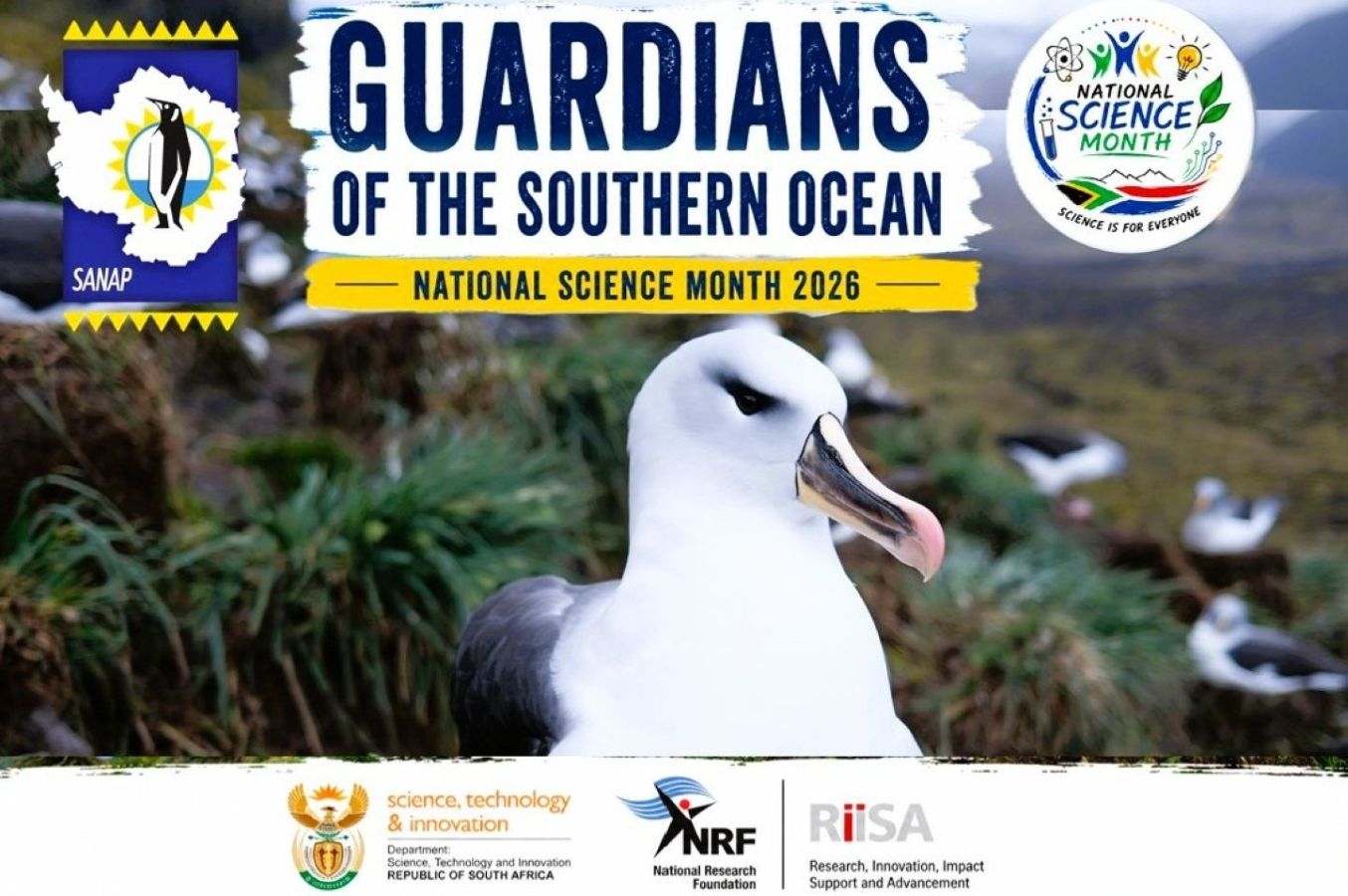 Call to Action –Every seabird has a story to tell about the health of our oceans. Follow the SANAP National Science Month series as we continue exploring the incredible science taking place across Antarctica, the sub-Antarctic islands and the Southern Ocean.