by Ria Olivier | Jul 9, 2026 | Marion Island, Research, SANAP, Science, Uncategorised
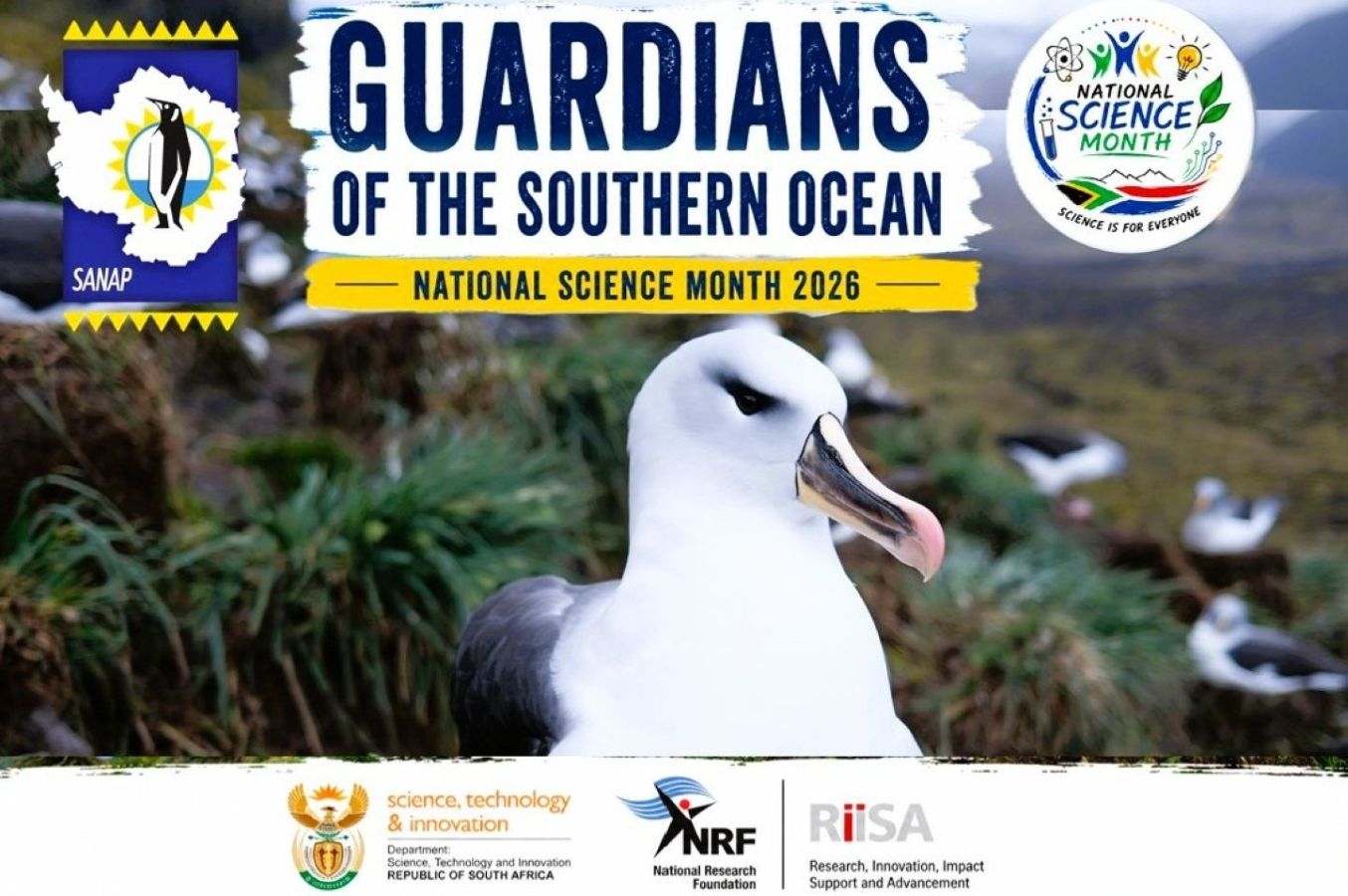
How Seabirds Reveal a Changing Climate. The skies above the Southern Ocean are home to some of the world’s most remarkable travellers. Wandering albatrosses soar effortlessly across thousands of kilometres, while penguins, petrels and skuas brave some of the harshest weather conditions on Earth. These seabirds are not only iconic symbols of Antarctica and the sub-Antarctic—they are also important indicators of the health of our oceans. One of the research projects supported by the South African National Antarctic Programme (SANAP), “Interactive Effects of Multiple Stressors and Environmental Change on Seabird Breeding Performance,” investigates how environmental changes are affecting seabird populations. Scientists study breeding success, chick growth, feeding behaviour and survival to better understand how birds respond to changing conditions in the Southern Ocean.
 Seabirds depend on healthy marine ecosystems to find food. Changes in sea surface temperatures, ocean currents and sea ice influence where fish, squid and krill can be found. At the same time, seabirds face additional pressures from pollution, invasive species, fisheries interactions and increasingly unpredictable weather. These multiple stressors can combine to affect breeding colonies in ways that are often difficult to predict. Many of SANAP’s long-term studies take place on Marion Island, where researchers monitor nesting birds year after year. By returning to the same colonies over decades, scientists can detect gradual changes that would otherwise go unnoticed. Long-term monitoring provides valuable information about population trends and helps distinguish between natural fluctuations and the effects of climate change.
The findings from this research extend far beyond Antarctica. Because seabirds occupy the top of the marine food web, changes in their behaviour often reflect broader changes occurring throughout the Southern Ocean ecosystem. Their health can provide early warning signs of shifts in ocean productivity that may ultimately influence global climate systems and marine biodiversity. By understanding how seabirds respond to environmental change today, researchers can help guide conservation efforts for tomorrow. The knowledge gained through SANAP supports international agreements that protect vulnerable species and contributes to global efforts to conserve the Southern Ocean for future generations.
Did You Know? The wandering albatross has the largest wingspan of any living bird—reaching up to 3.5 metres. Using powerful ocean winds, it can travel thousands of kilometres without flapping its wings for extended periods.
Why This Matters –Healthy seabird populations indicate healthy oceans. By monitoring these remarkable birds, SANAP scientists gain valuable insights into the impacts of climate change on marine ecosystems, helping policymakers and conservation organisations make informed decisions to protect biodiversity.
Call to Action –Every seabird has a story to tell about the health of our oceans. Follow the SANAP National Science Month series as we continue exploring the incredible science taking place across Antarctica, the sub-Antarctic islands and the Southern Ocean.
by Ria Olivier | Jul 8, 2026 | Research, SANAP, Science
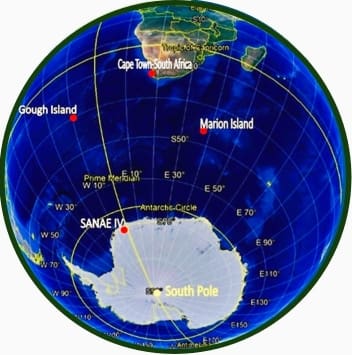
Every August, South Africa celebrates the power of science to improve lives, inspire curiosity, and shape a better future. As part of National Science Month, the South African National Antarctic Programme (SANAP) invites you on a journey to one of the most remote and remarkable places on Earth—the Antarctic, the sub-Antarctic islands, and the Southern Ocean. Managed by the Department of Science, Technology and Innovation (DSTI) and implemented through the National Research Foundation (NRF), SANAP supports world-class scientific research that helps us understand our changing planet. From monitoring penguins and albatrosses to studying glaciers, sea ice, space weather, ocean circulation, geology, biodiversity, and even Antarctica’s rich human history, SANAP researchers are tackling some of the world’s most important scientific questions.
Although Antarctica lies thousands of kilometres from South Africa, what happens there has global consequences. The Southern Ocean regulates Earth’s climate, Antarctic ice sheets influence sea levels worldwide, and the region’s unique ecosystems provide valuable insights into how plants, animals, and microorganisms respond to environmental change. The discoveries made through SANAP research contribute not only to international scientific knowledge but also to South Africa’s ability to prepare for environmental and climate-related challenges.
Science is about more than laboratories and instruments—it is about curiosity, exploration, and collaboration. Every expedition to Antarctica or Marion and Gough Islands brings together scientists, engineers, technicians, logisticians, students, and support staff who work together under some of the harshest conditions on Earth. Their dedication allows South Africa to remain a respected leader in Antarctic research and an active contributor to global scientific partnerships.
Throughout National Science Month, this special SANAP blog series will introduce readers to the diverse research projects taking place across the Antarctic, sub-Antarctic, and Southern Ocean. You’ll discover how researchers study wildlife, oceans, ice, geology, climate, technology, and even cultural heritage to better understand our planet and safeguard its future. Whether you’re a learner considering a career in science, a teacher looking for inspiring stories, or simply someone curious about the frozen south, we hope this series will show that science belongs to everyone. You don’t need to be a scientist to appreciate discovery—you only need curiosity.
Did You Know? South Africa has maintained a continuous scientific presence in Antarctica since 1960, making it one of the original consultative nations of the Antarctic Treaty and a recognised leader in polar research.
Why This Matters. Research conducted through SANAP helps improve our understanding of climate change, biodiversity, ocean health, and Earth’s environmental systems. The knowledge gained supports informed decision-making, contributes to international scientific collaboration, and helps prepare future generations of South African scientists.
Call to Action. Follow the SANAP National Science Month series throughout August as we explore the fascinating research taking place in Antarctica, the sub-Antarctic islands, and the Southern Ocean. Discover how South African scientists are expanding the frontiers of knowledge and helping to protect one of Earth’s last great wildernesses.
Join us throughout National Science Month as we celebrate South African science at the edge of the world.
by Ria Olivier | Apr 21, 2026 | Antarctica, Environment, Gough Island, International Days, Marion Island, Prince Edward Island, Research, Science, Southern Ocean, sub-Antarctic
Earth Day is commemorated annually on 22 April and is one of the largest global environmental movements. In 2026, the theme “Our Power, Our Planet” highlights the importance of civic action, community engagement, and collective responsibility in addressing environmental challenges. For the South African National Antarctic Programme (SANAP), Earth Day is not only a moment of reflection, but also a celebration of ongoing scientific research, conservation efforts, and the people who make this work possible.
Why Earth Day Matters! SANAP’s vision to understand, develop, and conserve the Antarctic, sub-Antarctic, and Southern Ocean environments aligns directly with the principles of Earth Day. These remote regions are critical to the health of our planet. They regulate global climate systems, support unique biodiversity, and provide essential insights into environmental change. Research is vital in a world where environmental risks continue to dominate global concerns and research conducted through SANAP contributes to:
- Understanding climate change and its global impacts
- Protecting fragile sub-Antarctic ecosystems
- Monitoring marine and terrestrial biodiversity
- Supporting sustainable environmental stewardship
SANAP scientists and researchers work in some of the most extreme environments on Earth, studying ocean systems, atmospheric processes, wildlife ecology, and environmental change. Their work contributes to international scientific knowledge and informs global responses to climate challenges. Equally important are the support personnel who ensures that research can be conducted safely and effectively. Earth Day is an opportunity to recognise the collective effort required to sustain Antarctic science.
Earth Day reminds us that protecting the environment is a shared responsibility. While SANAP operates in remote regions, the insights gained have global relevance. Healthy ecosystems—from the Antarctic to Southern Ocean currents—play a crucial role in climate regulation, biodiversity, and human wellbeing. The 2026 focus on civic mobilisation and community action reinforces the idea that meaningful change comes from both scientific understanding and public engagement. Within the SANAP community, Earth Day is a time to:
- Reflect on the importance of Antarctic and ocean research
- Celebrate the contributions of scientists and support teams
- Promote awareness of environmental conservation
- Inspire continued commitment to protecting our planet
By advancing knowledge and supporting conservation, SANAP contributes to a global effort to safeguard Earth’s future.
by Ria Olivier | Mar 22, 2026 | International Days, Oceanography, Research, SANAP, Science, Southern Ocean
Each year on World Water Day (22 March), the global community reflects on the importance of freshwater and the urgent need to protect it. In 2026, the theme “Water and Gender: Where water flows, equality grows” reminds us that access to clean water is not only an environmental priority, but also a social one. Around the world, water scarcity, pollution and climate change continue to threaten communities and ecosystems alike. Through initiatives led by UNESCO—including the Intergovernmental Hydrological Programme (IHP) and the World Water Assessment Programme (WWAP)—scientific research is being translated into real-world solutions that help countries better manage and safeguard this vital resource.
UCT ice-tethered buoy deployments and retrieval.
For the South African National Antarctic Programme (SANAP), the Southern Ocean plays a critical role in understanding Earth’s water systems. This vast and dynamic ocean regulates global climate, drives ocean circulation and influences rainfall patterns far beyond the polar regions—including across southern Africa. SANAP-supported research in this remote environment helps scientists track how changing temperatures, melting ice and shifting currents affect the global water cycle. By studying these processes, researchers gain insights into future water availability, the stability of marine ecosystems and the long-term impacts of climate change on freshwater resources.
Protecting water for future generations depends on knowledge, collaboration and sustained scientific effort. Research conducted in the Southern Ocean not only deepens our understanding of planetary systems, but also supports informed decision-making that benefits societies worldwide. As we mark World Water Day 2026, SANAP’s work highlights a powerful truth: even the most distant oceans are connected to the water we rely on every day. By investing in science and fostering inclusive approaches to water management, we can help ensure that where water flows, opportunity and equality can grow.
by Ria Olivier | Feb 12, 2026 | Antarctica, Research, SANAE, SANAP, Science
The End: From Field Data to Global Impact
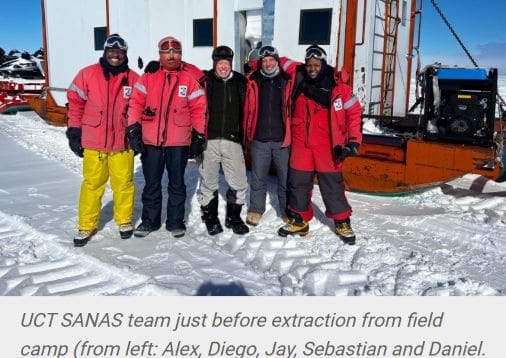
By early February 2026, the SANAP field campaign entered its final phase, completing measurements and preparing for extraction ahead of worsening weather.
Temporary GNSS stations along the calving front were recovered, allowing detailed mapping of ice velocities across the ice shelf. Advanced radar surveys also measured ice thickness and internal crystal orientation, improving models of ice flow and fracture behaviour.
Seismic equipment was retrieved after weeks of recording, capturing data on both controlled signals and natural fracture events. These datasets will support detailed imaging of ice-shelf structure and zones of weakness.
As severe weather approached, the team secured equipment, dismantled installations, and restored the camp site, marking the successful completion of a productive campaign.
The project’s findings will improve predictions of Antarctic ice loss and future sea-level rise, with implications for global climate systems, coastal communities, and ecosystems. As fieldwork ends, long-term data analysis begins.
Full Article
by Ria Olivier | Jan 30, 2026 | Announcement, Jobs, Marion Island, News, Overwintering Team, Research, SANAP, Science, Southern Ocean, Stations, sub-Antarctic, Team member
Applications are still open for the following positions on the sub-Antarctic, Marion Island for the overwintering period (April 2026 to May 2027)
Communications Engineer Diesel Mechanic Electrical Engineer Medical Orderly
Closing Date: 09 February 2026
The incumbent will execute duties at a Sub/Antarctic Base and adhere to the health, safety and environmental requirements. The successful applicant will spend a full year (April 2026 to May 2027) at Marion Island. There is no option to return to South Africa before May 2027. The ability to work and live with small groups of people is thus essential. Although the base is well-equipped with e-mail, fax and satellite telephone facilities, the applicant must be self-sufficient and self-motivated.

 How Seabirds Reveal a Changing Climate. The skies above the Southern Ocean are home to some of the world’s most remarkable travellers. Wandering albatrosses soar effortlessly across thousands of kilometres, while penguins, petrels and skuas brave some of the harshest weather conditions on Earth. These seabirds are not only iconic symbols of Antarctica and the sub-Antarctic—they are also important indicators of the health of our oceans. One of the research projects supported by the South African National Antarctic Programme (SANAP), “Interactive Effects of Multiple Stressors and Environmental Change on Seabird Breeding Performance,” investigates how environmental changes are affecting seabird populations. Scientists study breeding success, chick growth, feeding behaviour and survival to better understand how birds respond to changing conditions in the Southern Ocean.
 Call to Action –Every seabird has a story to tell about the health of our oceans. Follow the SANAP National Science Month series as we continue exploring the incredible science taking place across Antarctica, the sub-Antarctic islands and the Southern Ocean.
 Join us throughout National Science Month as we celebrate South African science at the edge of the world.


 Why Earth Day Matters! SANAP’s vision to understand, develop, and conserve the Antarctic, sub-Antarctic, and Southern Ocean environments aligns directly with the principles of Earth Day. These remote regions are critical to the health of our planet. They regulate global climate systems, support unique biodiversity, and provide essential insights into environmental change. Research is vital in a world where environmental risks continue to dominate global concerns and research conducted through SANAP contributes to:
 SANAP scientists and researchers work in some of the most extreme environments on Earth, studying ocean systems, atmospheric processes, wildlife ecology, and environmental change. Their work contributes to international scientific knowledge and informs global responses to climate challenges. Equally important are the support personnel who ensures that research can be conducted safely and effectively. Earth Day is an opportunity to recognise the collective effort required to sustain Antarctic science.
 Earth Day reminds us that protecting the environment is a shared responsibility. While SANAP operates in remote regions, the insights gained have global relevance. Healthy ecosystems—from the Antarctic to Southern Ocean currents—play a crucial role in climate regulation, biodiversity, and human wellbeing. The 2026 focus on civic mobilisation and community action reinforces the idea that meaningful change comes from both scientific understanding and public engagement. Within the SANAP community, Earth Day is a time to: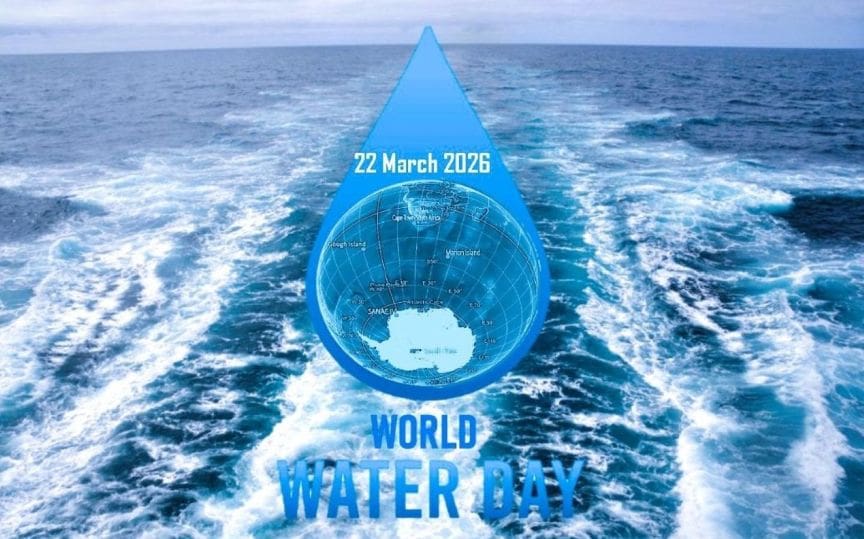
 Each year on World Water Day (22 March), the global community reflects on the importance of freshwater and the urgent need to protect it. In 2026, the theme “Water and Gender: Where water flows, equality grows” reminds us that access to clean water is not only an environmental priority, but also a social one. Around the world, water scarcity, pollution and climate change continue to threaten communities and ecosystems alike. Through initiatives led by UNESCO—including the Intergovernmental Hydrological Programme (IHP) and the World Water Assessment Programme (WWAP)—scientific research is being translated into real-world solutions that help countries better manage and safeguard this vital resource.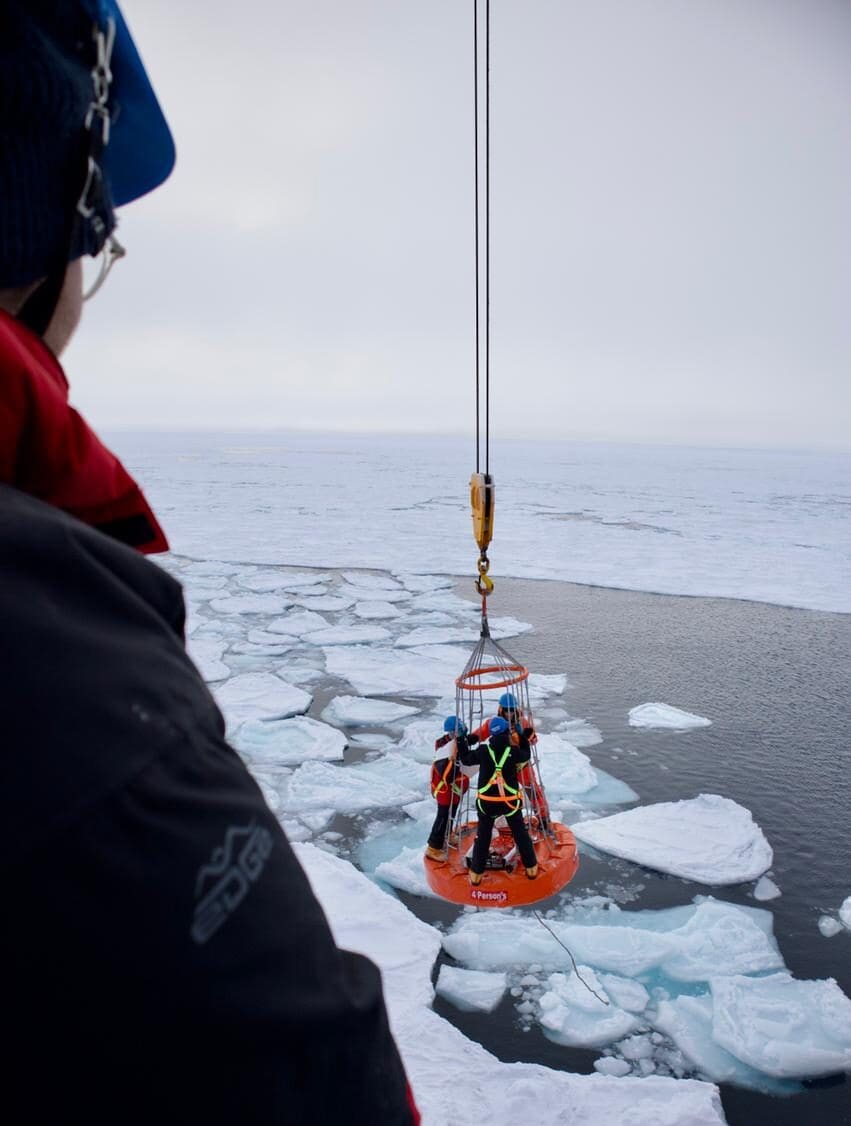
 By early February 2026, the SANAP field campaign entered its final phase, completing measurements and preparing for extraction ahead of worsening weather.
 Applications are still open for the following positions on the sub-Antarctic, Marion Island for the overwintering period (April 2026 to May 2027)