by Fishgate@sanap | Aug 23, 2018 | Announcement, News
The CLIVAR/CliC/SCAR Southern Ocean Region Panel (SORP) seeks nominations for four new members (self-nominations are welcome).
The panel is in particular need of nominees possessing expertise in:
- global climate/Earth-system modelling;
- open ocean measurements;
- sea ice remote sensing;
- sea-going chemical oceanography;
The inclusion of representation from across the nations and regions that participate in Southern Ocean climate science is a priority. At least one new member from Africa and from Asia are needed for this round of nominations.
SORP’s terms of reference are given here: http://www.clivar.org/clivar-panels/southern
Nominations (including self-nominations) are through this link: http://www.clivar.org/news/open-call-new-clivar-members-1
The panel has in-person meetings every 18 months or so, the next one is due in 2020. SORP has video conferences about every 3-4 months, and members do a lot of their work by email.
Current activities include contributing to OceanObs19 papers, as well as regular reporting to CLIVAR, CliC and SCAR on ocean and climate research for the Southern Ocean.
The process of nominations is that they are collated by CLIVAR and then passed to the co-chairs to short-list. CLIVAR, CliC, and SCAR then make the final decisions on the members, taking into account balance issues such as geographic location, gender, and range of disciplinary expertise.
For more information about panel activities and the expectations for panel members, please contact one of the panel co-chairs, Inga Smith (inga.smith@otago.ac.nz) and Riccardo Farneti (rfarneti@ictp.it).
For more information, please visit the SORP website.
Source: [scar-news] Call for nominations to Southern Ocean Region Panel, 23 August 2018.
by Fishgate@sanap | Aug 21, 2018 | Announcement, Antarctica, Gough Island, Legacy, Marion Island, Research, SANAP, Science, SEAmester, Southern Ocean, sub-Antarctic
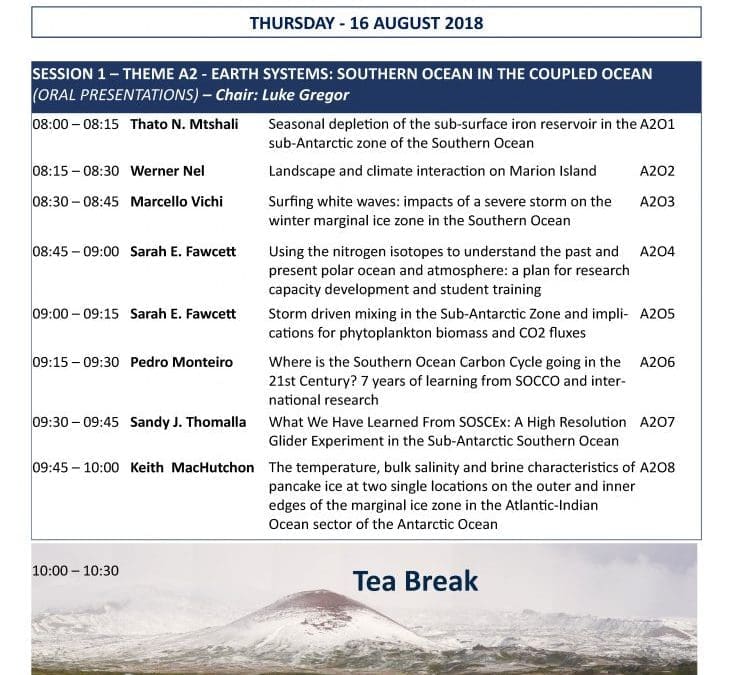
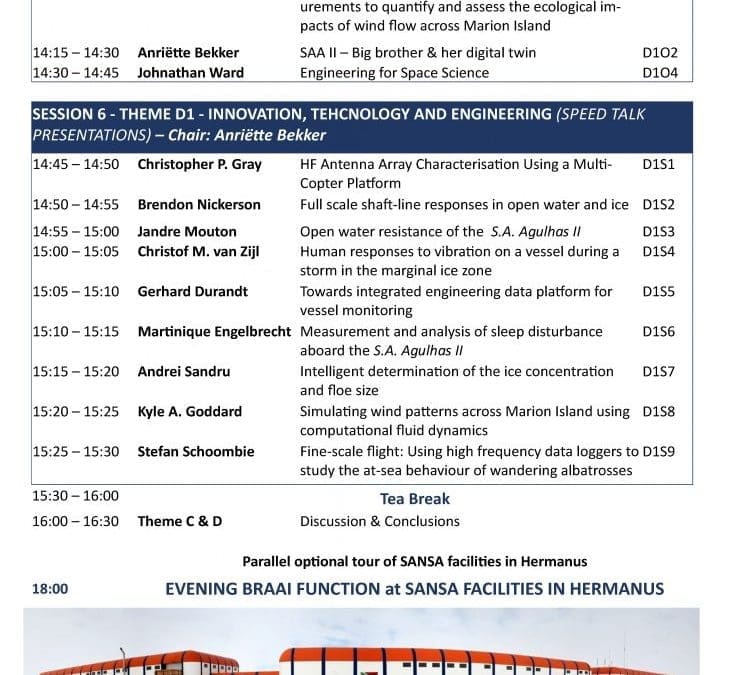
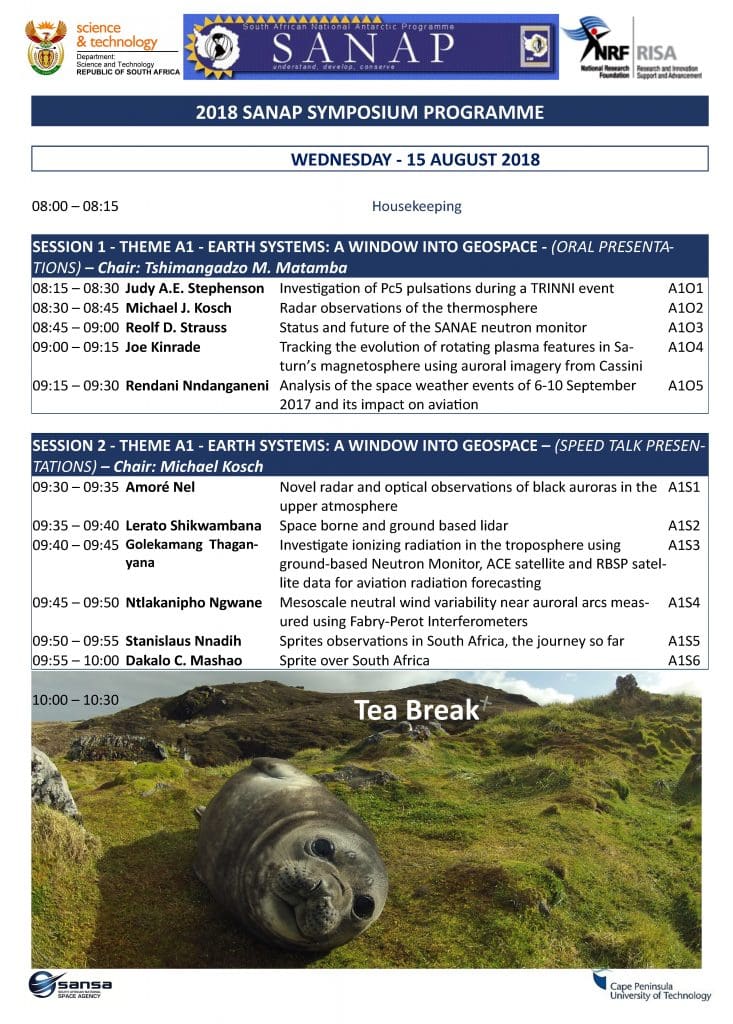
FIFTH SANAP SYMPOSIUM : OPENING REMARKS (13 August 2018)
Gansen Pillay PhD
DCEO: Research and Innovation Support and Advancement (RISA)
Distinguished Participants
It is a pleasure and privilege to provide some Opening Remarks on behalf of the National Research Foundation (NRF) of SA on the occasion of the 5th SANAP Symposium jointly hosted by CPUT and SANSA. This afternoon, I would like to focus on four dimensions.
Firstly, I would like to focus on this Symposium and its importance. Secondly, I would like to explore the strategic positioning of SANAP and its related research areas in the context of a global research agenda. Thirdly, we will share with you the latest information relating to the funding of SANAP by the NRF. And finally, I would like to focus on training the next generation of researchers, viz., our postgraduate students.
Our sincere congratulations to the Conference Organisers for conceptualising the content and themes for this Symposium. Hermanus as a venue could not have been more ideal venue given the themes of this meeting. This Symposium signifies a meeting of the oceans and space, each looking at the other through different lenses, yet focusing on the common good of responsiveness, relevance and sustainability.
We take the opportunity of congratulating Prof Isabelle Ansorge and her joint authors for the timely article in the South African Journal of Science (SAJS) titled “SEAmester – SA’s first class afloat”. It intersects the Global Change Grand Challenge and draws on Operation Phakisa. As you may be aware, one of NRF’s National Research Facilities (NFs), viz., the SA institute for Aquatic Biodiversity (SAIAB) is a partner in this initiative. This goes a long way towards accelerating NRF’s objective of not just providing NFs but National Research Infrastructure Platforms (NRIPs).
We would also like to commend SANAP on its new SANAP portal and website (www.sanap.ac.za), the Antarctic Legacy Platform (http://blogs.sun.ac.za/antarcticlegacy/). It is current and informative and its presence on Facebook and other social media platforms is very encouraging.
The public lecture on ‘South Africa’s legacy within the Antarctic region’ being presented this evening is timely and critical to the public understanding of science.
This symposium provides delegates the opportunity to present their research within the Southern Ocean, Antarctic and sub-Antarctic regions.
Interwoven into the fabric of the Symposium is a rich tapestry of complementary themes on (i) A window into geospace; (ii) Southern Oceans in the coupled ocean; (iii) Carbon-climate links and geotraces; (iv) Ecosystem functioning and the response to global change; (v) Biodiscovery and biotechnology; (vi) Earth and living systems; (vii) Paleosciences and human history; and (viii) Innovation, technology and engineering. A research canvas of this nature offers enormous possibilities.
Given the aforementioned, I would like to move to the second dimension of my Opening Remarks, viz., the strategic positioning of SANAP research in the global research agenda. One of the hallmarks of any successful organization or company like Apple is the ability to respond to change. Those who adapt to change, survive. Those who do not, perish. A systems thinking approach is essential.
When one looks at the various themes of this Symposium its main focus is on interactions and the ability to respond to change. So what exactly happens in the Southern Oceans and Space? Is there a constant quest for dynamic equilibrium and sustainability? Is there a symphony at play that is being orchestrated and conducted by global climate change? What are SA’s geographic and competitive advantages? In responding to how we position SANAP, we have to accept that we cannot be everything to everyone. So what is it that we do that is unique or what is it that we do exceptionally well? More importantly, what should we stop doing?
In positioning our research there are some aspects that we must factor. These include, inter alia, how do we plan for impact? How do we manage impact? What is the potential for translational research? What are the alignments to national priorities, the draft White Paper on Science, Technology and Innovation (STI), the NDP, Agenda 2063, the Sustainable Development Goals (SDGs), the World in 2050, the Belmont Forum, Future Earth, etc. Would Artificial Intelligence (AI) and Robotics come into play? What about quantum computing? Machine learning? How would you be dealing with Big Data? Do you have the capacity to deal with Big Data? I leave you with these questions as you contemplate the future of your research during this Symposium.
Thirdly, over the next three years, the NRF has made the following investments in SANAP:
- 29 grant holders:
- 23 rated: 3A-rated, 6 B-rated, 2 P-rated, importantly 4 Y-rated
- 16 female; 13 male
- Currently, only 4 grant holders are Black which is an are that requires attention and intervention
- There is growing evidence of young talent, especially black and female, moving up through the ranks. Many of SANAP’s early career researchers were students supported though this programme. But it is not enough. Much more needs to be done to bring in smart young students from previously disadvantaged backgrounds and institutions.
Finally, I would like to focus on the numerous postgraduate students who are here today. One of the most important aspects at the beginning of your research is its conceptualisation. Read widely, and know the entire backdrop/canvas of your research. Identify the gaps in knowledge and develop smart research questions/hypotheses. Use the latest methodologies in your field to explore these research questions. The information/data that you produce must be engaged with against the backdrop of existing knowledge. What is the new knowledge that you have produced? Production of new knowledge is the hallmark of a PhD degree and is immortalised through your scholarly publications or translational research. Remember, it is often easier to choose a wife, husband or life partner than to choose a supervisor. So choose smartly and wisely. Good luck with your studies!
Despite the constrained fiscal environment, the NRF would continue to fund excellent, transformative research that enables SA to meaningfully contribute to the SDGs.
In conclusion, I would like to wish you every success in your research and thank you in advance for your contributions to society.
May you have a whale of a time in Hermanus!!
END
Posted by: Ria Olivier (Antarctic Legacy of South Africa), 21 August 2018
by Fishgate@sanap | Aug 20, 2018 | Gough Island, News, SA Agulhas II, Southern Ocean, Team Photo
Team training for the 64th Gough Island Overwintering Team commenced on the 13th of August and today the Antarctic Legacy of South Africa (ALSA) joined the training.
During this session the team received historical background (in the form of a timeline) on South Africa’s involvement in the Antarctic (SANAE base), sub-Antarctic (Marion base), but most importantly Gough Island – where this team will depart to in 3 weeks’ time.
This team will now become part of South Africa’s Antarctic Legacy and we wish them all the best for their journey on the island.
Click here to download the Gough64 team training schedule.
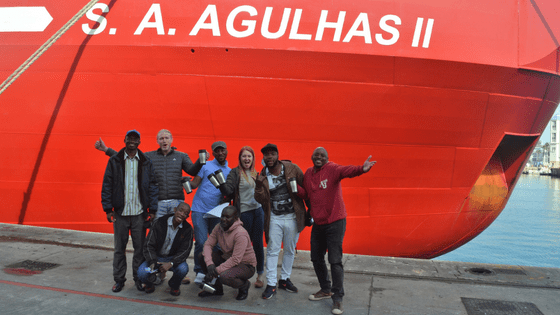
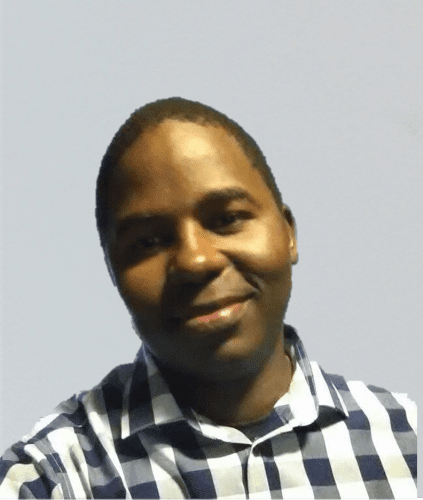
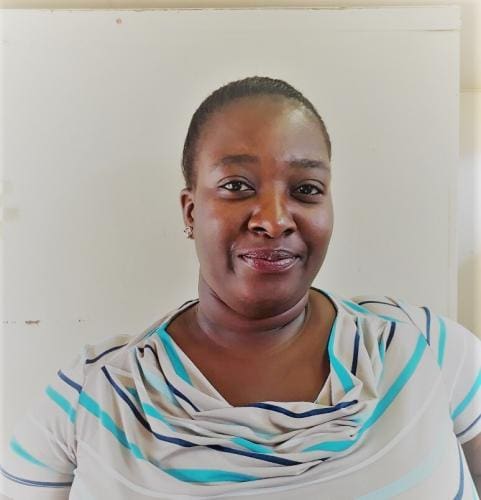
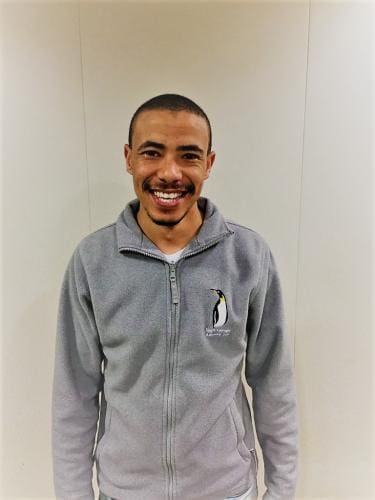
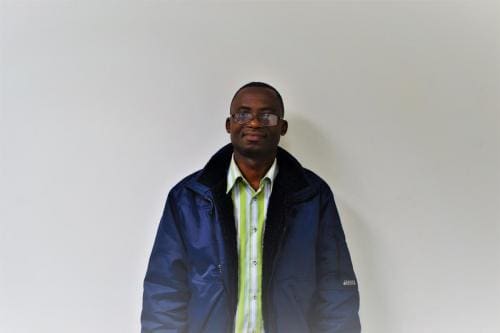
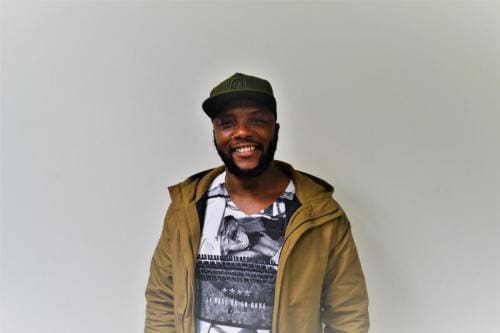
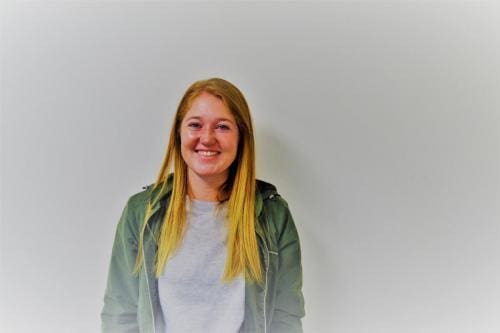
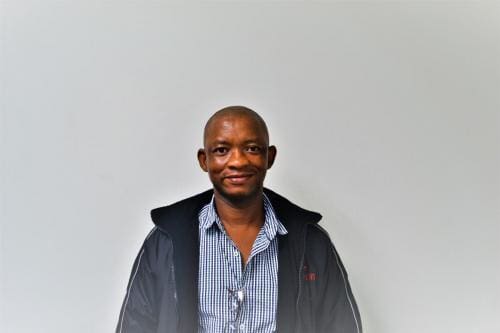
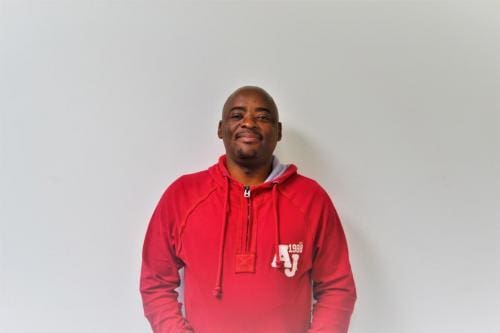
Meet the 64th Gough Island Overwintering team:
Author: Anché Louw (Antarctic Legacy of South Africa), 20 August 2018