by Ria Olivier | Sep 4, 2026 | Announcement, Antarctica, Jobs, Overwintering Team
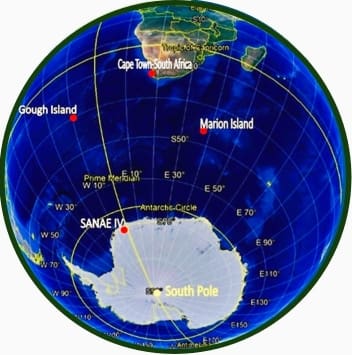
The Department of Forestry, Fisheries and the Environment (DFFE) is inviting suitably qualified candidates to apply for a range of positions at SANAE IV, South Africa’s Antarctic research station. Successful candidates will become part of the overwintering team living and working at SANAE IV in Antarctica for approximately 14 months, from December 2026 to February 2028 as part of the South African National Antarctic Programme (SANAP)
 Positions available: Applications are invited for the following positions: (Download advertisements click on position)
These are extraordinary employment opportunities, but working at SANAE IV requires resilience, adaptability and the ability to live and work effectively as part of a small, isolated team. Successful applicants will spend the full deployment period at SANAE IV, with no option to return to South Africa before February 2028. Team members must be physically fit, mentally resilient, self-sufficient and self-motivated. They must be prepared to work in extreme Antarctic conditions and may be required to work long hours or assist with duties outside their normal professional functions when operational circumstances require it. Short-listed candidates will undergo screening and security vetting. Appointment is also subject to a rigorous medical examination and psychometric assessment, arranged at no cost to applicants.
Applications must be submitted online through the DFFE e-Recruitment system.
Closing date: 14 September 2026 at 16:00
No late applications will be accepted. Applicants are strongly encouraged to read the full advertisement for the relevant position before submitting an application and to ensure that they meet all qualification, experience and other requirements. The National Department of Forestry, Fisheries and the Environment is an equal opportunity, affirmative action employer.
Enquiries:
Mr Willem Boshoff (Tel: 021 493 4293) and Mr Rodgerson Hlophe (021 493 7379)
Please note: SANAP shares these opportunities for information. Recruitment and appointments are administered by the Department of Forestry, Fisheries and the Environment.
by Ria Olivier | Apr 21, 2026 | Antarctica, Environment, Gough Island, International Days, Marion Island, Prince Edward Island, Research, Science, Southern Ocean, sub-Antarctic
Earth Day is commemorated annually on 22 April and is one of the largest global environmental movements. In 2026, the theme “Our Power, Our Planet” highlights the importance of civic action, community engagement, and collective responsibility in addressing environmental challenges. For the South African National Antarctic Programme (SANAP), Earth Day is not only a moment of reflection, but also a celebration of ongoing scientific research, conservation efforts, and the people who make this work possible.
Why Earth Day Matters! SANAP’s vision to understand, develop, and conserve the Antarctic, sub-Antarctic, and Southern Ocean environments aligns directly with the principles of Earth Day. These remote regions are critical to the health of our planet. They regulate global climate systems, support unique biodiversity, and provide essential insights into environmental change. Research is vital in a world where environmental risks continue to dominate global concerns and research conducted through SANAP contributes to:
- Understanding climate change and its global impacts
- Protecting fragile sub-Antarctic ecosystems
- Monitoring marine and terrestrial biodiversity
- Supporting sustainable environmental stewardship
SANAP scientists and researchers work in some of the most extreme environments on Earth, studying ocean systems, atmospheric processes, wildlife ecology, and environmental change. Their work contributes to international scientific knowledge and informs global responses to climate challenges. Equally important are the support personnel who ensures that research can be conducted safely and effectively. Earth Day is an opportunity to recognise the collective effort required to sustain Antarctic science.
Earth Day reminds us that protecting the environment is a shared responsibility. While SANAP operates in remote regions, the insights gained have global relevance. Healthy ecosystems—from the Antarctic to Southern Ocean currents—play a crucial role in climate regulation, biodiversity, and human wellbeing. The 2026 focus on civic mobilisation and community action reinforces the idea that meaningful change comes from both scientific understanding and public engagement. Within the SANAP community, Earth Day is a time to:
- Reflect on the importance of Antarctic and ocean research
- Celebrate the contributions of scientists and support teams
- Promote awareness of environmental conservation
- Inspire continued commitment to protecting our planet
By advancing knowledge and supporting conservation, SANAP contributes to a global effort to safeguard Earth’s future.
by Ria Olivier | Mar 23, 2026 | Antarctica, Commemorative Days, Gough Island, Marion Island, Meteorology
Each year on 23 March, World Meteorological Day marks the establishment of the World Meteorological Organization in 1950 and celebrates the vital role of meteorology in safeguarding lives and livelihoods. For South Africa, this global effort is strengthened by the work of dedicated meteorologists stationed in some of the most remote environments on Earth—SANAE IV, Marion Island and Gough Island. From these isolated bases, scientists continuously monitor atmospheric conditions, contributing critical data that feeds into both national forecasting systems and global climate models.
At SANAE IV in Antarctica, meteorologists record weather patterns that influence global circulation systems. Meanwhile, at Marion Island and Gough Island, teams track rapidly changing weather in the Southern Ocean and South Atlantic—regions known for their powerful storms and complex climate interactions. Their observations help improve the accuracy of forecasts, support maritime and aviation safety, and deepen our understanding of climate variability. This work ensures that South Africans remain informed and prepared, even when the weather systems affecting them originate thousands of kilometres away.
Beyond daily forecasts, the long-term datasets collected at these stations are essential for detecting climate trends and understanding future risks. By maintaining a continuous presence in these key locations, SANAP contributes to a global network of meteorological observation that underpins climate science and resilience planning. On World Meteorological Day 2026, we recognise the commitment of these teams who, far from home, play a crucial role in keeping South Africa—and the world—connected to the ever-changing atmosphere.
by Ria Olivier | Mar 3, 2026 | Antarctica, Gough Island, International Days, Invasion Biology, Mammology, Marion Island, Ornithology, Prince Edward Island, Research
Every year on 3 March, the world celebrates World Wildlife Day, recognising the extraordinary diversity of life and the need to conserve it. For South Africa, this commitment extends far beyond the mainland — to the remote sub-Antarctic and Antarctic regions where SANAP conducts research and conservation work and plays a vital role in understanding and protecting some of the world’s most unique ecosystems.
Macaroni Penguin on Marion Island getting ready for World Wildlife Day – Otto Whitehead
Guardians of the Sub-Antarctic: The Prince Edward Islands — comprising Marion Island and Prince Edward Island — are globally significant biodiversity hotspots, they host thriving populations of seabirds and marine mammals, including King, Macaroni, Gentoo, and Rockhopper penguins, several Albatross and Petrel species, Southern Elephant seals and Antarctic Fur seals and Killer whales. SANAP-supported researchers monitor wildlife populations to detect changes linked to climate variability, ocean conditions, and human impacts. Long-term datasets collected over decades allow scientists to track breeding success, foraging behaviour, migration patterns, and survival rates.
These islands are also a Special Nature Reserve — South Africa’s highest level of environmental protection — ensuring strict conservation management. Ongoing efforts include the monitoring ecosystem health, studying predator-prey relationships, investigate the effects of climate change on sub-Antarctic food webs and managing invasive species. The eradication of invasive species and strict biosecurity controls are among conservation projects that protect these fragile ecosystems from human-introduced threats.
Macaroni Penguin on Marion Island enjoying World Wildlife Day – Otto Whitehead
Through science, conservation management, and responsible environmental practices, SANAP continues to protect these extraordinary environments for future generations. On this World Wildlife Day, we reaffirm our commitment to understanding, conserving, and championing life at the edge of the Earth. We celebrate the resilience of life in extreme environments, the dedication of researchers working in extreme conditions and South Africa’s role in polar science and environmental stewardship.
- Video Credit: Otto Whitehead
- Feature background image credit: Ben van der Walt
by Ria Olivier | Feb 26, 2026 | Announcement, Antarctica, Southern Ocean, sub-Antarctic
26 February 2026
Save the date: Workshops to update the Marine Research Plan and the Antarctic and Southern Ocean Research Plan
Dear Members of the Marine and Antarctic Research Community
The Department of Science, Technology and Innovation, together with the National Research Foundation is scheduling two independent Research Plan workshops at the end of March 2026 to bring together representatives of the research community with the objective of updating the Marine and Antarctic research plans. The Antarctic and Southern Ocean Research Plan workshop will take place on 24-25 March 2026, and the Marine Research Plan workshop will take place on 26-27 March 2026. It is acknowledged that a small number of researchers are active in both research areas, and the option to participate in both workshops is made available as the inputs into each plan will be distinct.
Together these research plans implement the 2016 Marine and Antarctic Strategy and are updated every 10 years. The new research plans will cover 2026-2036. Input documents for the workshop will be as follows:
The workshops will take the format of framing presentations from the DSTI and the NRF, breakaway groups for theme-specific discussions and feedback sessions, and group discussions for cross-cutting topics. We anticipate one full day and one half day per workshop. All sessions will be recorded and shared with a specialised writer as identified by the DSTI, who will produce the final version of each research plan. An agenda will follow in due course.
The Department does not anticipate significant changes to the themes as expressed in the 2014 2024 research plans. There is, however, a strong expectation that the new research plans pivot slightly to address the imperatives as detailed in the 2022-2032 Decadal Plan.
The workshops will be hosted in the Western Cape (venue to be determined). The National Research Foundation will assist with travel and accommodation for representatives from outside Cape Town. We have capped the participation numbers at 40 people per workshop due to financial constraints but encourage representatives from all institutions and all thematic areas to contribute both in preparation for the event, and during the event. We are hoping to have an option for virtual participation should the demand exceed to space/budget available. The colleagues that are managing the logistics elements at the NRF will suggest flight times to allow for group shuttles between the venue and the airport. This significantly cuts costs. Colleagues wishing to travel outside these timeslots will need to arrange their own transportation to the venue and back to the airport.
Physical participation in this event will be prioritised for established researchers. Institutional and thematic representation will inform final travel approvals should the numbers exceed the stipulated limits. We ask that you complete the registration forms below so that we can keep track of participants, both those requiring logistic support and those participating locally.
The link to participate virtually will be shared on request. All queries should be sent directly to me at TJ.Klarenbeek@risa.nrf.ac.za .
We look forward to hearing from you and seeing you at the end of March 2026.
Tracy Klarenbeek
NRF: Thematic Research Support and Advancement
by Ria Olivier | Feb 26, 2026 | Antarctica, SA Agulhas II, SANAE, SANAP, Take-Over Operations
From December 2025 to February 2026, the South African National Antarctic Programme (SANAP) embarks on its annual takeover voyage to relieve and resupply SANAE IV in Queen Maud Land, Antarctica. This critical mission ensures a seamless transition between overwintering and incoming teams, sustaining South Africa’s year-round scientific presence in Antarctica. More than a logistical operation, the voyage represents a coordinated national effort — uniting government officials, scientists, aviation specialists, maritime crew, engineers, and support teams — all working together in one of the most demanding environments on Earth.
At the core of the transition are the Department of Forestry, Fisheries and the Environment (DFFE) takeover personnel, who oversee inspections, infrastructure assessments, compliance requirements, and environmental protocols at SANAE IV. Their work ensures that power generation, life-support systems, communications, and safety procedures remain fully operational for the year ahead. Supporting the operation from sea to ice is the skilled helicopter team from Ultimate Heli, who transport people and cargo between the vessel and the base with precision in narrow Antarctic weather windows. (Photo: DFFE takeover personnel with Shiraan Watson -DCO)
The voyage south is safely guided by the Captain Roland Clutties and crew of the S.A. Agulhas II, whose expertise navigating the Southern Ocean and pack ice ensures the secure transport of passengers, fuel, equipment, and supplies. Onboard, the chefs and stewards keep teams energised with warm meals throughout the journey. Meanwhile, bulldozer operators and mechanics prepare for ice-shelf operations and CAT train traverses that will move bulk cargo inland to the station once the ship reaches the ice edge. (Photo, Captain with part of off duty crew and UJ reserach team)
L-R: Ultimate Heli Team, Bulldozers and drivers’ with SANAE Chefs, S.A. Agulhas II Chefs on board
Science continues throughout the voyage. Research teams conduct geology, oceanographic, biological, and environmental studies enroute and on Antarctica, collecting critical data on the continent and the Southern Ocean and their role in global climate systems. Specialists from the South African Weather Service gather atmospheric and ocean measurements that strengthen forecasting models and support operational safety for maritime and aviation activities. Together, these partnerships reflect the collaborative spirit that makes South Africa’s Antarctic programme possible — ensuring SANAE IV remains operational, sustainable, and ready for another year of discovery.


 Why Earth Day Matters! SANAP’s vision to understand, develop, and conserve the Antarctic, sub-Antarctic, and Southern Ocean environments aligns directly with the principles of Earth Day. These remote regions are critical to the health of our planet. They regulate global climate systems, support unique biodiversity, and provide essential insights into environmental change. Research is vital in a world where environmental risks continue to dominate global concerns and research conducted through SANAP contributes to:
 SANAP scientists and researchers work in some of the most extreme environments on Earth, studying ocean systems, atmospheric processes, wildlife ecology, and environmental change. Their work contributes to international scientific knowledge and informs global responses to climate challenges. Equally important are the support personnel who ensures that research can be conducted safely and effectively. Earth Day is an opportunity to recognise the collective effort required to sustain Antarctic science.
 Earth Day reminds us that protecting the environment is a shared responsibility. While SANAP operates in remote regions, the insights gained have global relevance. Healthy ecosystems—from the Antarctic to Southern Ocean currents—play a crucial role in climate regulation, biodiversity, and human wellbeing. The 2026 focus on civic mobilisation and community action reinforces the idea that meaningful change comes from both scientific understanding and public engagement. Within the SANAP community, Earth Day is a time to:


 26 February 2026

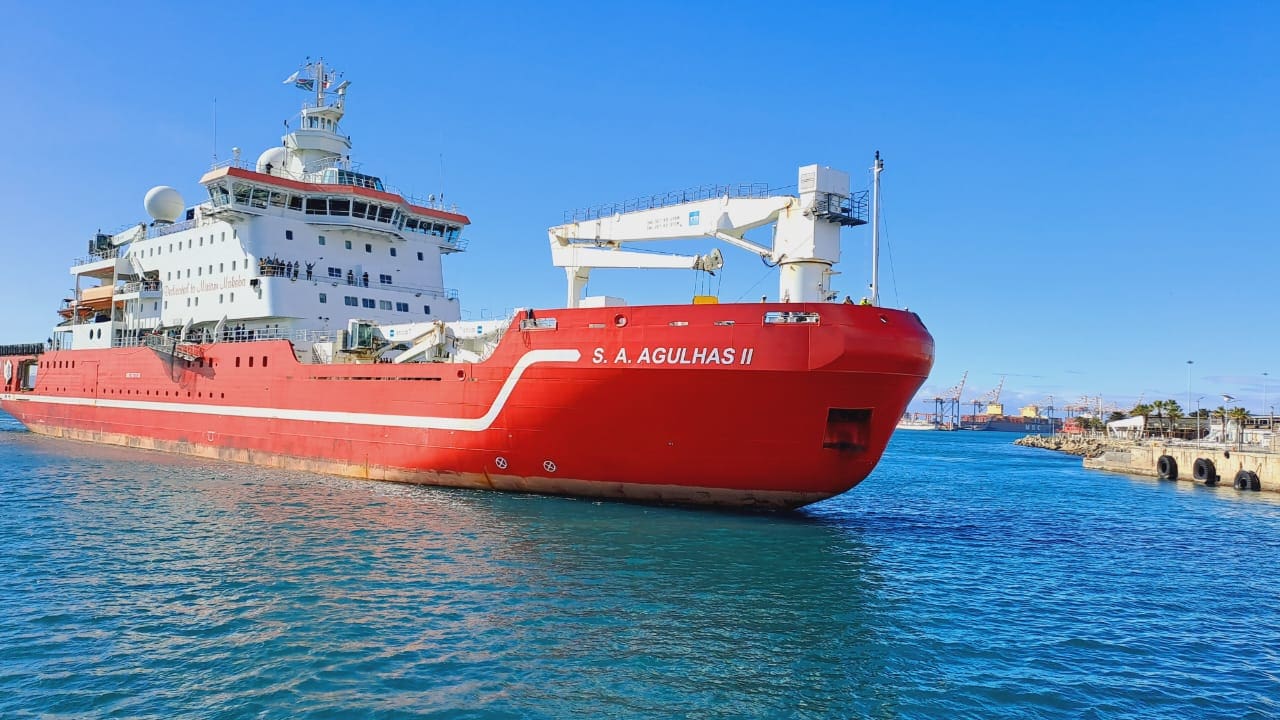 From December 2025 to February 2026, the South African National Antarctic Programme (SANAP) embarks on its annual takeover voyage to relieve and resupply SANAE IV in Queen Maud Land, Antarctica. This critical mission ensures a seamless transition between overwintering and incoming teams, sustaining South Africa’s year-round scientific presence in Antarctica. More than a logistical operation, the voyage represents a coordinated national effort — uniting government officials, scientists, aviation specialists, maritime crew, engineers, and support teams — all working together in one of the most demanding environments on Earth.
 At the core of the transition are the Department of Forestry, Fisheries and the Environment (DFFE) takeover personnel, who oversee inspections, infrastructure assessments, compliance requirements, and environmental protocols at SANAE IV. Their work ensures that power generation, life-support systems, communications, and safety procedures remain fully operational for the year ahead. Supporting the operation from sea to ice is the skilled helicopter team from Ultimate Heli, who transport people and cargo between the vessel and the base with precision in narrow Antarctic weather windows. (Photo: DFFE takeover personnel with Shiraan Watson -DCO)
 The voyage south is safely guided by the Captain Roland Clutties and crew of the S.A. Agulhas II, whose expertise navigating the Southern Ocean and pack ice ensures the secure transport of passengers, fuel, equipment, and supplies. Onboard, the chefs and stewards keep teams energised with warm meals throughout the journey. Meanwhile, bulldozer operators and mechanics prepare for ice-shelf operations and CAT train traverses that will move bulk cargo inland to the station once the ship reaches the ice edge. (Photo, Captain with part of off duty crew and UJ reserach team)