by Ria Olivier | Apr 21, 2026 | Antarctica, Environment, Gough Island, International Days, Marion Island, Prince Edward Island, Research, Science, Southern Ocean, sub-Antarctic
Earth Day is commemorated annually on 22 April and is one of the largest global environmental movements. In 2026, the theme “Our Power, Our Planet” highlights the importance of civic action, community engagement, and collective responsibility in addressing environmental challenges. For the South African National Antarctic Programme (SANAP), Earth Day is not only a moment of reflection, but also a celebration of ongoing scientific research, conservation efforts, and the people who make this work possible.
Why Earth Day Matters! SANAP’s vision to understand, develop, and conserve the Antarctic, sub-Antarctic, and Southern Ocean environments aligns directly with the principles of Earth Day. These remote regions are critical to the health of our planet. They regulate global climate systems, support unique biodiversity, and provide essential insights into environmental change. Research is vital in a world where environmental risks continue to dominate global concerns and research conducted through SANAP contributes to:
- Understanding climate change and its global impacts
- Protecting fragile sub-Antarctic ecosystems
- Monitoring marine and terrestrial biodiversity
- Supporting sustainable environmental stewardship
SANAP scientists and researchers work in some of the most extreme environments on Earth, studying ocean systems, atmospheric processes, wildlife ecology, and environmental change. Their work contributes to international scientific knowledge and informs global responses to climate challenges. Equally important are the support personnel who ensures that research can be conducted safely and effectively. Earth Day is an opportunity to recognise the collective effort required to sustain Antarctic science.
Earth Day reminds us that protecting the environment is a shared responsibility. While SANAP operates in remote regions, the insights gained have global relevance. Healthy ecosystems—from the Antarctic to Southern Ocean currents—play a crucial role in climate regulation, biodiversity, and human wellbeing. The 2026 focus on civic mobilisation and community action reinforces the idea that meaningful change comes from both scientific understanding and public engagement. Within the SANAP community, Earth Day is a time to:
- Reflect on the importance of Antarctic and ocean research
- Celebrate the contributions of scientists and support teams
- Promote awareness of environmental conservation
- Inspire continued commitment to protecting our planet
By advancing knowledge and supporting conservation, SANAP contributes to a global effort to safeguard Earth’s future.
by Ria Olivier | Mar 22, 2026 | International Days, Oceanography, Research, SANAP, Science, Southern Ocean
Each year on World Water Day (22 March), the global community reflects on the importance of freshwater and the urgent need to protect it. In 2026, the theme “Water and Gender: Where water flows, equality grows” reminds us that access to clean water is not only an environmental priority, but also a social one. Around the world, water scarcity, pollution and climate change continue to threaten communities and ecosystems alike. Through initiatives led by UNESCO—including the Intergovernmental Hydrological Programme (IHP) and the World Water Assessment Programme (WWAP)—scientific research is being translated into real-world solutions that help countries better manage and safeguard this vital resource.
UCT ice-tethered buoy deployments and retrieval.
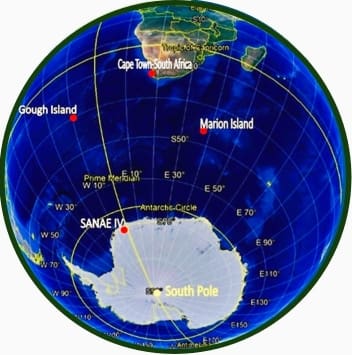
For the South African National Antarctic Programme (SANAP), the Southern Ocean plays a critical role in understanding Earth’s water systems. This vast and dynamic ocean regulates global climate, drives ocean circulation and influences rainfall patterns far beyond the polar regions—including across southern Africa. SANAP-supported research in this remote environment helps scientists track how changing temperatures, melting ice and shifting currents affect the global water cycle. By studying these processes, researchers gain insights into future water availability, the stability of marine ecosystems and the long-term impacts of climate change on freshwater resources.
Protecting water for future generations depends on knowledge, collaboration and sustained scientific effort. Research conducted in the Southern Ocean not only deepens our understanding of planetary systems, but also supports informed decision-making that benefits societies worldwide. As we mark World Water Day 2026, SANAP’s work highlights a powerful truth: even the most distant oceans are connected to the water we rely on every day. By investing in science and fostering inclusive approaches to water management, we can help ensure that where water flows, opportunity and equality can grow.
by Ria Olivier | Feb 26, 2026 | Announcement, Antarctica, Southern Ocean, sub-Antarctic
26 February 2026
Save the date: Workshops to update the Marine Research Plan and the Antarctic and Southern Ocean Research Plan
Dear Members of the Marine and Antarctic Research Community
The Department of Science, Technology and Innovation, together with the National Research Foundation is scheduling two independent Research Plan workshops at the end of March 2026 to bring together representatives of the research community with the objective of updating the Marine and Antarctic research plans. The Antarctic and Southern Ocean Research Plan workshop will take place on 24-25 March 2026, and the Marine Research Plan workshop will take place on 26-27 March 2026. It is acknowledged that a small number of researchers are active in both research areas, and the option to participate in both workshops is made available as the inputs into each plan will be distinct.
Together these research plans implement the 2016 Marine and Antarctic Strategy and are updated every 10 years. The new research plans will cover 2026-2036. Input documents for the workshop will be as follows:
The workshops will take the format of framing presentations from the DSTI and the NRF, breakaway groups for theme-specific discussions and feedback sessions, and group discussions for cross-cutting topics. We anticipate one full day and one half day per workshop. All sessions will be recorded and shared with a specialised writer as identified by the DSTI, who will produce the final version of each research plan. An agenda will follow in due course.
The Department does not anticipate significant changes to the themes as expressed in the 2014 2024 research plans. There is, however, a strong expectation that the new research plans pivot slightly to address the imperatives as detailed in the 2022-2032 Decadal Plan.
The workshops will be hosted in the Western Cape (venue to be determined). The National Research Foundation will assist with travel and accommodation for representatives from outside Cape Town. We have capped the participation numbers at 40 people per workshop due to financial constraints but encourage representatives from all institutions and all thematic areas to contribute both in preparation for the event, and during the event. We are hoping to have an option for virtual participation should the demand exceed to space/budget available. The colleagues that are managing the logistics elements at the NRF will suggest flight times to allow for group shuttles between the venue and the airport. This significantly cuts costs. Colleagues wishing to travel outside these timeslots will need to arrange their own transportation to the venue and back to the airport.
Physical participation in this event will be prioritised for established researchers. Institutional and thematic representation will inform final travel approvals should the numbers exceed the stipulated limits. We ask that you complete the registration forms below so that we can keep track of participants, both those requiring logistic support and those participating locally.
The link to participate virtually will be shared on request. All queries should be sent directly to me at TJ.Klarenbeek@risa.nrf.ac.za .
We look forward to hearing from you and seeing you at the end of March 2026.
Tracy Klarenbeek
NRF: Thematic Research Support and Advancement
by Ria Olivier | Jan 30, 2026 | Announcement, Jobs, Marion Island, News, Overwintering Team, Research, SANAP, Science, Southern Ocean, Stations, sub-Antarctic, Team member
Applications are still open for the following positions on the sub-Antarctic, Marion Island for the overwintering period (April 2026 to May 2027)
Communications Engineer Diesel Mechanic Electrical Engineer Medical Orderly
Closing Date: 09 February 2026
The incumbent will execute duties at a Sub/Antarctic Base and adhere to the health, safety and environmental requirements. The successful applicant will spend a full year (April 2026 to May 2027) at Marion Island. There is no option to return to South Africa before May 2027. The ability to work and live with small groups of people is thus essential. Although the base is well-equipped with e-mail, fax and satellite telephone facilities, the applicant must be self-sufficient and self-motivated.
by Ria Olivier | Dec 3, 2025 | geochemistry, Oceanography, Research, SANAP, SANAP Student, Science, Southern Ocean
The South African National Antarctic Programme (SANAP) is proud to highlight the successful hosting of the 4th GEOTRACES Summer School, held in Cape Town, South Africa, from 17–21 November 2025. This prestigious international training event brought together 35 students and 19 GEOTRACES scientists from across the globe, reinforcing the importance of collaboration in advancing oceanographic and trace metal research. Supported by the French National Centre for Scientific Research (CNRS) and the Scientific Committee on Oceanic Research (SCOR), the summer school served as an essential platform for equipping PhD candidates and early career researchers with the knowledge and skills necessary to understand the biogeochemical cycles of trace metals in the world’s oceans. These cycles play a crucial role in regulating marine ecosystems, influencing climate processes, and shaping global biogeochemical dynamics.
Building Global Connections and Sharing Knowledge – A central goal of the GEOTRACES Summer School is to foster meaningful collaboration and knowledge exchange among emerging scientists. Participants were assigned to diverse working groups intended to strengthen networking, encourage interdisciplinary thinking, and build long-term scientific partnerships. These groups formed the basis of practical activities, poster sessions, and the week’s learning programme.
Prizewinners above with organising committee: l-r Thomas Ryan-Keogh, Hélène Planquette, Ruth Hawley, University Southampton (UK), CJ Denault, University of Minnesota (USA), Michael Julian Haryanto, University of Toyama (Japan), Ryan Cloete, Susanne Fietz. The organising committee—Hélène Planquette (CNRS), Susanne Fietz (Stellenbosch University), Thomas Ryan-Keogh (National Oceanography Centre), and Ryan Cloete (Stellenbosch University)—curated an intensive and enriching schedule combining expert lectures with hands-on training.
Insightful Lectures – Participants were privileged to learn from internationally recognised researchers who shared their expertise across a wide range of GEOTRACES-relevant themes, including sampling techniques, trace element isotopes, atmospheric processes, paleoceanography, modelling, and science communication. Lecture Programme Highlights:
- Greg Cutter (Old Dominion University): Planning and executing a GEOTRACES cruise
- Rob Middag (NIOZ; University of Groningen): Trace metal clean sampling and analysis – past and present approaches
- Hélène Planquette (CNRS): Intercalibration
- Jessica Fitzsimmons (Texas A&M University): Physicochemical speciation and its role in oceanic metal sinks
- Alessandro Tagliabue (University of Liverpool): Predicting climate-change impacts on trace element and isotope (TEI) cycles for IPCC assessments
- Adi Torfstein (Hebrew University of Jerusalem): Trace element particulate fluxes in the ocean
- William (Bill) Landing (Florida State University): Atmospheric deposition of trace elements and their biogeochemical impact
- Tim Conway (University of South Florida): Iron isotopes
- Taryn Noble (University of Tasmania): Paleoceanography
- Rhiannon Jones (British Antarctic Survey): Sediments as sources and sinks of trace elements
- Zhouling Zhang (GEOMAR): Non-traditional stable isotopes in biogeochemical research
- Lise Artigue (University of Perpignan): Multi-tracer approaches combined with hydrodynamics, modelling, and microbiology
- Thomas Ryan-Keogh (National Oceanography Centre): Conducting nutrient-addition (“bioassay”) experiments at sea
- Mak Saito (Woods Hole Oceanographic Institution): Metals in biology and biochemistry
- Ria Olivier (Antarctic Legacy of South Africa): Science outreach, awareness, and the role of transdisciplinarity in communication
Hands-On Practical Training – To complement the lecture series, participants engaged in practical sessions that exposed them to key tools, datasets, and analytical techniques used in trace metal research. These sessions helped early career scientists understand how their work integrates into the broader international GEOTRACES community, building confidence for future participation in global research initiatives. Training included:
- Data crunching and processing
- Paleoceanographic exercises
- IPCC-style assessment activities
- Integrating complementary oceanographic datasets
- SeaFAST and MC-ICP-MS laboratory techniques
- GoFlo sampling methods
- Autonomous platform technologies
Sincere appreciation to the sponsors of the 4th GEOTRACES Summer School:
- French National Centre for Scientific Research (CNRS)
- French Embassy in South Africa, Lesotho, and Malawi
- Scientific Committee on Oceanic Research (SCOR)
We also acknowledge and thank the following South African partners and supporters, their collective support played a pivotal role in ensuring the success of this global training event.
- Department of Science, Technology and Innovation (DSTI)
- National Research Foundation (NRF)
- Department of Forestry, Fisheries and the Environment (DFFE)
- South African National Antarctic Programme (SANAP)
- Stellenbosch University (SUN)
- Sea Technology Services (STS)
- Antarctic Legacy of South Africa (ALSA)
Strengthening the Future of Trace Metal and Antarctic Research – The 4th GEOTRACES Summer School has once again demonstrated the power of international collaboration in addressing complex marine and climate challenges. By building capacity among early career scientists and connecting them with leading experts, this event helps ensure that the next generation is well equipped to contribute to cutting-edge oceanographic research—both within South Africa and across the world. SANAP is proud to have been part of such an impactful scientific gathering and remains committed to supporting global research that enhances understanding of our oceans and the polar regions.
Fun during Science Communication session with adding fingerprints to an Antarctica Map
by Ria Olivier | Sep 25, 2025 | Announcement, Jobs, Marion Island, News, Overwintering Team, Research, SANAP, Science, Southern Ocean, Stations, sub-Antarctic, Team member
The following positions are available on the sub-Antarctic, Marion Island for the overwintering period (April 2026 to May 2027)
Environmental Officer Assistant Environmental Officer
Communications Engineer Diesel Mechanic Electrical Engineer Medical Orderly
Senior Meteorological Technician Assistant Meteorological Technician
Closing Date: 06 OCTOBER
The incumbent will execute duties at a Sub/Antarctic Base and adhere to the health, safety and environmental requirements. The successful applicant will spend a full year (April 2026 to May 2027) at Marion Island. There is no option to return to South Africa before May 2027. The ability to work and live with small groups of people is thus essential. Although the base is well-equipped with e-mail, fax and satellite telephone facilities, the applicant must be self-sufficient and self-motivated.
Click here: View all positions


 Earth Day is commemorated annually on 22 April and is one of the largest global environmental movements. In 2026, the theme “Our Power, Our Planet” highlights the importance of civic action, community engagement, and collective responsibility in addressing environmental challenges. For the South African National Antarctic Programme (SANAP), Earth Day is not only a moment of reflection, but also a celebration of ongoing scientific research, conservation efforts, and the people who make this work possible.
  Why Earth Day Matters! SANAP’s vision to understand, develop, and conserve the Antarctic, sub-Antarctic, and Southern Ocean environments aligns directly with the principles of Earth Day. These remote regions are critical to the health of our planet. They regulate global climate systems, support unique biodiversity, and provide essential insights into environmental change. Research is vital in a world where environmental risks continue to dominate global concerns and research conducted through SANAP contributes to:
 SANAP scientists and researchers work in some of the most extreme environments on Earth, studying ocean systems, atmospheric processes, wildlife ecology, and environmental change. Their work contributes to international scientific knowledge and informs global responses to climate challenges. Equally important are the support personnel who ensures that research can be conducted safely and effectively. Earth Day is an opportunity to recognise the collective effort required to sustain Antarctic science.
 Earth Day reminds us that protecting the environment is a shared responsibility. While SANAP operates in remote regions, the insights gained have global relevance. Healthy ecosystems—from the Antarctic to Southern Ocean currents—play a crucial role in climate regulation, biodiversity, and human wellbeing. The 2026 focus on civic mobilisation and community action reinforces the idea that meaningful change comes from both scientific understanding and public engagement. Within the SANAP community, Earth Day is a time to: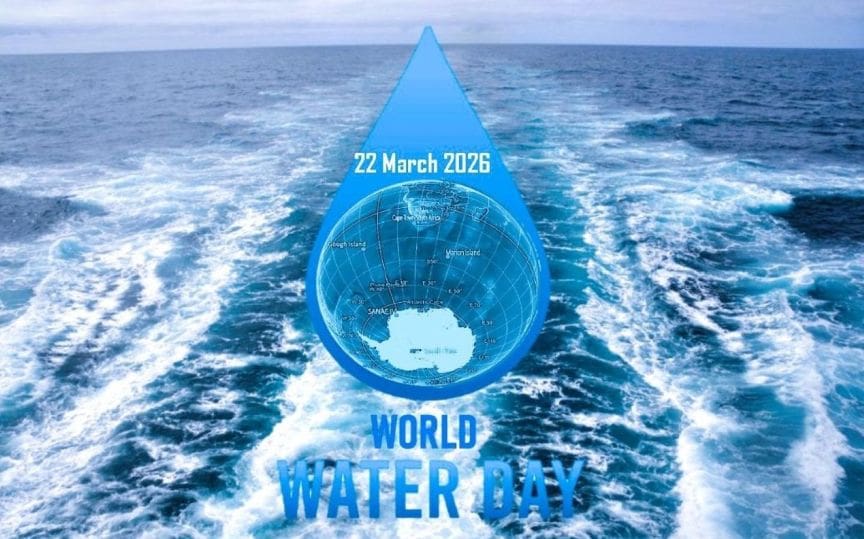
 Each year on World Water Day (22 March), the global community reflects on the importance of freshwater and the urgent need to protect it. In 2026, the theme “Water and Gender: Where water flows, equality grows” reminds us that access to clean water is not only an environmental priority, but also a social one. Around the world, water scarcity, pollution and climate change continue to threaten communities and ecosystems alike. Through initiatives led by UNESCO—including the Intergovernmental Hydrological Programme (IHP) and the World Water Assessment Programme (WWAP)—scientific research is being translated into real-world solutions that help countries better manage and safeguard this vital resource.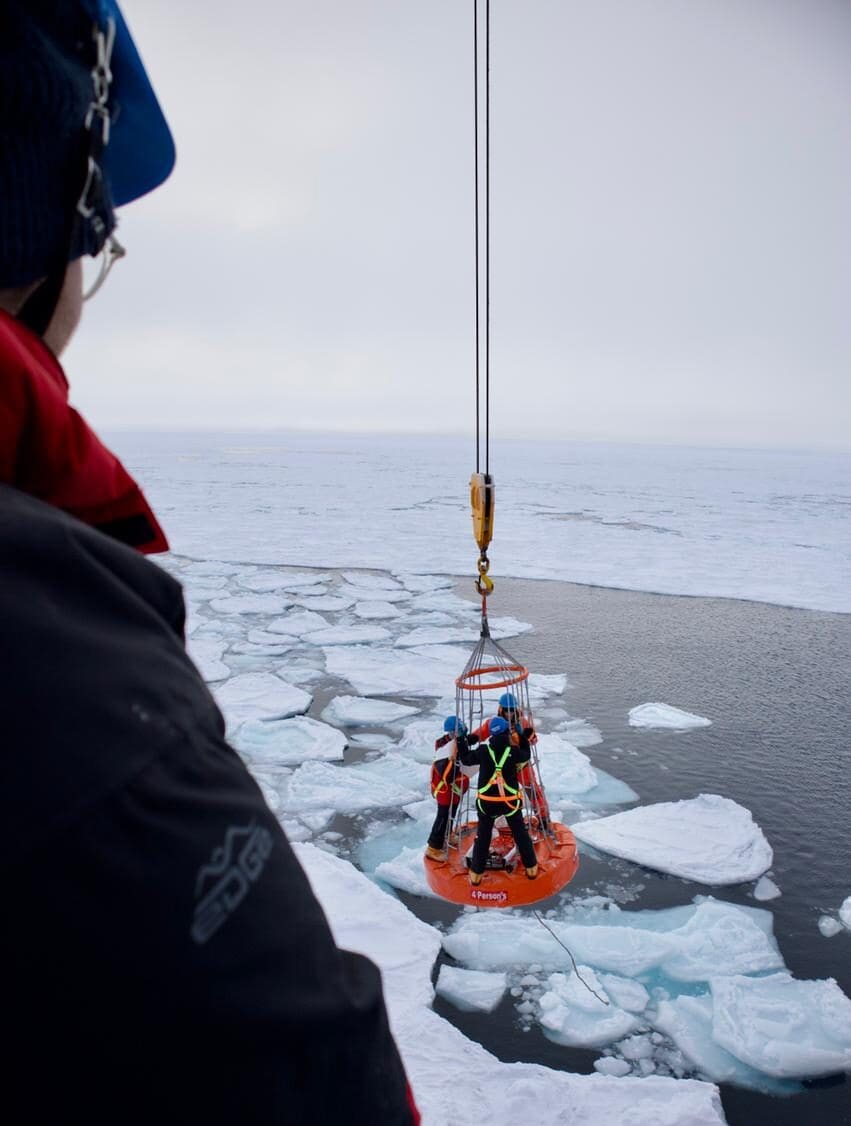

 26 February 2026

 Applications are still open for the following positions on the sub-Antarctic, Marion Island for the overwintering period (April 2026 to May 2027)
 Building Global Connections and Sharing Knowledge – A central goal of the GEOTRACES Summer School is to foster meaningful collaboration and knowledge exchange among emerging scientists. Participants were assigned to diverse working groups intended to strengthen networking, encourage interdisciplinary thinking, and build long-term scientific partnerships. These groups formed the basis of practical activities, poster sessions, and the week’s learning programme.
 Prizewinners above with organising committee: l-r Thomas Ryan-Keogh, Hélène Planquette, Ruth Hawley, University Southampton (UK), CJ Denault, University of Minnesota (USA), Michael Julian Haryanto, University of Toyama (Japan), Ryan Cloete, Susanne Fietz. The organising committee—Hélène Planquette (CNRS), Susanne Fietz (Stellenbosch University), Thomas Ryan-Keogh (National Oceanography Centre), and Ryan Cloete (Stellenbosch University)—curated an intensive and enriching schedule combining expert lectures with hands-on training.
 Insightful Lectures – Participants were privileged to learn from internationally recognised researchers who shared their expertise across a wide range of GEOTRACES-relevant themes, including sampling techniques, trace element isotopes, atmospheric processes, paleoceanography, modelling, and science communication. Lecture Programme Highlights:
 Sincere appreciation to the sponsors of the 4th GEOTRACES Summer School:
 Fun during Science Communication session with adding fingerprints to an Antarctica Map