by Ria Olivier | Aug 24, 2026 | Announcement, Gough Island, Overwintering Team
MEDICAL ORDERLY: GOUGH ISLAND
(APPROXIMATELY FIFTEEN MONTHS CONTRACT)
CLOSING DATE: 31 August 2026, 16:00. No late applications will be accepted
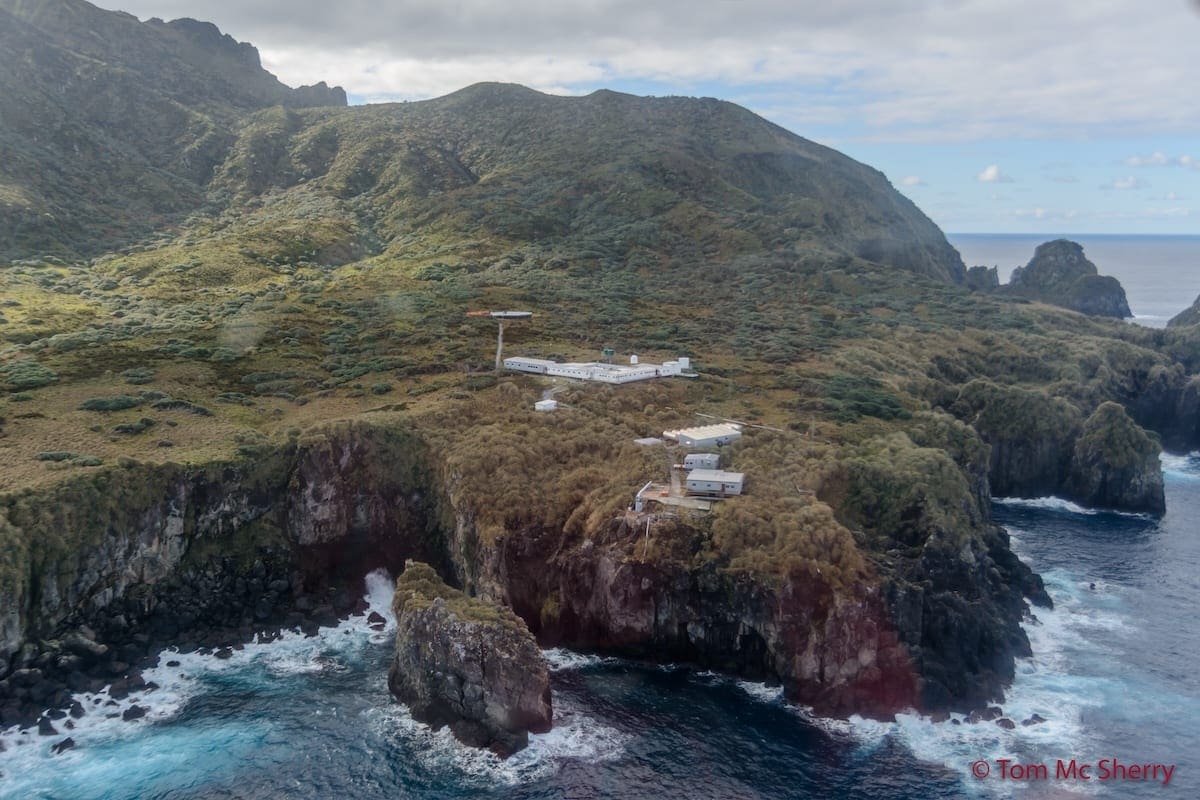 The incumbent will be responsible for providing medical treatment to all team members during the expedition and ensure the work is according to the scope of practice regulations. The incumbent will execute duties at a Sub/Antarctic Base and adhere to the health, safety and environmental requirements. The successful applicant will spend a full year (September 2026 to October 2027) at Gough Island. There is no option to return to South Africa before October 2027. The ability to work and live with small groups of people is thus essential.
Advertisement Application Details
APPLICATIONS: Must be submitted to the Director-General, Department of Forestry, Fisheries and the
Environment, The Director: Integrated Human Resource Management, Private Bag X4390, Cape Town, 8000 or hand-deliver to No 63 Strand Street, Cape Town or email to: Recruitmentcoastal@dffe.gov.za
by Ria Olivier | Apr 21, 2026 | Antarctica, Environment, Gough Island, International Days, Marion Island, Prince Edward Island, Research, Science, Southern Ocean, sub-Antarctic
Earth Day is commemorated annually on 22 April and is one of the largest global environmental movements. In 2026, the theme “Our Power, Our Planet” highlights the importance of civic action, community engagement, and collective responsibility in addressing environmental challenges. For the South African National Antarctic Programme (SANAP), Earth Day is not only a moment of reflection, but also a celebration of ongoing scientific research, conservation efforts, and the people who make this work possible.
Why Earth Day Matters! SANAP’s vision to understand, develop, and conserve the Antarctic, sub-Antarctic, and Southern Ocean environments aligns directly with the principles of Earth Day. These remote regions are critical to the health of our planet. They regulate global climate systems, support unique biodiversity, and provide essential insights into environmental change. Research is vital in a world where environmental risks continue to dominate global concerns and research conducted through SANAP contributes to:
- Understanding climate change and its global impacts
- Protecting fragile sub-Antarctic ecosystems
- Monitoring marine and terrestrial biodiversity
- Supporting sustainable environmental stewardship
SANAP scientists and researchers work in some of the most extreme environments on Earth, studying ocean systems, atmospheric processes, wildlife ecology, and environmental change. Their work contributes to international scientific knowledge and informs global responses to climate challenges. Equally important are the support personnel who ensures that research can be conducted safely and effectively. Earth Day is an opportunity to recognise the collective effort required to sustain Antarctic science.
Earth Day reminds us that protecting the environment is a shared responsibility. While SANAP operates in remote regions, the insights gained have global relevance. Healthy ecosystems—from the Antarctic to Southern Ocean currents—play a crucial role in climate regulation, biodiversity, and human wellbeing. The 2026 focus on civic mobilisation and community action reinforces the idea that meaningful change comes from both scientific understanding and public engagement. Within the SANAP community, Earth Day is a time to:
- Reflect on the importance of Antarctic and ocean research
- Celebrate the contributions of scientists and support teams
- Promote awareness of environmental conservation
- Inspire continued commitment to protecting our planet
By advancing knowledge and supporting conservation, SANAP contributes to a global effort to safeguard Earth’s future.
by Ria Olivier | Mar 23, 2026 | Antarctica, Commemorative Days, Gough Island, Marion Island, Meteorology
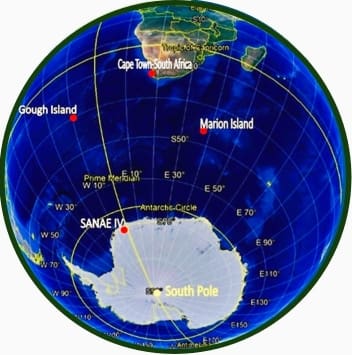
Each year on 23 March, World Meteorological Day marks the establishment of the World Meteorological Organization in 1950 and celebrates the vital role of meteorology in safeguarding lives and livelihoods. For South Africa, this global effort is strengthened by the work of dedicated meteorologists stationed in some of the most remote environments on Earth—SANAE IV, Marion Island and Gough Island. From these isolated bases, scientists continuously monitor atmospheric conditions, contributing critical data that feeds into both national forecasting systems and global climate models.
At SANAE IV in Antarctica, meteorologists record weather patterns that influence global circulation systems. Meanwhile, at Marion Island and Gough Island, teams track rapidly changing weather in the Southern Ocean and South Atlantic—regions known for their powerful storms and complex climate interactions. Their observations help improve the accuracy of forecasts, support maritime and aviation safety, and deepen our understanding of climate variability. This work ensures that South Africans remain informed and prepared, even when the weather systems affecting them originate thousands of kilometres away.
Beyond daily forecasts, the long-term datasets collected at these stations are essential for detecting climate trends and understanding future risks. By maintaining a continuous presence in these key locations, SANAP contributes to a global network of meteorological observation that underpins climate science and resilience planning. On World Meteorological Day 2026, we recognise the commitment of these teams who, far from home, play a crucial role in keeping South Africa—and the world—connected to the ever-changing atmosphere.
by Ria Olivier | Mar 3, 2026 | Antarctica, Gough Island, International Days, Invasion Biology, Mammology, Marion Island, Ornithology, Prince Edward Island, Research
Every year on 3 March, the world celebrates World Wildlife Day, recognising the extraordinary diversity of life and the need to conserve it. For South Africa, this commitment extends far beyond the mainland — to the remote sub-Antarctic and Antarctic regions where SANAP conducts research and conservation work and plays a vital role in understanding and protecting some of the world’s most unique ecosystems.
Macaroni Penguin on Marion Island getting ready for World Wildlife Day – Otto Whitehead
Guardians of the Sub-Antarctic: The Prince Edward Islands — comprising Marion Island and Prince Edward Island — are globally significant biodiversity hotspots, they host thriving populations of seabirds and marine mammals, including King, Macaroni, Gentoo, and Rockhopper penguins, several Albatross and Petrel species, Southern Elephant seals and Antarctic Fur seals and Killer whales. SANAP-supported researchers monitor wildlife populations to detect changes linked to climate variability, ocean conditions, and human impacts. Long-term datasets collected over decades allow scientists to track breeding success, foraging behaviour, migration patterns, and survival rates.
These islands are also a Special Nature Reserve — South Africa’s highest level of environmental protection — ensuring strict conservation management. Ongoing efforts include the monitoring ecosystem health, studying predator-prey relationships, investigate the effects of climate change on sub-Antarctic food webs and managing invasive species. The eradication of invasive species and strict biosecurity controls are among conservation projects that protect these fragile ecosystems from human-introduced threats.
Macaroni Penguin on Marion Island enjoying World Wildlife Day – Otto Whitehead
Through science, conservation management, and responsible environmental practices, SANAP continues to protect these extraordinary environments for future generations. On this World Wildlife Day, we reaffirm our commitment to understanding, conserving, and championing life at the edge of the Earth. We celebrate the resilience of life in extreme environments, the dedication of researchers working in extreme conditions and South Africa’s role in polar science and environmental stewardship.
- Video Credit: Otto Whitehead
- Feature background image credit: Ben van der Walt
by Ria Olivier | Oct 15, 2025 | Announcement, Gough Island, Humanities, SANAP
After more than a year on the remote and rugged shores of Gough Island, the Gough 70 Overwintering Team has safely arrived back in Cape Town today — marking the end of another remarkable chapter in South Africa’s contribution to global environmental and climate research.
The team has spent the past year maintaining and operating the South African weather and research station on Gough Island, one of the most isolated and scientifically significant islands in the South Atlantic Ocean. Their work forms a vital part of the South African National Antarctic Programme (SANAP), contributing to international understanding of climate systems, ocean–atmosphere interactions, and biodiversity conservation in one of the world’s most pristine environments. Throughout their 13-month stay, the Gough 70 team challenged weather conditions, isolation, and logistical difficulties — yet continued to deliver crucial meteorological observations and research support. Their dedication and resilience embody the true spirit of the SANAP community.
We extend a heartfelt welcome home to each member of the team and express our thanks for their commitment and hard work. Their efforts not only uphold South Africa’s legacy of excellence in polar and sub-Antarctic research but also ensure that critical data continues to support global scientific collaboration. (above taken when arriving at Gough Island in 2024)
As the team reunites with family and friends, the Gough 71 Overwintering Team now takes up the baton, continuing the mission on the island for the year ahead.
Welcome back, Gough 70 — and thank you for your service and passion for discovery in one of the most remote corners of the world.
— The SANAP Community
by Ria Olivier | Oct 7, 2025 | Antarctica, Current Event, Gough Island, International Days, Marine Protected Area, Marion Island
October marks the celebration of Maritime Month, a time when nations across the world reflect on the vital role that oceans, ships, and seafarers play in connecting the global community. In South Africa, a country with a proud maritime heritage and stewardship of some of the world’s most important sea routes. South Africa celebrates maritime month and highlights the significance of our oceans to trade, research, and environmental sustainability. As a nation deeply intertwined with the Southern Ocean, South Africa’s maritime strength extends far beyond its ports — it reaches all the way to Antarctica through the work of the South African National Antarctic Programme (SANAP).
Within SANAP, maritime excellence is at the heart of our operations. Each expedition to Marion Island, Gough Island, and Antarctica depends on the dedication and skill of South Africa’s maritime professionals — from the crews who navigate the S.A. Agulhas II, to the scientists and support teams who rely on her safe passage to conduct world-leading research in some of the planet’s most remote and challenging environments. As we celebrate Maritime Month, SANAP honours all those who make these voyages possible, and reaffirms our commitment to sustainable ocean science, environmental protection, and the advancement of South Africa’s blue economy.
Marine Month 2025: 1 to 31 October
- National Marine Month creates awareness of South Africa’s marine and coastal environments and the benefits that our oceans bring to our nation. South Africa is nestled between two currents; the warm Agulhas Current with rich ocean biodiversity and the cold Benguela. These currents, in addition to the cold southern oceans, are key drivers of South Africa climate and rainfall conditions. South Africa’s different climatic zones, with its different bio-diversities, agricultural and economic activities, are shaped by the availability of one of our scarcest resources, namely fresh water.
Feature Photo: Taken by Jean Brundrit with a lens made with ice – read more here


 Why Earth Day Matters! SANAP’s vision to understand, develop, and conserve the Antarctic, sub-Antarctic, and Southern Ocean environments aligns directly with the principles of Earth Day. These remote regions are critical to the health of our planet. They regulate global climate systems, support unique biodiversity, and provide essential insights into environmental change. Research is vital in a world where environmental risks continue to dominate global concerns and research conducted through SANAP contributes to:
 SANAP scientists and researchers work in some of the most extreme environments on Earth, studying ocean systems, atmospheric processes, wildlife ecology, and environmental change. Their work contributes to international scientific knowledge and informs global responses to climate challenges. Equally important are the support personnel who ensures that research can be conducted safely and effectively. Earth Day is an opportunity to recognise the collective effort required to sustain Antarctic science.
 Earth Day reminds us that protecting the environment is a shared responsibility. While SANAP operates in remote regions, the insights gained have global relevance. Healthy ecosystems—from the Antarctic to Southern Ocean currents—play a crucial role in climate regulation, biodiversity, and human wellbeing. The 2026 focus on civic mobilisation and community action reinforces the idea that meaningful change comes from both scientific understanding and public engagement. Within the SANAP community, Earth Day is a time to:


 After more than a year on the remote and rugged shores of Gough Island, the Gough 70 Overwintering Team has safely arrived back in Cape Town today — marking the end of another remarkable chapter in South Africa’s contribution to global environmental and climate research.
 We extend a heartfelt welcome home to each member of the team and express our thanks for their commitment and hard work. Their efforts not only uphold South Africa’s legacy of excellence in polar and sub-Antarctic research but also ensure that critical data continues to support global scientific collaboration. (above taken when arriving at Gough Island in 2024)