by Ria Olivier | Dec 2, 2025 | Announcement, Research, SANAP, SCAR, Science
The South African National Antarctic Programme (SANAP) is pleased to share an exciting update from the Scientific Committee on Antarctic Research (SCAR). The international Antarctic research community is preparing to gather for one of the most anticipated events in polar science: the 12th SCAR Open Science Conference, taking place 8–19 August 2026 in Oslo, Norway. Hosted by SCAR in partnership with the Norwegian Polar Institute, the conference will be held at the centrally located Clarion Hotel – The Hub, bringing together researchers, students, policy makers, and partners from across the globe under the theme:
SCAR2026: “Diving into Antarctic Science – Making Waves for the Future”
Call for Abstracts — Deadline 28 February 2026 (23:59 UTC) – In the spirit of collaboration and scientific discovery, SCAR has officially opened the call for abstracts for the 2026 conference. Researchers are encouraged to submit abstracts by 28 February 2026 at 23:59 UTC. This is a valuable opportunity for the SANAP community to showcase cutting-edge Antarctic research and engage with colleagues working across a range of disciplines.
SUBMIT ABSTRACT
A Diverse and Dynamic Scientific Programme: The 2026 parallel session programme features 50 sessions spanning; Physical Sciences, Geosciences, Life Sciences, Humanities and Social Sciences and Cross-disciplinary themes. With this breadth of topics, the programme promises to highlight both disciplinary excellence and interdisciplinary innovation.
Explore the full session list here
First Circular Now Available. It provides important details, including Key conference dates, Conference structure, Travel guidance for visiting Oslo and Norway, Venue information, Exhibition and sponsorship opportunities. 📄 Download the First Circular.
Stay Informed. Visit scar2026.org for: Full programme details, Organising committee information, Partners, Sponsors, Travel and practical information. The website will be continuously updated as planning progresses.
Important Dates to Bookmark
| Date |
Event |
| 31 January 2026 |
Call for satellite events closes |
| 28 February 2026 |
Abstract submission closes |
| February 2026 |
Early-bird registration opens |
| 8–9 & 16 August 2026 |
Business meetings & satellite events |
| 10–14 August 2026 |
12th SCAR Open Science Conference |
| 15 August 2026 |
Science Group Business Meetings |
| 17–19 August 2026 |
SCAR Delegates Meeting |
SANAP encourages all South African polar researchers — established and emerging — to participate actively in SCAR2026. Let’s ensure that South Africa continues to make meaningful contributions to global Antarctic science and collaboration.
We look forward to seeing many SANAP scientists represented in Oslo!
by Ria Olivier | Dec 1, 2025 | Antarctica, International Days, SANAP, SCAR
Honouring South Africa’s Place in the Antarctic Treaty and Our Shared Polar Heritage
 Every year on 1 December, the global Antarctic community pauses to celebrate International Antarctica Day—a tribute to the signing of the Antarctic Treaty in 1959. For the Antarctic Legacy of South Africa (ALSA), this day holds special significance. It is a moment to reflect on South Africa’s historic and ongoing contributions to the protection, research, and preservation of the frozen continent.
A Treaty That Changed the World: In the aftermath of the International Geophysical Year, representatives from twelve nations met in Washington between 1958 and early 1959 to craft a treaty that would safeguard Antarctica for peaceful and scientific purposes. Their work culminated on 1 December 1959, when the Antarctic Treaty was signed by: Argentina, Australia, Belgium, Chile, France, Japan, New Zealand, Norway, South Africa, the USSR, the United Kingdom, and the United States. The Treaty entered into force on 23 June 1961, establishing these nations as the original Consultative Parties—a group entrusted with stewardship of Antarctica.
Core Principles of the Antarctic Treaty: Over the decades, the Treaty has expanded into the Antarctic Treaty System, a comprehensive framework guiding environmental protection, science, and international collaboration. The Antarctic Treaty is built on 14 articles that ensure:
- Peaceful use only: Antarctica is dedicated to peace; no military bases, manoeuvres, weapons testing, or nuclear activities are allowed.
- Freedom of scientific research: Scientific investigation, cooperation, and exchange of information, personnel, and results are at the heart of Antarctic activity.
- No sovereign claims: Territorial claims are neither recognised nor disputed, and no new claims may be made.
The Madrid Protocol – Protecting a Natural Reserve. – One of the most important developments within this system is the Protocol on Environmental Protection, commonly known as the Madrid Protocol. This landmark agreement declares Antarctica a “natural reserve devoted to peace and science.” All consultative members—South Africa included—commit to responsible environmental management, ensuring minimal impact from human activity.
South Africa’s Role in Antarctica. As the only African nation represented in the Antarctic Treaty System, South Africa’s engagement carries continental importance. From early explorers and overwintering teams to modern scientists and support personnel, South Africans have played a vital role in shaping the human story of Antarctica. Our contributions include:
- Decades of scientific research at SANAE and earlier stations
- A long tradition of logistical support for international science programmes
- The preservation of heritage, photographs, stories, and documents through ALSA
- Continued commitment to environmental protection under the Treaty’s principles
Celebrating Our Shared Legacy. On this International Antarctica Day, ALSA celebrates the vision of the 12 nations who signed the Antarctic Treaty—and South Africa’s proud position among them. The Treaty remains a rare symbol of global cooperation, scientific freedom, and peaceful governance. Antarctica belongs to no one, yet it is cared for by many.
As we look to the future, ALSA remains dedicated to preserving the legacy of South Africa’s Antarctic journey for generations to come.
by Ria Olivier | Nov 12, 2025 | Announcement, Research, SANAP, SCAR, Science
Recognising Excellence in Antarctic Research and Service
The Scientific Committee on Antarctic Research (SCAR) plays a pivotal role in advancing knowledge of the Antarctic and Southern Ocean. A cornerstone of this mission is the recognition of excellence — celebrating researchers and contributors whose work and service embody the spirit of international cooperation and scientific discovery in the Antarctic community.
Honouring Outstanding Contributions
To highlight and reward those who exemplify the best of the Antarctic community, SCAR established a series of prestigious medals. These awards celebrate both scientific achievement and dedicated service, serving as an inspiration for the next generation of polar researchers.
Since their inception in 2006, SCAR has awarded:
In 2018, SCAR introduced a third category:
Each of these medals is awarded through a peer-nominated process, ensuring fairness, transparency, and the recognition of true merit. Recipients are selected by an expert committee based on their outstanding contributions to Antarctic research, collaboration, or education and outreach.
The President’s Medal for Outstanding Achievement
In addition to the main medals, SCAR also awards the President’s Medal for Outstanding Achievement. This distinguished honour is presented by the outgoing SCAR President to an individual who has made exceptional contributions to SCAR and the wider Antarctic community during their term.
Call for Nominations — 2026 SCAR Medals
Nominations for the 2026 SCAR Medals are now open!
🗓️ Initial nominations close on 22 March 2026.
This is a unique opportunity to recognise peers who have made remarkable contributions to Antarctic science, coordination, or communication.
For detailed information on the award criteria and selection process, please visit SCAR’s Detailed Information page.
by Ria Olivier | Oct 8, 2024 | Antarctica, Research, SANAP, SANAP Student, SCAR
A dive into the latest research and activities within the Scientific and Antarctic Research community during the biannual conference in Chile.
In today’s rapidly evolving scientific landscape, research conferences serve as vital hubs for knowledge exchange, fostering innovation, and building collaborations across disciplines. The recent SCAR conference held in Pucon, Chile during August brought together leading scholars and emerging researchers from around the globe. The event was packed with groundbreaking presentations, hands-on workshops, and insightful discussions that highlighted the latest trends shaping the future of research.
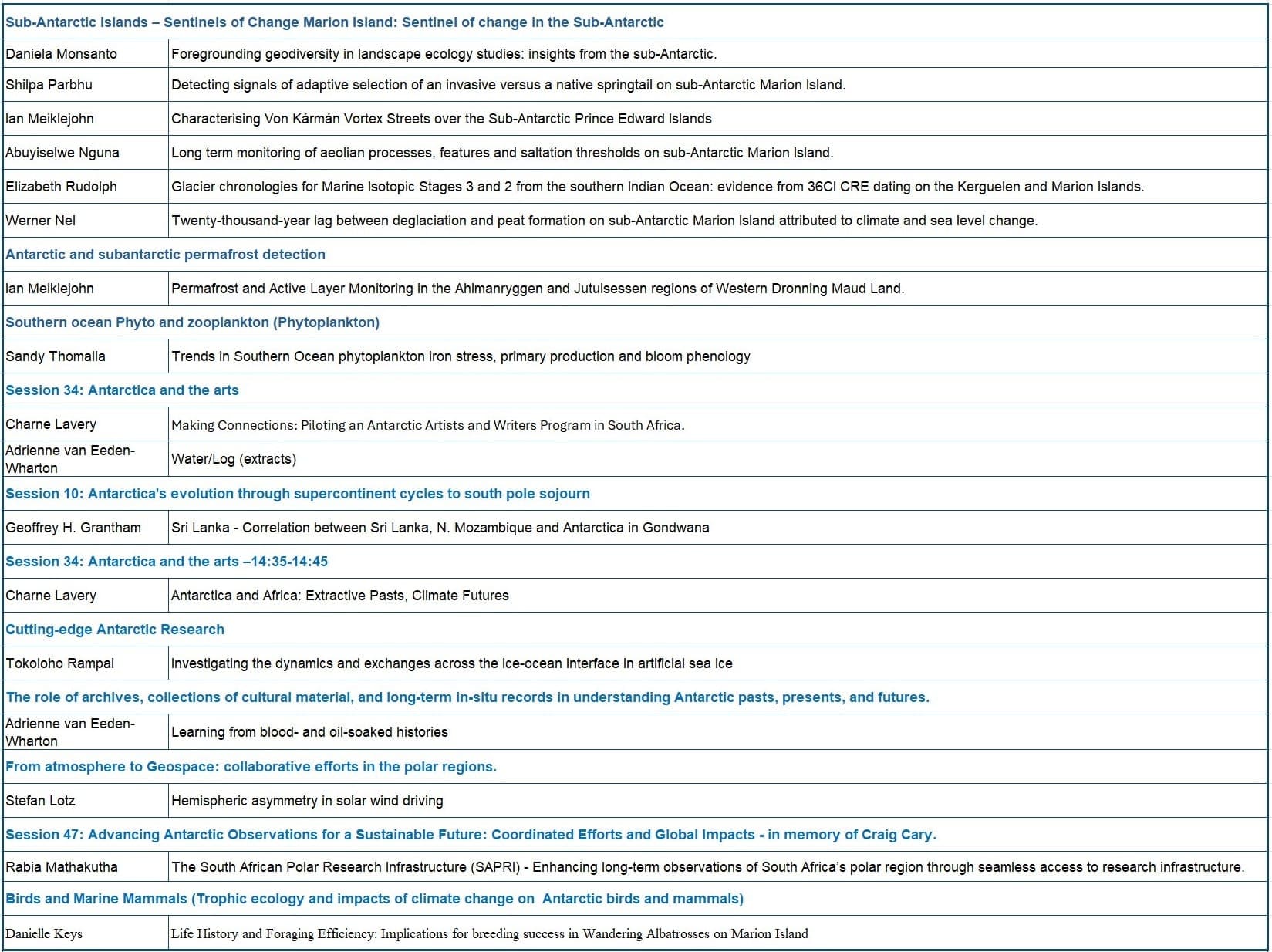
Here’s a closer look at the highlights and takeaways from this year’s conference. (above: Session on sub-Antarctic was an all South African session)
Plenary Lectures and Mini Symposia: The conference had a series of plenary lecture from some of the most respected minds in academia. Dr Victoria Nuviala from Madrid Institute for Advanced Study (MIAS), shared insights into An Architectural Biography of Antarctica. The reckoning: how #MeTooAntarctica is changing fieldwork a presentation by Dr Meredith Nash
Groundbreaking Research Papers. One of the conference’s core components was the presentation by researchers during the different parallel sessions. Each session provided opportunity for Q&A, enabling in-depth conversations between the audience and the researchers, fostering a true sense of intellectual community. South African researchers presented during these sessions. (above a few presenters captured during their present picture above: Session on sub-Antarctic was an all South African sessions)
Workshops. Experts from organizations guided participants through various disciplines. Ria Olivier held a workshop on publications in the Antarctica Community and resources on data management
Poster Sessions: Spotlight on Research in addition to formal presentations, these sessions provided a platform for researchers to showcase their work.
Networking and Collaboration. Beyond the formal sessions, the networking opportunities were an integral part of the conference. Through social events, coffee breaks, and an industry exhibition, participants had the chance to connect with peers, potential collaborators, and mentors.
NEXT SCAR in Norway in 2026! !
Conclusion – SCAR2024 was a celebration of innovation, collaboration, and cutting-edge research. It provided a rich platform for learning, networking, and exchanging ideas that will shape the future of research. For attendees, the event was not only an opportunity to showcase their work but also a reminder of the collaborative spirit that drives scientific progress. As we look forward to next conference, it’s clear that the future holds exciting developments in Antarctic Research, and conferences like this one will continue to play a crucial role in fostering those advancements.
Activities during SCAR2024
Oral & Poster Presentations
by Ria Olivier | Aug 28, 2024 | Research, SCAR, Uncategorised
Well done to all that represented South Africa at XIth SCAR – Open Science Conference & Biennial Meetings in Pucón-Punta Arenas – CHILE during
August 2024.
More posts to follow
by Ria Olivier | Dec 12, 2023 | International Days, Research, SA Polar Research Infrastructure, SANAP, SANAP Student, SAPRI, SCAR, Science, SEAmester
Over a period of 5 days 172 people participate in the 6th SANAP symposium. A lot has happened in the past 4 years since the last symposium in Hermanus in 2018 and feedback on research and other activities within SANAP featured on the program. The symposium was hosted by Stellenbosch University at Houw Hoek Hotel in the Grabouw valley where the participants built on a SANAP Research community for the future.
The Symposium kicked off with a hybrid meeting of the South African national committee for SCAR and the first evening a keynote lecture was presented by Prof Jukka Tukhuri (Aalto University, Finland) on the discovery of Shackleton’s Endurance on a voyage of the SA Agulhas II. During the symposium keynote lectures and plenary talks were given by Dr Peter Convey of British Antarctic Survey, Dr Sue Tonin of Mouse Free Marion and Prof Marcello Vichi on the Polar Lab part of the South African Polar Research Infrastructure (SAPRI).
The purpose of the symposium was to facilitate the free exchange of scientific information within SANAP research. In the Marine and Antarctic Research strategy it states that: “The need for coordinated, extensive and targeted research in the marine and oceanic domain has been underlined. Coordination has become important as there has been a shift in marine science from resources and process studies that could be carried out by small groups or individuals to very large-scale regional climate and ecosystem studies, where the success, nooses and benefits lie in the coordination.” One of the strategies outlined is: “creation of a society informed on the value of marine and Antarctic research initiatives.”
The following five thematic (vertical) areas were prioritised for research sessions and various principal investigators and researchers within SANAP chaired the sessions:
- Oceans and marine ecosystems under global change – Dr Rampai, Dr Fietz, Dr Thomalla, Dr Nicholson and Dr Lamont
- Earth systems observations – Prof Nel, Dr Lotz
- Ecosystems, biodiversity and biodiscovery – Prof Van Vuuren, Prof Cowan, Dr Greve, Prof Pistorius, Dr Wege,
- Innovation and development – Prof A Bekker
- Human Enterprise – Dr Lavery
Cross-cutting support interventions were discussed such as:
- Coordination and governance by Dr Gilbert Siko and Tracy Klarenbeek
- Human capital development and transformation chaired by Prof Ansorge
- Public awareness and engagement chaired by A Louw
- Research Infrastructure and platforms chaired by Dr T Morris
- Data management chaired by Dr Treasure
Feedback from SA National Committee for SCAR, APECSSA, SCALE expeditions and SEAmester were given and an evening session was held by the APECSSA committee where all the early career researchers that attended the symposium had great discussions. The newly established SAPRI was showcased to the SANAP community in cross discipline sessions on research infrastructure and platforms, data management and engagement, and a keynote lecture on the SAPRI Polar Lab that concluded all the research presentations
It was the first time that so many South African polar researchers were together on the 1st December on International Antarctic Day and a special Antarctic Breakfast took place to commemorate this International Day. A map of Antarctica, was signed and a cake was provided to celebrate the occasion.
The organising committee would like to thank all participants and attendees for making the 6th SANAP symposium a success and achieving its aim in building a SANAP research Community for the future. We are looking forward to the next Symposium in Kruger National Park in 2025 that will be hosted by a consortium of University of Johannesburg, Fort Hare University and the University of the Free State.
Comment by an ECR: “This was my very first SANAP symposium and it was absolutely incredible! Job well done to all those who assisted in organizing the event. Although it was a jam-packed week, the sessions were extremely interesting and well organized. The location was a perfect venue choice for this kind of event – especially for people to mingle, engage with one another and building strong relationships as well as for making connections for potential research collaborations. I am really impressed with the big focus that this symposium had on Early Career Researchers – I think it is a great way of getting the younger professionals more involved and to network! Congrats on pulling off a very successful SANAP Symposium!”
More will follow of the symposium and sessions that took place with a photos.
A huge thank you to the NRF for making the symposium possible and to all our suppliers and sponsors; Houw Hoek Hotel, Neelsie Travel Bureau, Adjuvo enterprises, Trilogy Audio Services, Crazylicous Cookies.
Featured Image: David Hedding
Image of signatures on Antarctica map : Anche Louw

 The South African National Antarctic Programme (SANAP) is pleased to share an exciting update from the Scientific Committee on Antarctic Research (SCAR). The international Antarctic research community is preparing to gather for one of the most anticipated events in polar science: the 12th SCAR Open Science Conference, taking place 8–19 August 2026 in Oslo, Norway. Hosted by SCAR in partnership with the Norwegian Polar Institute, the conference will be held at the centrally located Clarion Hotel – The Hub, bringing together researchers, students, policy makers, and partners from across the globe under the theme:
 Core Principles of the Antarctic Treaty: Over the decades, the Treaty has expanded into the Antarctic Treaty System, a comprehensive framework guiding environmental protection, science, and international collaboration. The Antarctic Treaty is built on 14 articles that ensure:
 As we look to the future, ALSA remains dedicated to preserving the legacy of South Africa’s Antarctic journey for generations to come.
 Honouring Outstanding Contributions
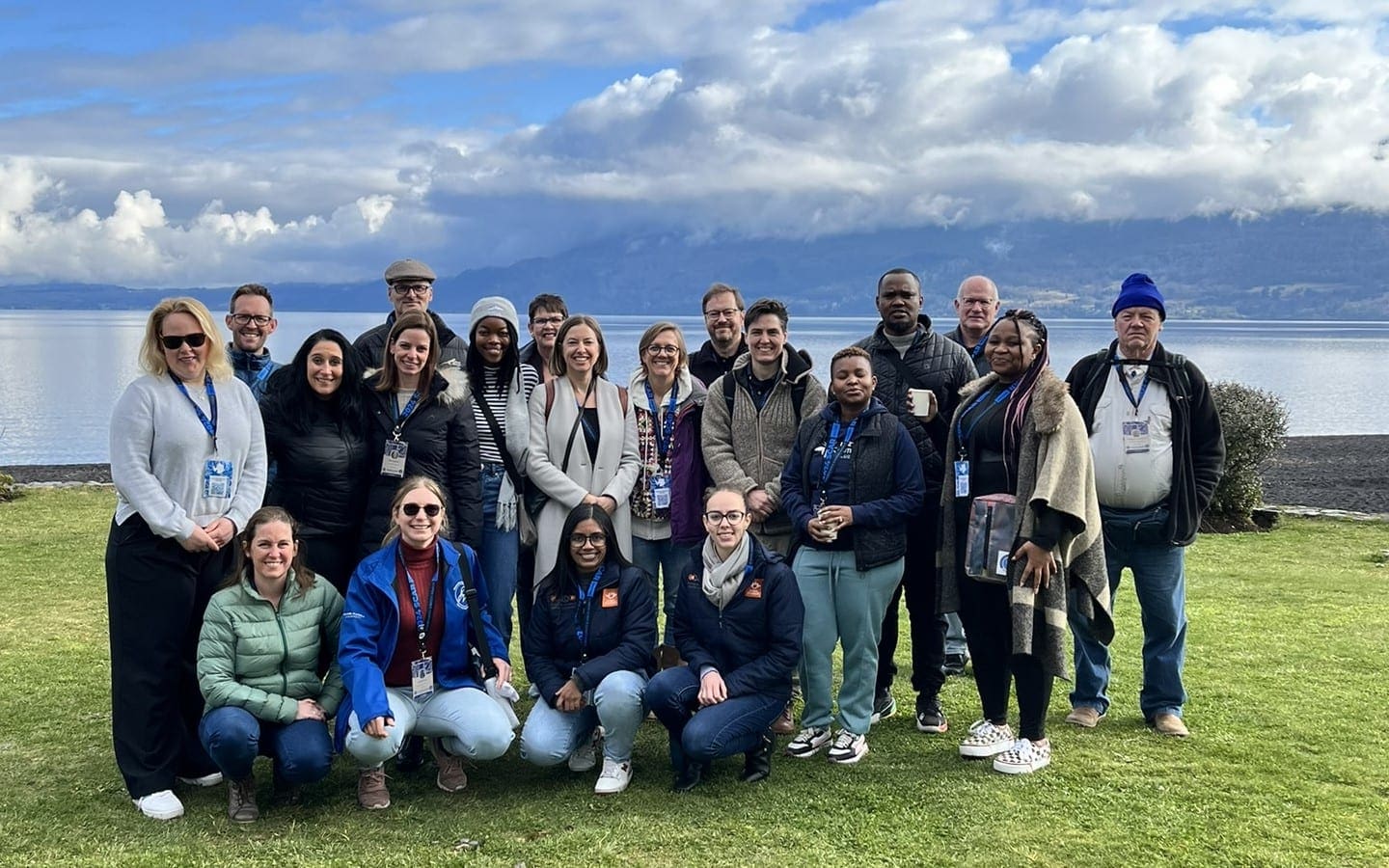
 In today’s rapidly evolving scientific landscape, research conferences serve as vital hubs for knowledge exchange, fostering innovation, and building collaborations across disciplines. The recent SCAR conference held in Pucon, Chile during August brought together leading scholars and emerging researchers from around the globe. The event was packed with groundbreaking presentations, hands-on workshops, and insightful discussions that highlighted the latest trends shaping the future of research.
 Here’s a closer look at the highlights and takeaways from this year’s conference. (above: Session on sub-Antarctic was an all South African session)
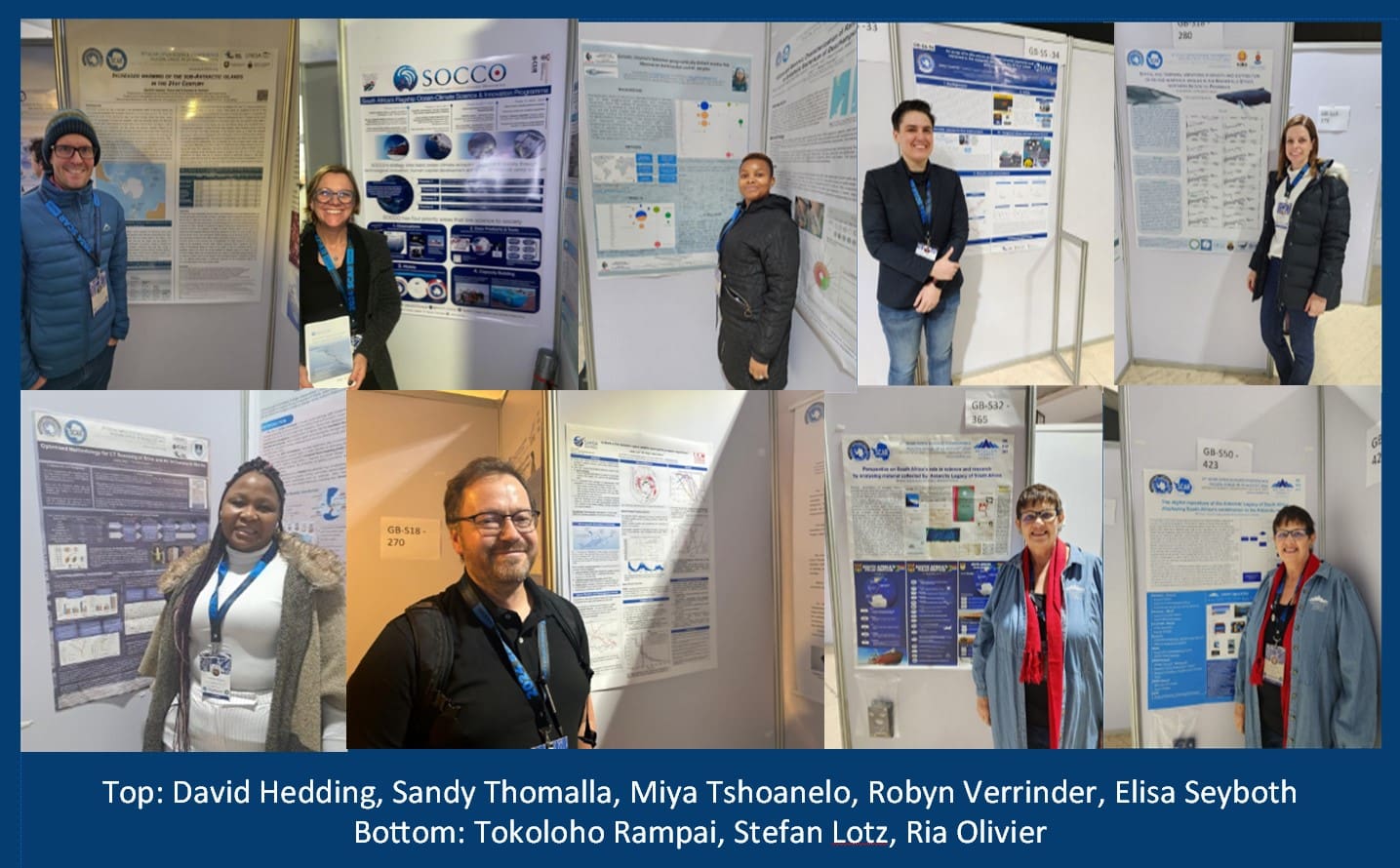
 Networking and Collaboration. Beyond the formal sessions, the networking opportunities were an integral part of the conference. Through social events, coffee breaks, and an industry exhibition, participants had the chance to connect with peers, potential collaborators, and mentors.
 Well done to all that represented South Africa at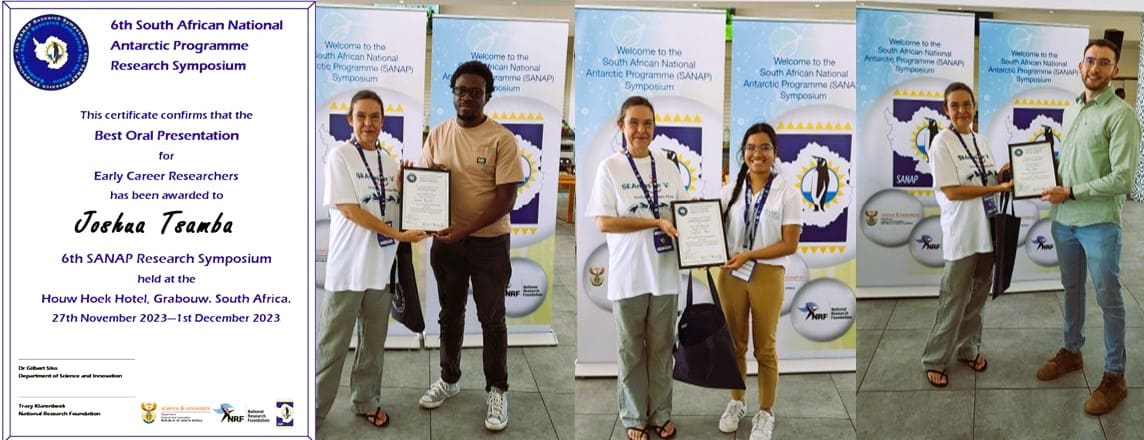


 Over a period of 5 days 172 people participate in the
  The purpose of the symposium was to facilitate the free exchange of scientific information within SANAP research. In the
 It was the first time that so many South African polar researchers were together on the 1st December on International Antarctic Day and a special Antarctic Breakfast took place to commemorate this International Day. A map of Antarctica, was signed and a cake was provided to celebrate the occasion.
 The organising committee would like to thank all participants and attendees for making the 6th SANAP symposium a success and achieving its aim in building a SANAP research Community for the future. We are looking forward to the next Symposium in Kruger National Park in 2025 that will be hosted by a consortium of University of Johannesburg, Fort Hare University and the University of the Free State.