by Ria Olivier | Mar 13, 2026 | Announcement, SA Agulhas II, SANAP, SANAP Student, SEAmester
Postgraduate students in environmental and marine-related sciences are encouraged to apply for SEAmester IX – South Africa’s Class Afloat, taking place from 1–10 June 2026 aboard the country’s polar research vessel, the S.A. Agulhas II.
!!Applications close Thursday 19 March 2026!!
SEAmester is an innovative national training programme designed to introduce postgraduate students to marine science as an applied, cross-disciplinary field. Developed to support South Africa’s scientific capacity in ocean and climate research, the programme aims to attract young researchers to the region and spark long-term interest in studying global environmental change.
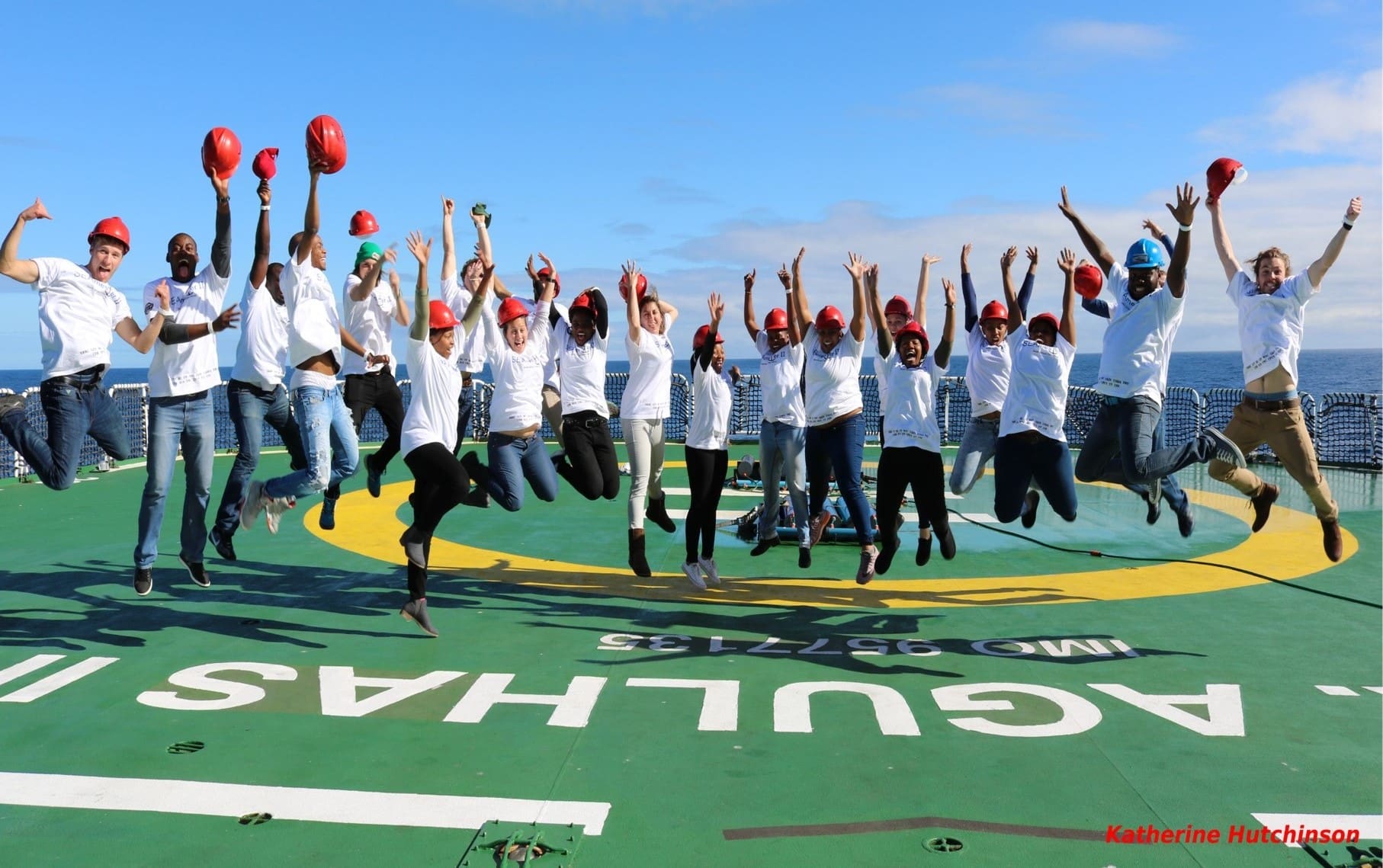 A Floating Classroom: The strength of SEAmester lies in its combination of theoretical learning and hands-on research at sea. Over the course of ten days, students participate in lectures from leading scientists while actively engaging in ship-based scientific work. The S.A. Agulhas II, a state-of-the-art research and polar supply vessel, provides the ideal teaching platform. Its onboard laboratories, research equipment and facilities allow students and lecturers to work closely together in an immersive scientific environment. Participants gain exposure to a wide range of marine science disciplines, including oceanography, marine biology, biogeochemistry and climate science. Daily lectures are paired with deck-based activities where students assist with research operations, collect data and learn how oceanographic instruments are deployed and analysed. Students also contribute to small scientific mini-projects, gaining practical research experience while working alongside specialist scientists.
For many participants, SEAmester represents their first time at sea and a defining moment in their scientific careers.
Fully Funded Participation: SEAmester is fully funded, with accommodation and meals provided onboard the SA Agulhas II. Travel arrangements will be made for students travelling from outside the Western Cape where necessary. Participants must hold a valid passport, as the cruise will operate outside South African waters. Medical clearances required for sea-going activities will be arranged through the programme.
Prepare a Strong Application: SEAmester is highly competitive, and applicants are encouraged to take time preparing their submissions. When applying, be sure to read the application requirements carefully and explain why you are a strong candidate. Demonstrate your interest in environmental or marine science and describe how the experience will contribute to your research and career goals. Write your application in your own words. The selection committee is looking for students who are motivated, curious and eager to engage in interdisciplinary research. SEAmester offers a rare opportunity to gain hands-on marine research experience while learning from leading scientists at sea. For postgraduate students interested in environmental change and ocean science, this programme provides an unforgettable introduction to research in the marine environment.
DOWNLOAD STUDENTS Application form
DOWNLOAD LECTURER application form
2024 Layout Program
by Ria Olivier | Dec 5, 2025 | Legacy, Research, SANAP, SANAP Student, Science
The Science Forum South Africa (SFSA) 2025 brought together researchers, policy leaders, students, and science enthusiasts from across the globe—and once again, SANAP- ALSA proudly showcased South Africa’s vital role in Antarctic and climate-change research. This year, the Antarctic Legacy of South Africa (ALSA) exhibit drew significant attention from delegates and exhibitors eager to learn more about the scientific, cultural, and environmental contributions South Africa makes in the Antarctic region. ALSA highlighted its mission to preserve, promote, and communicate South Africa’s polar heritage, while also reflecting the essential research being conducted by institutions across the country under SANAP.
Ministerial Engagement and Public Interaction: We were honoured to welcome the Honorable Minister of Higher Education, Science and Innovation, Dr Blade Nzimande, to the ALSA exhibition. During his visit, he participated in an interview with SABC at the ALSA stall and added his fingerprint to a large map of Antarctica—a symbolic gesture celebrating South Africa’s commitment to protecting the region. The full fingerprint map, once completed by visitors during SFSA, will be delivered to the Minister.
Many attendees followed suit, placing their fingerprints on Antarctica maps to show solidarity in protecting the polar environment. This interactive activity reminded visitors of the fragility of polar ecosystems and the importance of ongoing conservation and research.
Delegates also enjoyed creating their own Antarctic animal-themed badges—an engaging way to spark conversation about biodiversity in the Southern Ocean and sub-Antarctic islands.
Showcasing SANAP Research: Among the highlights of the SANAP presence was the showcase by Prof Michelle Greve and Nicola Marnewick representing the Marion Island mouSe Ecology (MISE) Project. Their exhibit included research photographs, a project banner, and lively discussions with attendees about the ecological impacts of invasive house mice on Marion Island and ongoing efforts to understand and mitigate these effects.
Highlighting South Africa’s Contributions to Polar Science: SANAP supports a wide array of multidisciplinary research projects aimed at understanding the Antarctic, the sub-Antarctic, and the Southern Ocean. During SFSA 2025, we highlighted several active research programmes across South Africa’s leading institutions, these projects collectively demonstrate South Africa’s leadership in understanding climate change, marine ecosystems, glaciology, atmospheric science, biodiversity, and Earth systems—research essential to global climate policy and scientific preparedness.:
- SEAmester – South Africa’s Floating University
- SA Agulhas II – Flagship for Vessel (4.0) – Part II
- On-island impacts of climate change on the Southern Ocean’s iconic seabirds
- The biological carbon pump in a changing Southern Ocean
- Micronutrient and pollutant trace elements at the air-sea interface of the Southern Ocean
- Crustal evolution of Dronning Maud Land
- Marion Island mouSe Ecology (MISE)
- Ecogenomics
- SANAE HF radar
- South African Antarctic Artists and Writers Programme (AWP) Pilot
- Polar Space Weather Studies
- Interactive effects of multiple stressors and environmental change on seabird breeding performance
- Decoding the mercury cycle in the Southern Ocean: in situ observations and advanced modeling
- Landscape and Climate Interactions in the sub-Antarctic
- Marion Island Top Predator Long-Term Observations
- Southern Ocean Carbon-Heat Nexus: mixed-layer processes & feedbacks for improved climate projections
- Growth dynamics of sea ice and how they affect sea-ice mechanics
- ECOSOPHY – Emergent constraints on Southern Ocean phytoplankton physiology
- Structural Glaciological Analysis of North-Western Antarctic Ice Shelf (SANAS)
- Provenance and paleomagnetics of the rocks of the Grunehogna Craton in Western Dronning Maud Land
- Antarctic MIZ Observations: interdisciplinary approaches to resolve seasonal sea-ice variability
Acknowledgements: We extend our sincere thanks to all visitors, partners, collaborators, and supporters who stopped by the ALSA exhibit. Your interest and engagement help strengthen South Africa’s ongoing commitment to polar science. Thank you to DSTI and NRF making the exhibit possible.
SANAP remains dedicated to advancing research, supporting our scientists, and preserving our legacy in the Antarctic region.
by Ria Olivier | Dec 3, 2025 | geochemistry, Oceanography, Research, SANAP, SANAP Student, Science, Southern Ocean
The South African National Antarctic Programme (SANAP) is proud to highlight the successful hosting of the 4th GEOTRACES Summer School, held in Cape Town, South Africa, from 17–21 November 2025. This prestigious international training event brought together 35 students and 19 GEOTRACES scientists from across the globe, reinforcing the importance of collaboration in advancing oceanographic and trace metal research. Supported by the French National Centre for Scientific Research (CNRS) and the Scientific Committee on Oceanic Research (SCOR), the summer school served as an essential platform for equipping PhD candidates and early career researchers with the knowledge and skills necessary to understand the biogeochemical cycles of trace metals in the world’s oceans. These cycles play a crucial role in regulating marine ecosystems, influencing climate processes, and shaping global biogeochemical dynamics.
Building Global Connections and Sharing Knowledge – A central goal of the GEOTRACES Summer School is to foster meaningful collaboration and knowledge exchange among emerging scientists. Participants were assigned to diverse working groups intended to strengthen networking, encourage interdisciplinary thinking, and build long-term scientific partnerships. These groups formed the basis of practical activities, poster sessions, and the week’s learning programme.
Prizewinners above with organising committee: l-r Thomas Ryan-Keogh, Hélène Planquette, Ruth Hawley, University Southampton (UK), CJ Denault, University of Minnesota (USA), Michael Julian Haryanto, University of Toyama (Japan), Ryan Cloete, Susanne Fietz. The organising committee—Hélène Planquette (CNRS), Susanne Fietz (Stellenbosch University), Thomas Ryan-Keogh (National Oceanography Centre), and Ryan Cloete (Stellenbosch University)—curated an intensive and enriching schedule combining expert lectures with hands-on training.
Insightful Lectures – Participants were privileged to learn from internationally recognised researchers who shared their expertise across a wide range of GEOTRACES-relevant themes, including sampling techniques, trace element isotopes, atmospheric processes, paleoceanography, modelling, and science communication. Lecture Programme Highlights:
- Greg Cutter (Old Dominion University): Planning and executing a GEOTRACES cruise
- Rob Middag (NIOZ; University of Groningen): Trace metal clean sampling and analysis – past and present approaches
- Hélène Planquette (CNRS): Intercalibration
- Jessica Fitzsimmons (Texas A&M University): Physicochemical speciation and its role in oceanic metal sinks
- Alessandro Tagliabue (University of Liverpool): Predicting climate-change impacts on trace element and isotope (TEI) cycles for IPCC assessments
- Adi Torfstein (Hebrew University of Jerusalem): Trace element particulate fluxes in the ocean
- William (Bill) Landing (Florida State University): Atmospheric deposition of trace elements and their biogeochemical impact
- Tim Conway (University of South Florida): Iron isotopes
- Taryn Noble (University of Tasmania): Paleoceanography
- Rhiannon Jones (British Antarctic Survey): Sediments as sources and sinks of trace elements
- Zhouling Zhang (GEOMAR): Non-traditional stable isotopes in biogeochemical research
- Lise Artigue (University of Perpignan): Multi-tracer approaches combined with hydrodynamics, modelling, and microbiology
- Thomas Ryan-Keogh (National Oceanography Centre): Conducting nutrient-addition (“bioassay”) experiments at sea
- Mak Saito (Woods Hole Oceanographic Institution): Metals in biology and biochemistry
- Ria Olivier (Antarctic Legacy of South Africa): Science outreach, awareness, and the role of transdisciplinarity in communication
Hands-On Practical Training – To complement the lecture series, participants engaged in practical sessions that exposed them to key tools, datasets, and analytical techniques used in trace metal research. These sessions helped early career scientists understand how their work integrates into the broader international GEOTRACES community, building confidence for future participation in global research initiatives. Training included:
- Data crunching and processing
- Paleoceanographic exercises
- IPCC-style assessment activities
- Integrating complementary oceanographic datasets
- SeaFAST and MC-ICP-MS laboratory techniques
- GoFlo sampling methods
- Autonomous platform technologies
Sincere appreciation to the sponsors of the 4th GEOTRACES Summer School:
- French National Centre for Scientific Research (CNRS)
- French Embassy in South Africa, Lesotho, and Malawi
- Scientific Committee on Oceanic Research (SCOR)
We also acknowledge and thank the following South African partners and supporters, their collective support played a pivotal role in ensuring the success of this global training event.
- Department of Science, Technology and Innovation (DSTI)
- National Research Foundation (NRF)
- Department of Forestry, Fisheries and the Environment (DFFE)
- South African National Antarctic Programme (SANAP)
- Stellenbosch University (SUN)
- Sea Technology Services (STS)
- Antarctic Legacy of South Africa (ALSA)
Strengthening the Future of Trace Metal and Antarctic Research – The 4th GEOTRACES Summer School has once again demonstrated the power of international collaboration in addressing complex marine and climate challenges. By building capacity among early career scientists and connecting them with leading experts, this event helps ensure that the next generation is well equipped to contribute to cutting-edge oceanographic research—both within South Africa and across the world. SANAP is proud to have been part of such an impactful scientific gathering and remains committed to supporting global research that enhances understanding of our oceans and the polar regions.
Fun during Science Communication session with adding fingerprints to an Antarctica Map
by Ria Olivier | Nov 25, 2025 | Research, SANAP, SANAP Student, Science
16–19 November | Kwalata Game Lodge, North West Province
The 7th South Africa National Antarctic Programme (SANAP) Research Symposium brought together the nation’s polar research community for four days of learning, connection and inspiration. Hosted and organised by Prof Bettine van Vuuren (University of Johannesburg), Prof Werner Nel (Fort Hare University) and Dr Liezel Rudolph (University of Free State) this year’s gathering took place at the Kwalata Game Lodge, offering a truly South African setting for discussions focused on some of the planet’s coldest and most remote regions.
Inspiring Informal Talks – Two invited talks set the tone for an engaging and reflective symposium: David Hedding shared insights from the Prince Edward Island Expedition 2023, taking attendees into the rugged and scientifically rich sub-Antarctic. Pete Convey delivered a heartfelt reflection on “How did that happen? Four decades as a cold ecologist”, offering wisdom accumulated over a remarkable career in polar science.
Research Sessions: Advancing Polar Knowledge. Across multiple sessions, principal investigators presented updates on SANAP-supported research, revealing the depth and breadth of South Africa’s contribution to Southern Ocean and Antarctic science.
- Sub-Antarctic & Marion Island Research
- Saving Marion Island’s seabirds – Mouse-Free Marion Project
- Marion Island mouSe Ecology (MISE)
- Impact of mouse eradication on the Marion Island bird community
- Climate change impacts on Southern Ocean seabirds
- DFFE Top Predator Research
- Top predator ecology and ecosystem connections
- Southern Ocean Biogeochemistry & Climate
- Southern Ocean Carbon-Heat Nexus: Mixed-layer processes and climate feedbacks
- Micronutrient and pollutant trace elements at the air–sea interface
- Decoding the mercury cycle through in situ observations and modelling
- ECOSOPHY: Emergent constraints on Southern Ocean phytoplankton
- The biological carbon pump in a changing Southern Ocean
- Atmosphere, Space & Geophysics
- SuperDARN radar advances
- Polar space weather studies
- Mechanical and physical properties of Antarctic sea ice
- Antarctic Marginal Ice Zone (MIZ) and seasonal variability
- SAMOC and ACC long-term monitoring
- Structural glaciology of the north-western Antarctic ice shelves (SANAS)
- Provenance & paleomagnetics of Grunehogna Craton rocks
- Ecology, Genomics & Humanity in the Polar Regions
- Ecogenomics developments
- Modelling wind patterns and ecological impacts
- Landscape–climate interactions in the sub-Antarctic
- Whale Unit research updates
- The Marion Island Hut Book Project
- Antarctic Legacy of South Africa (ALSA)
- South African Antarctic Artists & Writers Programme
- Vessels and Biosecurity & Infrastructure
- SA Agulhas II – Flagship for Vessel (4.0), Part II
- Safeguarding biodiversity through SANAP biosecurity practices
Strategic Vision for the Future: The final day concluded with two forward-looking presentations and it emphasized SANAP’s growing impact on national priorities, global science, and South Africa’s leadership in polar stewardship.
- Dr Gilbert Siko: Antarctic and Southern Ocean Research – The Contribution to Innovation & Socio-Economic Development in South Africa
- Tracy Klarenbeek: Marine and Antarctic Research Strategy 2026–2036: Southern Ocean and Antarctic Research Plan
Building Community – Mentorship, Fun & Shared Moments. Beyond the science, the symposium celebrated community:
- A fun-filled evening hosted by APECSSA brought mentors and mentees together for quiz challenges and bingo, strengthening networks across generations.
- Mealtimes—shared breakfasts, lunches and dinners—provided space for collaboration and new friendships.
- Participants enjoyed the quiet beauty of Kwalata with game drives, wildlife sightings, and peaceful bushveld walks.
Here, beneath the wide African sky, researchers working from the Southernmost ice to Africa’s beating heart gathered to exchange knowledge, protect ecosystems, and shape a collective future for polar science.
A heartfelt thank you goes to the 7th SANAP Research Symposium Organising Committee for creating an inspiring, seamless and memorable gathering.
The 2026 symposium once again reflected SANAP’s strength: a passionate, collaborative community committed to understanding and safeguarding the Antarctic, Southern Ocean and sub-Antarctic regions—regions crucial to the wellbeing of our planet.
Until next time, we continue the work, inspired and united.
Group photo: Annette Ford
by Ria Olivier | Nov 11, 2025 | Announcement, Research, SANAP, SANAP Student, Science
At the edge of the Earth lies a mirror of our planet — a place where ice tells the story of climate, oceans, and life itself. The South African National Antarctic Programme (SANAP) stands at the forefront of exploring and protecting this frozen world.
This November, the SANAP research community will gather once again for the 7th SANAP Symposium, a meeting of minds, science, and purpose.
Dates: 16–19 November 2025
Venue: Kwalata Game Reserve, South Africa
The Symposium brings together researchers, students, policymakers, and environmental stewards from across disciplines to share discoveries from the Antarctic and Southern Ocean, and to reflect on how they shape our understanding of global change.
From the southernmost ice sheets to Africa’s beating heart, SANAP researchers explore the connections that link polar science to climate, ecosystems, and society. The Symposium offers a unique opportunity to discuss new research, inspire collaboration, and strengthen the community committed to safeguarding the world’s most remote environments.
Join the conversation, connect with fellow explorers of knowledge, and be part of shaping a sustainable polar future.
More information click here
by Ria Olivier | Feb 3, 2025 | Announcement, Geomorphology, Important Dates, Research, SANAP, SANAP Student, Science
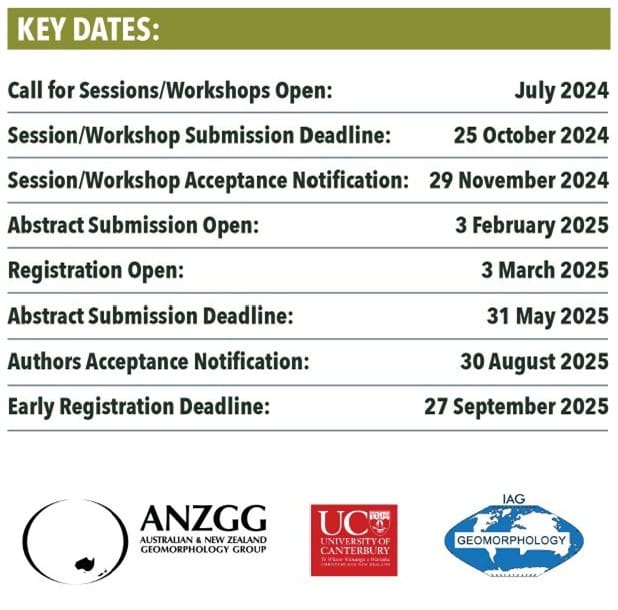
The International Conference on Geomorphology (ICG) 2025 is set to take place in breathtaking New Zealand, a land renowned for its dynamic landscapes and geological wonders. This global gathering of geomorphologists will provide a platform for cutting-edge discussions on landform processes, climate interactions, and Earth surface dynamics. We invite researchers, early-career scientists, and professionals to contribute to this exciting event by submitting abstracts to the special session:
Geomorphological Insights from the Sub-Antarctic
Description: Sub-Antarctic islands, situated in the remote Southern Ocean, offer a unique geomorphological perspective due to their distinct geographical setting. These cold islands, characterized by both glacial and periglacial processes, provide crucial insights into the historical and ongoing changes in oceanic and atmospheric circulation patterns within the southern hemisphere mid-latitudes. Unlike their northern hemisphere counterparts, these islands experienced a different Last Glacial Maximum (LGM) and complex deglaciation, leading to unique geomorphological features and processes. The landforms of these islands serve as invaluable proxies for understanding landscape responses to climate change. Palaeo-climatic shifts have profoundly influenced geomorphological and cryogenic dynamics, shaping landforms and influencing ecosystem processes. Contemporary climatic changes, such as rising temperatures, moisture fluctuations, and increased frequency of extreme events, pose significant threats to these delicate geomorphological systems. These changes have the potential to push landscape and ecosystem processes beyond their existing environmental thresholds, impacting landforms and biodiversity. This session aims to explore the geomorphological significance of Sub-Antarctic islands and their role as indicators of environmental change. We invite contributions that highlight the geomorphological processes and dynamics that shape the landscape of these Sub- Antarctic Islands. Research focusing on the region’s geomorphological responses to past and present climatic conditions and the possible implications for ecosystem processes are particularly welcome. Emerging researchers are encouraged to submit their work to advance our understanding of these critical sentinel landscapes.
Who Should Submit?
We strongly encourage early-career researchers, postgraduate students, and experienced scientists to contribute their work. This is an excellent opportunity to showcase your research to an international audience, gain valuable feedback, and network with leading experts in the field.
Abstract Submission Deadline: 31 May 2025!!
Don’t miss your chance to be part of ICG 2025 and contribute to this vital discussion on the evolving landscapes of the Sub-Antarctic.
Message from Prof Werner Nel:
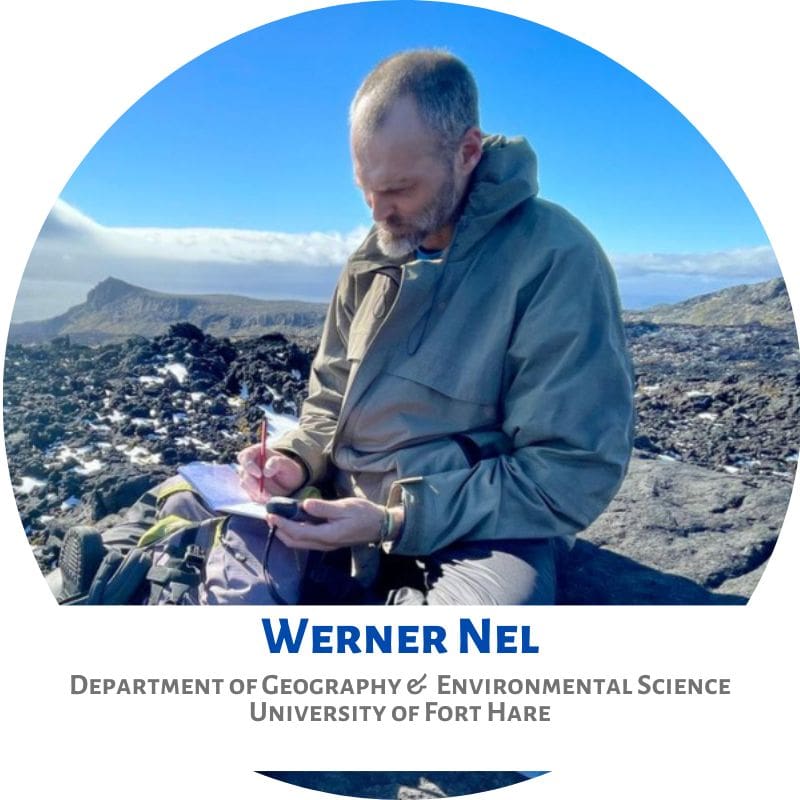
“Dear Friends and Colleagues, We are putting a session together for the International Conference on Geomorphology that will be held in Christchurch in February 2026. As you can see the session description is very open, so we can really put a nice diverse session together. We would like to ask you to consider submitting an abstract to the session.
Hope to see you there. All the best.” Werner Nel

 Postgraduate students in environmental and marine-related sciences are encouraged to apply for SEAmester IX – South Africa’s Class Afloat, taking place from 1–10 June 2026 aboard the country’s polar research vessel, the S.A. Agulhas II.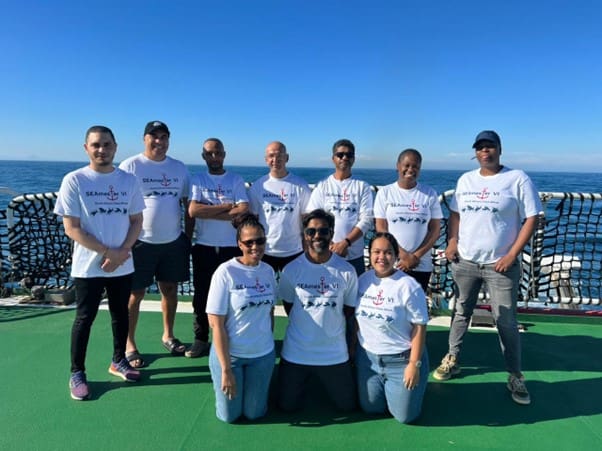
 Prepare a Strong Application: SEAmester is highly competitive, and applicants are encouraged to take time preparing their submissions. When applying, be sure to read the application requirements carefully and explain why you are a strong candidate. Demonstrate your interest in environmental or marine science and describe how the experience will contribute to your research and career goals. Write your application in your own words. The selection committee is looking for students who are motivated, curious and eager to engage in interdisciplinary research. SEAmester offers a rare opportunity to gain hands-on marine research experience while learning from leading scientists at sea. For postgraduate students interested in environmental change and ocean science, this programme provides an unforgettable introduction to research in the marine environment.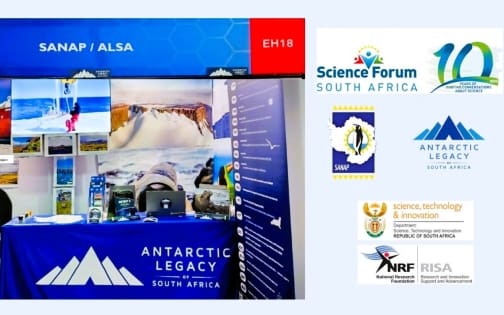
 The Science Forum South Africa (SFSA) 2025 brought together researchers, policy leaders, students, and science enthusiasts from across the globe—and once again, SANAP- ALSA proudly showcased South Africa’s vital role in Antarctic and climate-change research. This year, the Antarctic Legacy of South Africa (ALSA) exhibit drew significant attention from delegates and exhibitors eager to learn more about the scientific, cultural, and environmental contributions South Africa makes in the Antarctic region. ALSA highlighted its mission to preserve, promote, and communicate South Africa’s polar heritage, while also reflecting the essential research being conducted by institutions across the country under SANAP.
 Ministerial Engagement and Public Interaction: We were honoured to welcome the Honorable Minister of Higher Education, Science and Innovation, Dr Blade Nzimande, to the ALSA exhibition. During his visit, he participated in an interview with SABC at the ALSA stall and added his fingerprint to a large map of Antarctica—a symbolic gesture celebrating South Africa’s commitment to protecting the region. The full fingerprint map, once completed by visitors during SFSA, will be delivered to the Minister.
 Many attendees followed suit, placing their fingerprints on Antarctica maps to show solidarity in protecting the polar environment. This interactive activity reminded visitors of the fragility of polar ecosystems and the importance of ongoing conservation and research.
 Delegates also enjoyed creating their own Antarctic animal-themed badges—an engaging way to spark conversation about biodiversity in the Southern Ocean and sub-Antarctic islands.
 Showcasing SANAP Research: Among the highlights of the SANAP presence was the showcase by Prof Michelle Greve and Nicola Marnewick representing the Marion Island mouSe Ecology (MISE) Project. Their exhibit included research photographs, a project banner, and lively discussions with attendees about the ecological impacts of invasive house mice on Marion Island and ongoing efforts to understand and mitigate these effects.
 Building Global Connections and Sharing Knowledge – A central goal of the GEOTRACES Summer School is to foster meaningful collaboration and knowledge exchange among emerging scientists. Participants were assigned to diverse working groups intended to strengthen networking, encourage interdisciplinary thinking, and build long-term scientific partnerships. These groups formed the basis of practical activities, poster sessions, and the week’s learning programme.
 Prizewinners above with organising committee: l-r Thomas Ryan-Keogh, Hélène Planquette, Ruth Hawley, University Southampton (UK), CJ Denault, University of Minnesota (USA), Michael Julian Haryanto, University of Toyama (Japan), Ryan Cloete, Susanne Fietz. The organising committee—Hélène Planquette (CNRS), Susanne Fietz (Stellenbosch University), Thomas Ryan-Keogh (National Oceanography Centre), and Ryan Cloete (Stellenbosch University)—curated an intensive and enriching schedule combining expert lectures with hands-on training.
 Insightful Lectures – Participants were privileged to learn from internationally recognised researchers who shared their expertise across a wide range of GEOTRACES-relevant themes, including sampling techniques, trace element isotopes, atmospheric processes, paleoceanography, modelling, and science communication. Lecture Programme Highlights:
 Sincere appreciation to the sponsors of the 4th GEOTRACES Summer School:
 Fun during Science Communication session with adding fingerprints to an Antarctica Map
 The 7th South Africa National Antarctic Programme (SANAP) Research Symposium brought together the nation’s polar research community for four days of learning, connection and inspiration. Hosted and organised by Prof Bettine van Vuuren (University of Johannesburg), Prof Werner Nel (Fort Hare University) and Dr Liezel Rudolph (University of Free State) this year’s gathering took place at the Kwalata Game Lodge, offering a truly South African setting for discussions focused on some of the planet’s coldest and most remote regions.
 The
The 
 Who Should Submit?
 Message from Prof Werner Nel: