by Ria Olivier | Dec 3, 2025 | geochemistry, Oceanography, Research, SANAP, SANAP Student, Science, Southern Ocean
The South African National Antarctic Programme (SANAP) is proud to highlight the successful hosting of the 4th GEOTRACES Summer School, held in Cape Town, South Africa, from 17–21 November 2025. This prestigious international training event brought together 35 students and 19 GEOTRACES scientists from across the globe, reinforcing the importance of collaboration in advancing oceanographic and trace metal research. Supported by the French National Centre for Scientific Research (CNRS) and the Scientific Committee on Oceanic Research (SCOR), the summer school served as an essential platform for equipping PhD candidates and early career researchers with the knowledge and skills necessary to understand the biogeochemical cycles of trace metals in the world’s oceans. These cycles play a crucial role in regulating marine ecosystems, influencing climate processes, and shaping global biogeochemical dynamics.
 Building Global Connections and Sharing Knowledge – A central goal of the GEOTRACES Summer School is to foster meaningful collaboration and knowledge exchange among emerging scientists. Participants were assigned to diverse working groups intended to strengthen networking, encourage interdisciplinary thinking, and build long-term scientific partnerships. These groups formed the basis of practical activities, poster sessions, and the week’s learning programme.
Prizewinners above with organising committee: l-r Thomas Ryan-Keogh, Hélène Planquette, Ruth Hawley, University Southampton (UK), CJ Denault, University of Minnesota (USA), Michael Julian Haryanto, University of Toyama (Japan), Ryan Cloete, Susanne Fietz. The organising committee—Hélène Planquette (CNRS), Susanne Fietz (Stellenbosch University), Thomas Ryan-Keogh (National Oceanography Centre), and Ryan Cloete (Stellenbosch University)—curated an intensive and enriching schedule combining expert lectures with hands-on training.
Insightful Lectures – Participants were privileged to learn from internationally recognised researchers who shared their expertise across a wide range of GEOTRACES-relevant themes, including sampling techniques, trace element isotopes, atmospheric processes, paleoceanography, modelling, and science communication. Lecture Programme Highlights:
- Greg Cutter (Old Dominion University): Planning and executing a GEOTRACES cruise
- Rob Middag (NIOZ; University of Groningen): Trace metal clean sampling and analysis – past and present approaches
- Hélène Planquette (CNRS): Intercalibration
- Jessica Fitzsimmons (Texas A&M University): Physicochemical speciation and its role in oceanic metal sinks
- Alessandro Tagliabue (University of Liverpool): Predicting climate-change impacts on trace element and isotope (TEI) cycles for IPCC assessments
- Adi Torfstein (Hebrew University of Jerusalem): Trace element particulate fluxes in the ocean
- William (Bill) Landing (Florida State University): Atmospheric deposition of trace elements and their biogeochemical impact
- Tim Conway (University of South Florida): Iron isotopes
- Taryn Noble (University of Tasmania): Paleoceanography
- Rhiannon Jones (British Antarctic Survey): Sediments as sources and sinks of trace elements
- Zhouling Zhang (GEOMAR): Non-traditional stable isotopes in biogeochemical research
- Lise Artigue (University of Perpignan): Multi-tracer approaches combined with hydrodynamics, modelling, and microbiology
- Thomas Ryan-Keogh (National Oceanography Centre): Conducting nutrient-addition (“bioassay”) experiments at sea
- Mak Saito (Woods Hole Oceanographic Institution): Metals in biology and biochemistry
- Ria Olivier (Antarctic Legacy of South Africa): Science outreach, awareness, and the role of transdisciplinarity in communication
Hands-On Practical Training – To complement the lecture series, participants engaged in practical sessions that exposed them to key tools, datasets, and analytical techniques used in trace metal research. These sessions helped early career scientists understand how their work integrates into the broader international GEOTRACES community, building confidence for future participation in global research initiatives. Training included:
- Data crunching and processing
- Paleoceanographic exercises
- IPCC-style assessment activities
- Integrating complementary oceanographic datasets
- SeaFAST and MC-ICP-MS laboratory techniques
- GoFlo sampling methods
- Autonomous platform technologies
Sincere appreciation to the sponsors of the 4th GEOTRACES Summer School:
- French National Centre for Scientific Research (CNRS)
- French Embassy in South Africa, Lesotho, and Malawi
- Scientific Committee on Oceanic Research (SCOR)
We also acknowledge and thank the following South African partners and supporters, their collective support played a pivotal role in ensuring the success of this global training event.
- Department of Science, Technology and Innovation (DSTI)
- National Research Foundation (NRF)
- Department of Forestry, Fisheries and the Environment (DFFE)
- South African National Antarctic Programme (SANAP)
- Stellenbosch University (SUN)
- Sea Technology Services (STS)
- Antarctic Legacy of South Africa (ALSA)
Strengthening the Future of Trace Metal and Antarctic Research – The 4th GEOTRACES Summer School has once again demonstrated the power of international collaboration in addressing complex marine and climate challenges. By building capacity among early career scientists and connecting them with leading experts, this event helps ensure that the next generation is well equipped to contribute to cutting-edge oceanographic research—both within South Africa and across the world. SANAP is proud to have been part of such an impactful scientific gathering and remains committed to supporting global research that enhances understanding of our oceans and the polar regions.
Fun during Science Communication session with adding fingerprints to an Antarctica Map
by Ria Olivier | Dec 2, 2025 | Announcement, Research, SANAP, SCAR, Science
The South African National Antarctic Programme (SANAP) is pleased to share an exciting update from the Scientific Committee on Antarctic Research (SCAR). The international Antarctic research community is preparing to gather for one of the most anticipated events in polar science: the 12th SCAR Open Science Conference, taking place 8–19 August 2026 in Oslo, Norway. Hosted by SCAR in partnership with the Norwegian Polar Institute, the conference will be held at the centrally located Clarion Hotel – The Hub, bringing together researchers, students, policy makers, and partners from across the globe under the theme:
SCAR2026: “Diving into Antarctic Science – Making Waves for the Future”
Call for Abstracts — Deadline 28 February 2026 (23:59 UTC) – In the spirit of collaboration and scientific discovery, SCAR has officially opened the call for abstracts for the 2026 conference. Researchers are encouraged to submit abstracts by 28 February 2026 at 23:59 UTC. This is a valuable opportunity for the SANAP community to showcase cutting-edge Antarctic research and engage with colleagues working across a range of disciplines.
SUBMIT ABSTRACT
A Diverse and Dynamic Scientific Programme: The 2026 parallel session programme features 50 sessions spanning; Physical Sciences, Geosciences, Life Sciences, Humanities and Social Sciences and Cross-disciplinary themes. With this breadth of topics, the programme promises to highlight both disciplinary excellence and interdisciplinary innovation.
Explore the full session list here
First Circular Now Available. It provides important details, including Key conference dates, Conference structure, Travel guidance for visiting Oslo and Norway, Venue information, Exhibition and sponsorship opportunities. 📄 Download the First Circular.
Stay Informed. Visit scar2026.org for: Full programme details, Organising committee information, Partners, Sponsors, Travel and practical information. The website will be continuously updated as planning progresses.
Important Dates to Bookmark
| Date |
Event |
| 31 January 2026 |
Call for satellite events closes |
| 28 February 2026 |
Abstract submission closes |
| February 2026 |
Early-bird registration opens |
| 8–9 & 16 August 2026 |
Business meetings & satellite events |
| 10–14 August 2026 |
12th SCAR Open Science Conference |
| 15 August 2026 |
Science Group Business Meetings |
| 17–19 August 2026 |
SCAR Delegates Meeting |
SANAP encourages all South African polar researchers — established and emerging — to participate actively in SCAR2026. Let’s ensure that South Africa continues to make meaningful contributions to global Antarctic science and collaboration.
We look forward to seeing many SANAP scientists represented in Oslo!
by Ria Olivier | Nov 25, 2025 | Research, SANAP, SANAP Student, Science
16–19 November | Kwalata Game Lodge, North West Province
The 7th South Africa National Antarctic Programme (SANAP) Research Symposium brought together the nation’s polar research community for four days of learning, connection and inspiration. Hosted and organised by Prof Bettine van Vuuren (University of Johannesburg), Prof Werner Nel (Fort Hare University) and Dr Liezel Rudolph (University of Free State) this year’s gathering took place at the Kwalata Game Lodge, offering a truly South African setting for discussions focused on some of the planet’s coldest and most remote regions.
Inspiring Informal Talks – Two invited talks set the tone for an engaging and reflective symposium: David Hedding shared insights from the Prince Edward Island Expedition 2023, taking attendees into the rugged and scientifically rich sub-Antarctic. Pete Convey delivered a heartfelt reflection on “How did that happen? Four decades as a cold ecologist”, offering wisdom accumulated over a remarkable career in polar science.
Research Sessions: Advancing Polar Knowledge. Across multiple sessions, principal investigators presented updates on SANAP-supported research, revealing the depth and breadth of South Africa’s contribution to Southern Ocean and Antarctic science.
- Sub-Antarctic & Marion Island Research
- Saving Marion Island’s seabirds – Mouse-Free Marion Project
- Marion Island mouSe Ecology (MISE)
- Impact of mouse eradication on the Marion Island bird community
- Climate change impacts on Southern Ocean seabirds
- DFFE Top Predator Research
- Top predator ecology and ecosystem connections
- Southern Ocean Biogeochemistry & Climate
- Southern Ocean Carbon-Heat Nexus: Mixed-layer processes and climate feedbacks
- Micronutrient and pollutant trace elements at the air–sea interface
- Decoding the mercury cycle through in situ observations and modelling
- ECOSOPHY: Emergent constraints on Southern Ocean phytoplankton
- The biological carbon pump in a changing Southern Ocean
- Atmosphere, Space & Geophysics
- SuperDARN radar advances
- Polar space weather studies
- Mechanical and physical properties of Antarctic sea ice
- Antarctic Marginal Ice Zone (MIZ) and seasonal variability
- SAMOC and ACC long-term monitoring
- Structural glaciology of the north-western Antarctic ice shelves (SANAS)
- Provenance & paleomagnetics of Grunehogna Craton rocks
- Ecology, Genomics & Humanity in the Polar Regions
- Ecogenomics developments
- Modelling wind patterns and ecological impacts
- Landscape–climate interactions in the sub-Antarctic
- Whale Unit research updates
- The Marion Island Hut Book Project
- Antarctic Legacy of South Africa (ALSA)
- South African Antarctic Artists & Writers Programme
- Vessels and Biosecurity & Infrastructure
- SA Agulhas II – Flagship for Vessel (4.0), Part II
- Safeguarding biodiversity through SANAP biosecurity practices
Strategic Vision for the Future: The final day concluded with two forward-looking presentations and it emphasized SANAP’s growing impact on national priorities, global science, and South Africa’s leadership in polar stewardship.
- Dr Gilbert Siko: Antarctic and Southern Ocean Research – The Contribution to Innovation & Socio-Economic Development in South Africa
- Tracy Klarenbeek: Marine and Antarctic Research Strategy 2026–2036: Southern Ocean and Antarctic Research Plan
Building Community – Mentorship, Fun & Shared Moments. Beyond the science, the symposium celebrated community:
- A fun-filled evening hosted by APECSSA brought mentors and mentees together for quiz challenges and bingo, strengthening networks across generations.
- Mealtimes—shared breakfasts, lunches and dinners—provided space for collaboration and new friendships.
- Participants enjoyed the quiet beauty of Kwalata with game drives, wildlife sightings, and peaceful bushveld walks.
Here, beneath the wide African sky, researchers working from the Southernmost ice to Africa’s beating heart gathered to exchange knowledge, protect ecosystems, and shape a collective future for polar science.
A heartfelt thank you goes to the 7th SANAP Research Symposium Organising Committee for creating an inspiring, seamless and memorable gathering.
The 2026 symposium once again reflected SANAP’s strength: a passionate, collaborative community committed to understanding and safeguarding the Antarctic, Southern Ocean and sub-Antarctic regions—regions crucial to the wellbeing of our planet.
Until next time, we continue the work, inspired and united.
Group photo: Annette Ford
by Ria Olivier | Nov 12, 2025 | Announcement, Research, SANAP, SCAR, Science
Recognising Excellence in Antarctic Research and Service
The Scientific Committee on Antarctic Research (SCAR) plays a pivotal role in advancing knowledge of the Antarctic and Southern Ocean. A cornerstone of this mission is the recognition of excellence — celebrating researchers and contributors whose work and service embody the spirit of international cooperation and scientific discovery in the Antarctic community.
Honouring Outstanding Contributions
To highlight and reward those who exemplify the best of the Antarctic community, SCAR established a series of prestigious medals. These awards celebrate both scientific achievement and dedicated service, serving as an inspiration for the next generation of polar researchers.
Since their inception in 2006, SCAR has awarded:
In 2018, SCAR introduced a third category:
Each of these medals is awarded through a peer-nominated process, ensuring fairness, transparency, and the recognition of true merit. Recipients are selected by an expert committee based on their outstanding contributions to Antarctic research, collaboration, or education and outreach.
The President’s Medal for Outstanding Achievement
In addition to the main medals, SCAR also awards the President’s Medal for Outstanding Achievement. This distinguished honour is presented by the outgoing SCAR President to an individual who has made exceptional contributions to SCAR and the wider Antarctic community during their term.
Call for Nominations — 2026 SCAR Medals
Nominations for the 2026 SCAR Medals are now open!
🗓️ Initial nominations close on 22 March 2026.
This is a unique opportunity to recognise peers who have made remarkable contributions to Antarctic science, coordination, or communication.
For detailed information on the award criteria and selection process, please visit SCAR’s Detailed Information page.
by Ria Olivier | Nov 11, 2025 | Announcement, Research, SANAP, SANAP Student, Science
At the edge of the Earth lies a mirror of our planet — a place where ice tells the story of climate, oceans, and life itself. The South African National Antarctic Programme (SANAP) stands at the forefront of exploring and protecting this frozen world.
This November, the SANAP research community will gather once again for the 7th SANAP Symposium, a meeting of minds, science, and purpose.
Dates: 16–19 November 2025
Venue: Kwalata Game Reserve, South Africa
The Symposium brings together researchers, students, policymakers, and environmental stewards from across disciplines to share discoveries from the Antarctic and Southern Ocean, and to reflect on how they shape our understanding of global change.
From the southernmost ice sheets to Africa’s beating heart, SANAP researchers explore the connections that link polar science to climate, ecosystems, and society. The Symposium offers a unique opportunity to discuss new research, inspire collaboration, and strengthen the community committed to safeguarding the world’s most remote environments.
Join the conversation, connect with fellow explorers of knowledge, and be part of shaping a sustainable polar future.
More information click here
by Ria Olivier | Oct 2, 2025 | Antarctica, Engineering, Jobs, Research, SANAE, Science
Programme: Space Science: Volunteer
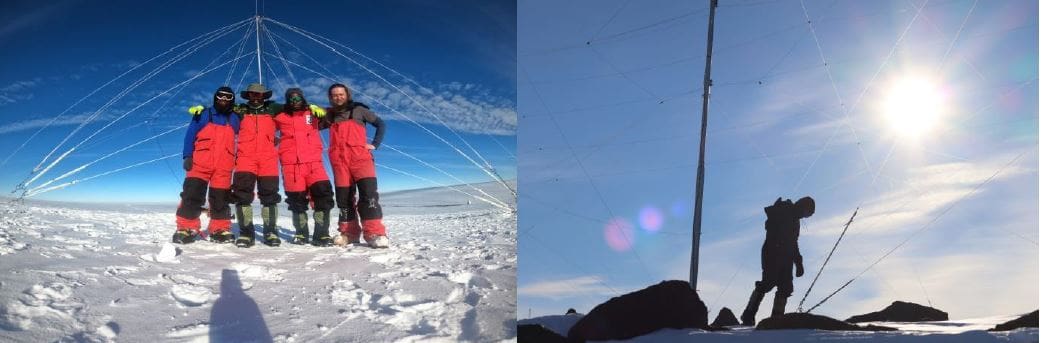
This is a unique opportunity for individuals with a scientific and/or engineering background, who are eager for an extraordinary experience in a remote Antarctic environment. We are currently assembling a team to participate in the annual relief expedition to SANAE IV, Antarctica. The SANAE IV station in Antarctica lies at 71°S, 2°W – 4280 km from East Pier in Cape Town Harbour. (Photo above taken in 2022 during the annual relief voyage)
Successful candidates will embark on the SA Agulhas II, South Africa’s polar research and supply vessel, for a voyage of approximately 14 days to Antarctica. Upon arrival, they will be stationed at the SANAE IV research base for the entire relief period. Volunteers will work under the guidance of the Group Leader/Senior Engineer, assisting with critical infrastructure maintenance, scientific instrument servicing, and logistical operations during the expedition.
Voyage Dates: 9 December 2025 – 9 February 2026 (TBC)
For more information: Click Here

 Prizewinners above with organising committee: l-r Thomas Ryan-Keogh, Hélène Planquette, Ruth Hawley, University Southampton (UK), CJ Denault, University of Minnesota (USA), Michael Julian Haryanto, University of Toyama (Japan), Ryan Cloete, Susanne Fietz. The organising committee—Hélène Planquette (CNRS), Susanne Fietz (Stellenbosch University), Thomas Ryan-Keogh (National Oceanography Centre), and Ryan Cloete (Stellenbosch University)—curated an intensive and enriching schedule combining expert lectures with hands-on training.
 Insightful Lectures – Participants were privileged to learn from internationally recognised researchers who shared their expertise across a wide range of GEOTRACES-relevant themes, including sampling techniques, trace element isotopes, atmospheric processes, paleoceanography, modelling, and science communication. Lecture Programme Highlights:
 Sincere appreciation to the sponsors of the 4th GEOTRACES Summer School:
 Fun during Science Communication session with adding fingerprints to an Antarctica Map
 The South African National Antarctic Programme (SANAP) is pleased to share an exciting update from the Scientific Committee on Antarctic Research (SCAR). The international Antarctic research community is preparing to gather for one of the most anticipated events in polar science: the 12th SCAR Open Science Conference, taking place 8–19 August 2026 in Oslo, Norway. Hosted by SCAR in partnership with the Norwegian Polar Institute, the conference will be held at the centrally located Clarion Hotel – The Hub, bringing together researchers, students, policy makers, and partners from across the globe under the theme:
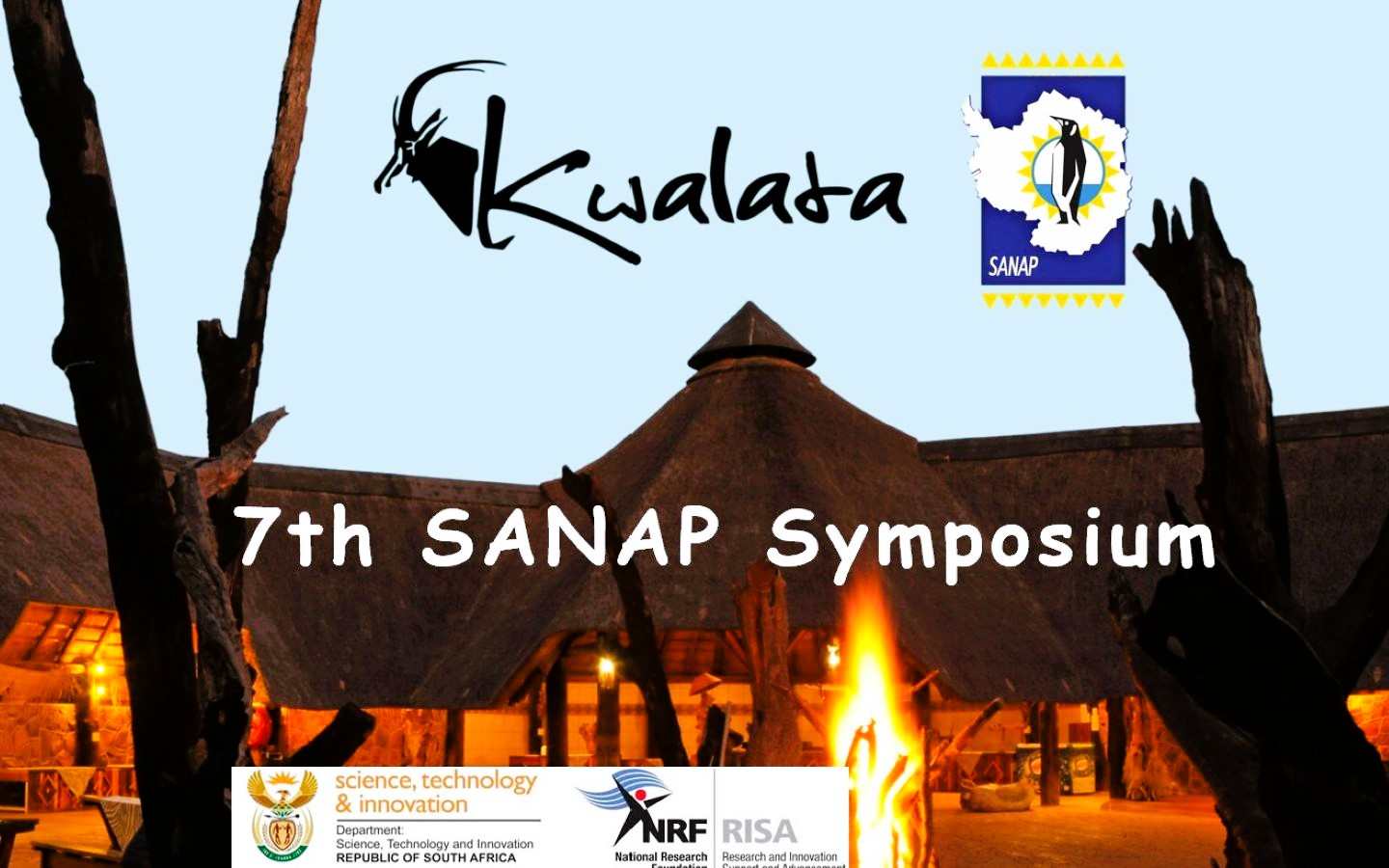 The 7th South Africa National Antarctic Programme (SANAP) Research Symposium brought together the nation’s polar research community for four days of learning, connection and inspiration. Hosted and organised by Prof Bettine van Vuuren (University of Johannesburg), Prof Werner Nel (Fort Hare University) and Dr Liezel Rudolph (University of Free State) this year’s gathering took place at the Kwalata Game Lodge, offering a truly South African setting for discussions focused on some of the planet’s coldest and most remote regions.
 Honouring Outstanding Contributions

 Programme: Space Science: Volunteer
  This is a unique opportunity for individuals with a scientific and/or engineering background, who are eager for an extraordinary experience in a remote Antarctic environment. We are currently assembling a team to participate in the annual relief expedition to SANAE IV, Antarctica. The SANAE IV station in Antarctica lies at 71°S, 2°W – 4280 km from East Pier in Cape Town Harbour. (Photo above taken in 2022 during the annual relief voyage)
 Successful candidates will embark on the SA Agulhas II, South Africa’s polar research and supply vessel, for a voyage of approximately 14 days to Antarctica. Upon arrival, they will be stationed at the SANAE IV research base for the entire relief period. Volunteers will work under the guidance of the Group Leader/Senior Engineer, assisting with critical infrastructure maintenance, scientific instrument servicing, and logistical operations during the expedition.