by Ria Olivier | Feb 12, 2026 | Antarctica, Research, SANAE, SANAP, Science
The End: From Field Data to Global Impact
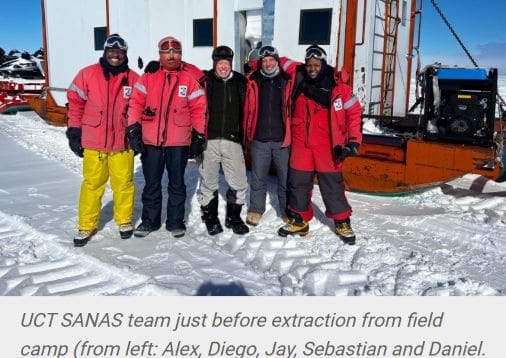 By early February 2026, the SANAP field campaign entered its final phase, completing measurements and preparing for extraction ahead of worsening weather.
Temporary GNSS stations along the calving front were recovered, allowing detailed mapping of ice velocities across the ice shelf. Advanced radar surveys also measured ice thickness and internal crystal orientation, improving models of ice flow and fracture behaviour.
Seismic equipment was retrieved after weeks of recording, capturing data on both controlled signals and natural fracture events. These datasets will support detailed imaging of ice-shelf structure and zones of weakness.
As severe weather approached, the team secured equipment, dismantled installations, and restored the camp site, marking the successful completion of a productive campaign.
The project’s findings will improve predictions of Antarctic ice loss and future sea-level rise, with implications for global climate systems, coastal communities, and ecosystems. As fieldwork ends, long-term data analysis begins.
Full Article
by Ria Olivier | Feb 9, 2026 | Antarctica, Engineering, geochemistry, Research, SANAP
The Duration: Life and Science on the Fimbulisen Ice Shelf
Through mid- and late January, the team balanced demanding science with the realities of Antarctic fieldwork. GNSS stations positioned around major basal crevasses provided precise measurements of ice motion and fracture growth, helping assess the risk of large calving events. Complementary radar surveys quantified changes in ice thickness, supplying key inputs for ice-shelf flow models.
Seismic surveys used arrays of geophones and controlled energy sources to image the ice shelf and the ice–ocean interface. Drone-based ground-penetrating radar revealed the structure and evolution of deep basal crevasses, building on data from the previous season.
Fieldwork was frequently interrupted by severe storms, including wind gusts exceeding 120 km/h. Despite delays, the team adapted schedules and used downtime for maintenance and data checks. A major milestone was the first deployment of SAR corner reflectors on an Antarctic ice shelf, enabling highly accurate satellite tracking of ice motion.
Together, these measurements produced a unique dataset capturing both surface and subsurface behaviour of the Fimbulisen Ice Shelf.
Full Article
by Ria Olivier | Feb 7, 2026 | Antarctica, Engineering, geochemistry, Research, SANAP
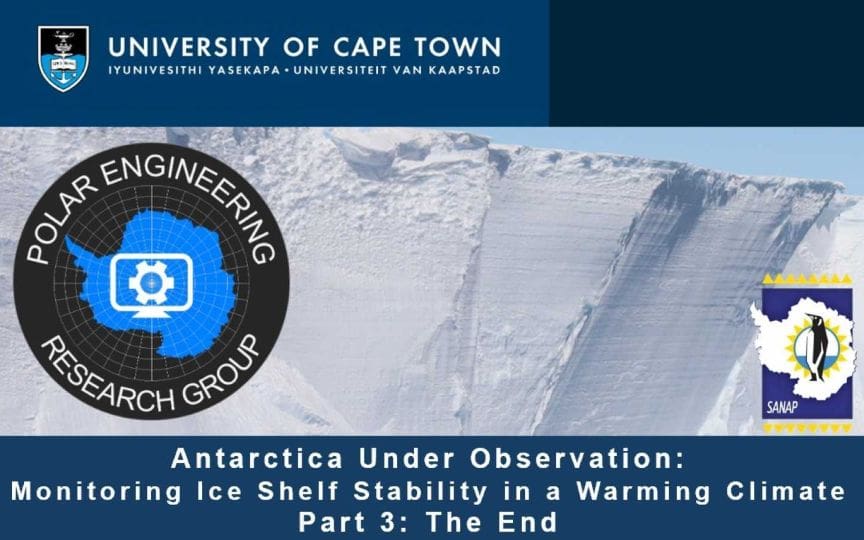
Monitoring Antarctic Ice Shelf Stability. Antarctic ice shelves play a critical role in controlling future sea-level rise.
In January 2026, an international research team began the second field campaign of Structural Glaciological Analysis of the Antarctic Ice Shelves, supported by the National Research Foundation and the South African National Antarctic Programme (SANAP). Led by the University of Cape Town’s Polar Engineering Research Group, the project combines expertise in engineering, geophysics, and glaciology.
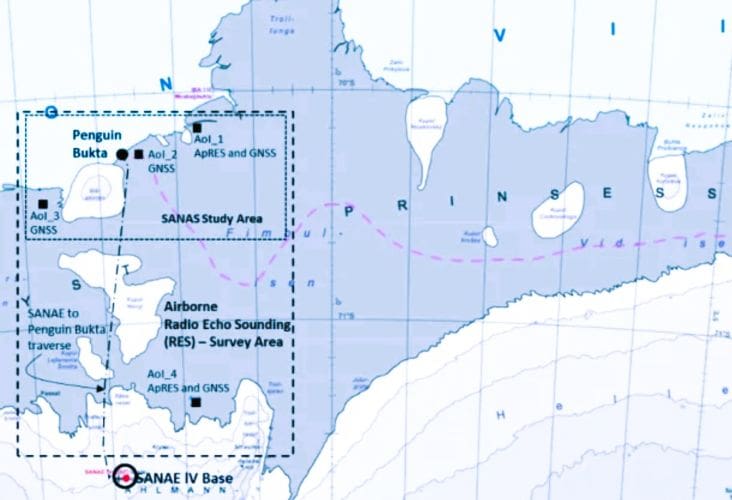
The focus is the western Fimbulisen Ice Shelf , which regulates ice flow from the Antarctic interior into the Southern Ocean via the Jutulstraumen Glacier. Changes in its stability directly affect ice discharge and global sea level.
The SANAP 2025/2026 team arrived aboard SA Agulhas II on 11 January 2026 and established a field camp on the ice shelf. Early work centred on retrieving data from permanent GNSS stations and phase-sensitive radar instruments measuring ice motion, thickness, and basal melt.
These efforts marked the start of five intensive weeks of fieldwork aimed at understanding how Antarctic ice shelves respond to a warming climate.
Full Article
by Ria Olivier | Jan 30, 2026 | Announcement, Jobs, Marion Island, News, Overwintering Team, Research, SANAP, Science, Southern Ocean, Stations, sub-Antarctic, Team member
Applications are still open for the following positions on the sub-Antarctic, Marion Island for the overwintering period (April 2026 to May 2027)
Communications Engineer Diesel Mechanic Electrical Engineer Medical Orderly
Closing Date: 09 February 2026
The incumbent will execute duties at a Sub/Antarctic Base and adhere to the health, safety and environmental requirements. The successful applicant will spend a full year (April 2026 to May 2027) at Marion Island. There is no option to return to South Africa before May 2027. The ability to work and live with small groups of people is thus essential. Although the base is well-equipped with e-mail, fax and satellite telephone facilities, the applicant must be self-sufficient and self-motivated.
by Ria Olivier | Dec 5, 2025 | Legacy, Research, SANAP, SANAP Student, Science
The Science Forum South Africa (SFSA) 2025 brought together researchers, policy leaders, students, and science enthusiasts from across the globe—and once again, SANAP- ALSA proudly showcased South Africa’s vital role in Antarctic and climate-change research. This year, the Antarctic Legacy of South Africa (ALSA) exhibit drew significant attention from delegates and exhibitors eager to learn more about the scientific, cultural, and environmental contributions South Africa makes in the Antarctic region. ALSA highlighted its mission to preserve, promote, and communicate South Africa’s polar heritage, while also reflecting the essential research being conducted by institutions across the country under SANAP.
Ministerial Engagement and Public Interaction: We were honoured to welcome the Honorable Minister of Higher Education, Science and Innovation, Dr Blade Nzimande, to the ALSA exhibition. During his visit, he participated in an interview with SABC at the ALSA stall and added his fingerprint to a large map of Antarctica—a symbolic gesture celebrating South Africa’s commitment to protecting the region. The full fingerprint map, once completed by visitors during SFSA, will be delivered to the Minister.
Many attendees followed suit, placing their fingerprints on Antarctica maps to show solidarity in protecting the polar environment. This interactive activity reminded visitors of the fragility of polar ecosystems and the importance of ongoing conservation and research.
Delegates also enjoyed creating their own Antarctic animal-themed badges—an engaging way to spark conversation about biodiversity in the Southern Ocean and sub-Antarctic islands.
Showcasing SANAP Research: Among the highlights of the SANAP presence was the showcase by Prof Michelle Greve and Nicola Marnewick representing the Marion Island mouSe Ecology (MISE) Project. Their exhibit included research photographs, a project banner, and lively discussions with attendees about the ecological impacts of invasive house mice on Marion Island and ongoing efforts to understand and mitigate these effects.
Highlighting South Africa’s Contributions to Polar Science: SANAP supports a wide array of multidisciplinary research projects aimed at understanding the Antarctic, the sub-Antarctic, and the Southern Ocean. During SFSA 2025, we highlighted several active research programmes across South Africa’s leading institutions, these projects collectively demonstrate South Africa’s leadership in understanding climate change, marine ecosystems, glaciology, atmospheric science, biodiversity, and Earth systems—research essential to global climate policy and scientific preparedness.:
- SEAmester – South Africa’s Floating University
- SA Agulhas II – Flagship for Vessel (4.0) – Part II
- On-island impacts of climate change on the Southern Ocean’s iconic seabirds
- The biological carbon pump in a changing Southern Ocean
- Micronutrient and pollutant trace elements at the air-sea interface of the Southern Ocean
- Crustal evolution of Dronning Maud Land
- Marion Island mouSe Ecology (MISE)
- Ecogenomics
- SANAE HF radar
- South African Antarctic Artists and Writers Programme (AWP) Pilot
- Polar Space Weather Studies
- Interactive effects of multiple stressors and environmental change on seabird breeding performance
- Decoding the mercury cycle in the Southern Ocean: in situ observations and advanced modeling
- Landscape and Climate Interactions in the sub-Antarctic
- Marion Island Top Predator Long-Term Observations
- Southern Ocean Carbon-Heat Nexus: mixed-layer processes & feedbacks for improved climate projections
- Growth dynamics of sea ice and how they affect sea-ice mechanics
- ECOSOPHY – Emergent constraints on Southern Ocean phytoplankton physiology
- Structural Glaciological Analysis of North-Western Antarctic Ice Shelf (SANAS)
- Provenance and paleomagnetics of the rocks of the Grunehogna Craton in Western Dronning Maud Land
- Antarctic MIZ Observations: interdisciplinary approaches to resolve seasonal sea-ice variability
Acknowledgements: We extend our sincere thanks to all visitors, partners, collaborators, and supporters who stopped by the ALSA exhibit. Your interest and engagement help strengthen South Africa’s ongoing commitment to polar science. Thank you to DSTI and NRF making the exhibit possible.
SANAP remains dedicated to advancing research, supporting our scientists, and preserving our legacy in the Antarctic region.
by Ria Olivier | Dec 3, 2025 | geochemistry, Oceanography, Research, SANAP, SANAP Student, Science, Southern Ocean
The South African National Antarctic Programme (SANAP) is proud to highlight the successful hosting of the 4th GEOTRACES Summer School, held in Cape Town, South Africa, from 17–21 November 2025. This prestigious international training event brought together 35 students and 19 GEOTRACES scientists from across the globe, reinforcing the importance of collaboration in advancing oceanographic and trace metal research. Supported by the French National Centre for Scientific Research (CNRS) and the Scientific Committee on Oceanic Research (SCOR), the summer school served as an essential platform for equipping PhD candidates and early career researchers with the knowledge and skills necessary to understand the biogeochemical cycles of trace metals in the world’s oceans. These cycles play a crucial role in regulating marine ecosystems, influencing climate processes, and shaping global biogeochemical dynamics.
Building Global Connections and Sharing Knowledge – A central goal of the GEOTRACES Summer School is to foster meaningful collaboration and knowledge exchange among emerging scientists. Participants were assigned to diverse working groups intended to strengthen networking, encourage interdisciplinary thinking, and build long-term scientific partnerships. These groups formed the basis of practical activities, poster sessions, and the week’s learning programme.
Prizewinners above with organising committee: l-r Thomas Ryan-Keogh, Hélène Planquette, Ruth Hawley, University Southampton (UK), CJ Denault, University of Minnesota (USA), Michael Julian Haryanto, University of Toyama (Japan), Ryan Cloete, Susanne Fietz. The organising committee—Hélène Planquette (CNRS), Susanne Fietz (Stellenbosch University), Thomas Ryan-Keogh (National Oceanography Centre), and Ryan Cloete (Stellenbosch University)—curated an intensive and enriching schedule combining expert lectures with hands-on training.
Insightful Lectures – Participants were privileged to learn from internationally recognised researchers who shared their expertise across a wide range of GEOTRACES-relevant themes, including sampling techniques, trace element isotopes, atmospheric processes, paleoceanography, modelling, and science communication. Lecture Programme Highlights:
- Greg Cutter (Old Dominion University): Planning and executing a GEOTRACES cruise
- Rob Middag (NIOZ; University of Groningen): Trace metal clean sampling and analysis – past and present approaches
- Hélène Planquette (CNRS): Intercalibration
- Jessica Fitzsimmons (Texas A&M University): Physicochemical speciation and its role in oceanic metal sinks
- Alessandro Tagliabue (University of Liverpool): Predicting climate-change impacts on trace element and isotope (TEI) cycles for IPCC assessments
- Adi Torfstein (Hebrew University of Jerusalem): Trace element particulate fluxes in the ocean
- William (Bill) Landing (Florida State University): Atmospheric deposition of trace elements and their biogeochemical impact
- Tim Conway (University of South Florida): Iron isotopes
- Taryn Noble (University of Tasmania): Paleoceanography
- Rhiannon Jones (British Antarctic Survey): Sediments as sources and sinks of trace elements
- Zhouling Zhang (GEOMAR): Non-traditional stable isotopes in biogeochemical research
- Lise Artigue (University of Perpignan): Multi-tracer approaches combined with hydrodynamics, modelling, and microbiology
- Thomas Ryan-Keogh (National Oceanography Centre): Conducting nutrient-addition (“bioassay”) experiments at sea
- Mak Saito (Woods Hole Oceanographic Institution): Metals in biology and biochemistry
- Ria Olivier (Antarctic Legacy of South Africa): Science outreach, awareness, and the role of transdisciplinarity in communication
Hands-On Practical Training – To complement the lecture series, participants engaged in practical sessions that exposed them to key tools, datasets, and analytical techniques used in trace metal research. These sessions helped early career scientists understand how their work integrates into the broader international GEOTRACES community, building confidence for future participation in global research initiatives. Training included:
- Data crunching and processing
- Paleoceanographic exercises
- IPCC-style assessment activities
- Integrating complementary oceanographic datasets
- SeaFAST and MC-ICP-MS laboratory techniques
- GoFlo sampling methods
- Autonomous platform technologies
Sincere appreciation to the sponsors of the 4th GEOTRACES Summer School:
- French National Centre for Scientific Research (CNRS)
- French Embassy in South Africa, Lesotho, and Malawi
- Scientific Committee on Oceanic Research (SCOR)
We also acknowledge and thank the following South African partners and supporters, their collective support played a pivotal role in ensuring the success of this global training event.
- Department of Science, Technology and Innovation (DSTI)
- National Research Foundation (NRF)
- Department of Forestry, Fisheries and the Environment (DFFE)
- South African National Antarctic Programme (SANAP)
- Stellenbosch University (SUN)
- Sea Technology Services (STS)
- Antarctic Legacy of South Africa (ALSA)
Strengthening the Future of Trace Metal and Antarctic Research – The 4th GEOTRACES Summer School has once again demonstrated the power of international collaboration in addressing complex marine and climate challenges. By building capacity among early career scientists and connecting them with leading experts, this event helps ensure that the next generation is well equipped to contribute to cutting-edge oceanographic research—both within South Africa and across the world. SANAP is proud to have been part of such an impactful scientific gathering and remains committed to supporting global research that enhances understanding of our oceans and the polar regions.
Fun during Science Communication session with adding fingerprints to an Antarctica Map
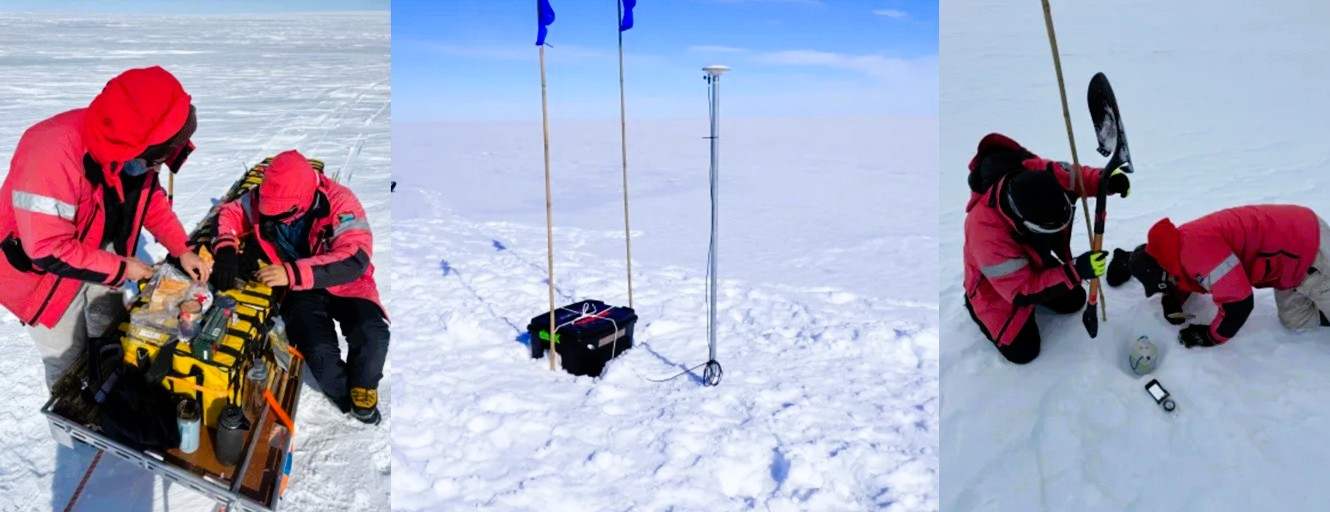 Through mid- and late January, the team balanced demanding science with the realities of Antarctic fieldwork. GNSS stations positioned around major basal crevasses provided precise measurements of ice motion and fracture growth, helping assess the risk of large calving events. Complementary radar surveys quantified changes in ice thickness, supplying key inputs for ice-shelf flow models.
 Monitoring Antarctic Ice Shelf Stability. Antarctic ice shelves play a critical role in controlling future sea-level rise.
 Applications are still open for the following positions on the sub-Antarctic, Marion Island for the overwintering period (April 2026 to May 2027)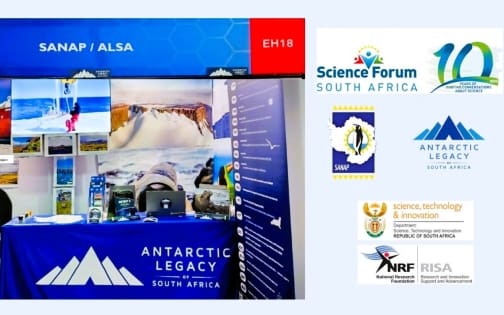
 The Science Forum South Africa (SFSA) 2025 brought together researchers, policy leaders, students, and science enthusiasts from across the globe—and once again, SANAP- ALSA proudly showcased South Africa’s vital role in Antarctic and climate-change research. This year, the Antarctic Legacy of South Africa (ALSA) exhibit drew significant attention from delegates and exhibitors eager to learn more about the scientific, cultural, and environmental contributions South Africa makes in the Antarctic region. ALSA highlighted its mission to preserve, promote, and communicate South Africa’s polar heritage, while also reflecting the essential research being conducted by institutions across the country under SANAP.
 Ministerial Engagement and Public Interaction: We were honoured to welcome the Honorable Minister of Higher Education, Science and Innovation, Dr Blade Nzimande, to the ALSA exhibition. During his visit, he participated in an interview with SABC at the ALSA stall and added his fingerprint to a large map of Antarctica—a symbolic gesture celebrating South Africa’s commitment to protecting the region. The full fingerprint map, once completed by visitors during SFSA, will be delivered to the Minister.
 Many attendees followed suit, placing their fingerprints on Antarctica maps to show solidarity in protecting the polar environment. This interactive activity reminded visitors of the fragility of polar ecosystems and the importance of ongoing conservation and research.
 Delegates also enjoyed creating their own Antarctic animal-themed badges—an engaging way to spark conversation about biodiversity in the Southern Ocean and sub-Antarctic islands.
 Showcasing SANAP Research: Among the highlights of the SANAP presence was the showcase by Prof Michelle Greve and Nicola Marnewick representing the Marion Island mouSe Ecology (MISE) Project. Their exhibit included research photographs, a project banner, and lively discussions with attendees about the ecological impacts of invasive house mice on Marion Island and ongoing efforts to understand and mitigate these effects.
 Building Global Connections and Sharing Knowledge – A central goal of the GEOTRACES Summer School is to foster meaningful collaboration and knowledge exchange among emerging scientists. Participants were assigned to diverse working groups intended to strengthen networking, encourage interdisciplinary thinking, and build long-term scientific partnerships. These groups formed the basis of practical activities, poster sessions, and the week’s learning programme.
 Prizewinners above with organising committee: l-r Thomas Ryan-Keogh, Hélène Planquette, Ruth Hawley, University Southampton (UK), CJ Denault, University of Minnesota (USA), Michael Julian Haryanto, University of Toyama (Japan), Ryan Cloete, Susanne Fietz. The organising committee—Hélène Planquette (CNRS), Susanne Fietz (Stellenbosch University), Thomas Ryan-Keogh (National Oceanography Centre), and Ryan Cloete (Stellenbosch University)—curated an intensive and enriching schedule combining expert lectures with hands-on training.
 Insightful Lectures – Participants were privileged to learn from internationally recognised researchers who shared their expertise across a wide range of GEOTRACES-relevant themes, including sampling techniques, trace element isotopes, atmospheric processes, paleoceanography, modelling, and science communication. Lecture Programme Highlights:
 Sincere appreciation to the sponsors of the 4th GEOTRACES Summer School:
 Fun during Science Communication session with adding fingerprints to an Antarctica Map