by Ria Olivier | Apr 21, 2026 | Antarctica, Environment, Gough Island, International Days, Marion Island, Prince Edward Island, Research, Science, Southern Ocean, sub-Antarctic
Earth Day is commemorated annually on 22 April and is one of the largest global environmental movements. In 2026, the theme “Our Power, Our Planet” highlights the importance of civic action, community engagement, and collective responsibility in addressing environmental challenges. For the South African National Antarctic Programme (SANAP), Earth Day is not only a moment of reflection, but also a celebration of ongoing scientific research, conservation efforts, and the people who make this work possible.
Why Earth Day Matters! SANAP’s vision to understand, develop, and conserve the Antarctic, sub-Antarctic, and Southern Ocean environments aligns directly with the principles of Earth Day. These remote regions are critical to the health of our planet. They regulate global climate systems, support unique biodiversity, and provide essential insights into environmental change. Research is vital in a world where environmental risks continue to dominate global concerns and research conducted through SANAP contributes to:
- Understanding climate change and its global impacts
- Protecting fragile sub-Antarctic ecosystems
- Monitoring marine and terrestrial biodiversity
- Supporting sustainable environmental stewardship
SANAP scientists and researchers work in some of the most extreme environments on Earth, studying ocean systems, atmospheric processes, wildlife ecology, and environmental change. Their work contributes to international scientific knowledge and informs global responses to climate challenges. Equally important are the support personnel who ensures that research can be conducted safely and effectively. Earth Day is an opportunity to recognise the collective effort required to sustain Antarctic science.
Earth Day reminds us that protecting the environment is a shared responsibility. While SANAP operates in remote regions, the insights gained have global relevance. Healthy ecosystems—from the Antarctic to Southern Ocean currents—play a crucial role in climate regulation, biodiversity, and human wellbeing. The 2026 focus on civic mobilisation and community action reinforces the idea that meaningful change comes from both scientific understanding and public engagement. Within the SANAP community, Earth Day is a time to:
- Reflect on the importance of Antarctic and ocean research
- Celebrate the contributions of scientists and support teams
- Promote awareness of environmental conservation
- Inspire continued commitment to protecting our planet
By advancing knowledge and supporting conservation, SANAP contributes to a global effort to safeguard Earth’s future.
by Ria Olivier | Mar 3, 2026 | Antarctica, Gough Island, International Days, Invasion Biology, Mammology, Marion Island, Ornithology, Prince Edward Island, Research
Every year on 3 March, the world celebrates World Wildlife Day, recognising the extraordinary diversity of life and the need to conserve it. For South Africa, this commitment extends far beyond the mainland — to the remote sub-Antarctic and Antarctic regions where SANAP conducts research and conservation work and plays a vital role in understanding and protecting some of the world’s most unique ecosystems.
Macaroni Penguin on Marion Island getting ready for World Wildlife Day – Otto Whitehead
Guardians of the Sub-Antarctic: The Prince Edward Islands — comprising Marion Island and Prince Edward Island — are globally significant biodiversity hotspots, they host thriving populations of seabirds and marine mammals, including King, Macaroni, Gentoo, and Rockhopper penguins, several Albatross and Petrel species, Southern Elephant seals and Antarctic Fur seals and Killer whales. SANAP-supported researchers monitor wildlife populations to detect changes linked to climate variability, ocean conditions, and human impacts. Long-term datasets collected over decades allow scientists to track breeding success, foraging behaviour, migration patterns, and survival rates.
These islands are also a Special Nature Reserve — South Africa’s highest level of environmental protection — ensuring strict conservation management. Ongoing efforts include the monitoring ecosystem health, studying predator-prey relationships, investigate the effects of climate change on sub-Antarctic food webs and managing invasive species. The eradication of invasive species and strict biosecurity controls are among conservation projects that protect these fragile ecosystems from human-introduced threats.
Macaroni Penguin on Marion Island enjoying World Wildlife Day – Otto Whitehead
Through science, conservation management, and responsible environmental practices, SANAP continues to protect these extraordinary environments for future generations. On this World Wildlife Day, we reaffirm our commitment to understanding, conserving, and championing life at the edge of the Earth. We celebrate the resilience of life in extreme environments, the dedication of researchers working in extreme conditions and South Africa’s role in polar science and environmental stewardship.
- Video Credit: Otto Whitehead
- Feature background image credit: Ben van der Walt
by Ria Olivier | Dec 5, 2025 | Announcement, Marion Island, Prince Edward Island, Prince Edward Islands
CLOSING DATE: Monday 26 January 2026
Consultation on the intention to adopt a generic environmental management programme and exclude identified activities associated with conservation or conservation research at THE PRINCE EDWARD ISLANDS, for public comment.
The Minister of Forestry, Fisheries and the Environment is hereby consulting on the intention to adopt a Generic Environmental Management Programme for Conservation or Conservation Research at the Prince Edward Islands (revision 0 of 2025) (GEMPr) as an environmental management instrument in terms of the Regulations Laying Down the Procedure for the Adoption of Environmental Management Instruments, 2019, read with section 24(5)(bA) of the National Environmental Management Act, 1998, (Act No. 107 of 1998) (NEMA) and based on compliance with this environmental management instrument to, in terms of section 24(2)(e) of the NEMA, exclude activities identified in terms of section 24(2)(a) and (b) from the requirement to obtain an environmental authorisation.
Only conservation or conservation research currently takes place at the Prince Edward Islands, some of which may require environmental authorisation for activities identified in terms of sections 24(2)(a) and (b) of the NEMA prior to commencement thereof. The GEMPr stipulates appropriate measures to avoid, manage and/or mitigate potential environmental impacts and risks associated with the implementation of identified activities. The exclusion of identfied activities will be applicable to conservation or conservation research only, subject to compliance with the Government Notice and Schedule and the relevant requirements of the GEMPr, which includes the requirement to register any such exclusions.
Members of the public are invited to submit written comments or input within 30 days from the date of the publication of the Notice in the Government Gazette or the publication of the newspaper notice, whichever occurs last. Should the 30-day comment period overlap with the period from 15 December 2025 to 5 January 2026, this period will be excluded from the reckoning of days.
Comments may be submitted by post to the Director-General of the Department of Forestry, Fisheries and the Environment for the attention of A Gabriel, at Private Bag X447, Pretoria, 0001; or by e-mail at agabriel@dffe.gov.za. Comments or inputs received after the public comment period may not be considered.
The Government Notice is accessible on the website of the Department – CLICK HERE
GEMPr is accessible at DFFE – CLICK HERE
Any inquiries in connection with the Notice can be directed to Alvan Gabriel at agabriel@dffe.gov.za (Cell: 066 081 9554).
For communications or media enquiries, kindly contact Mr Zolile Nqayi: Acting Chief Director Communications and Advocacy on Cell: 083 898 6483 I Tel: 021 4937144 Email: znqayi@dffe.gov.za
The Department of Forestry, Fisheries and the Environment complies with the Protection of Personal Information Act, 2013 (Act No. 4 of 2013). Comments received and responses thereto are collated into a comments and response report which will be made available to the public as part of the consultation process. If a commenting party has any objection to his or her name, or the name of the represented company/organisation, being made publicly available in the comments and responses report, such objection should be highlighted in bold as part of the comments submitted.
TEXT from PUBLIC NOTICE: ISSUED BY THE DEPARTMENT OF FORESTRY, FISHERIES AND THE ENVIRONMENT.
by Ria Olivier | Jul 31, 2025 | International Days, Marine Protected Area, Marion Island, Prince Edward Island, SANAP
Today, on Marine Protected Areas (MPA) Day, we join a growing global community in celebrating the ocean’s incredible biodiversity and the sanctuaries that safeguard it. This year’s theme, “Ocean Protection Needs Human Connection”, is a powerful reminder that the health of our oceans is inseparably linked to the actions and commitment of people.
MPA Day, shines a spotlight on the importance of Marine Protected Areas in ocean conservation, sustainable development, and the well-being of communities across the globe. The date—1 August—honours the momentous 2019 declaration of 20 new or expanded MPAs in South Africa. Since then, MPA Day has grown into a United Nations Ocean Decade-endorsed international movement.
The Prince Edward Islands MPA: South Africa’s Sub-Antarctic Treasure: In the remote reaches of the Southern Ocean lies one of South Africa’s most unique and ecologically valuable MPAs—the Prince Edward Islands Marine Protected Area, comprising the volcanic Marion Island and the smaller Prince Edward Island. Together, they represent South Africa’s only sub-Antarctic territory, rich in biodiversity and scientific significance. Declared in 2013, this MPA protects 30% of South Africa’s Southern Ocean territory, encompassing 80% of its marine ecosystem diversity. These waters are a haven for marine life—from krill and Patagonian toothfish to charismatic top predators like seals, seabirds, and killer whales.
Marion Island is more than just a rugged sub-Antarctic outpost—it is a living laboratory and sanctuary:
- Home to 40% of the world’s wandering albatrosses
- Teeming with millions of penguins, albatrosses, petrels, and seals
- Hosts unique benthic (seafloor) ecosystems found nowhere else in South Africa
- Provides essential feeding grounds for top predators
- A permanent weather station contributes vital data for monitoring climate change in the Southern Ocean
While the marine protections are robust, terrestrial threats persist. Invasive house mice, introduced in the 1800s, have devastated native invertebrates and seabird populations. The Mouse-Free Marion Project, aims to eradicate these invaders and restore the island’s fragile ecosystem. This year’s theme “Ocean Protection Needs Human Connection”—resonates deeply with the work being done at Marion Island. Scientists, conservationists, and policymakers must collaborate to protect this unique MPA. But the connection goes even deeper: through awareness, education, and support, every person has a role to play in safeguarding the ocean.
On MPA Day, we not only celebrate these protected places
we commit ourselves to ensuring they thrive for generations to come.
Feature photo credit Ben van der Walt – Antarctic Legacy of South Africa repository
by Ria Olivier | Mar 11, 2024 | Announcement, Environment, Invasion Biology, Marine Protected Area, Marion Island, Mice Eradication, Prince Edward Island, Prince Edward Islands
MINISTER CREECY LAUNCHES THE 3RD NATIONAL STATUS OF BIOLOGICAL INVASIONS AND THEIR MANAGEMENT IN SOUTH AFRICA
Full release available on Department of Forestry Fisheries nd the Environment website
“We must continue investing in research and innovation, supporting studies that enhance our understanding of invasive species dynamics to improve management strategies. The 3rd National Status report on Biological Invasions serves as a clarion call for action reminding us of the urgency of the situation and the imperative to act decisively,”
“Addressing the challenges posed by biological invasions requires a coordinated and collaborative effort. No single entity can tackle this issue alone. Government, academics, civil society organisations and communities must come together, pooling their knowledge, resources and expertise to develop effective prevention, early detection and control strategies,” said Minister Creecy.
Thirdly, invasive species are devastating the unique and sensitive biodiversity of the Prince Edward Islands. For the first time, this report provides a separate assessment of the status of biological invasions and their management on the Prince Edward Islands. Although these islands are part of South Africa, their remote location and unique biodiversity warrant a separate assessment. Findings highlight the devastating impact of the house mouse, which is alien to the Marion Island. The mice feed on plants, and small animals including endangered seabirds. A bold plan to eradicate mice from the island has been developed and is due to be implemented in 2027. The eradication of mice from Marion Island is essential if its unique biodiversity is to be preserved.
by Ria Olivier | Mar 1, 2024 | Data Management, Environment, Prince Edward Island, Research, SANAP
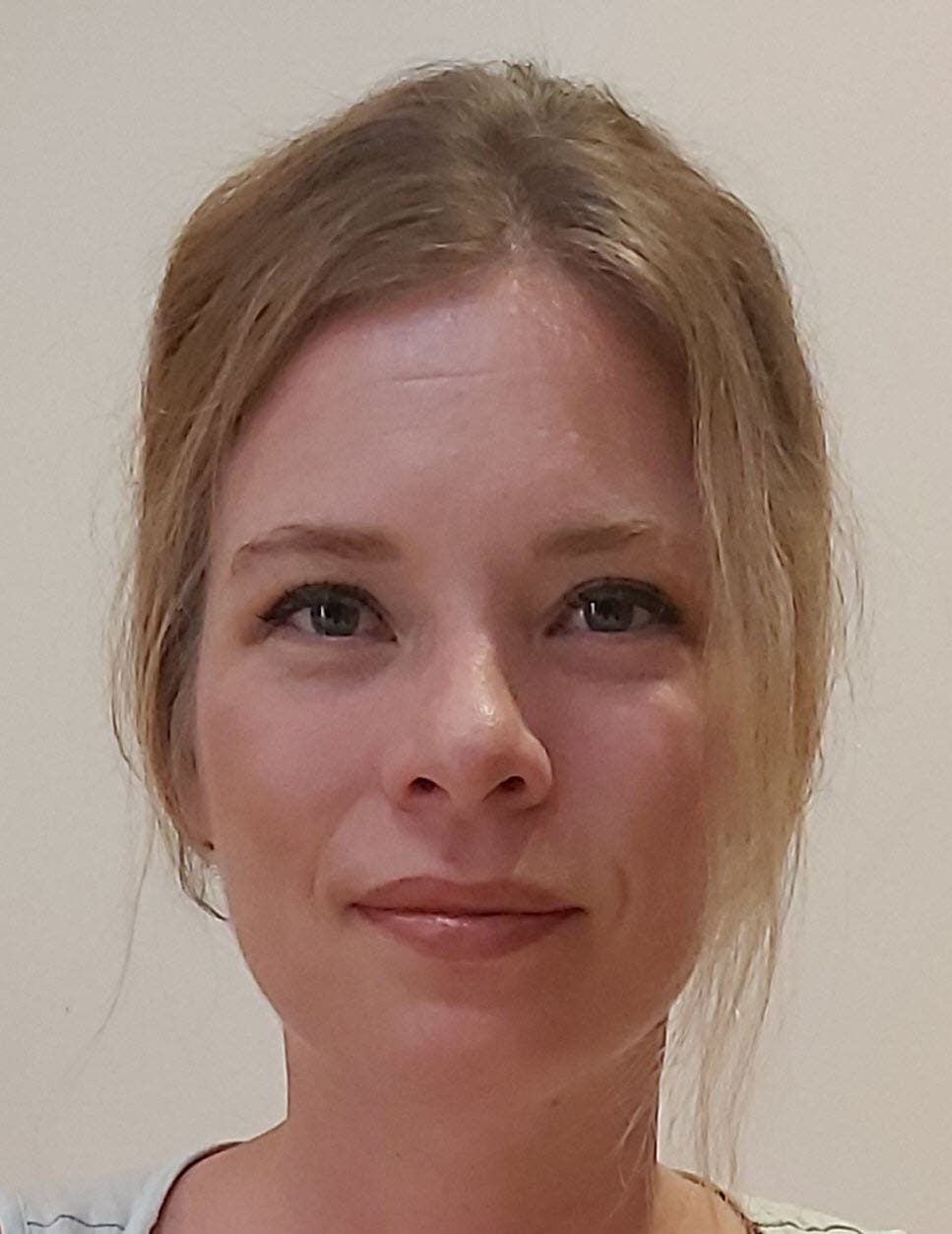
A session has been included in the 6th SANAP symposium to include the Prince Edward Island scientific survey members as they were arriving late on the 29 November. As a cross discipline on Data Management and the Summer Survey Participants. Christel Hansen chaired the session ‘Data and frameworks in the support of polar research’.
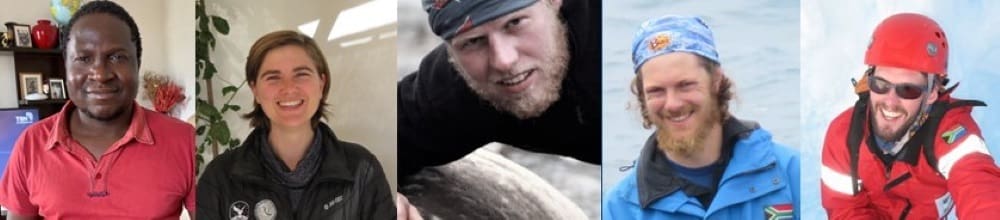
Above(l-r): Newi Makhado, Janine Schoombie, Chris Oosthuizen, David Hedding, Stefan Schoombie
- Newi Makhado: Ecoregionalisation of the pelagic zone in the Subantarctic and subtropical Indian Ocean.
- Janine Schoombie: Studies of wind, plants and seabirds on Marion Island. (Abstract)
- Chris Oosthuizen: Marine predators: ecosystem sentinels that help inform Southern Ocean management. (Abstract)
- David Hedding: A geospatial database for the sub-Antarctic Prince Edward Islands. (Abstract)
- Stefan Schoombie: Non-breeding distribution and moulting activity of Blue Petrels (Halobaena caerulea) breeding on sub-Antarctic Marion Island.
- Christel Hansen: Consistent mapping and geospatial information representation in the Antarctic and sub-Antarctic: why South Africans should care. (Abstract)
Above: Scientific Survey members taken on Prince Edward Island. Azwianewi Makhado, Maëlle Connan, David Hedding, Charlene Janion-Scheepers , Rowan Jordaan, Makhudu Masotla, Thomas Mufanadzo, Chris Oosthuizen, Liezl Pretorius, Janine Schoombie, Stefan Schoombie, Yinhla Shihlomule, and Elsa van Ginkel. Read more


 Earth Day is commemorated annually on 22 April and is one of the largest global environmental movements. In 2026, the theme “Our Power, Our Planet” highlights the importance of civic action, community engagement, and collective responsibility in addressing environmental challenges. For the South African National Antarctic Programme (SANAP), Earth Day is not only a moment of reflection, but also a celebration of ongoing scientific research, conservation efforts, and the people who make this work possible.
  Why Earth Day Matters! SANAP’s vision to understand, develop, and conserve the Antarctic, sub-Antarctic, and Southern Ocean environments aligns directly with the principles of Earth Day. These remote regions are critical to the health of our planet. They regulate global climate systems, support unique biodiversity, and provide essential insights into environmental change. Research is vital in a world where environmental risks continue to dominate global concerns and research conducted through SANAP contributes to:
 SANAP scientists and researchers work in some of the most extreme environments on Earth, studying ocean systems, atmospheric processes, wildlife ecology, and environmental change. Their work contributes to international scientific knowledge and informs global responses to climate challenges. Equally important are the support personnel who ensures that research can be conducted safely and effectively. Earth Day is an opportunity to recognise the collective effort required to sustain Antarctic science.
 Earth Day reminds us that protecting the environment is a shared responsibility. While SANAP operates in remote regions, the insights gained have global relevance. Healthy ecosystems—from the Antarctic to Southern Ocean currents—play a crucial role in climate regulation, biodiversity, and human wellbeing. The 2026 focus on civic mobilisation and community action reinforces the idea that meaningful change comes from both scientific understanding and public engagement. Within the SANAP community, Earth Day is a time to:

 Only conservation or conservation research currently takes place at the Prince Edward Islands, some of which may require environmental authorisation for activities identified in terms of sections 24(2)(a) and (b) of the NEMA prior to commencement thereof. The GEMPr stipulates appropriate measures to avoid, manage and/or mitigate potential environmental impacts and risks associated with the implementation of identified activities. The exclusion of identfied activities will be applicable to conservation or conservation research only, subject to compliance with the Government Notice and Schedule and the relevant requirements of the GEMPr, which includes the requirement to register any such exclusions.
 Members of the public are invited to submit written comments or input within 30 days from the date of the publication of the Notice in the Government Gazette or the publication of the newspaper notice, whichever occurs last. Should the 30-day comment period overlap with the period from 15 December 2025 to 5 January 2026, this period will be excluded from the reckoning of days.
 TEXT from PUBLIC NOTICE: ISSUED BY THE DEPARTMENT OF FORESTRY, FISHERIES AND THE ENVIRONMENT.
 MPA Day, shines a spotlight on the importance of Marine Protected Areas in ocean conservation, sustainable development, and the well-being of communities across the globe. The date—1 August—honours the momentous 2019 declaration of 20 new or expanded MPAs in South Africa. Since then, MPA Day has grown into a United Nations Ocean Decade-endorsed international movement.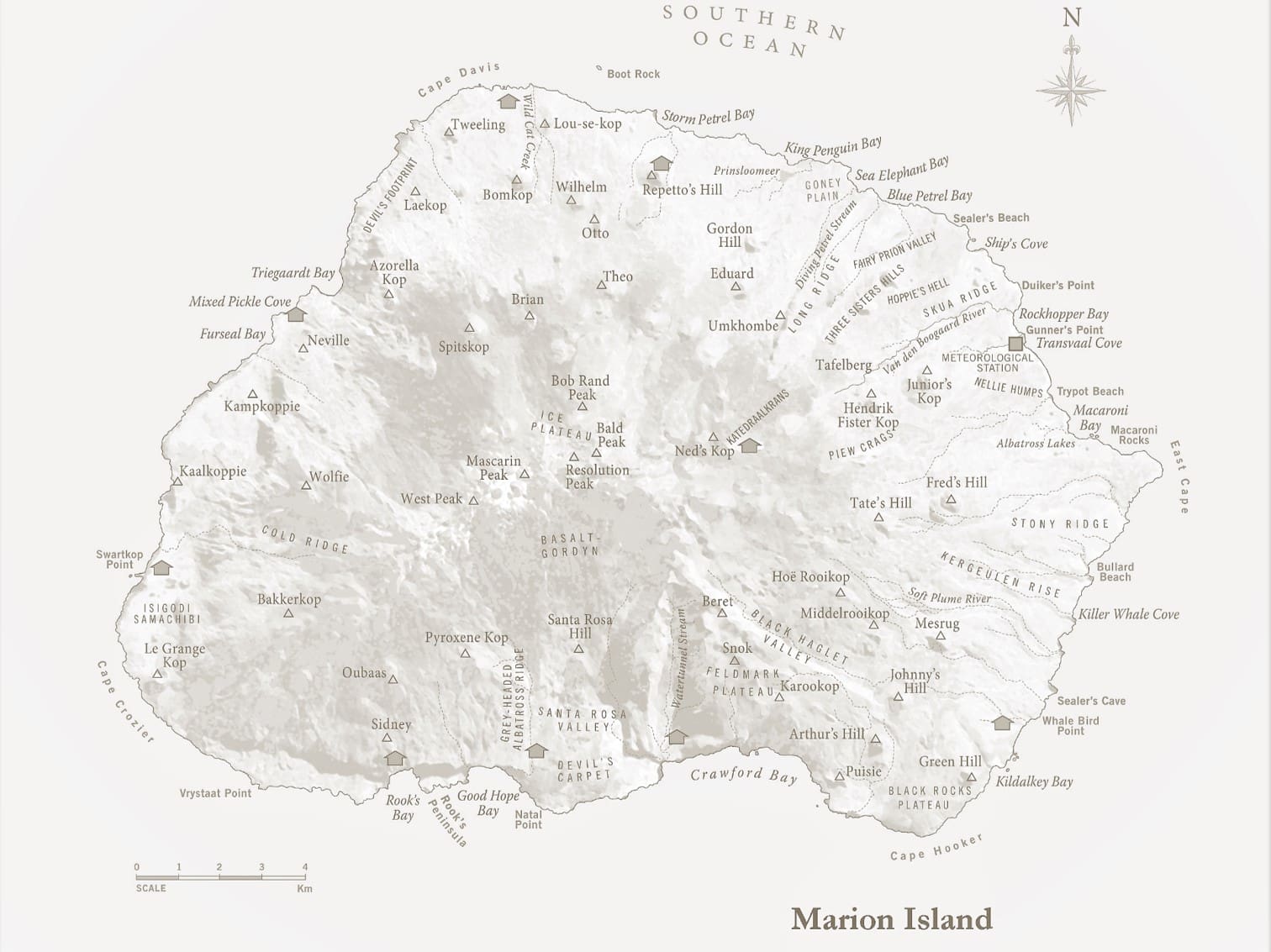
 The Prince Edward Islands MPA: South Africa’s Sub-Antarctic Treasure: In the remote reaches of the Southern Ocean lies one of South Africa’s most unique and ecologically valuable MPAs—the Prince Edward Islands Marine Protected Area, comprising the volcanic Marion Island and the smaller Prince Edward Island. Together, they represent South Africa’s only sub-Antarctic territory, rich in biodiversity and scientific significance. Declared in 2013, this MPA protects 30% of South Africa’s Southern Ocean territory, encompassing 80% of its marine ecosystem diversity. These waters are a haven for marine life—from krill and Patagonian toothfish to charismatic top predators like seals, seabirds, and killer whales.
 MINISTER CREECY LAUNCHES THE 3RD NATIONAL STATUS OF BIOLOGICAL INVASIONS AND THEIR MANAGEMENT IN SOUTH AFRICA
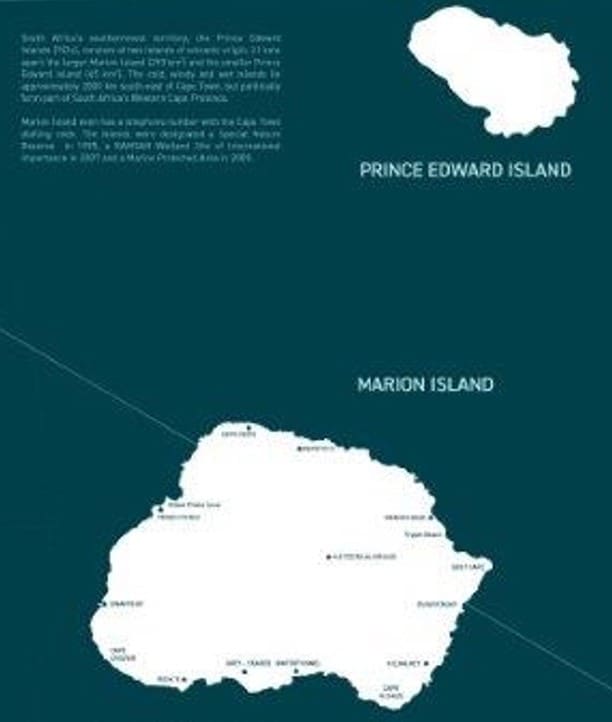 Thirdly, invasive species are devastating the unique and sensitive biodiversity of the Prince Edward Islands. For the first time, this report provides a separate assessment of the status of biological invasions and their management on the Prince Edward Islands. Although these islands are part of South Africa, their remote location and unique biodiversity warrant a separate assessment. Findings highlight the devastating impact of the house mouse, which is alien to the Marion Island. The mice feed on plants, and small animals including endangered seabirds. A bold plan to eradicate mice from the island has been developed and is due to be implemented in 2027. The eradication of mice from Marion Island is essential if its unique biodiversity is to be preserved.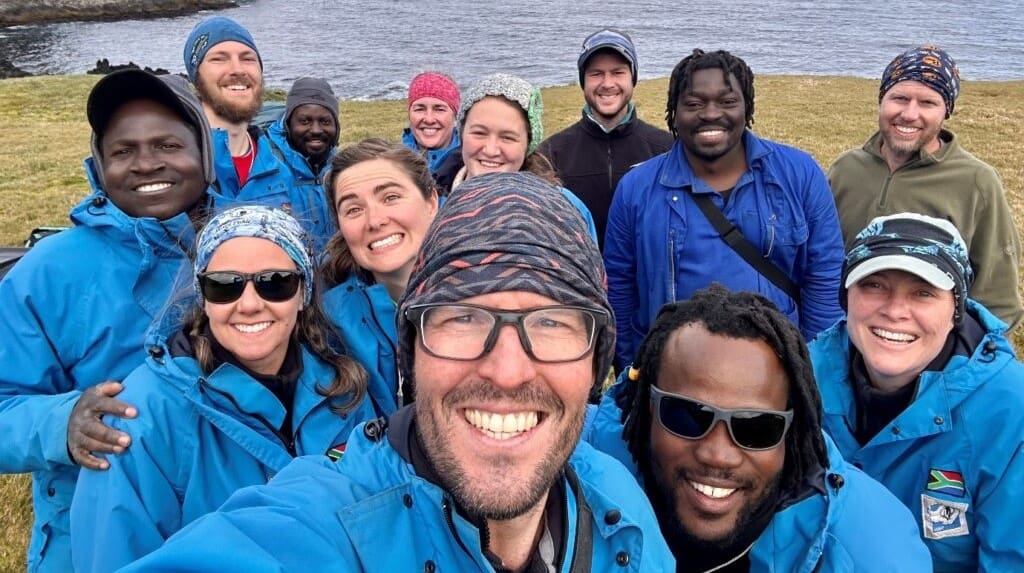
 A session has been included in the 6th SANAP symposium to include the Prince Edward Island scientific survey members as they were arriving late on the 29 November. As a cross discipline on Data Management and the Summer Survey Participants. Christel Hansen chaired the session ‘Data and frameworks in the support of polar research’.
  Above(l-r): Newi Makhado, Janine Schoombie, Chris Oosthuizen, David Hedding, Stefan Schoombie