by Ria Olivier | Feb 26, 2026 | Announcement, Antarctica, Southern Ocean, sub-Antarctic
26 February 2026
Save the date: Workshops to update the Marine Research Plan and the Antarctic and Southern Ocean Research Plan
Dear Members of the Marine and Antarctic Research Community
The Department of Science, Technology and Innovation, together with the National Research Foundation is scheduling two independent Research Plan workshops at the end of March 2026 to bring together representatives of the research community with the objective of updating the Marine and Antarctic research plans. The Antarctic and Southern Ocean Research Plan workshop will take place on 24-25 March 2026, and the Marine Research Plan workshop will take place on 26-27 March 2026. It is acknowledged that a small number of researchers are active in both research areas, and the option to participate in both workshops is made available as the inputs into each plan will be distinct.
Together these research plans implement the 2016 Marine and Antarctic Strategy and are updated every 10 years. The new research plans will cover 2026-2036. Input documents for the workshop will be as follows:
The workshops will take the format of framing presentations from the DSTI and the NRF, breakaway groups for theme-specific discussions and feedback sessions, and group discussions for cross-cutting topics. We anticipate one full day and one half day per workshop. All sessions will be recorded and shared with a specialised writer as identified by the DSTI, who will produce the final version of each research plan. An agenda will follow in due course.
The Department does not anticipate significant changes to the themes as expressed in the 2014 2024 research plans. There is, however, a strong expectation that the new research plans pivot slightly to address the imperatives as detailed in the 2022-2032 Decadal Plan.
The workshops will be hosted in the Western Cape (venue to be determined). The National Research Foundation will assist with travel and accommodation for representatives from outside Cape Town. We have capped the participation numbers at 40 people per workshop due to financial constraints but encourage representatives from all institutions and all thematic areas to contribute both in preparation for the event, and during the event. We are hoping to have an option for virtual participation should the demand exceed to space/budget available. The colleagues that are managing the logistics elements at the NRF will suggest flight times to allow for group shuttles between the venue and the airport. This significantly cuts costs. Colleagues wishing to travel outside these timeslots will need to arrange their own transportation to the venue and back to the airport.
Physical participation in this event will be prioritised for established researchers. Institutional and thematic representation will inform final travel approvals should the numbers exceed the stipulated limits. We ask that you complete the registration forms below so that we can keep track of participants, both those requiring logistic support and those participating locally.
The link to participate virtually will be shared on request. All queries should be sent directly to me at TJ.Klarenbeek@risa.nrf.ac.za .
We look forward to hearing from you and seeing you at the end of March 2026.
Tracy Klarenbeek
NRF: Thematic Research Support and Advancement

by Ria Olivier | Feb 10, 2026 | Announcement, Antarctica, Overwintering Team, SANAE
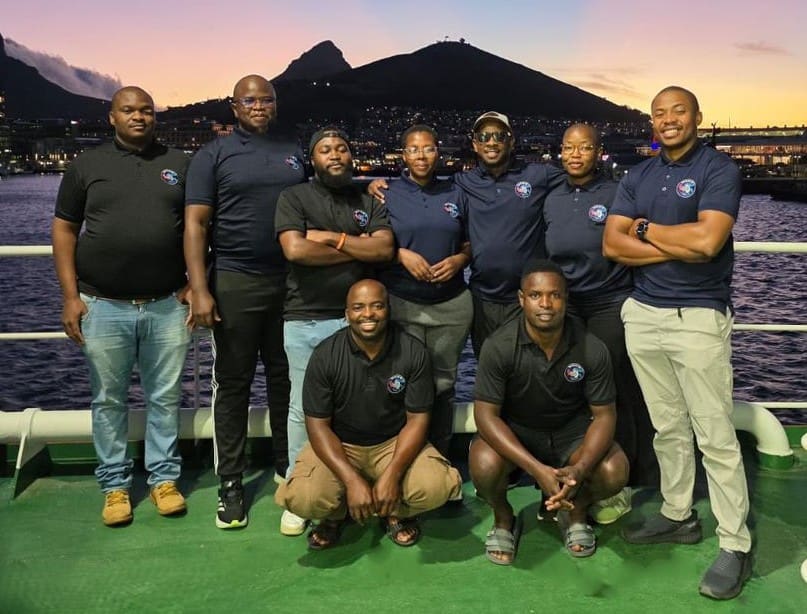
The S.A. Agulhas II departed to Antarctica on 24 December 2025. The 65th South African National Antarctic Expedition team (SANAE 65 was on board the vessel. The S65 team with be replacing the S64 team during this Antarctic relief voyage. The takeover function took place last night at SANAE IV.
65th South African National Antarctic Expedition team (SANAE 65)
Back l-r: Ndiphiwe Peza, Lungisa Qiniso Mkhosana Zungu, Akani Tshabalala,
Toko Mdleleni, Yanga Jonas, Samukelisiwe Mthembu, Anele Magobiyane
Front l-r: Lutho Mkhangazi, Nkhumeleni Oscar Radzhadzhi

Team Leader: Lungisa Qiniso Mkhosana Zungu
Deputy Team leader: Lutho Mkhangazi
Photo taken on S.A. Agulhas II in Cape Town Harbour 24 December 2025
by Ria Olivier | Jan 30, 2026 | Announcement, Jobs, Marion Island, News, Overwintering Team, Research, SANAP, Science, Southern Ocean, Stations, sub-Antarctic, Team member
Applications are still open for the following positions on the sub-Antarctic, Marion Island for the overwintering period (April 2026 to May 2027)
Communications Engineer Diesel Mechanic Electrical Engineer Medical Orderly
Closing Date: 09 February 2026
The incumbent will execute duties at a Sub/Antarctic Base and adhere to the health, safety and environmental requirements. The successful applicant will spend a full year (April 2026 to May 2027) at Marion Island. There is no option to return to South Africa before May 2027. The ability to work and live with small groups of people is thus essential. Although the base is well-equipped with e-mail, fax and satellite telephone facilities, the applicant must be self-sufficient and self-motivated.
by Ria Olivier | Dec 5, 2025 | Announcement, Marion Island, Prince Edward Island, Prince Edward Islands
CLOSING DATE: Monday 26 January 2026
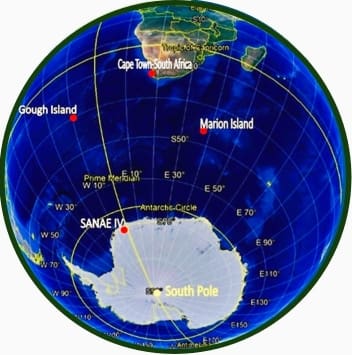
Consultation on the intention to adopt a generic environmental management programme and exclude identified activities associated with conservation or conservation research at THE PRINCE EDWARD ISLANDS, for public comment.
The Minister of Forestry, Fisheries and the Environment is hereby consulting on the intention to adopt a Generic Environmental Management Programme for Conservation or Conservation Research at the Prince Edward Islands (revision 0 of 2025) (GEMPr) as an environmental management instrument in terms of the Regulations Laying Down the Procedure for the Adoption of Environmental Management Instruments, 2019, read with section 24(5)(bA) of the National Environmental Management Act, 1998, (Act No. 107 of 1998) (NEMA) and based on compliance with this environmental management instrument to, in terms of section 24(2)(e) of the NEMA, exclude activities identified in terms of section 24(2)(a) and (b) from the requirement to obtain an environmental authorisation.
Only conservation or conservation research currently takes place at the Prince Edward Islands, some of which may require environmental authorisation for activities identified in terms of sections 24(2)(a) and (b) of the NEMA prior to commencement thereof. The GEMPr stipulates appropriate measures to avoid, manage and/or mitigate potential environmental impacts and risks associated with the implementation of identified activities. The exclusion of identfied activities will be applicable to conservation or conservation research only, subject to compliance with the Government Notice and Schedule and the relevant requirements of the GEMPr, which includes the requirement to register any such exclusions.
Members of the public are invited to submit written comments or input within 30 days from the date of the publication of the Notice in the Government Gazette or the publication of the newspaper notice, whichever occurs last. Should the 30-day comment period overlap with the period from 15 December 2025 to 5 January 2026, this period will be excluded from the reckoning of days.
Comments may be submitted by post to the Director-General of the Department of Forestry, Fisheries and the Environment for the attention of A Gabriel, at Private Bag X447, Pretoria, 0001; or by e-mail at agabriel@dffe.gov.za. Comments or inputs received after the public comment period may not be considered.
The Government Notice is accessible on the website of the Department – CLICK HERE
GEMPr is accessible at DFFE – CLICK HERE
Any inquiries in connection with the Notice can be directed to Alvan Gabriel at agabriel@dffe.gov.za (Cell: 066 081 9554).
For communications or media enquiries, kindly contact Mr Zolile Nqayi: Acting Chief Director Communications and Advocacy on Cell: 083 898 6483 I Tel: 021 4937144 Email: znqayi@dffe.gov.za
The Department of Forestry, Fisheries and the Environment complies with the Protection of Personal Information Act, 2013 (Act No. 4 of 2013). Comments received and responses thereto are collated into a comments and response report which will be made available to the public as part of the consultation process. If a commenting party has any objection to his or her name, or the name of the represented company/organisation, being made publicly available in the comments and responses report, such objection should be highlighted in bold as part of the comments submitted.
TEXT from PUBLIC NOTICE: ISSUED BY THE DEPARTMENT OF FORESTRY, FISHERIES AND THE ENVIRONMENT.
by Ria Olivier | Dec 2, 2025 | Announcement, Research, SANAP, SCAR, Science
The South African National Antarctic Programme (SANAP) is pleased to share an exciting update from the Scientific Committee on Antarctic Research (SCAR). The international Antarctic research community is preparing to gather for one of the most anticipated events in polar science: the 12th SCAR Open Science Conference, taking place 8–19 August 2026 in Oslo, Norway. Hosted by SCAR in partnership with the Norwegian Polar Institute, the conference will be held at the centrally located Clarion Hotel – The Hub, bringing together researchers, students, policy makers, and partners from across the globe under the theme:
SCAR2026: “Diving into Antarctic Science – Making Waves for the Future”
Call for Abstracts — Deadline 28 February 2026 (23:59 UTC) – In the spirit of collaboration and scientific discovery, SCAR has officially opened the call for abstracts for the 2026 conference. Researchers are encouraged to submit abstracts by 28 February 2026 at 23:59 UTC. This is a valuable opportunity for the SANAP community to showcase cutting-edge Antarctic research and engage with colleagues working across a range of disciplines.
SUBMIT ABSTRACT
A Diverse and Dynamic Scientific Programme: The 2026 parallel session programme features 50 sessions spanning; Physical Sciences, Geosciences, Life Sciences, Humanities and Social Sciences and Cross-disciplinary themes. With this breadth of topics, the programme promises to highlight both disciplinary excellence and interdisciplinary innovation.
Explore the full session list here
First Circular Now Available. It provides important details, including Key conference dates, Conference structure, Travel guidance for visiting Oslo and Norway, Venue information, Exhibition and sponsorship opportunities. 📄 Download the First Circular.
Stay Informed. Visit scar2026.org for: Full programme details, Organising committee information, Partners, Sponsors, Travel and practical information. The website will be continuously updated as planning progresses.
Important Dates to Bookmark
| Date |
Event |
| 31 January 2026 |
Call for satellite events closes |
| 28 February 2026 |
Abstract submission closes |
| February 2026 |
Early-bird registration opens |
| 8–9 & 16 August 2026 |
Business meetings & satellite events |
| 10–14 August 2026 |
12th SCAR Open Science Conference |
| 15 August 2026 |
Science Group Business Meetings |
| 17–19 August 2026 |
SCAR Delegates Meeting |
SANAP encourages all South African polar researchers — established and emerging — to participate actively in SCAR2026. Let’s ensure that South Africa continues to make meaningful contributions to global Antarctic science and collaboration.
We look forward to seeing many SANAP scientists represented in Oslo!
by Ria Olivier | Nov 12, 2025 | Announcement, Research, SANAP, SCAR, Science
Recognising Excellence in Antarctic Research and Service
The Scientific Committee on Antarctic Research (SCAR) plays a pivotal role in advancing knowledge of the Antarctic and Southern Ocean. A cornerstone of this mission is the recognition of excellence — celebrating researchers and contributors whose work and service embody the spirit of international cooperation and scientific discovery in the Antarctic community.
Honouring Outstanding Contributions
To highlight and reward those who exemplify the best of the Antarctic community, SCAR established a series of prestigious medals. These awards celebrate both scientific achievement and dedicated service, serving as an inspiration for the next generation of polar researchers.
Since their inception in 2006, SCAR has awarded:
In 2018, SCAR introduced a third category:
Each of these medals is awarded through a peer-nominated process, ensuring fairness, transparency, and the recognition of true merit. Recipients are selected by an expert committee based on their outstanding contributions to Antarctic research, collaboration, or education and outreach.
The President’s Medal for Outstanding Achievement
In addition to the main medals, SCAR also awards the President’s Medal for Outstanding Achievement. This distinguished honour is presented by the outgoing SCAR President to an individual who has made exceptional contributions to SCAR and the wider Antarctic community during their term.
Call for Nominations — 2026 SCAR Medals
Nominations for the 2026 SCAR Medals are now open!
🗓️ Initial nominations close on 22 March 2026.
This is a unique opportunity to recognise peers who have made remarkable contributions to Antarctic science, coordination, or communication.
For detailed information on the award criteria and selection process, please visit SCAR’s Detailed Information page.

 26 February 2026

 Back l-r: Ndiphiwe Peza, Lungisa Qiniso Mkhosana Zungu, Akani Tshabalala,
Toko Mdleleni, Yanga Jonas, Samukelisiwe Mthembu, Anele Magobiyane
Front l-r: Lutho Mkhangazi, Nkhumeleni Oscar Radzhadzhi
Back l-r: Ndiphiwe Peza, Lungisa Qiniso Mkhosana Zungu, Akani Tshabalala,
Toko Mdleleni, Yanga Jonas, Samukelisiwe Mthembu, Anele Magobiyane
Front l-r: Lutho Mkhangazi, Nkhumeleni Oscar Radzhadzhi
 Team Leader: Lungisa Qiniso Mkhosana Zungu
Deputy Team leader: Lutho Mkhangazi
Photo taken on S.A. Agulhas II in Cape Town Harbour 24 December 2025
Team Leader: Lungisa Qiniso Mkhosana Zungu
Deputy Team leader: Lutho Mkhangazi
Photo taken on S.A. Agulhas II in Cape Town Harbour 24 December 2025
 Applications are still open for the following positions on the sub-Antarctic, Marion Island for the overwintering period (April 2026 to May 2027)
 Consultation on the intention to adopt a generic environmental management programme and exclude identified activities associated with conservation or conservation research at THE PRINCE EDWARD ISLANDS, for public comment.
  Only conservation or conservation research currently takes place at the Prince Edward Islands, some of which may require environmental authorisation for activities identified in terms of sections 24(2)(a) and (b) of the NEMA prior to commencement thereof. The GEMPr stipulates appropriate measures to avoid, manage and/or mitigate potential environmental impacts and risks associated with the implementation of identified activities. The exclusion of identfied activities will be applicable to conservation or conservation research only, subject to compliance with the Government Notice and Schedule and the relevant requirements of the GEMPr, which includes the requirement to register any such exclusions.
 Members of the public are invited to submit written comments or input within 30 days from the date of the publication of the Notice in the Government Gazette or the publication of the newspaper notice, whichever occurs last. Should the 30-day comment period overlap with the period from 15 December 2025 to 5 January 2026, this period will be excluded from the reckoning of days.
 TEXT from PUBLIC NOTICE: ISSUED BY THE DEPARTMENT OF FORESTRY, FISHERIES AND THE ENVIRONMENT.
 The South African National Antarctic Programme (SANAP) is pleased to share an exciting update from the Scientific Committee on Antarctic Research (SCAR). The international Antarctic research community is preparing to gather for one of the most anticipated events in polar science: the 12th SCAR Open Science Conference, taking place 8–19 August 2026 in Oslo, Norway. Hosted by SCAR in partnership with the Norwegian Polar Institute, the conference will be held at the centrally located Clarion Hotel – The Hub, bringing together researchers, students, policy makers, and partners from across the globe under the theme:
 Honouring Outstanding Contributions