by Ria Olivier | Feb 26, 2026 | Antarctica, SA Agulhas II, SANAE, SANAP, Take-Over Operations
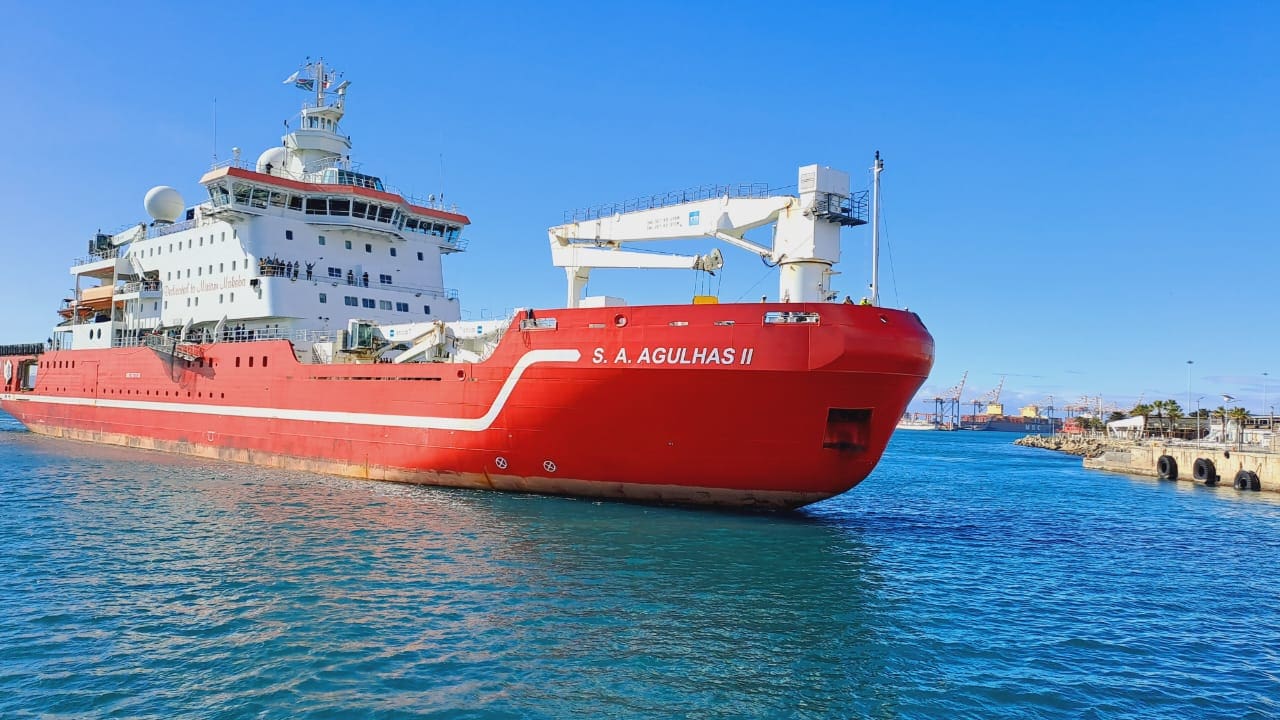 From December 2025 to February 2026, the South African National Antarctic Programme (SANAP) embarks on its annual takeover voyage to relieve and resupply SANAE IV in Queen Maud Land, Antarctica. This critical mission ensures a seamless transition between overwintering and incoming teams, sustaining South Africa’s year-round scientific presence in Antarctica. More than a logistical operation, the voyage represents a coordinated national effort — uniting government officials, scientists, aviation specialists, maritime crew, engineers, and support teams — all working together in one of the most demanding environments on Earth.
At the core of the transition are the Department of Forestry, Fisheries and the Environment (DFFE) takeover personnel, who oversee inspections, infrastructure assessments, compliance requirements, and environmental protocols at SANAE IV. Their work ensures that power generation, life-support systems, communications, and safety procedures remain fully operational for the year ahead. Supporting the operation from sea to ice is the skilled helicopter team from Ultimate Heli, who transport people and cargo between the vessel and the base with precision in narrow Antarctic weather windows. (Photo: DFFE takeover personnel with Shiraan Watson -DCO)
The voyage south is safely guided by the Captain Roland Clutties and crew of the S.A. Agulhas II, whose expertise navigating the Southern Ocean and pack ice ensures the secure transport of passengers, fuel, equipment, and supplies. Onboard, the chefs and stewards keep teams energised with warm meals throughout the journey. Meanwhile, bulldozer operators and mechanics prepare for ice-shelf operations and CAT train traverses that will move bulk cargo inland to the station once the ship reaches the ice edge. (Photo, Captain with part of off duty crew and UJ reserach team)
L-R: Ultimate Heli Team, Bulldozers and drivers’ with SANAE Chefs, S.A. Agulhas II Chefs on board
Science continues throughout the voyage. Research teams conduct geology, oceanographic, biological, and environmental studies enroute and on Antarctica, collecting critical data on the continent and the Southern Ocean and their role in global climate systems. Specialists from the South African Weather Service gather atmospheric and ocean measurements that strengthen forecasting models and support operational safety for maritime and aviation activities. Together, these partnerships reflect the collaborative spirit that makes South Africa’s Antarctic programme possible — ensuring SANAE IV remains operational, sustainable, and ready for another year of discovery.
by Ria Olivier | Feb 12, 2026 | Antarctica, Research, SANAE, SANAP, Science
The End: From Field Data to Global Impact
By early February 2026, the SANAP field campaign entered its final phase, completing measurements and preparing for extraction ahead of worsening weather.
Temporary GNSS stations along the calving front were recovered, allowing detailed mapping of ice velocities across the ice shelf. Advanced radar surveys also measured ice thickness and internal crystal orientation, improving models of ice flow and fracture behaviour.
Seismic equipment was retrieved after weeks of recording, capturing data on both controlled signals and natural fracture events. These datasets will support detailed imaging of ice-shelf structure and zones of weakness.
As severe weather approached, the team secured equipment, dismantled installations, and restored the camp site, marking the successful completion of a productive campaign.
The project’s findings will improve predictions of Antarctic ice loss and future sea-level rise, with implications for global climate systems, coastal communities, and ecosystems. As fieldwork ends, long-term data analysis begins.
Full Article
by Ria Olivier | Feb 10, 2026 | Announcement, Antarctica, Overwintering Team, SANAE
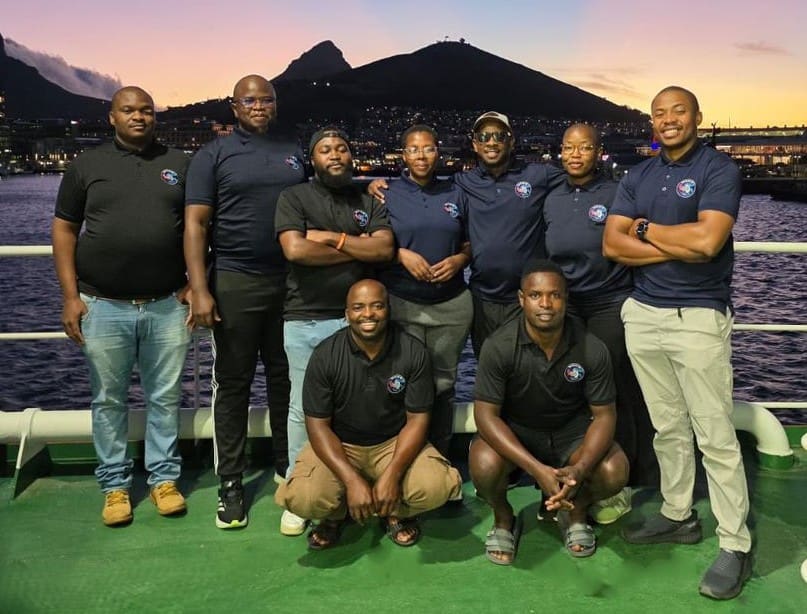
The S.A. Agulhas II departed to Antarctica on 24 December 2025. The 65th South African National Antarctic Expedition team (SANAE 65 was on board the vessel. The S65 team with be replacing the S64 team during this Antarctic relief voyage. The takeover function took place last night at SANAE IV.
65th South African National Antarctic Expedition team (SANAE 65)
Back l-r: Ndiphiwe Peza, Lungisa Qiniso Mkhosana Zungu, Akani Tshabalala,
Toko Mdleleni, Yanga Jonas, Samukelisiwe Mthembu, Anele Magobiyane
Front l-r: Lutho Mkhangazi, Nkhumeleni Oscar Radzhadzhi

Team Leader: Lungisa Qiniso Mkhosana Zungu
Deputy Team leader: Lutho Mkhangazi
Photo taken on S.A. Agulhas II in Cape Town Harbour 24 December 2025
by Ria Olivier | Feb 9, 2026 | Antarctica, Engineering, geochemistry, Research, SANAP
The Duration: Life and Science on the Fimbulisen Ice Shelf
Through mid- and late January, the team balanced demanding science with the realities of Antarctic fieldwork. GNSS stations positioned around major basal crevasses provided precise measurements of ice motion and fracture growth, helping assess the risk of large calving events. Complementary radar surveys quantified changes in ice thickness, supplying key inputs for ice-shelf flow models.
Seismic surveys used arrays of geophones and controlled energy sources to image the ice shelf and the ice–ocean interface. Drone-based ground-penetrating radar revealed the structure and evolution of deep basal crevasses, building on data from the previous season.
Fieldwork was frequently interrupted by severe storms, including wind gusts exceeding 120 km/h. Despite delays, the team adapted schedules and used downtime for maintenance and data checks. A major milestone was the first deployment of SAR corner reflectors on an Antarctic ice shelf, enabling highly accurate satellite tracking of ice motion.
Together, these measurements produced a unique dataset capturing both surface and subsurface behaviour of the Fimbulisen Ice Shelf.
Full Article
by Ria Olivier | Feb 7, 2026 | Antarctica, Engineering, geochemistry, Research, SANAP
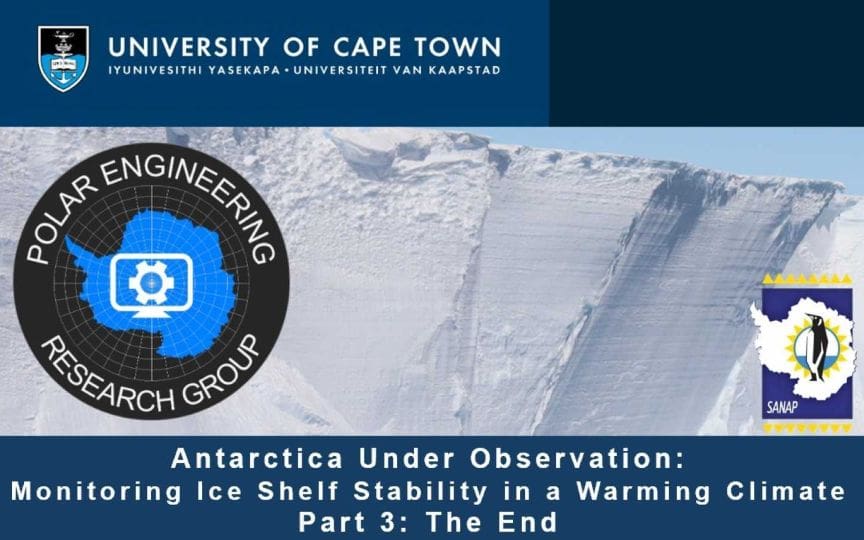
Monitoring Antarctic Ice Shelf Stability. Antarctic ice shelves play a critical role in controlling future sea-level rise.
In January 2026, an international research team began the second field campaign of Structural Glaciological Analysis of the Antarctic Ice Shelves, supported by the National Research Foundation and the South African National Antarctic Programme (SANAP). Led by the University of Cape Town’s Polar Engineering Research Group, the project combines expertise in engineering, geophysics, and glaciology.
The focus is the western Fimbulisen Ice Shelf , which regulates ice flow from the Antarctic interior into the Southern Ocean via the Jutulstraumen Glacier. Changes in its stability directly affect ice discharge and global sea level.
The SANAP 2025/2026 team arrived aboard SA Agulhas II on 11 January 2026 and established a field camp on the ice shelf. Early work centred on retrieving data from permanent GNSS stations and phase-sensitive radar instruments measuring ice motion, thickness, and basal melt.
These efforts marked the start of five intensive weeks of fieldwork aimed at understanding how Antarctic ice shelves respond to a warming climate.
Full Article

 At the core of the transition are the Department of Forestry, Fisheries and the Environment (DFFE) takeover personnel, who oversee inspections, infrastructure assessments, compliance requirements, and environmental protocols at SANAE IV. Their work ensures that power generation, life-support systems, communications, and safety procedures remain fully operational for the year ahead. Supporting the operation from sea to ice is the skilled helicopter team from Ultimate Heli, who transport people and cargo between the vessel and the base with precision in narrow Antarctic weather windows. (Photo: DFFE takeover personnel with Shiraan Watson -DCO)
 The voyage south is safely guided by the Captain Roland Clutties and crew of the S.A. Agulhas II, whose expertise navigating the Southern Ocean and pack ice ensures the secure transport of passengers, fuel, equipment, and supplies. Onboard, the chefs and stewards keep teams energised with warm meals throughout the journey. Meanwhile, bulldozer operators and mechanics prepare for ice-shelf operations and CAT train traverses that will move bulk cargo inland to the station once the ship reaches the ice edge. (Photo, Captain with part of off duty crew and UJ reserach team)


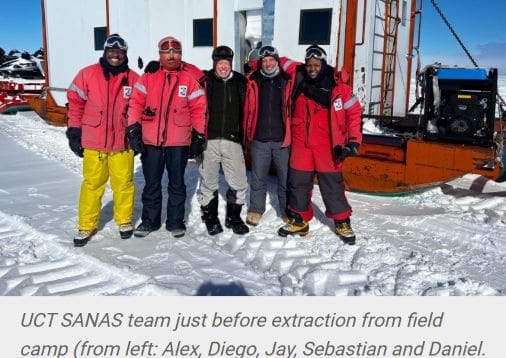 By early February 2026, the SANAP field campaign entered its final phase, completing measurements and preparing for extraction ahead of worsening weather.
 Back l-r: Ndiphiwe Peza, Lungisa Qiniso Mkhosana Zungu, Akani Tshabalala,
Toko Mdleleni, Yanga Jonas, Samukelisiwe Mthembu, Anele Magobiyane
Front l-r: Lutho Mkhangazi, Nkhumeleni Oscar Radzhadzhi
Back l-r: Ndiphiwe Peza, Lungisa Qiniso Mkhosana Zungu, Akani Tshabalala,
Toko Mdleleni, Yanga Jonas, Samukelisiwe Mthembu, Anele Magobiyane
Front l-r: Lutho Mkhangazi, Nkhumeleni Oscar Radzhadzhi
 Team Leader: Lungisa Qiniso Mkhosana Zungu
Deputy Team leader: Lutho Mkhangazi
Photo taken on S.A. Agulhas II in Cape Town Harbour 24 December 2025
Team Leader: Lungisa Qiniso Mkhosana Zungu
Deputy Team leader: Lutho Mkhangazi
Photo taken on S.A. Agulhas II in Cape Town Harbour 24 December 2025
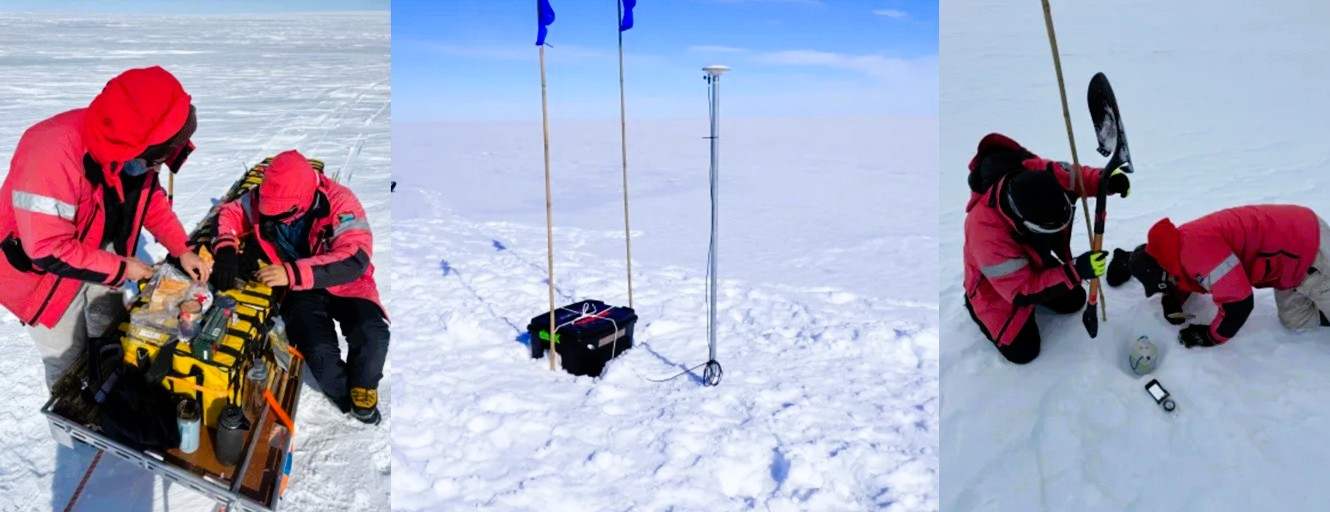 Through mid- and late January, the team balanced demanding science with the realities of Antarctic fieldwork. GNSS stations positioned around major basal crevasses provided precise measurements of ice motion and fracture growth, helping assess the risk of large calving events. Complementary radar surveys quantified changes in ice thickness, supplying key inputs for ice-shelf flow models.
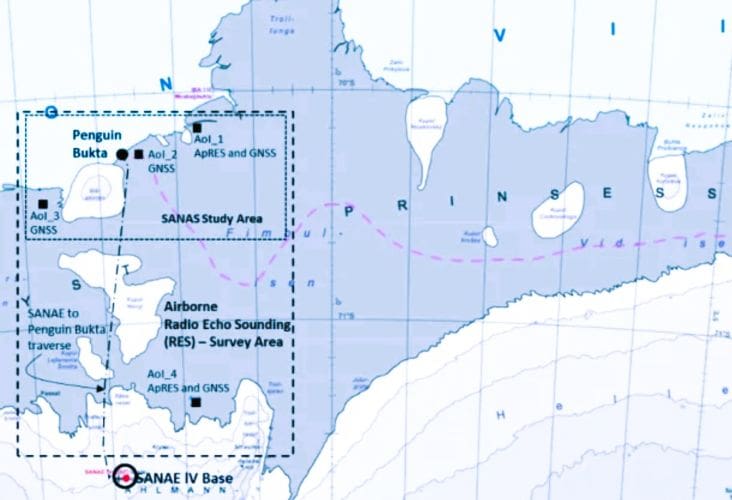 Monitoring Antarctic Ice Shelf Stability. Antarctic ice shelves play a critical role in controlling future sea-level rise.