by Ria Olivier | Oct 10, 2024 | Announcement, Antarctica, Arts, Humanities, Research, SANAP, SANAP Student
South Africa has long had an Antarctic research programme, including a base on the Antarctic continent and a polar vessel. It is the only African country with these facilities and uniquely an early signatory to the Antarctic Treaty System which governs the southern continent. Other countries with Antarctic science programmes—including the US, Australia, and the UK—have Artists and Writers Programmes (AWPs) which include artists, writers and scholars in their scientific programmes. We are piloting a similar programme for South Africa.
 The project works together with scientific research but is focused on approaching the relationship between Africa and Antarctica from a different lens: creative, critical, historical, futurist; focused on questions of aesthetics, ethics, value, storytelling; and with the explicit intention to transform Antarctic participation in relation to race, class and gender.
This project aims to plan and pilot a South African Antarctic Artists and Writers Programme (AWP), and in so doing to improve public engagement with South African Antarctic involvement through arts production and humanities research. Arts production will be supported by giving artists and writers a formal structure through which access the Antarctic and subantarctic regions, through exhibitions of their work, and through promotion by public events, publication and/or online platforms. Humanities research will provide the context, background, and cultural histories to develop and deepen both arts production and public engagement
Disciplines include: English, Fine Art, Creative Writing, History, Geography, Psychology, Anthropology, Science Communication, Journalism, Media Studies, Music, Dramatic Arts, and related disciplines.
Residency call 2024-2025
Calling artists and writers for a residency on, or about, the sea. The residency offers a 1-3 month immersive experience spending time at sea on a research vessel (the S.A. Agulhas II) or in a polar science lab, with a view to producing an artwork or publication. This residency is part of a pilot project that aims to bring Antarctica, the sub-Antarctic Islands and the Southern Ocean closer to a South African audience through the production of creative works.
FULL DETAILS
CLOSING DATE: 31 October 2024
by Ria Olivier | Oct 8, 2024 | Antarctica, Research, SANAP, SANAP Student, SCAR
A dive into the latest research and activities within the Scientific and Antarctic Research community during the biannual conference in Chile.
In today’s rapidly evolving scientific landscape, research conferences serve as vital hubs for knowledge exchange, fostering innovation, and building collaborations across disciplines. The recent SCAR conference held in Pucon, Chile during August brought together leading scholars and emerging researchers from around the globe. The event was packed with groundbreaking presentations, hands-on workshops, and insightful discussions that highlighted the latest trends shaping the future of research.
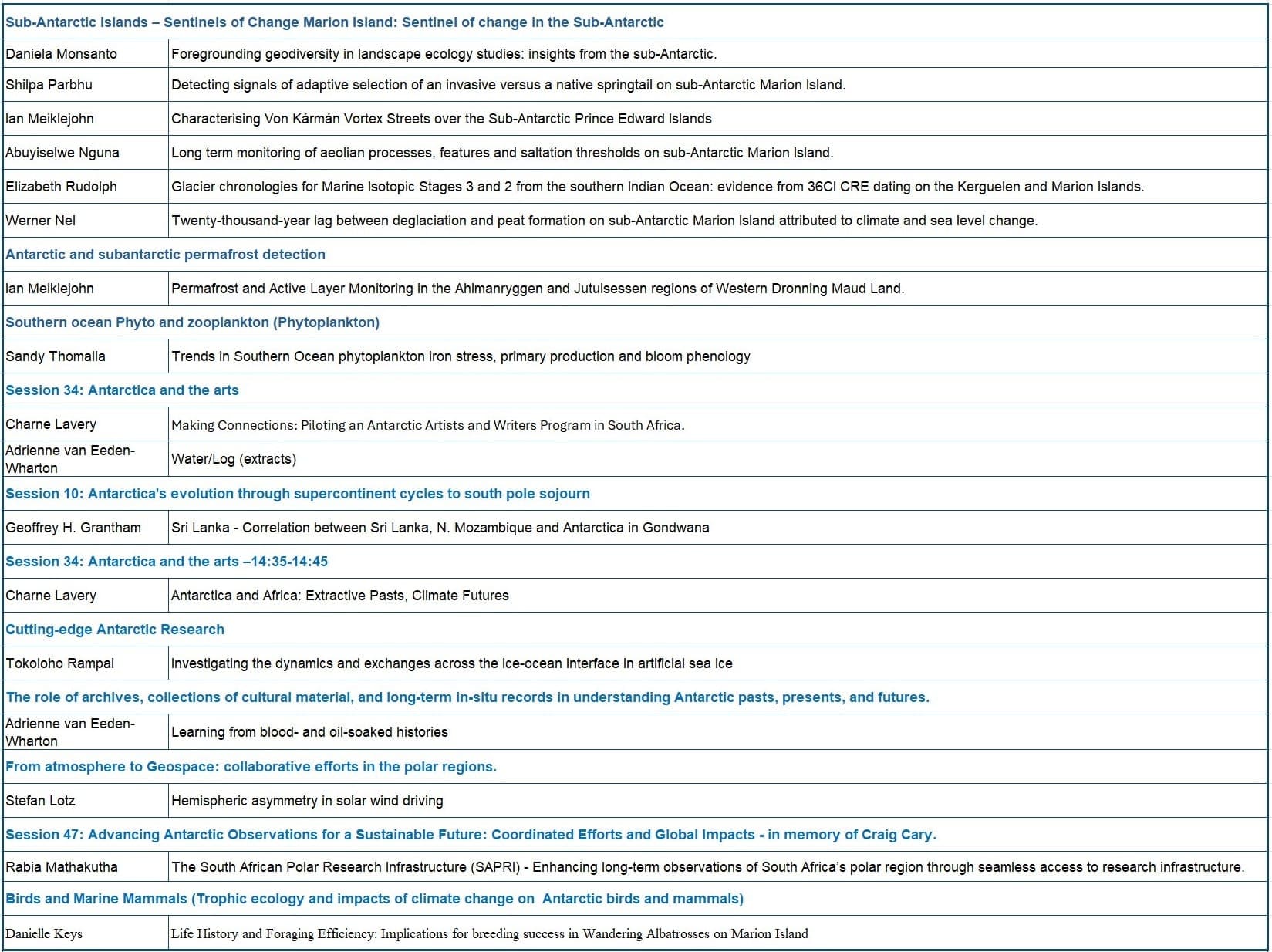
Here’s a closer look at the highlights and takeaways from this year’s conference. (above: Session on sub-Antarctic was an all South African session)
Plenary Lectures and Mini Symposia: The conference had a series of plenary lecture from some of the most respected minds in academia. Dr Victoria Nuviala from Madrid Institute for Advanced Study (MIAS), shared insights into An Architectural Biography of Antarctica. The reckoning: how #MeTooAntarctica is changing fieldwork a presentation by Dr Meredith Nash
Groundbreaking Research Papers. One of the conference’s core components was the presentation by researchers during the different parallel sessions. Each session provided opportunity for Q&A, enabling in-depth conversations between the audience and the researchers, fostering a true sense of intellectual community. South African researchers presented during these sessions. (above a few presenters captured during their present picture above: Session on sub-Antarctic was an all South African sessions)
Workshops. Experts from organizations guided participants through various disciplines. Ria Olivier held a workshop on publications in the Antarctica Community and resources on data management
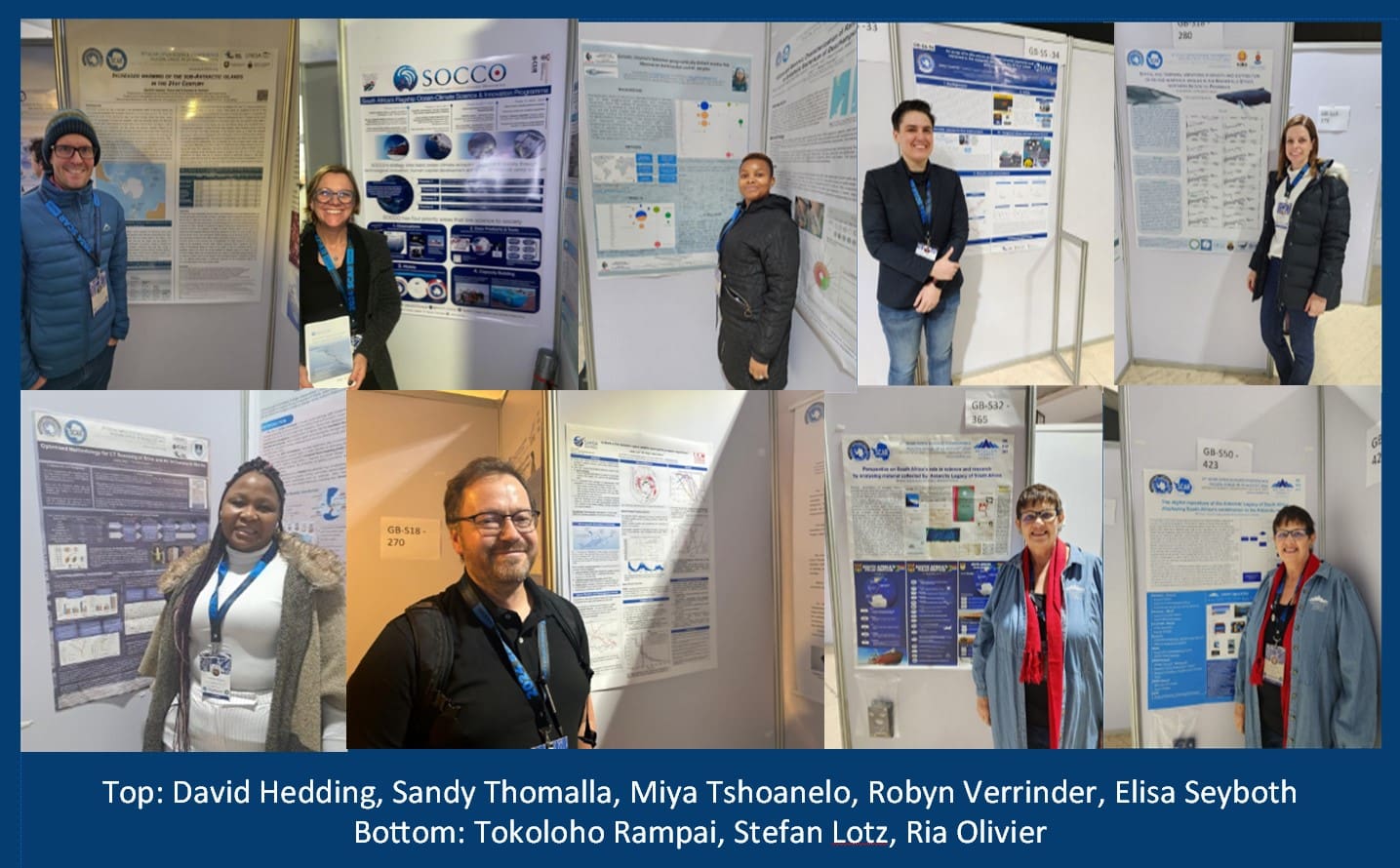
Poster Sessions: Spotlight on Research in addition to formal presentations, these sessions provided a platform for researchers to showcase their work.
Networking and Collaboration. Beyond the formal sessions, the networking opportunities were an integral part of the conference. Through social events, coffee breaks, and an industry exhibition, participants had the chance to connect with peers, potential collaborators, and mentors.
NEXT SCAR in Norway in 2026! !
Conclusion – SCAR2024 was a celebration of innovation, collaboration, and cutting-edge research. It provided a rich platform for learning, networking, and exchanging ideas that will shape the future of research. For attendees, the event was not only an opportunity to showcase their work but also a reminder of the collaborative spirit that drives scientific progress. As we look forward to next conference, it’s clear that the future holds exciting developments in Antarctic Research, and conferences like this one will continue to play a crucial role in fostering those advancements.
Activities during SCAR2024
Oral & Poster Presentations
by Ria Olivier | Mar 8, 2024 | Research, SANAP, SANAP Student, Science
During the 6th SANAP symposium, time was allocated for the presentation of governance issues, and this was done on the first day during the opening ceremony. Dr Gilbert Siko , the Director of Marine & Polar Research at the Department of Science and Innovation gave the first presentation. His role within the Research Development and Support Programme it is to promote the development of research, the production of scientific knowledge, and human capital development in science areas in which South Africa enjoys a geographic advantage, that includes Antarctic and marine research. Dr Siko highlighted the strategic importance of the research conducted through the South African National Antarctic Programme.
Dr Siko was followed by Tracy Klarenbeek, Director of Knowledge Advancement and Support of the National Research Foundation (NRF). She highlighted that create innovative funding instruments such as SANAP serve to transform the scientific landscape and inspire a representative research community to aspire to global competitiveness. She shared the outcomes of the 2023 SANAP Call for Proposals for funding cycle 2024 – 2026 with the community. She also mentioned that mentorship initiatives for unsuccessful applicants would be implemented via SAPRI.(right)
Dr Siko was followed by Tracy Klarenbeek, Director of Knowledge Advancement and Support of the National Research Foundation (NRF). She highlighted that create innovative funding instruments such as SANAP serve to transform the scientific landscape and inspire a representative research community to aspire to global competitiveness. She shared the outcomes of the 2023 SANAP Call for Proposals for funding cycle 2024 – 2026 with the community. She also mentioned that mentorship initiatives for unsuccessful applicants would be implemented via SAPRI.
Prof Bettine van Vuuren (right), Chair of the South African National Committee for SCAR gave feedback on the committee meeting. She also highlighted the function and activities of SCAR and the importance to be informed of these activities, and to be aware of scholarship opportunities. She encouraged early career researchers to become involved in SCAR committees and action scholarships.
The highlight of the Symposium was the international Antarctic day celebrations where Tracy Klarenbeek (left)addressed all attendees during the closing ceremony with a heartfelt talk. All participants, old and new, were thanked for their participation in the Symposium and their dedication to the SANAP programme. Tracy Klarenbeek talk gave a personal perspective of administering the SANAP programme:
“by facilitating Antarctic and Southern Ocean research, and awarding student bursaries, it is evident that the work I do changes lives”.
The opportunity to access the Southern Ocean, Antarctica and the sub-Antarctic islands (Gough and the Prince Edward Islands) is limited to the lucky few, and the work of the National Research Foundation makes this a reality for researchers and students alike.
A printed Map of Antarctica was signed by everyone on International Antarctica Day 1st December 2023 at Houw Hoek Hotel!
Speakers photos: credit Anche Louw – SA Polar Research Infrastructure/Antarctic Legacy of SA
by Ria Olivier | Mar 6, 2024 | APECSSA, Research, SANAP, SANAP Student
The Early Career Event at the SANAP symposium was a first for Early Career Researchers(ECR), but also for the first time during a SANAP symposium recognition was given for oral and poster presentations done by ECR’s. (above9l-r): Awardees – Joshua Tsamba, Saffiyah Moos, Ben Steyn, Stephni van der Merwe, Lillina Ruiters, Morgan Raath-Kruger)
(l-r): Joshua Tsamba, Saffiyah Moos, Ben Steyn receiving their certificates
Oral Presentations:
- 1st Joshua Tsamba: The first record of fungal endophytes associated with the sub-Antarctic cushion plant, Azorella selago (Apiaceae) on Marion Island. PI – Dr Michele Greve (Abstract)
- 2nd Safiyyah Moos: Investigating the dynamics and exchanges across the ice-ocean interface in artificial sea ice. PI – Dr Tokoloho Rampai (Abstract)
- 3rd Ben Steyn: A Longitudinal Study of the Open-Water Performance of an Ice-Class Vessel. PI- Prof Annie Bekker (Abstract)
(l-r) Certificates handed to Stephni van der Merwe, Lillina Ruiters, Morgan Raath Kruger( had to leave before ceremony)
Poster Presentations:
- 1st Stephni van der Merwe: Long-term vegetation change (1965-2020) in response to rapid warming and drying in a sub-Antarctic tundra: evidence from repeat photography. PI – Dr Michelle Greve (Abstract)
- 2nd Lillina Ruiters: Variability of phytoplankton photo physiology in the Southern Ocean: an analysis of assumptions and uncertainties . PI- Dr Sandy Thomalla (Abstract)
- 3rd Morgan Raath- Kruger: Do anisotropic processes influence fine-scale spatial genetic structure of a keystone sub-Antarctic plant species? PI – Prof Peter Le Roux (Abstract)
The symposium was an opportunity for human capital development. It is supported by the government and a peer-reviewed research programme that will provide future opportunities for all young, early career and established researchers working in the Southern Ocean, Antarctica and Islands. The students had the opportunity to present their work to a wider audience either in an oral or poster presentation. The SANAP symposium gave the students planning to present on international a ‘practice run’ with feedback.
Awards for oral and poster presentations were given to early-career scientists. These awards were to give recognition to Early career researchers and the effort they did in preparing and presenting their research. Principal Investigators made themselves available to mark presentations of ECR’s via a marksheet and we appreciate their time and comments. We congratulate the awardees and their Principal investigators and hope this recognition will motivate them in their career development. (above: Michelle Greve, Sandy Thomalla, Annie Bekker, Tokoloho Rampai, Peter le Roux)
Certificates signed by Dr Gilbert Siko of the Department of Science and innovation and Ms Tracy Klarenbeek form the National Research Foundation were handed to the recipients. There were a few Honours students that participate in the symposium and there presentations were of high standard and although they do not qualify for the ECR awards we would like to mention Sarah du Preez and Amber Sneddon for their Presentations. (above (l-R): Dr Gilbert Siko, Honour students with Annie Bekker and Tracy Klarenbeek, Tracy Klarenbeek)
Images of ceremony credit: Anche Louw (SA Polar Research Infrastructure and Antarctic Legacy of SA)
by Ria Olivier | Mar 4, 2024 | APECSSA, Fellowship, Research, SANAP, SANAP Student
For the first time ever at a SANAP Symposium an Early Career Event was organised by APECS-South Africa. The event was an opportunity to encourage ECRs to become members and to socialise with current members, in fact it was the first time that the current committee had all managed to meet in person and not over zoom. (Above group photo of APECSSA committee members 2024 that were able to attend the Symposium)
APECS-South Africa also wanted to use this time to engage in a community survey with ECRs to discuss important topics around career development and community inclusion. This survey was being conducted anonymously in real time and so provided a safe space for ECRs to raise any concerns they felt within the SANAP community. Most importantly, APECS-South Africa was able to then relay the results of this survey to the PIs and senior leadership of the SANAP community. (Above words used by ECRs to describe their journey, skills they need and what is missing in the organisation)
APECS-South Africa plans to continue running this survey going forward at future SANAP Symposiums so that ECRs feel like their voice is being heard and help the SANAP Community become better and more inclusive for everyone. During the workshop ECRs were able to respond to many questions (above ex). If you as an ECR has not yet responded click on the QR Code.
Meet APECSSA 2024 Committee
Full feedback presentation available
(Text, Slides and Group Photo by Tommy Ryan-Keogh.)
by Ria Olivier | Mar 1, 2024 | Antarctica, Engineering, Research, SANAP, SANAP Student
The last session on research themes were earth observations within the Marine and Antarctic Research Strategy research themes. The session on Space Physics was chaired by Dr Stefan Lotz. Dr Michael Kosch was not available in person but joined online with his presentation. (Above: group photo of presenters). All the presenters are from the South African National Space Agency (SANSA) based in Hermanus.
Above(l-r): Michael Kosch, Tshimangadzo M. Matamba, Nkosinathi Masango, Pierre Cilliers, Alicreance Hiyadutuje
- Dr Michael Kosch: How blue skies auroral research created and saved billions. (abstract)
- Tshimangadzo M. Matamba: Monitoring the Impact of Space Weather using South African Near-Real Time Space Weather GNSS Products. (abstract)
- Nkosinathi Masango: Analysis of ionospheric storm effects based on GPS and ionosonde data during geomagnetic storms. (abstract)
- Dr Pierre Cilliers: The long-term variation of the geomagnetic field in Antarctica as measured in Hermanus, Maitri and at SANAE-IV since 2007. (abstract)
- Alicreance Hiyadutuje: Sporadic E layer altitude modulated by the Traveling Ionospheric Disturbances at high latitudes. (abstract)
- Dr Stefan Lotz: Observation of powerful gamma ray burst GRB221009A from Marion Island. (abstract)

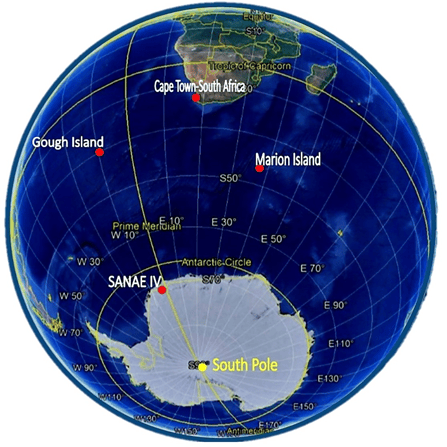 South Africa has long had an Antarctic research programme, including a base on the Antarctic continent and a polar vessel. It is the only African country with these facilities and uniquely an early signatory to the Antarctic Treaty System which governs the southern continent. Other countries with Antarctic science programmes—including the US, Australia, and the UK—have Artists and Writers Programmes (AWPs) which include artists, writers and scholars in their scientific programmes. We are piloting a similar programme for South Africa.
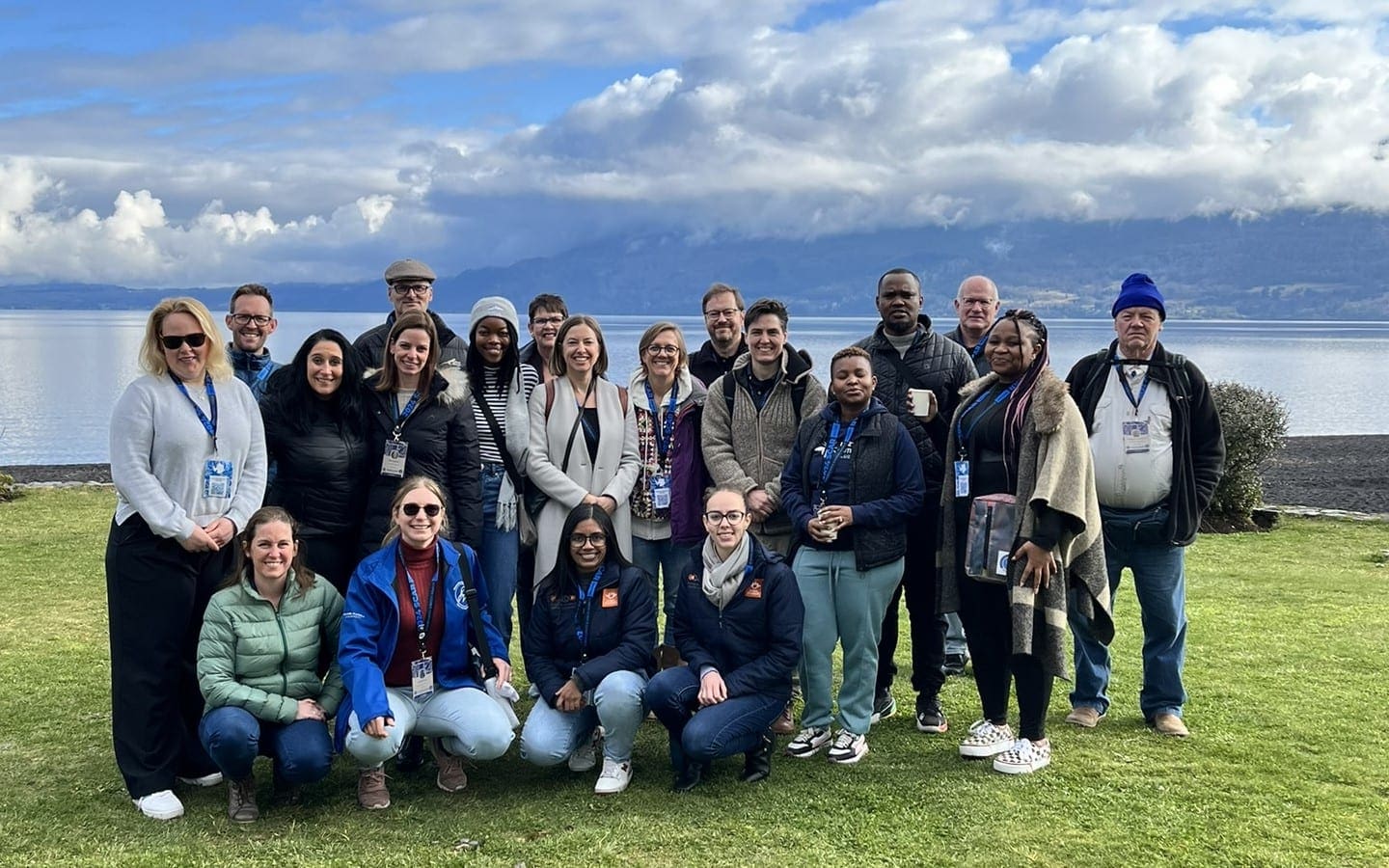
 In today’s rapidly evolving scientific landscape, research conferences serve as vital hubs for knowledge exchange, fostering innovation, and building collaborations across disciplines. The recent SCAR conference held in Pucon, Chile during August brought together leading scholars and emerging researchers from around the globe. The event was packed with groundbreaking presentations, hands-on workshops, and insightful discussions that highlighted the latest trends shaping the future of research.
 Here’s a closer look at the highlights and takeaways from this year’s conference. (above: Session on sub-Antarctic was an all South African session)
 Networking and Collaboration. Beyond the formal sessions, the networking opportunities were an integral part of the conference. Through social events, coffee breaks, and an industry exhibition, participants had the chance to connect with peers, potential collaborators, and mentors.
 During the 6th SANAP symposium, time was allocated for the presentation of governance issues, and this was done on the first day during the opening ceremony. Dr Gilbert Siko , the Director of Marine & Polar Research at the Department of Science and Innovation gave the first presentation. His role within the Research Development and Support Programme it is to promote the development of research, the production of scientific knowledge, and human capital development in science areas in which South Africa enjoys a geographic advantage, that includes Antarctic and marine research. Dr Siko highlighted the strategic importance of the research conducted through the South African National Antarctic Programme.
 Dr Siko was followed by Tracy Klarenbeek, Director of Knowledge Advancement and Support of the National Research Foundation (NRF). She highlighted that create innovative funding instruments such as SANAP serve to transform the scientific landscape and inspire a representative research community to aspire to global competitiveness. She shared the outcomes of the 2023 SANAP Call for Proposals for funding cycle 2024 – 2026 with the community. She also mentioned that mentorship initiatives for unsuccessful applicants would be implemented via SAPRI.(right)
 Prof Bettine van Vuuren (right), Chair of the
  A printed Map of Antarctica was signed by everyone on International Antarctica Day 1st December 2023 at Houw Hoek Hotel!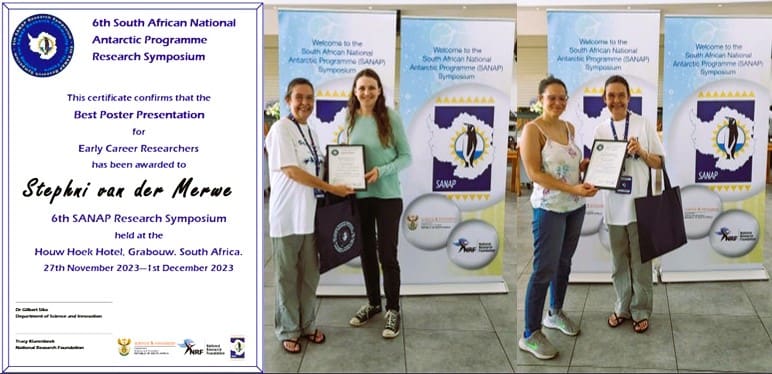
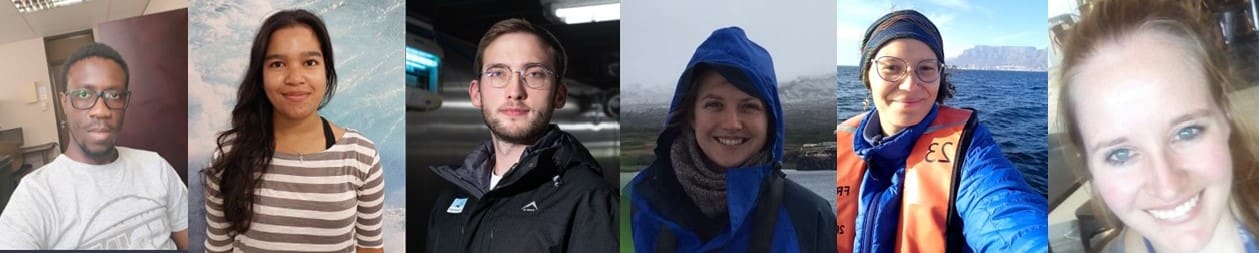 The Early Career Event at the SANAP symposium was a first for Early Career Researchers(ECR), but also for the first time during a SANAP symposium recognition was given for oral and poster presentations done by ECR’s. (above9l-r): Awardees – Joshua Tsamba, Saffiyah Moos, Ben Steyn, Stephni van der Merwe, Lillina Ruiters, Morgan Raath-Kruger)
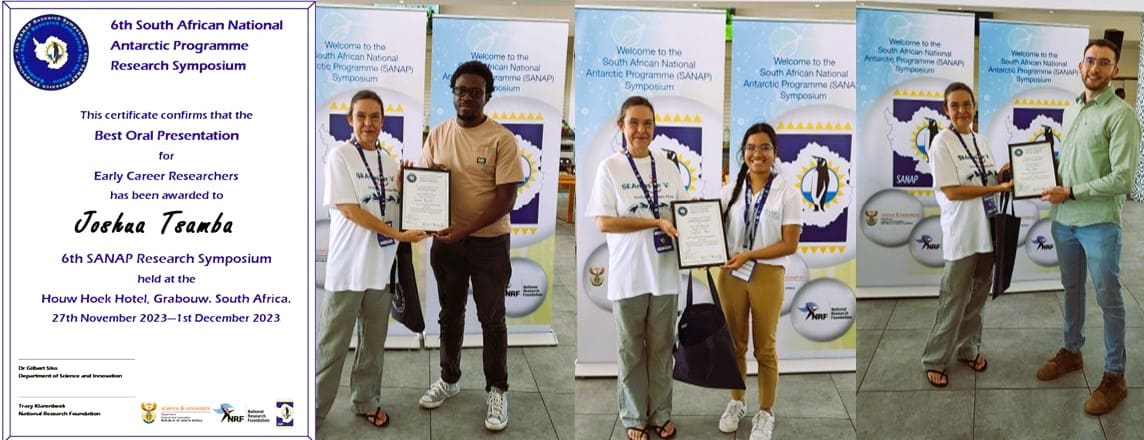 (l-r): Joshua Tsamba, Saffiyah Moos, Ben Steyn receiving their certificates
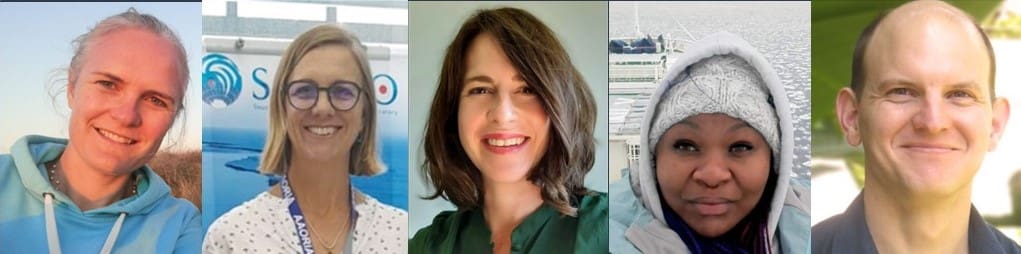 Awards for oral and poster presentations were given to early-career scientists. These awards were to give recognition to Early career researchers and the effort they did in preparing and presenting their research. Principal Investigators made themselves available to mark presentations of ECR’s via a marksheet and we appreciate their time and comments. We congratulate the awardees and their Principal investigators and hope this recognition will motivate them in their career development. (above: Michelle Greve, Sandy Thomalla, Annie Bekker, Tokoloho Rampai, Peter le Roux)
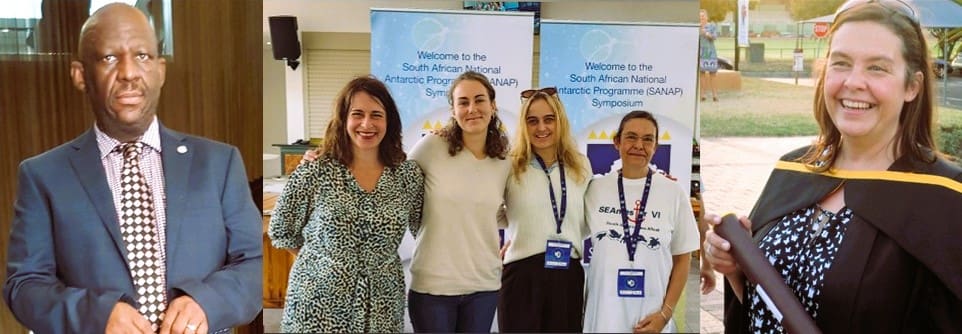 Certificates signed by Dr Gilbert Siko of the Department of Science and innovation and Ms Tracy Klarenbeek form the National Research Foundation were handed to the recipients. There were a few Honours students that participate in the symposium and there presentations were of high standard and although they do not qualify for the ECR awards we would like to mention Sarah du Preez and Amber Sneddon for their Presentations. (above (l-R): Dr Gilbert Siko, Honour students with Annie Bekker and Tracy Klarenbeek, Tracy Klarenbeek)
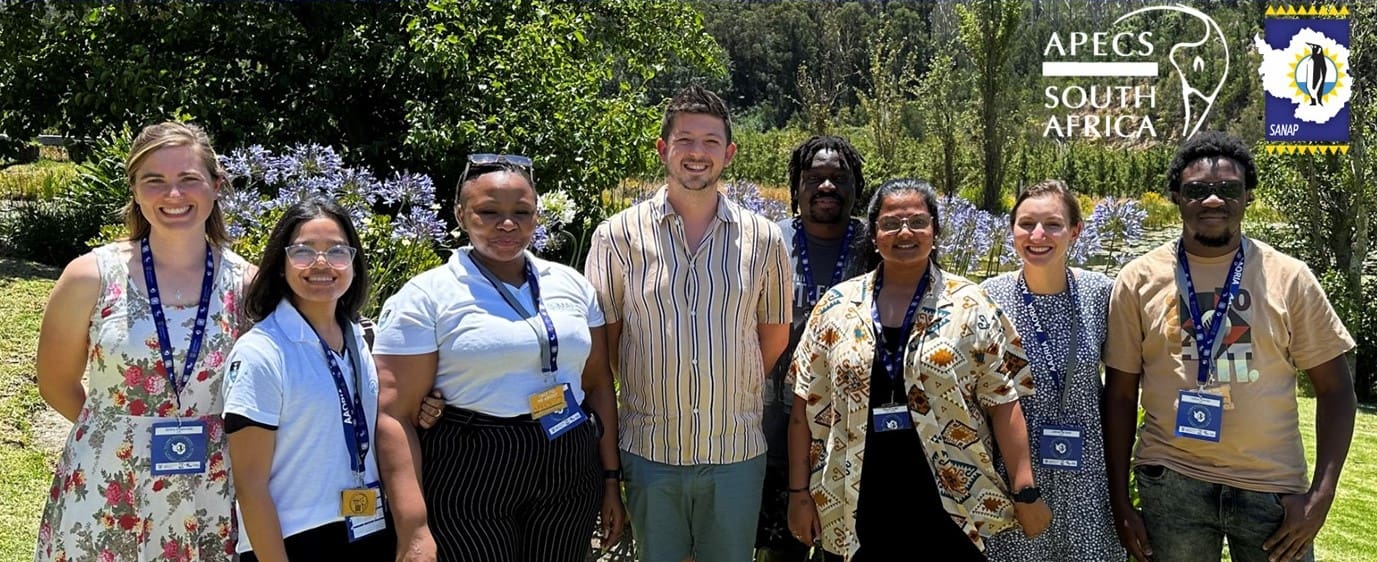 For the first time ever at a SANAP Symposium an Early Career Event was organised by APECS-South Africa. The event was an opportunity to encourage ECRs to become members and to socialise with current members, in fact it was the first time that the current committee had all managed to meet in person and not over zoom. (Above group photo of APECSSA committee members 2024 that were able to attend the Symposium)
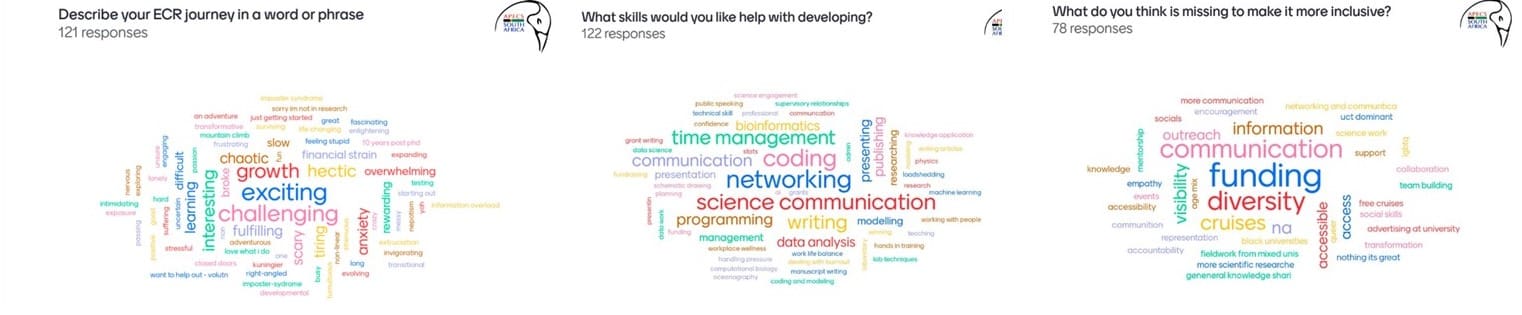 APECS-South Africa also wanted to use this time to engage in a community survey with ECRs to discuss important topics around career development and community inclusion. This survey was being conducted anonymously in real time and so provided a safe space for ECRs to raise any concerns they felt within the SANAP community. Most importantly, APECS-South Africa was able to then relay the results of this survey to the PIs and senior leadership of the SANAP community. (Above words used by ECRs to describe their journey, skills they need and what is missing in the organisation)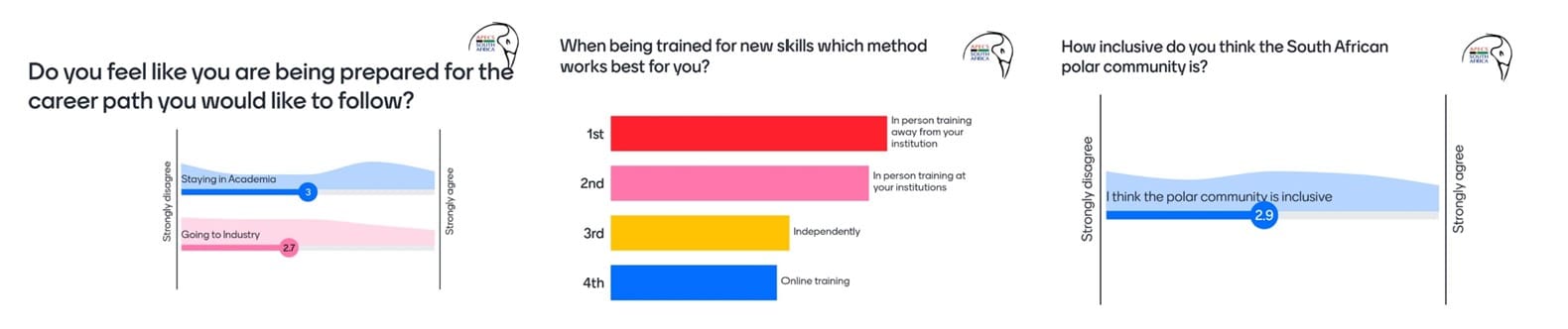
 APECS-South Africa plans to continue running this survey going forward at future SANAP Symposiums so that ECRs feel like their voice is being heard and help the SANAP Community become better and more inclusive for everyone. During the workshop ECRs were able to respond to many questions (above ex). If you as an ECR has not yet responded click on the QR Code.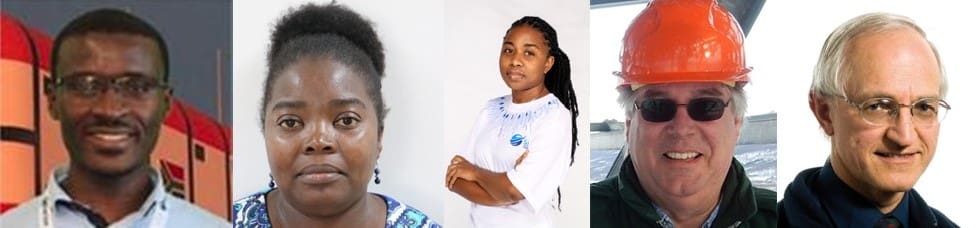


 The last session on research themes were earth observations within the