by Ria Olivier | Feb 9, 2026 | Antarctica, Engineering, geochemistry, Research, SANAP
The Duration: Life and Science on the Fimbulisen Ice Shelf
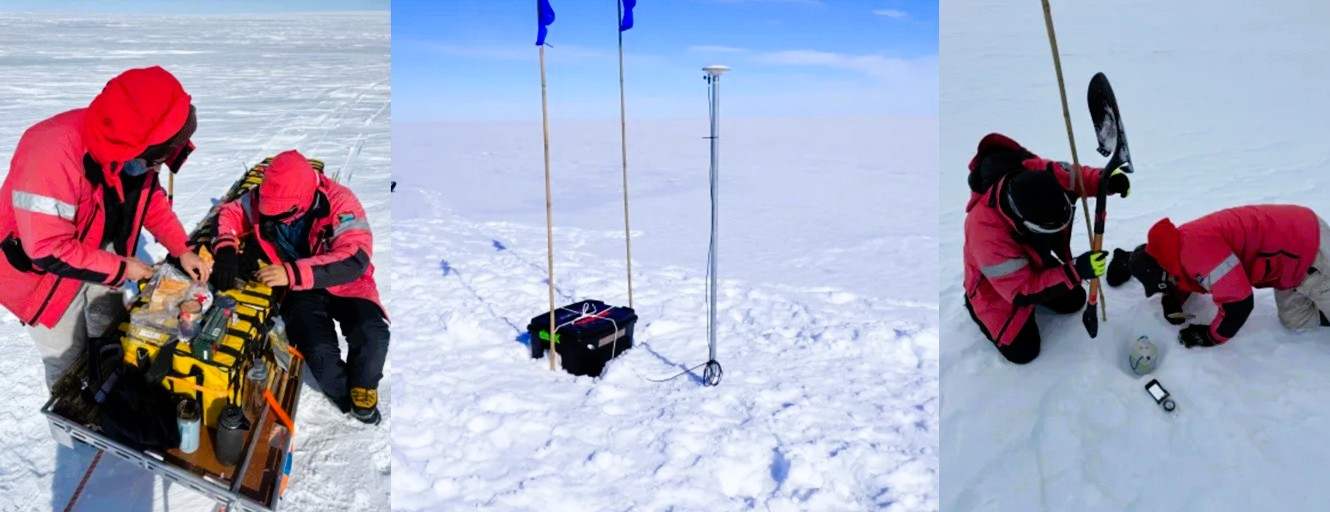 Through mid- and late January, the team balanced demanding science with the realities of Antarctic fieldwork. GNSS stations positioned around major basal crevasses provided precise measurements of ice motion and fracture growth, helping assess the risk of large calving events. Complementary radar surveys quantified changes in ice thickness, supplying key inputs for ice-shelf flow models.
Seismic surveys used arrays of geophones and controlled energy sources to image the ice shelf and the ice–ocean interface. Drone-based ground-penetrating radar revealed the structure and evolution of deep basal crevasses, building on data from the previous season.
Fieldwork was frequently interrupted by severe storms, including wind gusts exceeding 120 km/h. Despite delays, the team adapted schedules and used downtime for maintenance and data checks. A major milestone was the first deployment of SAR corner reflectors on an Antarctic ice shelf, enabling highly accurate satellite tracking of ice motion.
Together, these measurements produced a unique dataset capturing both surface and subsurface behaviour of the Fimbulisen Ice Shelf.
Full Article
by Ria Olivier | Feb 7, 2026 | Antarctica, Engineering, geochemistry, Research, SANAP
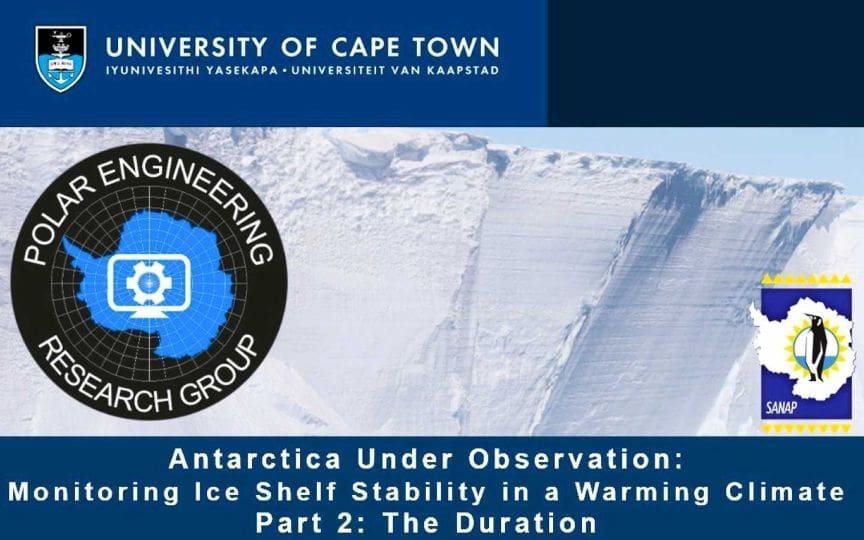
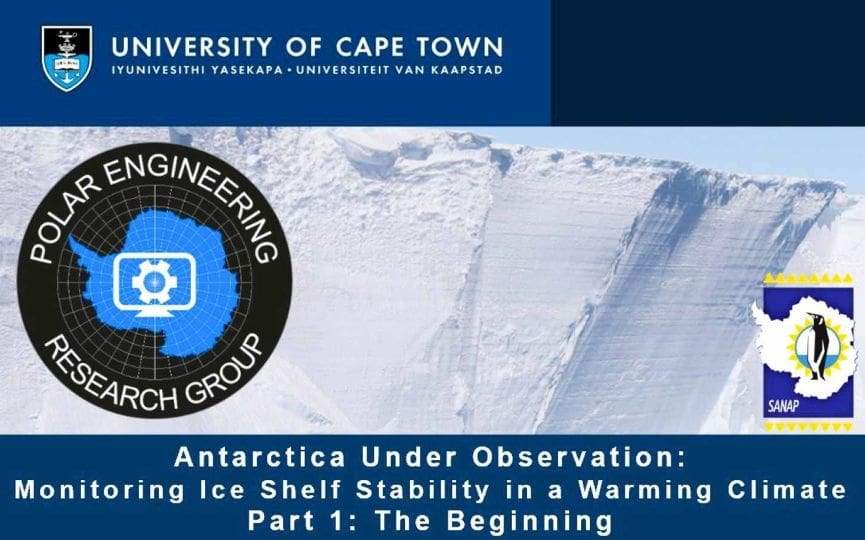
Monitoring Antarctic Ice Shelf Stability. Antarctic ice shelves play a critical role in controlling future sea-level rise.
In January 2026, an international research team began the second field campaign of Structural Glaciological Analysis of the Antarctic Ice Shelves, supported by the National Research Foundation and the South African National Antarctic Programme (SANAP). Led by the University of Cape Town’s Polar Engineering Research Group, the project combines expertise in engineering, geophysics, and glaciology.
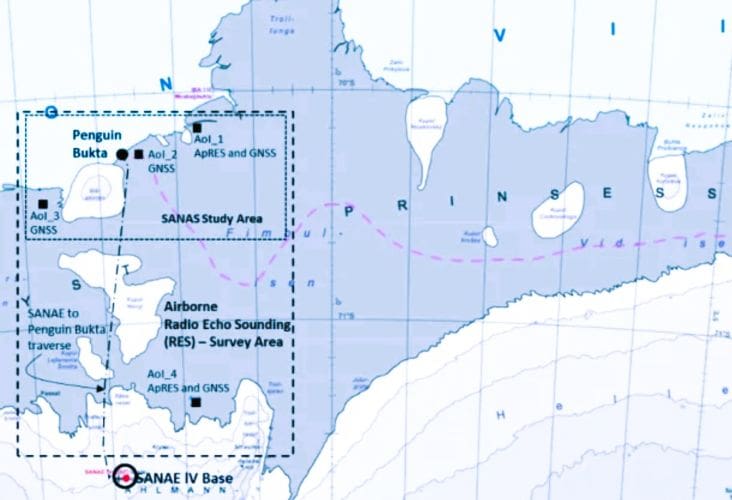
The focus is the western Fimbulisen Ice Shelf , which regulates ice flow from the Antarctic interior into the Southern Ocean via the Jutulstraumen Glacier. Changes in its stability directly affect ice discharge and global sea level.
The SANAP 2025/2026 team arrived aboard SA Agulhas II on 11 January 2026 and established a field camp on the ice shelf. Early work centred on retrieving data from permanent GNSS stations and phase-sensitive radar instruments measuring ice motion, thickness, and basal melt.
These efforts marked the start of five intensive weeks of fieldwork aimed at understanding how Antarctic ice shelves respond to a warming climate.
Full Article
by Ria Olivier | Dec 3, 2025 | geochemistry, Oceanography, Research, SANAP, SANAP Student, Science, Southern Ocean
The South African National Antarctic Programme (SANAP) is proud to highlight the successful hosting of the 4th GEOTRACES Summer School, held in Cape Town, South Africa, from 17–21 November 2025. This prestigious international training event brought together 35 students and 19 GEOTRACES scientists from across the globe, reinforcing the importance of collaboration in advancing oceanographic and trace metal research. Supported by the French National Centre for Scientific Research (CNRS) and the Scientific Committee on Oceanic Research (SCOR), the summer school served as an essential platform for equipping PhD candidates and early career researchers with the knowledge and skills necessary to understand the biogeochemical cycles of trace metals in the world’s oceans. These cycles play a crucial role in regulating marine ecosystems, influencing climate processes, and shaping global biogeochemical dynamics.
Building Global Connections and Sharing Knowledge – A central goal of the GEOTRACES Summer School is to foster meaningful collaboration and knowledge exchange among emerging scientists. Participants were assigned to diverse working groups intended to strengthen networking, encourage interdisciplinary thinking, and build long-term scientific partnerships. These groups formed the basis of practical activities, poster sessions, and the week’s learning programme.
Prizewinners above with organising committee: l-r Thomas Ryan-Keogh, Hélène Planquette, Ruth Hawley, University Southampton (UK), CJ Denault, University of Minnesota (USA), Michael Julian Haryanto, University of Toyama (Japan), Ryan Cloete, Susanne Fietz. The organising committee—Hélène Planquette (CNRS), Susanne Fietz (Stellenbosch University), Thomas Ryan-Keogh (National Oceanography Centre), and Ryan Cloete (Stellenbosch University)—curated an intensive and enriching schedule combining expert lectures with hands-on training.
Insightful Lectures – Participants were privileged to learn from internationally recognised researchers who shared their expertise across a wide range of GEOTRACES-relevant themes, including sampling techniques, trace element isotopes, atmospheric processes, paleoceanography, modelling, and science communication. Lecture Programme Highlights:
- Greg Cutter (Old Dominion University): Planning and executing a GEOTRACES cruise
- Rob Middag (NIOZ; University of Groningen): Trace metal clean sampling and analysis – past and present approaches
- Hélène Planquette (CNRS): Intercalibration
- Jessica Fitzsimmons (Texas A&M University): Physicochemical speciation and its role in oceanic metal sinks
- Alessandro Tagliabue (University of Liverpool): Predicting climate-change impacts on trace element and isotope (TEI) cycles for IPCC assessments
- Adi Torfstein (Hebrew University of Jerusalem): Trace element particulate fluxes in the ocean
- William (Bill) Landing (Florida State University): Atmospheric deposition of trace elements and their biogeochemical impact
- Tim Conway (University of South Florida): Iron isotopes
- Taryn Noble (University of Tasmania): Paleoceanography
- Rhiannon Jones (British Antarctic Survey): Sediments as sources and sinks of trace elements
- Zhouling Zhang (GEOMAR): Non-traditional stable isotopes in biogeochemical research
- Lise Artigue (University of Perpignan): Multi-tracer approaches combined with hydrodynamics, modelling, and microbiology
- Thomas Ryan-Keogh (National Oceanography Centre): Conducting nutrient-addition (“bioassay”) experiments at sea
- Mak Saito (Woods Hole Oceanographic Institution): Metals in biology and biochemistry
- Ria Olivier (Antarctic Legacy of South Africa): Science outreach, awareness, and the role of transdisciplinarity in communication
Hands-On Practical Training – To complement the lecture series, participants engaged in practical sessions that exposed them to key tools, datasets, and analytical techniques used in trace metal research. These sessions helped early career scientists understand how their work integrates into the broader international GEOTRACES community, building confidence for future participation in global research initiatives. Training included:
- Data crunching and processing
- Paleoceanographic exercises
- IPCC-style assessment activities
- Integrating complementary oceanographic datasets
- SeaFAST and MC-ICP-MS laboratory techniques
- GoFlo sampling methods
- Autonomous platform technologies
Sincere appreciation to the sponsors of the 4th GEOTRACES Summer School:
- French National Centre for Scientific Research (CNRS)
- French Embassy in South Africa, Lesotho, and Malawi
- Scientific Committee on Oceanic Research (SCOR)
We also acknowledge and thank the following South African partners and supporters, their collective support played a pivotal role in ensuring the success of this global training event.
- Department of Science, Technology and Innovation (DSTI)
- National Research Foundation (NRF)
- Department of Forestry, Fisheries and the Environment (DFFE)
- South African National Antarctic Programme (SANAP)
- Stellenbosch University (SUN)
- Sea Technology Services (STS)
- Antarctic Legacy of South Africa (ALSA)
Strengthening the Future of Trace Metal and Antarctic Research – The 4th GEOTRACES Summer School has once again demonstrated the power of international collaboration in addressing complex marine and climate challenges. By building capacity among early career scientists and connecting them with leading experts, this event helps ensure that the next generation is well equipped to contribute to cutting-edge oceanographic research—both within South Africa and across the world. SANAP is proud to have been part of such an impactful scientific gathering and remains committed to supporting global research that enhances understanding of our oceans and the polar regions.
Fun during Science Communication session with adding fingerprints to an Antarctica Map
by Ria Olivier | Feb 29, 2024 | Biogeochemistry, geochemistry, Research, SA Agulhas II, SANAP, SANAP Student, South Atlantic, Southern Ocean
The third session within the Marine and Antarctic Research Strategy research theme: Oceans and marine ecosystems under global change chaired by Suzanne Fietz of Stellenbosch University. The presentations resort under the title ‘Southern Ocean productivity: drivers and consequences. The session was introduced by Susanne Fietz and the alignment to MARS. (Above: group photo – Photo credit Suzanne Fietz)
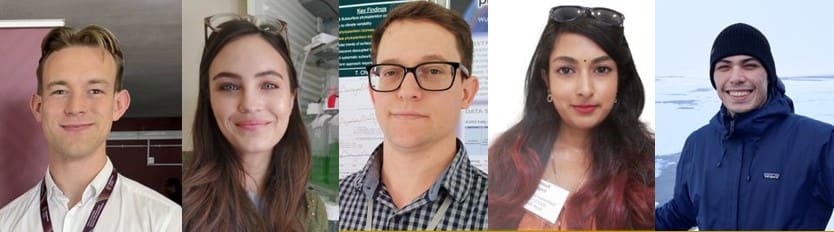
Above (l-r): Liam Quinlan, Emtia Wium, Johan Viljoen, Asmita Singh, Jared Walsh (Stellenbosch University)
- Liam Quinlan: Characterising phytoplankton communities: A Southern Ocean case study of environmental coupling. (Abstract)
- Amelia Deary: Early community development at the Southern Ocean Marginal Ice Zone. (Abstract)
- Sadiyah Rawat: The role of the island mass effect in enhancing productivity and carbon export in the Subantarctic Ocean. (Abstract)
- Emtia Wium: Impact of metals in aerosols and dust on marine phytoplankton: South Africa. (Abstract)
- Sina Wallschuss: The seasonality and origins of nitrous oxide in the Atlantic sector of the Southern Ocean. (Abstract)
- Faith February: Observations of Southern Ocean marine aerosols in Simon’s Town, False Bay. (Abstract)
- Susanne Fietz: General discussion
- Mhlangabezi Mdutyana: Nitrification in the Southern Ocean: controls, kinetics, and biogeochemical implications. (Abstract)
- Susanne Fietz: Trace metals and phytoplankton. (Abstract)
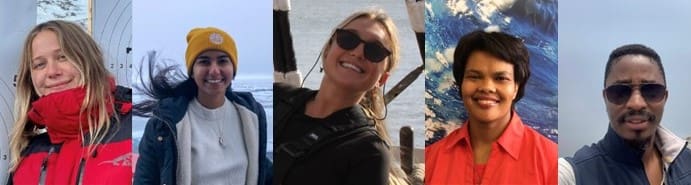
Above (l-r): Amelia Deary, Sadiyah Rawat, Sina Wallschuss, Faith February, Mhlangabezi Mdutyana (UCT)
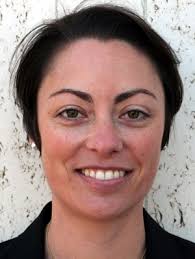
Sarah Fawcett(left) could not attend, but her and Dr Katye Altieri (right)students gave presentations during this session. Sarah Fawcett (abstract): Nanoplankton: the dominant vector for carbon export across the Atlantic Southern Ocean in spring.
Suzanne Fietz and the Stellenbosch University Earth Sciences team submitted an excellent e-poster Asmita Singh(e-poster) and Johan Viljoen (abstract) and Jared Walsh(abstract) were not able to attend the symposium in person.
by Ria Olivier | Oct 30, 2023 | Environment, geochemistry, Gough Island, News, Oceanography, Research, SA Agulhas II, SA Polar Research Infrastructure, SANAP, SAPolarRI, SAPRI, Science, South Atlantic, Southern Ocean, sub-Antarctic, Tristan da Cunha
Research team on the recent Gough Island takeover expedition.
Phytoplankton are microscopic plants that live in the ocean, and just like plants on land they need to have enough food to grow and be happy. However, some places in the ocean don’t have enough food for them whereas some places do. The Southern Ocean Carbon & Climate Observatory (SOCCO) team based at CSIR, Trace Metals team based at Stellenbosch University (TracEx) and the Department of Forestry, Fisheries and the Environment: Oceans and Coasts team are trying to figure out where those places are (in the Southern Ocean).
During the Gough Island takeover expedition:
The Trace Metal Biogeochemistry research teams sampled upstream and downstream of Gough Island to look at how the Antarctic Circumpolar Current (ACC) interacts with the island to resuspend sediments from the seafloor. This resuspended sediments acts as a source of trace metals to the surface mixed layer in support of phytoplankton blooms. The team used a 12 bottle mini-CTD rosette system (see image below, right) to sample for dissolved trace metals, particulate trace metals and organic trace metal chemistry.
| TEAM | Trace Metal Biogeochemistry |
| Projects Name | Seasonal Iron speciation in the Southern Ocean, from open ocean environments to naturally fertilized sub-Antarctic Islands (Marion and Gough Island) |
| Principal Investigator | Dr Thomas Ryan-Keogh | Senior Researcher at the Southern Ocean Carbon-Climate Observatory (SOCCO), CSIR South Africa |
| Co-Principal Investigator (On board DFFE team leader) | Dr TN Mtshali | Department of Forestry, Fisheries and the Environment (DFFE) |
| Co-Principal Investigator | Prof AN Roychoudhury | Stellenbosch University (TracEx) |
| SOCCO/TracEx on board team leader | Olie Valk | TracEx |
On board team member (PhD Student)
| Thapelo Ramalepe | SOCCO-TracEx |
On board team member (MSc Student)
| Miranda Sitofile | SOCCO-TracEx |
| On board DFFE team member | Mutshutshu Tsanwani | DFFE |
| On board DFFE team member | Kanyisile Vena | DFFE |
| On board DFFE team member | Hassan Ismael | DFFE |
| On board DFFE team member | Mbulelo Makhetha | DFFE |
| On board team members | Including all ship-based scientists sampling for trace metals |
The project in more detail:
The Southern Ocean (SO) is one of the largest high-nutrient low-chlorophyll regions in the World’s Ocean, where primary productivity is limited by iron bioavailability, thereby impacting the strength and efficiency of biological carbon pump. There are, however, exceptions with large phytoplankton blooms persistently observed downstream of the sub-Antarctic Islands. While extensive research has focussed on iron-biogeochemistry around Kerguelen and Crozet islands, no such studies have been conducted at Marion and Gough islands.
Furthermore, whilst our previous studies have made substantial advances toward addressing the gaps in seasonal data coverage through the Southern oCean seAsonaL Experiment (SCALE) 2019 winter and spring expeditions, there is still a paucity of dissolved iron data in the SO, especially from autumn to late spring. This is severely hampering our understanding of the full seasonal biogeochemical iron cycle and its impact on primary production. This project aims to continue its focus on seasonality by expanding seasonal coverage of iron measurements to include autumn (Marion) and late-spring (Gough) expeditions for more comprehensive coverage of the SO seasonal cycle, with a particular focus on quantifying biogeochemical cycling of iron-pool around these understudied islands.
This project is funded by: The National Research Foundation, South African National Antarctic Programme funding (NRF-SANAP).
Current NRF-SANAP funded projects
Visit SOCCO here! Visit TracEx here!
Featured Image: L-R (Back): Kanyisile Vena (DFFE), Ole Valk (TracEx), Hassan Ismael (DFFE), Mbulelo Makhetha (DFFE); (front) Miranda Sitofile (SOCCO-TracEx), Thato Mtshali (DFFE), Thapelo Ramalepe (SOCCO- TracEx), Mutshutshu Tsanwani (DFFE).
Project information supplied by Dr Thomas Ryan-Keogh. Images supplied by Thapelo Ramalepe.
Anche Louw, South African Polar Research Infrastructure, 30 October 2023.
by Ria Olivier | Dec 11, 2020 | Announcement, geochemistry, Jobs, Oceanography, Research, SA Agulhas II, SANAP, Science, Southern Ocean
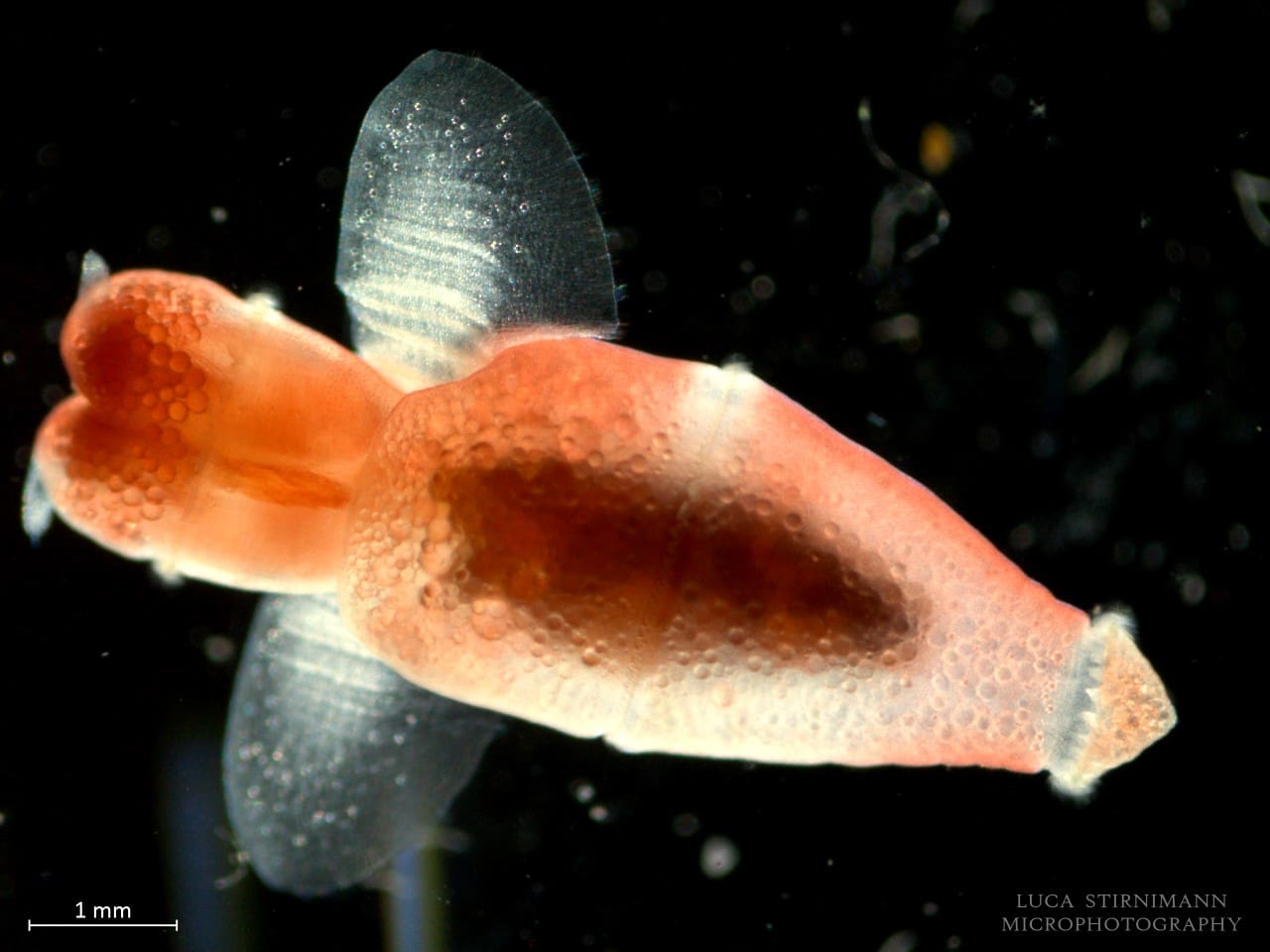
The Biogeochemistry Research Infrastructure Platform (BIOGRIP) was established in 2019 in terms of the South African Research Infrastructure Roadmap, a high-level research strategy of the national government Department of Science and Innovation.
BIOGRIP comprises four research ‘nodes’ based at the Universities of Cape Town (focusing on isotope biogeochemistry), Stellenbosch (water and soil biogeochemistry), Free State (mineral biogeochemistry) and North-West University (atmospheric biogeochemistry), with the administrative ‘hub’ located at UCT. The Director will be based at UCT and will report directly to the DVC Research. The Director will (1) provide strong leadership and scientific guidance to the BIOGRIP platform as a whole, ensuring that it delivers on its mandate (2) liaise with stakeholders, the management steering committee and scientific and technical advisory committees (3) hold overall financial responsibility for BIOGRIP and (4) contribute to the research output of BIOGRIP.
“Biogeochemistry” is the study of how biological, geological, chemical, and physical processes interact to shape natural environments over time and space. It covers a range of interdisciplinary research foci, from the origin and diversification of life, to how anthropogenic drivers alter modern environments, to the response of natural systems to environmental change. Biogeochemistry was identified by the 2016 South African Research Infrastructure Roadmap (SARIR) document as an emerging interdisciplinary field of strategic importance. SARIR recommends that the central objective of biogeochemical research in South Africa should be to gain “further insight into the interactions of human activity and the environment over the past several hundred millennia and to determine how the environmental impact of anthropogenic activity has contributed to the change in Earth system dynamics (chemical, physical and biological). This includes the search for an understanding of the behavior of well characterized and emerging pollutants and their current impact on the environment”. There are a number of strong research groups in South Africa already investigating various aspects of this broad research objective, but their efforts to-date have been isolated and/or fragmented. Moreover, biogeochemistry requires high precision data and measurements of a vast range of inorganic and organic chemical components, including isotope ratios and trace elements, some of which cannot currently be made in South Africa and many of which cannot be run at the volume and quality required. The investment in BIOGRIP will provide the platform to drive biogeochemical knowledge creation through investment in (1) technical capacity, training and scientific leadership in biogeochemical research, (2) world-class analytical facilities, and (3) improved monitoring of biogeochemical environmental variables through the generation and compilation of statistically meaningful datasets.
BIOGRIP will provide significant opportunities to advance South Africa’s research infrastructure and technical capacity in the field of biogeochemistry, while also facilitating a high level of scientific impact on a range of temporal and spatial scales. BIOGRIP will extend the practical research questions that address specific South African problems to include those that are purely curiosity-driven, creative, and/or risky, while also deepening the extent to which ongoing research themes can be probed. An additional impact of developing analytical capacity in-country is the potential for creative methods development, particularly South African-specific applications (e.g., for research questions relevant to the Cape floristic kingdom, hominin evolution, water availability and quality, Antarctic ecosystems, etc.). This will allow the South African research community to push the frontiers of knowledge in a variety of fields where biogeochemical techniques have yet to be applied (or have yet to be applied at the resolution offered by BIOGRIP).
Click here for advertisement. Closing date: 1st February 2021
Photo Credit: Sarah Fawcett, Alakendra Roychoudhury, Susanne Fietz
Cover Image: Ben van der Walt
 Monitoring Antarctic Ice Shelf Stability. Antarctic ice shelves play a critical role in controlling future sea-level rise.
 Building Global Connections and Sharing Knowledge – A central goal of the GEOTRACES Summer School is to foster meaningful collaboration and knowledge exchange among emerging scientists. Participants were assigned to diverse working groups intended to strengthen networking, encourage interdisciplinary thinking, and build long-term scientific partnerships. These groups formed the basis of practical activities, poster sessions, and the week’s learning programme.
 Prizewinners above with organising committee: l-r Thomas Ryan-Keogh, Hélène Planquette, Ruth Hawley, University Southampton (UK), CJ Denault, University of Minnesota (USA), Michael Julian Haryanto, University of Toyama (Japan), Ryan Cloete, Susanne Fietz. The organising committee—Hélène Planquette (CNRS), Susanne Fietz (Stellenbosch University), Thomas Ryan-Keogh (National Oceanography Centre), and Ryan Cloete (Stellenbosch University)—curated an intensive and enriching schedule combining expert lectures with hands-on training.
 Insightful Lectures – Participants were privileged to learn from internationally recognised researchers who shared their expertise across a wide range of GEOTRACES-relevant themes, including sampling techniques, trace element isotopes, atmospheric processes, paleoceanography, modelling, and science communication. Lecture Programme Highlights:
 Sincere appreciation to the sponsors of the 4th GEOTRACES Summer School:
 Fun during Science Communication session with adding fingerprints to an Antarctica Map

 Above (l-r): Liam Quinlan, Emtia Wium, Johan Viljoen, Asmita Singh, Jared Walsh (Stellenbosch University)
 Above (l-r): Amelia Deary, Sadiyah Rawat, Sina Wallschuss, Faith February, Mhlangabezi Mdutyana (UCT)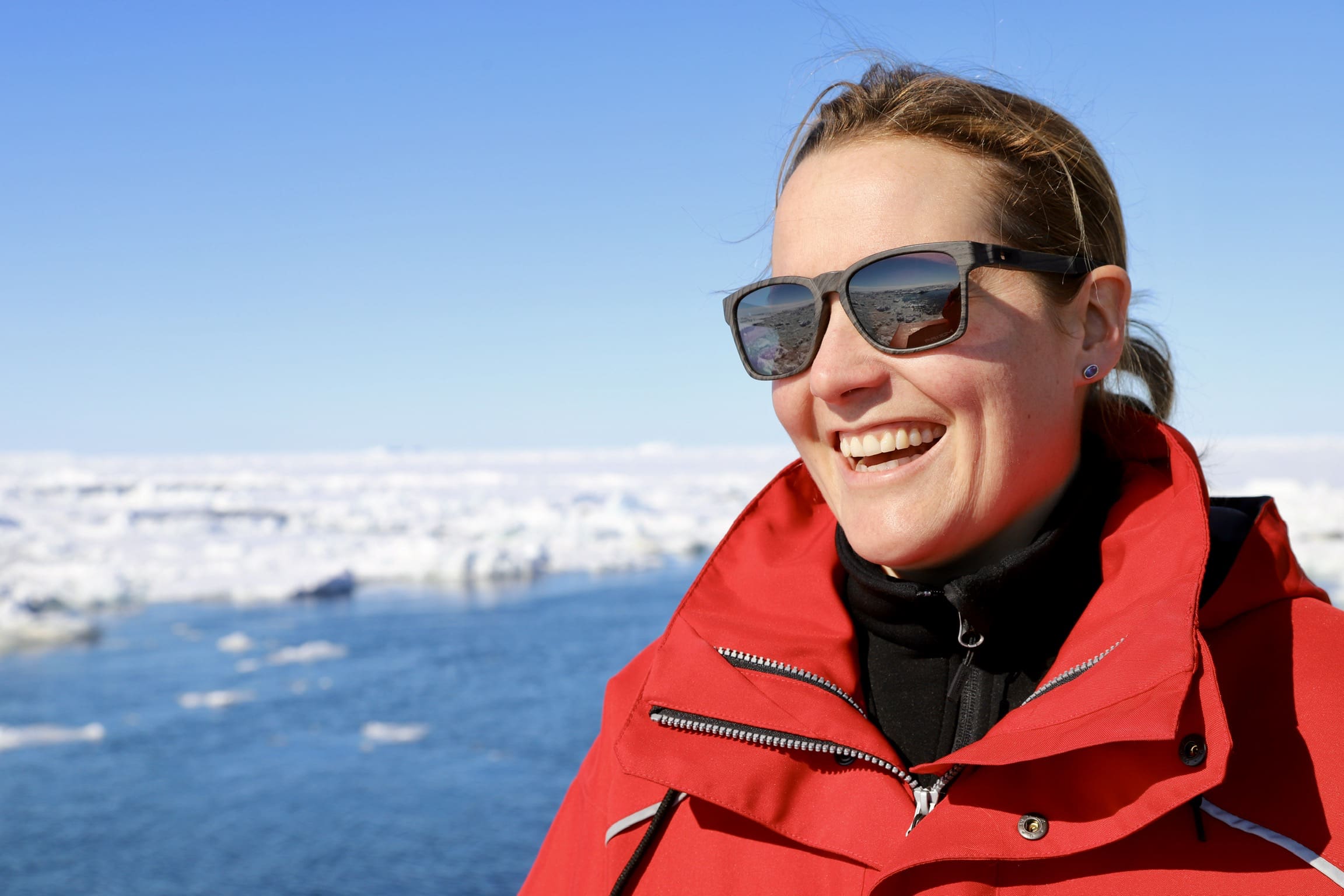
 Sarah Fawcett(left) could not attend, but her and Dr Katye Altieri (right)students gave presentations during this session. Sarah Fawcett (
 Suzanne Fietz and the Stellenbosch University Earth Sciences team submitted an excellent


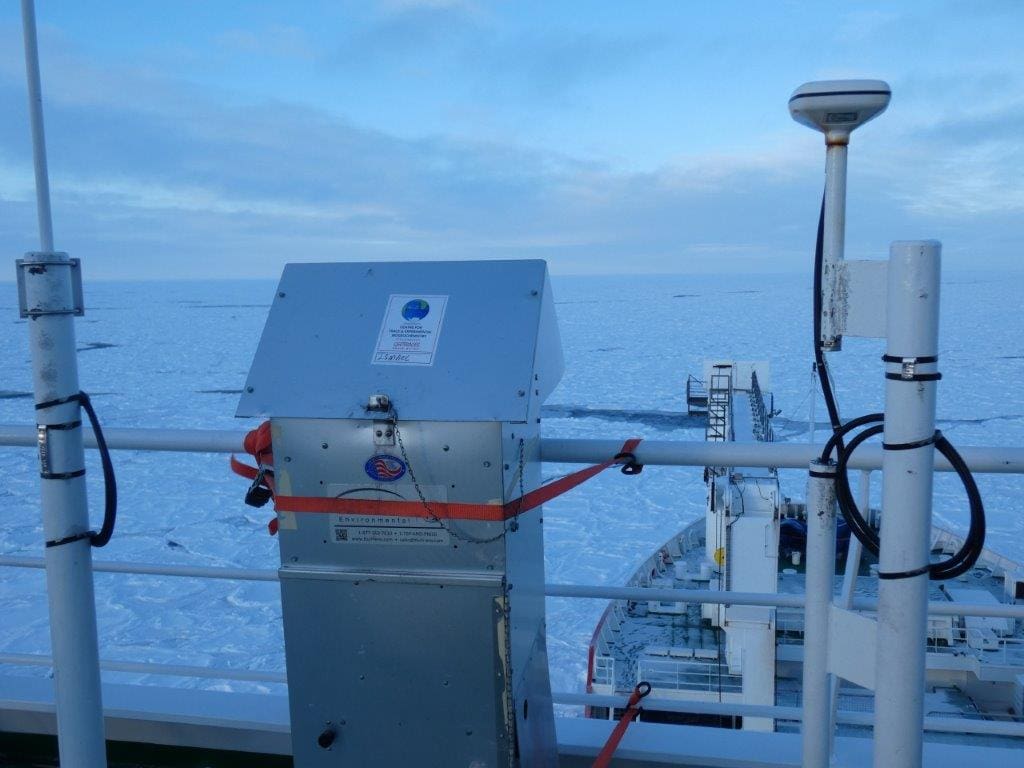 BIOGRIP comprises four research ‘nodes’ based at the Universities of Cape Town (focusing on isotope biogeochemistry), Stellenbosch (water and soil biogeochemistry), Free State (mineral biogeochemistry) and North-West University (atmospheric biogeochemistry), with the administrative ‘hub’ located at UCT. The

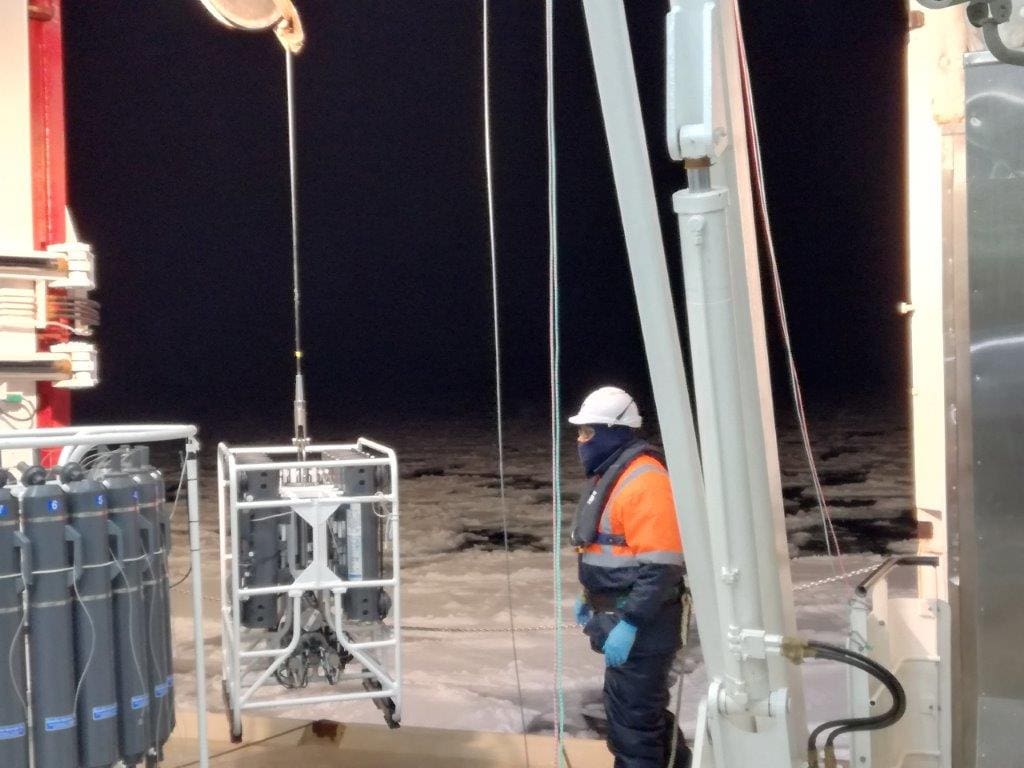 “Biogeochemistry” is the study of how biological, geological, chemical, and physical processes interact to shape natural environments over time and space. It covers a range of interdisciplinary research foci, from the origin and diversification of life, to how anthropogenic drivers alter modern environments, to the response of natural systems to environmental change. Biogeochemistry was identified by the 2016 South African Research Infrastructure Roadmap (SARIR) document as an emerging interdisciplinary field of strategic importance. SARIR recommends that the central objective of biogeochemical research in South Africa should be to gain “further insight into the interactions of human activity and the environment over the past several hundred millennia and to determine how the environmental impact of anthropogenic activity has contributed to the change in Earth system dynamics (chemical, physical and biological). This includes the search for an understanding of the behavior of well characterized and emerging pollutants and their current impact on the environment”. There are a number of strong research groups in South Africa already investigating various aspects of this broad research objective, but their efforts to-date have been isolated and/or fragmented. Moreover, biogeochemistry requires high precision data and measurements of a vast range of inorganic and organic chemical components, including isotope ratios and trace elements, some of which cannot currently be made in South Africa and many of which cannot be run at the volume and quality required. The investment in BIOGRIP will provide the platform to drive biogeochemical knowledge creation through investment in (1) technical capacity, training and scientific leadership in biogeochemical research, (2) world-class analytical facilities, and (3) improved monitoring of biogeochemical environmental variables through the generation and compilation of statistically meaningful datasets.
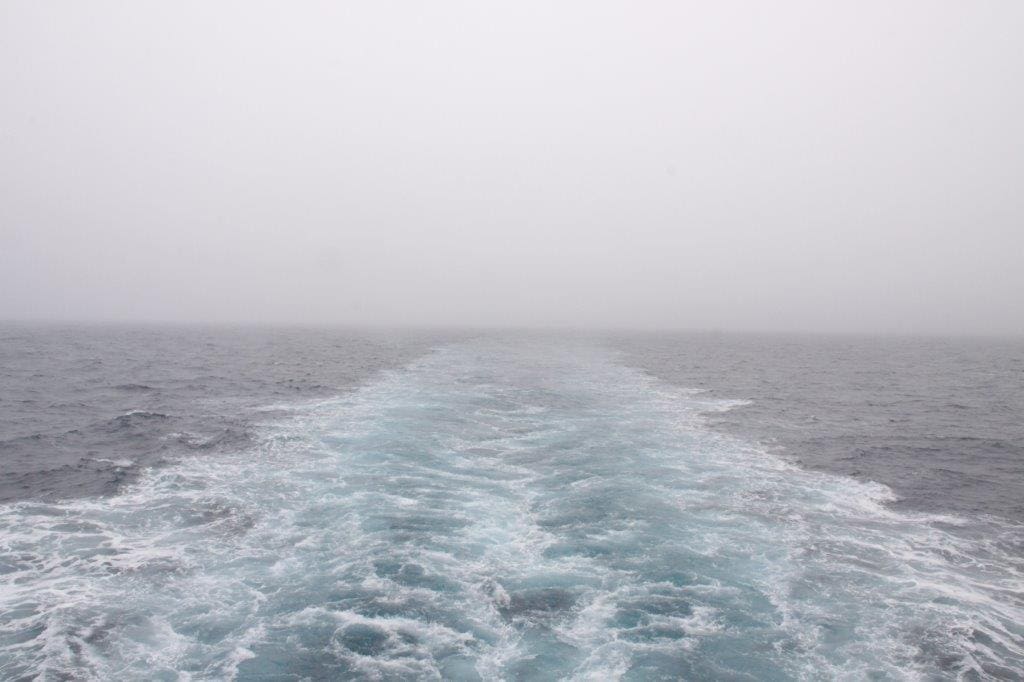
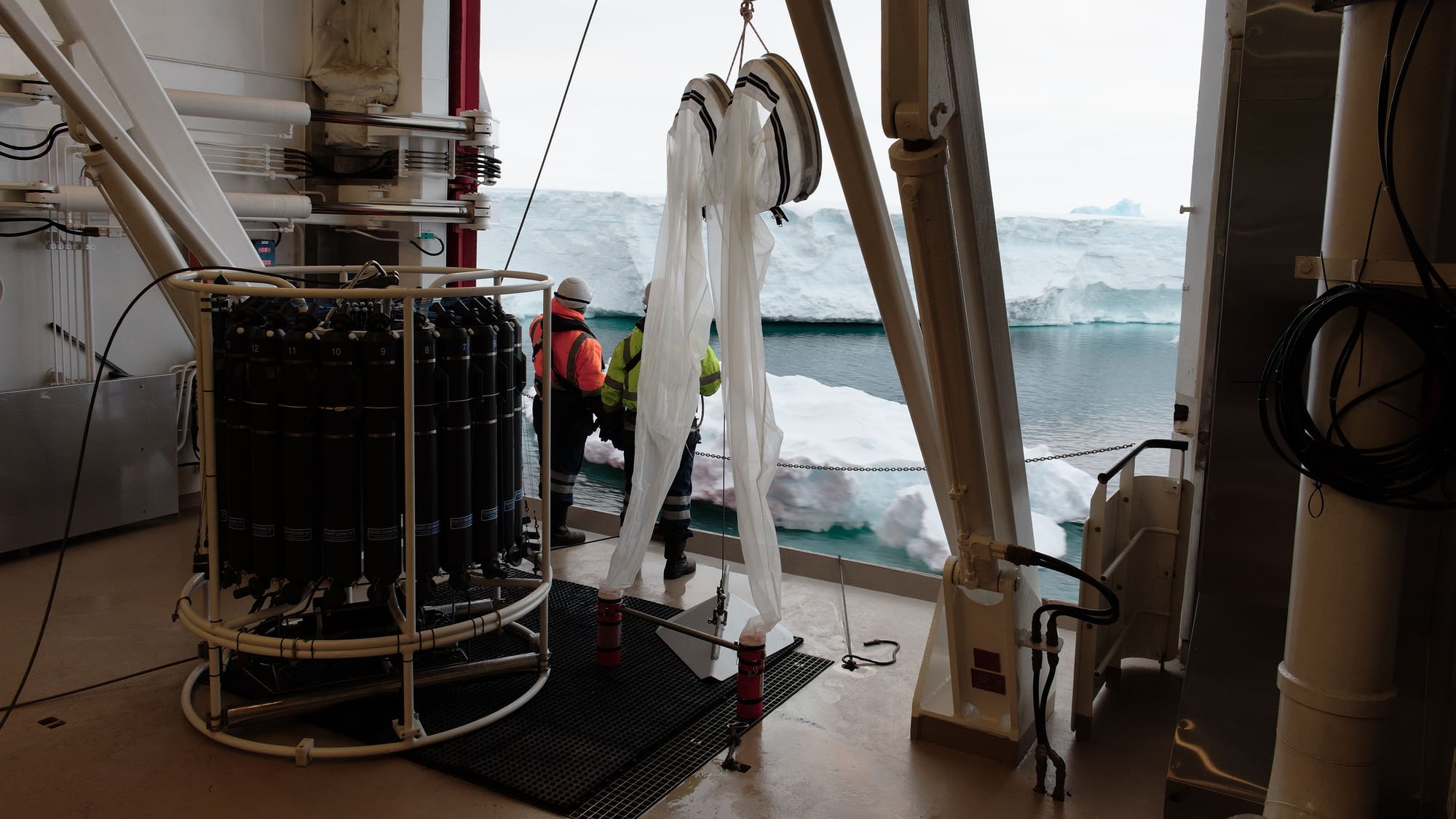 BIOGRIP will provide significant opportunities to advance South Africa’s research infrastructure and technical capacity in the field of biogeochemistry, while also facilitating a high level of scientific impact on a range of temporal and spatial scales. BIOGRIP will extend the practical research questions that address specific South African problems to include those that are purely curiosity-driven, creative, and/or risky, while also deepening the extent to which ongoing research themes can be probed. An additional impact of developing analytical capacity in-country is the potential for creative methods development, particularly South African-specific applications (e.g., for research questions relevant to the Cape floristic kingdom, hominin evolution, water availability and quality, Antarctic ecosystems, etc.). This will allow the South African research community to push the frontiers of knowledge in a variety of fields where biogeochemical techniques have yet to be applied (or have yet to be applied at the resolution offered by BIOGRIP).