by Ria Olivier | Apr 13, 2020 | Antarctica, Geomorphology, Marion Island, Research, Science, sub-Antarctic
Werner Nel was born and raised in East London. He was educated at the University of Pretoria with a BSc in Earth Sciences: Atmospheric Science, BSc Hons in Environmental Analysis and Management and an MSc and PhD in Geography. His MSc was on the Quaternary landforms on Marion Island (overwintered with M56) while his PhD was on the climate attributes and its geomorphic effect in the Drakensberg.
Why you love your career in science?
Very simply for the fact that science take me places and allows me to meet new people. (Above L-R: Aktru Glazier in Siberia, Huangshwen in China, Abisko mountains in Sweden) Since I was a young boy I always yearned for adventure (I still do) and field research gives you that. There are very few careers which allow you to be creative (making maps and figures and writing papers), work with your hands (setting up and maintaining field equipment) and challenges you intellectually. However more importantly, being able to work with people is the best thing about my career. I have had the honour of mentoring some wonderful students, each unique in their personality and approach to life. I have also met some magnificent people through research and travel. My best friends are my research partners and colleagues. I have had the privilege to be on numerous expeditions and travels to far off places with some of the best people, and even though we have different nationalities and come from different cultural backgrounds, I have learned that people are just people and field scientists (young and old) are the best of them all.
Latest research or study you’re working on ?
I am involved in many things. (Above fieldwork in Antarctica L-R; Flarjuvan, Robbertskollen and Lorenzpiggen) Firstly, at Fort Hare, I supervise many students across diverse fields of research interests in Geography and Environmental Science and to keep abreast of all this work takes a large chunk of my research time, but is the best part of my job. Then as for my own current research, I am involved in a very exciting collaboration with colleagues from Nanjing University in China where we are looking at the effect of weathering and human activities on heavy metal pollution in the Pearl River Basin. Then I am also involved in some climate and landscape interactions work on Mauritius and it’s off shore islets with SA colleagues (Paul Sumner, David Hedding and Jay le Roux) and our friends from the University of Mauritius and the Mauritian Wildlife Foundation. Then of course my SANAP sub-Antarctic research with Dave Hedding and students are the most important to me. We are currently busy with a number of ongoing research projects on the contemporary periglacial geomorphology of the island. We are also re-examining the glacial reconstruction and timing of deglaciation on Marion Island through the use of new funky cosmogenic dating techniques in collaboration with colleagues from SUERC in Scotland and the British Antarctic Survey.
Werner’s Message:
Ja, well there are better paying jobs out there and I guess jobs that give you more status in society (if this is what you are looking for). But I think no other career gives you more freedom to express yourself. Also, unlike what most people think, you don’t need to be particularly clever. Most of the top researchers that I know are just ordinary people that have a passion for what they do and they just put in the time. A willingness to learn (and read), to explore, and not be scared of new things are all you need. Science also allows you to break free from stereotypes and permits (actually insists) you to be who you are. And the rewards are amazing. To see your students graduate and go on to do wonderful things (and be great in their jobs) and to meet truly inspiring and interesting people are way more rewarding I think. And even though it seems that every academic in the universe is perpetually broke you can make a decent living from being an academic. However more importantly, given the flexibility a lot of us enjoy, you can still be there for your family when they need you, and you can always count on a fellow field researcher to buy you a beer.
Werner Nel is a Professor in the Department of Geography and Environmental Science at the University of Fort Hare. He lectures climatology to first, second and third year students and geomorphology to post-graduates. He has successfully supervised more than 20 Masters students and seven PhD students and serves on the joint International Association of Geomorphology/ International Geographical Union steering committee for Geomorphology and Society and he is a member of the South African National Committee for SCAR. He has been actively involved with SANAP research since 1999 and has been Chief Scientist for shore-based science on relief expeditions to Marion Island and Antarctica.
See profile on Google Scholar and Researchgate and an interview with Russian media at the Aktru research station in Siberia.
Photo Credits: Werner Nel
by Ria Olivier | Apr 2, 2020 | Important Dates, Marion Island, News, Overwintering Team, sub-Antarctic, Take-Over Operations
UPDATE ON WAY FORWARD FOR MARION 2020 RELIEF VOYAGE – 2 April 2020.
The Department of Environment Forestry and Fisheries (DEFF) hereby wishes to inform all participants, principle investigators and support teams of the arrangements pertaining to the forthcoming Marion Island 2020 relief voyage, which was scheduled to depart on 9 April 2020. As a result of the lockdown from 26 March 2020, as per announcement of the President, the voyage planning and arrangements had to be reconfigured to minimise any risk.
The DEFF as a custodian and key Department of the SANAP program needs to mitigate risks and
ensure that decisions are made in the best interest and well-being of all participants, as well as that of the overwintering teams. To this end, the DEFF together with key partners and specialist advisors has
decided that the voyage will proceed but with a significantly reduced vessel crew and passenger complement. The voyage configuration was premised on the guiding principle of having the minimum
number of essential voyage participants during the relief as well as to overwinter.
The format of the voyage will include an essential support team for logistics, maintenance and overwintering. There will be no field science activities during the relief and overwintering periods. The Department is facilitating quarantine and testing of all voyage participants.
This decision was not taken lightly and should not be construed as a lack of priority assigned to the science activities. This is certainly a tremendous set back for all of us, however we need to do the best that we can under the circumstances, and strive towards positive future outcomes. The parties that will be participating in the voyage will be contacted either directly or through their respective focal points. These would include personnel from Department of Public Works and Infrastructure, SA Weather Service, SA National Space Agency and Ultimate Heli.
The Department would like wish you and your families well.
Stay safe and healthy.
Ms Judy Beaumont
Deputy Director General: Oceans and Coasts
Date: 2 April 2020
by Ria Olivier | Feb 24, 2020 | Announcement, Antarctica, Gough Island, Marion Island, Research, SA Agulhas II, SANAP, Southern Ocean, sub-Antarctic
South African National Programme (SANAP)
CALL
Deadline 30 April 2020
(NRF General Application Guide 2021; Grants Management and Systems Administration (GMSA)
SANAP is a region-specific, theme-driven funding instrument which supports research in the Southern Ocean, including the Prince Edward Islands, and in Antarctica. As a competitive funding instrument, the chief eligibility criteria are:
- Research in the geographic region of the Southern Ocean, including the Prince Edward Islands, and / or in Antarctica
- Alignment with the research themes as detailed in the South African Antarctic and Southern Ocean Research Plan (2014-2024)
- Scientific merit and quality of the research proposal
- Evidence of associated human capacity development
SANAP research addresses the research themes detailed in the South African Antarctic and Southern Ocean Research Plan (2014-2024), and is underpinned by the overarching South African Marine and Antarctic Research Strategy (MARS) of 2015. The Antarctic and Southern Ocean Research Plan (hereafter “the Research Plan”) is focused on an integrative systems approach to understanding the evolution of the earth systems and ecosystems in the 21st Century. The Research Plan provides the overarching framework of operations for SANAP research activities, and follows the integrated progression from Earth Systems to Ecosystems to Human Systems in the research themes. Human activities and socio-political complexities in this international arena are of equal importance.(1).
Specific research themes detailed in the Research Plan are: Earth Systems, Living Systems, Human Enterprise and Innovation: Southern Ocean and Antarctic technology and engineering
Social Sciences, Law and Humanities applications are especially encouraged, as are applications addressing innovation. Each research theme has a number of sub- themes, and applicants are strongly encouraged to familiarise themselves with the thematic focus of the Research Plan, as well as with the overall strategic context provided in the MARS (both attached hereto) so as to ensure that their applications meet the very specific scientific and strategic objectives of this funding instrument.
EXECUTIVE SUMMARY
The National Research Foundation (NRF) recognises that in order for South Africa to be internationally competitive and to meaningfully contribute to the global economy, the country must have the capability to understand the knowledge produced by others. This understanding can best be developed through performing research. Publicly funded basic and applied research is viewed as a source of new ideas, opportunities, methods, and most importantly, the means through which problem solvers can be trained.
The South African Antarctic and Southern Ocean Research Plan (2014-2024) serves to link South Africa’s comparative geographic and research advantage, regional stewardship and national interest considerations to research themes so as to stimulate systems scale integration of knowledge and understanding. This will not only strengthen South Africa’s profile and develop advanced skills, but in so doing will also support the Country’s geo-political and citizenship goals in both regional and global dialogues. The importance of South Africa’s geographical proximity to Antarctica and its position as a Southern Ocean2 littoral State cannot be overstressed.
South Africa also maintains bases at Marion and Gough Islands, administered by the Department of Environment, Forestry and Fisheries (DEFF). Marion Island and Prince Edward Island together form the Prince Edward Islands Group, annexed by South Africa in 1947. Gough Island is a British protectorate which hosts the South African meteorological station, which operates as part of an agreement between South Africa and the United Kingdom.
The country runs the risk of not fully utilizing or maximizing the benefits from this geographic advantage, owing to a lack of adequate human capital. This includes the risk that the country may own research platforms and facilities, but could be subject to a form of “knowledge colonization” from international quarters, many of whom already possess a critical mass of requisite skills. The SANAP is a long-term funding instrument designed to ensure the creation of a demographically balanced Antarctic research programme that strives for internationally competitive research, promotes inter-disciplinarity and creates links with other African countries.
(1)The South African Antarctic and Southern Ocean Research Plan (2014-2024)
(2).This area includes the Prince Edward Islands over which South Africa exercises undisputed sovereignty. The Southern Ocean is defined as the region south of Africa comprising the ocean and the sub-Antarctic Islands up to, and including, the Antarctic Continental Shelf Zone.
by Fishgate Developer | Oct 10, 2019 | Announcement, Antarctica, Marion Island, News, Newsletters, Overwintering Team, sub-Antarctic
News from Marion Island
This month is the kickoff for the Marion Island newsletters – we will start with the May 2019 newsletter.
In this edition (May 2019)
- – Meet the 76th Marion Island overwintering team
- – See some photos of the team training
-
-
- On the island:
- – Take-over games and initiation
- – Sealers’ 1st round island
-
- – Meet the team’s fantastic sponsors
- – and more…
News from SANAE IV, Antarctica
In this edition (September 2019)
- – Meet the team’s Senior Meteorological Technician, Marvin Rankudu
-
-
- – Find out more about:
- – weather service
- – clouds
- – vehicles used at SANAE IV
- – aurora australis
-
- – September weather at SANAE IV
- – and more…
Anché Louw, Antarctic Legacy of South Africa, 10 October 2019
by Fishgate Developer | Sep 25, 2019 | Announcement, Jobs, Marion Island, News, Overwintering Team, Research, SANAP, sub-Antarctic
New job opportunities available on Marion Island.
| Job Title | Station | Period | Closing Date | Download Job Advert |
| Communications Engineer | Marion Island | April 2020 - May 2021 | 14 October 2019 | Click here |
| Electrical Engineer/Technician | Marion Island | April 2020 - May 2021 | 14 October 2019 | Click here |
| Diesel Mechanic | Marion Island | April 2020 - May 2021 | 14 October 2019 | Click here |
| Medical Orderly | Marion Island | April 2020 - May 2021 | 14 October 2019 | Click here |
| Field Assistant: Seabird Research x2 | Marion Island | April 2020 - May 2021 | 14 October 2019 | Click here |
| Environmental Control Officer | Marion Island | April 2020 - May 2021 | 14 October 2019 | Click here |
| Assistant Environmental Control Officer | Marion Island | April 2020 - May 2021 | 14 October 2019 | Click here |
| Senior Meteorological Technician | Marion Island | April 2020 - May 2021 | 14 October 2019 | Click here |
| Assistant Meteorological Technician x2 | Marion Island | April 2020 - May 2021 | 14 October 2019 | Click here |
| Field Assistant: Plant Ecology | Marion Island | April 2020 - May 2021 | 25 October 2019 | Click here |
| Field Assistant: 2 x"Sealers" and 1x "Whaler" | Marion Island | April 2020 - May 2021 | 21 October 2019 | Click here |
| Field Assistant: Plant Ecology (wind effects) | Marion Island | April 2020 - May 2021 | 25 October 2019 | Click here |
| Field Assistant: Seabird Research x2 (MAPRU) | Marion Island | April 2020 - May 2021 | 31 October 2019 | Click here |
by Fishgate Developer | Sep 11, 2019 | Announcement, Antarctica, News, Research, Science, Southern Ocean, sub-Antarctic
Ant-ICON Science and Implementation Plan
Dear Colleagues,
At the end of July, Mecha and I traveled to Plovdiv, Bulgaria to participate in the SCAR Programme Planning Group Leaders Meeting, and present the draft Ant-ICON Science and Implementation Plan to the SCAR Executive Committee.
Both meeting were extremely useful, particularly with regard to identifying synergies between the developing SRPs, and receiving useful guidance and feedback on how the developing Ant-ICON Science and Implementation Plan could be improved.
During the meetings Mecha and I, together with some invaluable input from Daniela Liggett, Chandrika Nath and other attendees, revised the Ant-ICON S&I Plan. We have continued to work on incorporating feedback over the last few weeks, and have now arrived at a near complete draft, which is attached for your further consideration.
Some sections still need a bit of work, but we feel that it is now at a stage where it can be disseminated more broadly to interested members of the SCAR scientific community and other stakeholders to raise the profile of this emerging initiative and hear any feedback that might be forthcoming. We’d also encourage you to disseminate this through your networks to interested colleagues.
Both the plan and an updated overview presentation have been uploaded to the Ant-ICON home page, and can be accessed using the following link under the Publications tab (https://scar.org/science/ant-icon/resources/). Mecha and I will undertake the broader dissemination, through various SCAR mailing lists, directly to key policy end users and other interested stakeholders including NGOs.
Mecha and I also encourage you to disseminate this plan through your networks to help raise awareness and to ensure anyone who is interested in following progress can join the mailing list. I am currently compiling an informal mailing list of interested persons, so if people do indicate interest, please let them know they can contact me directly and I will add their names.
We have a number of tasks ahead of us over the next few months as we aim to finalize the plan. This includes the completion of the Supporting Information that will accompany the S&I Plan, the preparation of a 2-page ‘marketing document’ and finalization of the make-up of the proposed Steering Committee (see section D – Management in the attached). With regard to the latter, please let me know if you would like to express interest in any of the Steering Committee positions as we need to start a list of potential names as soon as possible.
We received considerable input again in the last round, and while it was sometimes challenging to incorporate everything, we think most people’s comments and suggestions have been addressed. Nevertheless, the Science and Implementation Plan is still a work in progress, so please don’t hesitate to let us know if you have further input.
We hope to have a final draft completed by the end of October. It is likely that most of the consultation between now and then will be electronic, however, Mecha and I will hold at least one meeting in the margins of the CCAMLR meetings, which will be in Hobart from the 21 Oct-1 Nov 2019. Please let me know if you are likely to be in Hobart for these meetings and we will ensure that we include you in any correspondence regarding Ant-ICON discussions.
Many thanks once again for your interest and active engagement. It’s a pleasure to work with such a knowledgeable and enthusiastic planning group.
All the best
Aleks and Mecha
Dr. Aleks Terauds
Senior Research Scientist and Section Head |Biodiversity Conservation | Australian Antarctic Division | Kingston | Tasmania | Australia
Chief Officer – SCAR Standing Committee on the Antarctic Treaty System
P: +61 3 6232 3339 |E: aleks.terauds@gmail.com | Alt E: Aleks.Terauds@aad.gov.au

 Werner Nel was born and raised in East London. He was educated at the University of Pretoria with a BSc in Earth Sciences: Atmospheric Science, BSc Hons in Environmental Analysis and Management and an MSc and PhD in Geography. His MSc was on the Quaternary landforms on Marion Island (overwintered with M56) while his PhD was on the climate attributes and its geomorphic effect in the Drakensberg.

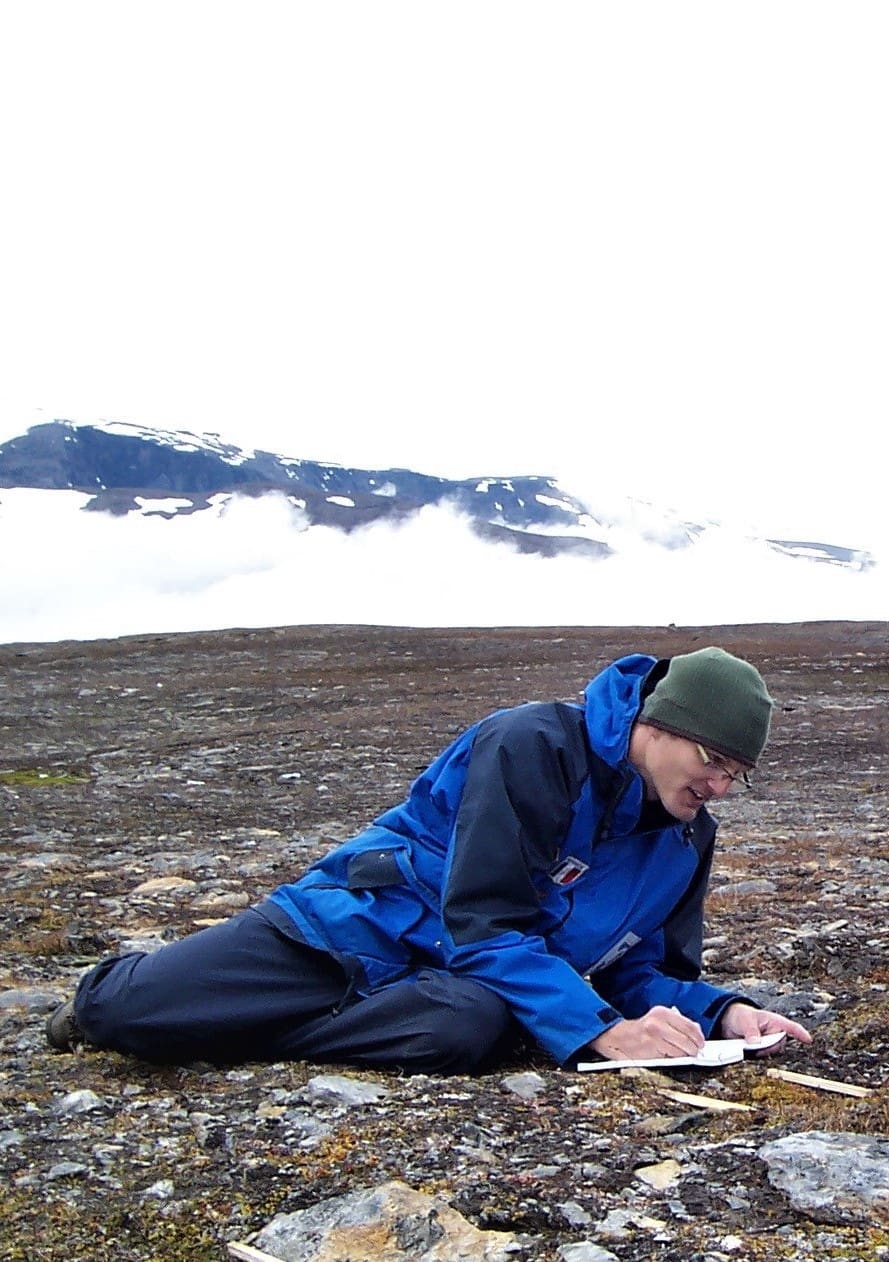 Very simply for the fact that science take me places and allows me to meet new people. (Above L-R: Aktru Glazier in Siberia, Huangshwen in China, Abisko mountains in Sweden) Since I was a young boy I always yearned for adventure (I still do) and field research gives you that. There are very few careers which allow you to be creative (making maps and figures and writing papers), work with your hands (setting up and maintaining field equipment) and challenges you intellectually. However more importantly, being able to work with people is the best thing about my career. I have had the honour of mentoring some wonderful students, each unique in their personality and approach to life. I have also met some magnificent people through research and travel. My best friends are my research partners and colleagues. I have had the privilege to be on numerous expeditions and travels to far off places with some of the best people, and even though we have different nationalities and come from different cultural backgrounds, I have learned that people are just people and field scientists (young and old) are the best of them all.
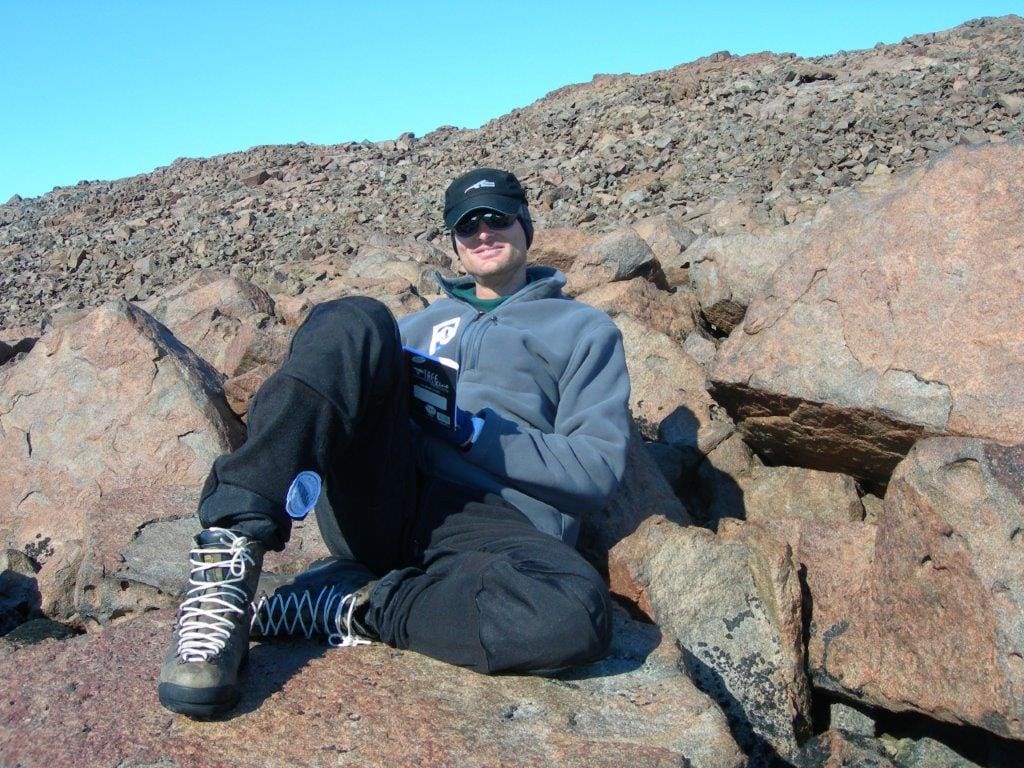

 Ja, well there are better paying jobs out there and I guess jobs that give you more status in society (if this is what you are looking for). But I think no other career gives you more freedom to express yourself. Also, unlike what most people think, you don’t need to be particularly clever. Most of the top researchers that I know are just ordinary people that have a passion for what they do and they just put in the time. A willingness to learn (and read), to explore, and not be scared of new things are all you need. Science also allows you to break free from stereotypes and permits (actually insists) you to be who you are. And the rewards are amazing. To see your students graduate and go on to do wonderful things (and be great in their jobs) and to meet truly inspiring and interesting people are way more rewarding I think. And even though it seems that every academic in the universe is perpetually broke you can make a decent living from being an academic. However more importantly, given the flexibility a lot of us enjoy, you can still be there for your family when they need you, and you can always count on a fellow field researcher to buy you a beer.