by Ria Olivier | Feb 27, 2024 | Research, SANAP, SANAP Student
Another session within the Marine and Antarctic Research Strategy research theme : Ecosystems, biodiversity and biodiscovery was chaired by Donald Cowan of the University of Pretoria, he also chaired the session for Thulani Makhalanyane’s project research. Dr Dowan started of the first section with his own presentation followed by research within his project.
 Above (l-r): Pedro Lebre, Silindile Maphosa, Lefentse Mashamaite
- Don Cowan: Microbial ecology of Antarctic desert soils. (Abstract)
- Pedro Lebre: Biogeographic survey of soil microbial communities across Antarctica. (Abstract)
- Silindile Maphosa: Exploring the functional potential of microbial metagenome-assembled genomes (MAGs) from sub-Antarctic islands. (Abstract)
- Lefentse Mashamaite: Microbial diversity in Antarctic Dry Valley soils across an altitudinal gradient. (Abstract)
Prof Makhalanyane project presentations. Above (l-r): Runesu Bakasa, Marike Hillocks, Riaan Pierneef, Mancha Mabaso, Choaro Dithugoe
Poster Presentations. Above (l-r): Sade Magabotha, Christophe Lefebvre, Elizabe Malan, Benjamin Abraham, Nelisiwe Hedebe, Michelle Bekker
- Sade Magabotha: A reproducible microbiome pipeline for the identification of horizontally acquired mobile genetic elements. (Abstract)
- Christophe Lefebvre: Using computational tools to shed light on microbes with capacity to degrade microplastics in the oceans. (Abstract)
- Elizabe Malan: Understanding the dynamics of microbial communities in the Congo River plume. (Abstract)
- Benjamin Abraham: Nutrient Co Limitation of Bacterial Communities within the Southern Ocean. (Abstract)
- Nelisiwe Hedebe: Charting the diversity of Giant viruses of Antarctic dry valley permafrost. (Abstract)
- Michelle Bekker: Phage diversity in the Southern Ocean. (Abstract)
Although Prof Makhalanyane(left) could only attend the National Committee and not the presentations, his students from Pretoria University were able to visit his new workplace at Stellenbosch University. (Photo credit: Riaan Pienaar)
by Ria Olivier | Feb 23, 2024 | Biosecurity, Ecology, Environment, Invasion Biology, Marion Island, Research, SANAP, SANAP Student
Michelle Greve chaired another session on Ecosystems “Major threats to terrestrial sub-Antarctic ecosystems – climate change and invasions” , including how climate and species interactions are driving leaf endophyte communities, how warming directly, and indirectly (through heightened microbial decomposition and nutrient release) affects plant performance) affect plant growth, and how vegetation communities on Marion Island have changed since the 1960s on a warmer, drier and more invaded Marion Island. The session ended with a summary of the knowledge garnered from the National Status Report on Invasions, which includes a chapter on the Prince Edward Islands, and summarised all we know about invasions to the offshore territory. Michelle(right) gave an introduction and then was followed by oral presentations. (Above, l-r: Joshua Tsamba, Michelle Greve, Laura Fernadez-Winzer, Stephni van der Merwe, Nita Pallett) (Photo Credit: Michelle Greve)
- Joshua Tsamba – Fungal endophytes on Marion Island. (Abstract)
- Nita Pallett – Sub-Antarctic plant nitrogen uptake in a changing world. (Abstract)
- Stephni van der Merwe – Long-term vegetation change (1965-2020) in response to rapid warming and drying in a sub-Antarctic tundra: evidence from repeat photography (interactive poster) (Abstract)
- Laura Fernandez Winzer – An assessment of the status of biological invasions and their management on the Prince Edward Islands. (Abstract)
Another student Janine Schoombie of Peter le Roux of University of Pretoria presented in the ad hoc session chaired by Christel Hansen. They only arrived on 30 November after the Prince Edward Island scientific voyage. “Studies of wind, plants and seabirds on Marion Island”. (Abstract) A poster presentation by Elsa van Ginkel , student of Peter le Roux “Examining the potential for entomophilous pollination on sub-Antarctic Marion Island” was mentioned in the ad hoc session.(Abstract) (Above l-r: Peter le Roux, Janine Schoombie, Elsa van Ginkel)
by Ria Olivier | Feb 22, 2024 | Biosecurity, Ecology, Invasion Biology, Marion Island, Research, SANAP, SANAP Student, Uncategorised
Prof Bettine Jansen van Vuuren (left) chaired the session of Ecosystems, Biodiversity and Biodiscovery with the first plenary talk of the symposium by Peter Convey(right) of the British Antarctic Survey ” Terrestrial biological invasions and their potential impacts in the maritime Antarctic”. (Abstract) Peter Convey discussed that there are around 15 species of non-native plants and invertebrates currently known to be established in the maritime Antarctic . He further emphasize that effective biosecurity measures are required to ensure that further human-assisted transfer both on Signy Island and beyond is avoided. Prof Bettine Jansen van Vuuren chaired the session of Ecosystems, Biodiversity and Biodiscovery.
Bettine gave an overview of research that included research done by Daniela and Shilpha as they could not attend as they were on Marion Island. Foregrounding geodiversity in landscape ecology studies: insights from the sub-Antarctic – Daniela Monsanto (Abstract) Detecting signals of adaptive selection of an invasive springtail on sub-Antarctic Marion Island – Shilpha Parbhu (Abstract)
Daniela Monsanto, Shilpa Parbhu, Sandra Durand, Arsalan Emami-Khoyi, Peter Teske, David Hedding
Morgan Raath-Kruger(left) and student of Peter le Roux at University of Pretoria gave an oral presentation and an introduction to her poster.
- Long-term spatially-replicated data show no physical cost to a benefactor species in a facilitative plant–plant interaction. (Abstract)
- Do anisotropic processes influence fine-scale spatial genetic structure of a keystone sub-Antarctic plant species? (Abstract)
Another abstract submitted but Carol Jacobs(right) could not present is on the biosecurity within the South African National Antarctic Programme. (Abstract)https://alp.lib.sun.ac.za/handle/123456789/29301
by Ria Olivier | Feb 19, 2024 | Oceanography, Research, SANAP, SANAP Student, Science, Southern Ocean, Uncategorised
MARIS started the first session on Southern Ocean research within SANAP with focus on SEA ICE. Above: Rutger Marquart, Magata Mangatane, Dylan White, Anand Nair, Wayne de Jager, Leila Nefdt, Safiyyah Moos, Tokoloho Rampai, Marcello Vichi, Robyn Verrinder, Hayley Swait, Riesna Audh, James van Niekerk. (Photo Credit: MARIS)
The first ocean session covered the Antarctic sea ice research field led by the Sea Ice Team from the Marine and Antarctic Research for Innovation and Sustainability (MARiS). The research themes covered in this session were innovation and development, oceans and marine eco-systems under global change and earth systems observations. The presentations and posters under these research theme covered a diverse range of projects from large-scale sea ice observations, tracking and measurements to the small-scale sea ice dynamics, properties and biogeochemistry. Antarctic sea ice research has received a comparatively limited focus compared to its Arctic counterpart. The MARiS sea ice team is constituted of the departments of Oceanography, Electrical and Chemical Engineering at the University of Cape Town, with projects aimed to contribute new insights and push the boundaries within this research domain. The presentation within this session were on a variety of earth system observations models, simulations of sea ice wave interactions, innovative tool development for lab-based experiments and field-based work investigating sea ice dynamics and properties and the ecological impacts of algae and their biogeochemical significance. The session under the MARS theme; Oceans and marine ecosystems under global change was chaired by Principal investigator Tokoloho Rampai and it included an overview of Maris by Robyn Verrinder. The session was done in round table fashion and included posters and oral presentations. Tokoloho concluded the session with a closing statement
Oral presentations:
- Robyn Verrinder – Overview of MARIS.
- Rutger Marquart – Numerical modelling of sea ice dynamics and thermodynamics in the Antarctic marginal ice zone. (abstract)
- Anand Nair – Three-Dimensional Computational Fluid Dynamics Modelling of Pancake Ice on Waves. (abstract)
- Safiyyah Moos – Investigating the dynamics and exchanges across the ice-ocean interface in artificial sea ice. (abstract)
- Hayley Swait – Investigating Brine and Air Porosity in Sea Ice from the Eastern Antarctic Marginal Ice Zone. (abstract)
Poster Presentations were displayed in the venue during the symposium and presenters gave a quick introduction to their posters during the round-table session.
- Wayne De Jager – Sub-daily Antarctic sea-ice variability estimates using swath-based retrieval methods. (abstract)
- Dylan White – Discussion on the Premise of, and Challenges in, the Development of a Ship-Based Radar System for the in-situ Measurement of Sea Ice Thickness. (abstract)
- Magata Mangatane – Antarctic sea-ice thickness reconstruction. (abstract)
- Marcello Vichi – Wind- and wave-driven free-drift dynamics in Antarctic Sea ice.(abstract)
- Tokoloho Rampai – Sea ice growth dynamics and their influence on the physical, structural and mechanical properties-A discussion on innovation in in situ testing. (abstract)
- James van Niekerk – Investigation of the Interactions Between Sea Ice Algae from the Marginal Ice Zone of Antarctica and Artificial Sea Ice. (abstract)
- Riesna Audh – Winter biogeochemical activity is enhanced by rafting in growing Antarctic Sea ice. (abstract)
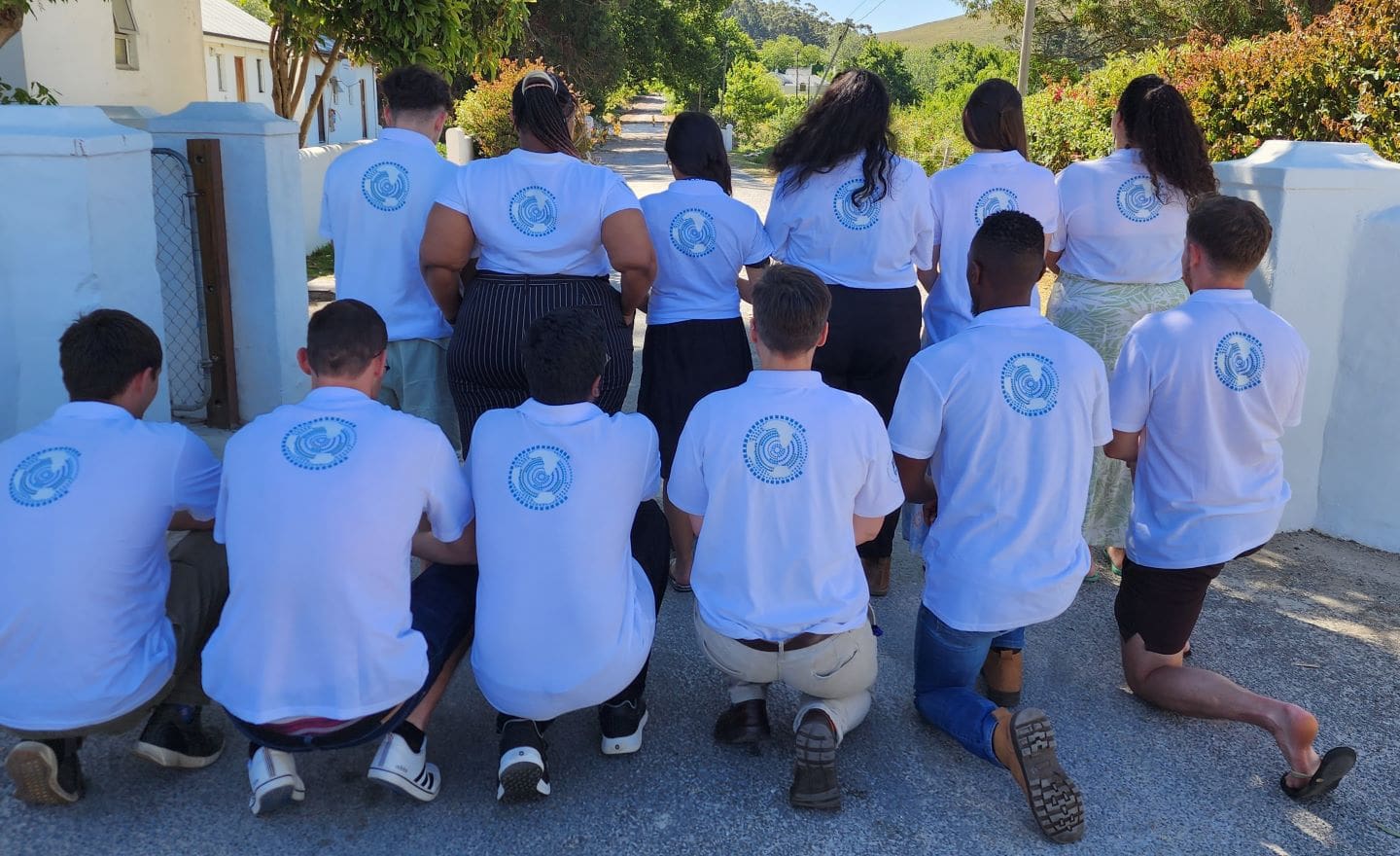
After the session the group took pictures (Credit: Leila Nefdt)
by Ria Olivier | Feb 8, 2024 | SANAP, SANAP Student, SEAmester
During the 6th Symposium sessions were allocated to cross cutting disciplines and it led to great presentations and discussions. After the governance session on the 2nd day of the symposium a few cross-cutting themes took place. This post focus on:
CAPACITY DEVELOPMENT within SANAP
Prof Isabelle Ansorge of UCT and PI of SEAmester chaired the session on capacity development and she introduce the session with the presentations: “SEAmester 6 Voyages later.”
She outlined the strength of SEAmester is that it combines theoretical classroom learning with the application of this knowledge through ship-based, and more importantly, hands-on research through the Agulhas System Climate Array (ASCA) programme. During past voyages 241 students from 26 universities all over South Africa having participated in these cruises. The presentation showed how successful this programme has been, but also the challenges that have been faced. A few were showcased of what has become of some of the SEAmester students. Isabelle’s presentation was followed by two SEAmester students. Themba Mbalati(above left) a SEAmester student gave a presentation on:” The perceptions of participants on the impact of South Africa’s Class Afloat Program (SEAmester) and its links with travel and tourism.”
Rudzani Silima, the top student for SEAmester in 2019 gave a presentation on the Antarctic Youth Coalition. Rudzi become part of this coalition when she has been nominated the top student. She outlined the aim and mission of the AYC and the importance of attracting new members and challenge the Gateway cities into practicing sustainability, using the model of Antarctic governance for instance, cooperation, diplomacy, science and best of all collaboration between countries to meet a sustainable end.
Sandy Thomalla of SOCCO concluded the session with the presentation:” The SOCCO Trajectory – A brief synopsis of our origin, emergence and strategic direction”. The presentation gave the impact of SOCCO that continues to make a growing contribution to our understanding of the role that fine-scale dynamics play in shaping the phasing and magnitudes of the seasonal cycle and its inter-annual variability. Phase IV will bring the Ocean Climate science to the south African society.
Please see more posts on Cross-Cutting themes such as infrastructures and data management on the SANAP website!
by Ria Olivier | Dec 12, 2023 | International Days, Research, SA Polar Research Infrastructure, SANAP, SANAP Student, SAPRI, SCAR, Science, SEAmester
Over a period of 5 days 172 people participate in the 6th SANAP symposium. A lot has happened in the past 4 years since the last symposium in Hermanus in 2018 and feedback on research and other activities within SANAP featured on the program. The symposium was hosted by Stellenbosch University at Houw Hoek Hotel in the Grabouw valley where the participants built on a SANAP Research community for the future.
The Symposium kicked off with a hybrid meeting of the South African national committee for SCAR and the first evening a keynote lecture was presented by Prof Jukka Tukhuri (Aalto University, Finland) on the discovery of Shackleton’s Endurance on a voyage of the SA Agulhas II. During the symposium keynote lectures and plenary talks were given by Dr Peter Convey of British Antarctic Survey, Dr Sue Tonin of Mouse Free Marion and Prof Marcello Vichi on the Polar Lab part of the South African Polar Research Infrastructure (SAPRI).
The purpose of the symposium was to facilitate the free exchange of scientific information within SANAP research. In the Marine and Antarctic Research strategy it states that: “The need for coordinated, extensive and targeted research in the marine and oceanic domain has been underlined. Coordination has become important as there has been a shift in marine science from resources and process studies that could be carried out by small groups or individuals to very large-scale regional climate and ecosystem studies, where the success, nooses and benefits lie in the coordination.” One of the strategies outlined is: “creation of a society informed on the value of marine and Antarctic research initiatives.”
The following five thematic (vertical) areas were prioritised for research sessions and various principal investigators and researchers within SANAP chaired the sessions:
- Oceans and marine ecosystems under global change – Dr Rampai, Dr Fietz, Dr Thomalla, Dr Nicholson and Dr Lamont
- Earth systems observations – Prof Nel, Dr Lotz
- Ecosystems, biodiversity and biodiscovery – Prof Van Vuuren, Prof Cowan, Dr Greve, Prof Pistorius, Dr Wege,
- Innovation and development – Prof A Bekker
- Human Enterprise – Dr Lavery
Cross-cutting support interventions were discussed such as:
- Coordination and governance by Dr Gilbert Siko and Tracy Klarenbeek
- Human capital development and transformation chaired by Prof Ansorge
- Public awareness and engagement chaired by A Louw
- Research Infrastructure and platforms chaired by Dr T Morris
- Data management chaired by Dr Treasure
Feedback from SA National Committee for SCAR, APECSSA, SCALE expeditions and SEAmester were given and an evening session was held by the APECSSA committee where all the early career researchers that attended the symposium had great discussions. The newly established SAPRI was showcased to the SANAP community in cross discipline sessions on research infrastructure and platforms, data management and engagement, and a keynote lecture on the SAPRI Polar Lab that concluded all the research presentations
It was the first time that so many South African polar researchers were together on the 1st December on International Antarctic Day and a special Antarctic Breakfast took place to commemorate this International Day. A map of Antarctica, was signed and a cake was provided to celebrate the occasion.
The organising committee would like to thank all participants and attendees for making the 6th SANAP symposium a success and achieving its aim in building a SANAP research Community for the future. We are looking forward to the next Symposium in Kruger National Park in 2025 that will be hosted by a consortium of University of Johannesburg, Fort Hare University and the University of the Free State.
Comment by an ECR: “This was my very first SANAP symposium and it was absolutely incredible! Job well done to all those who assisted in organizing the event. Although it was a jam-packed week, the sessions were extremely interesting and well organized. The location was a perfect venue choice for this kind of event – especially for people to mingle, engage with one another and building strong relationships as well as for making connections for potential research collaborations. I am really impressed with the big focus that this symposium had on Early Career Researchers – I think it is a great way of getting the younger professionals more involved and to network! Congrats on pulling off a very successful SANAP Symposium!”
More will follow of the symposium and sessions that took place with a photos.
A huge thank you to the NRF for making the symposium possible and to all our suppliers and sponsors; Houw Hoek Hotel, Neelsie Travel Bureau, Adjuvo enterprises, Trilogy Audio Services, Crazylicous Cookies.
Featured Image: David Hedding
Image of signatures on Antarctica map : Anche Louw
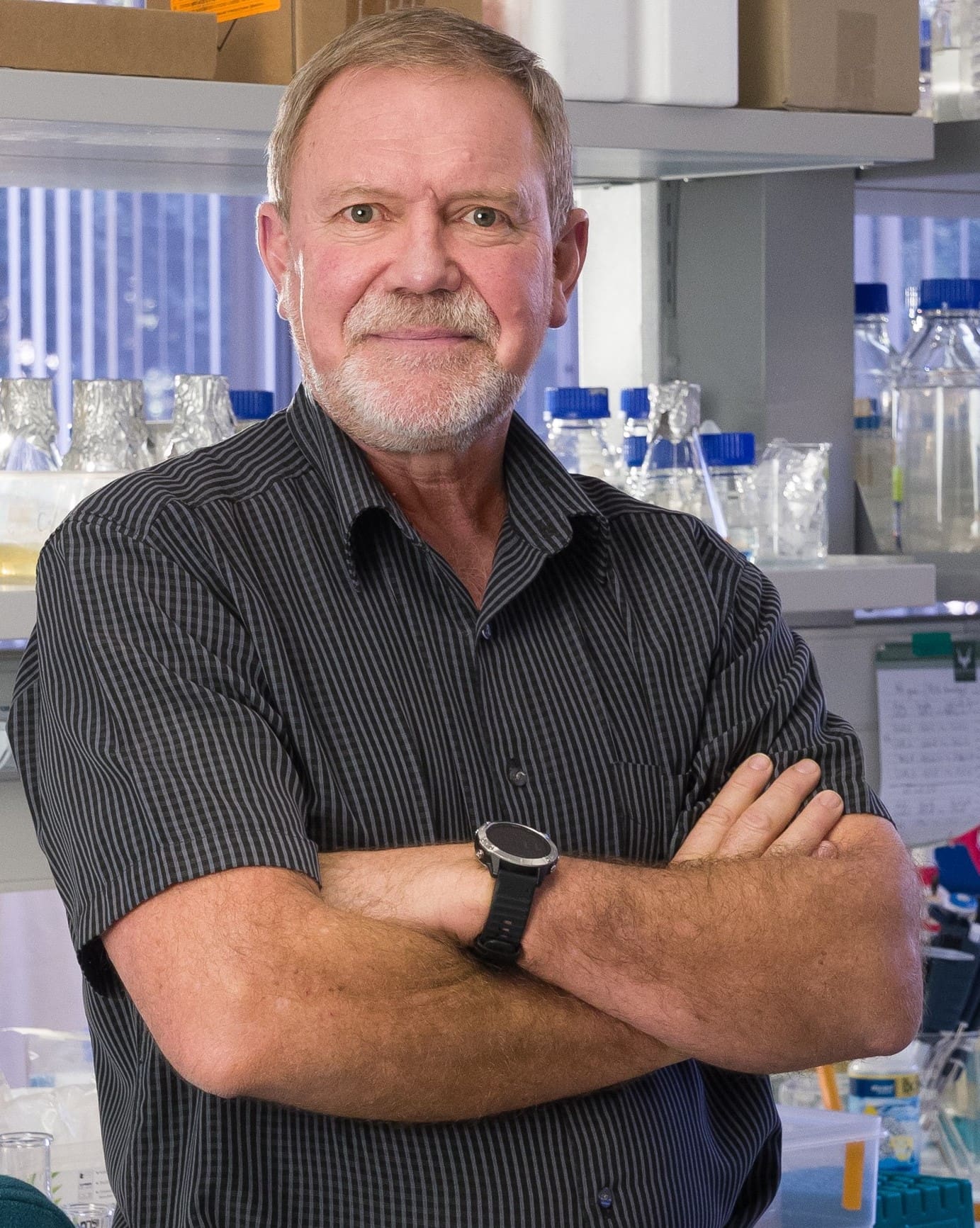 Another session within the Marine and Antarctic Research Strategy research theme : Ecosystems, biodiversity and biodiscovery was chaired by Donald Cowan of the University of Pretoria, he also chaired the session for Thulani Makhalanyane’s project research. Dr Dowan started of the first section with his own presentation followed by research within his project.
 Prof Makhalanyane project presentations. Above (l-r): Runesu Bakasa, Marike Hillocks, Riaan Pierneef, Mancha Mabaso, Choaro Dithugoe
 Above: (l-r)Nosipho Hlalukana, Nyasha Mafumo, Phillip Mawire, Mayinbogwe Buthelezi
 Poster Presentations. Above (l-r): Sade Magabotha, Christophe Lefebvre, Elizabe Malan, Benjamin Abraham, Nelisiwe Hedebe, Michelle Bekker
 Although Prof Makhalanyane(left) could only attend the National Committee and not the presentations, his students from Pretoria University were able to visit his new workplace at Stellenbosch University. (Photo credit: Riaan Pienaar)
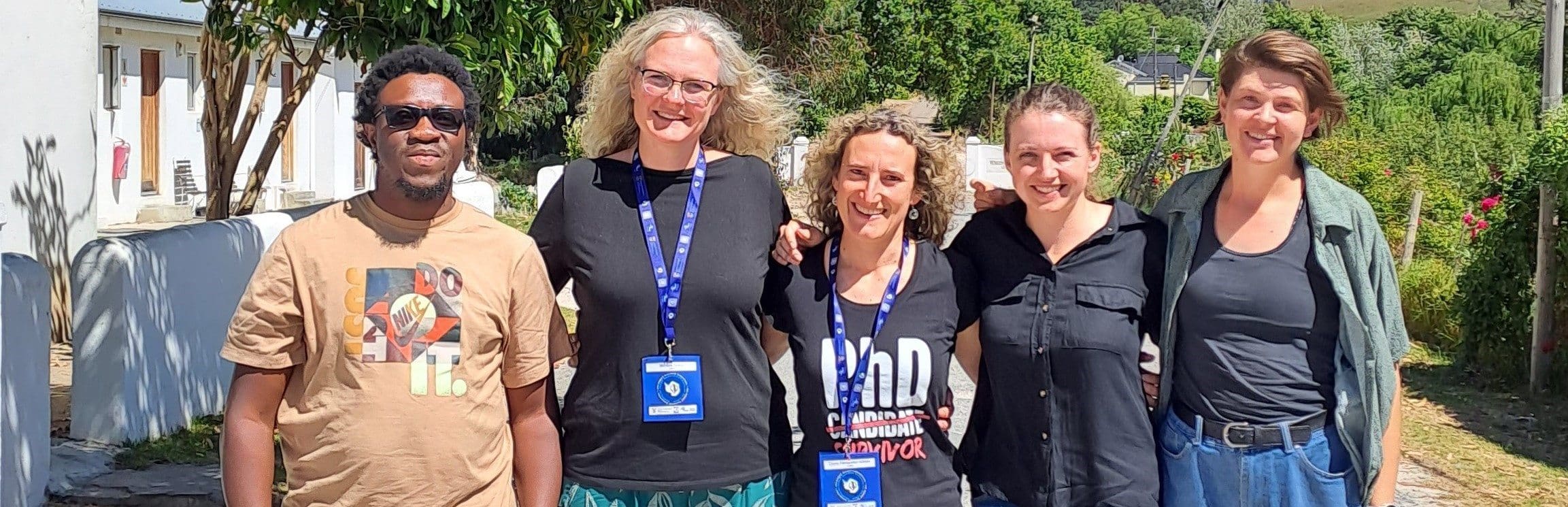 Michelle Greve chaired another session on Ecosystems “Major threats to terrestrial sub-Antarctic ecosystems – climate change and invasions” , including how climate and species interactions are driving leaf endophyte communities, how warming directly, and indirectly (through heightened microbial decomposition and nutrient release) affects plant performance) affect plant growth, and how vegetation communities on Marion Island have changed since the 1960s on a warmer, drier and more invaded Marion Island. The session ended with a summary of the knowledge garnered from the National Status Report on Invasions, which includes a chapter on the Prince Edward Islands, and summarised all we know about invasions to the offshore territory.
 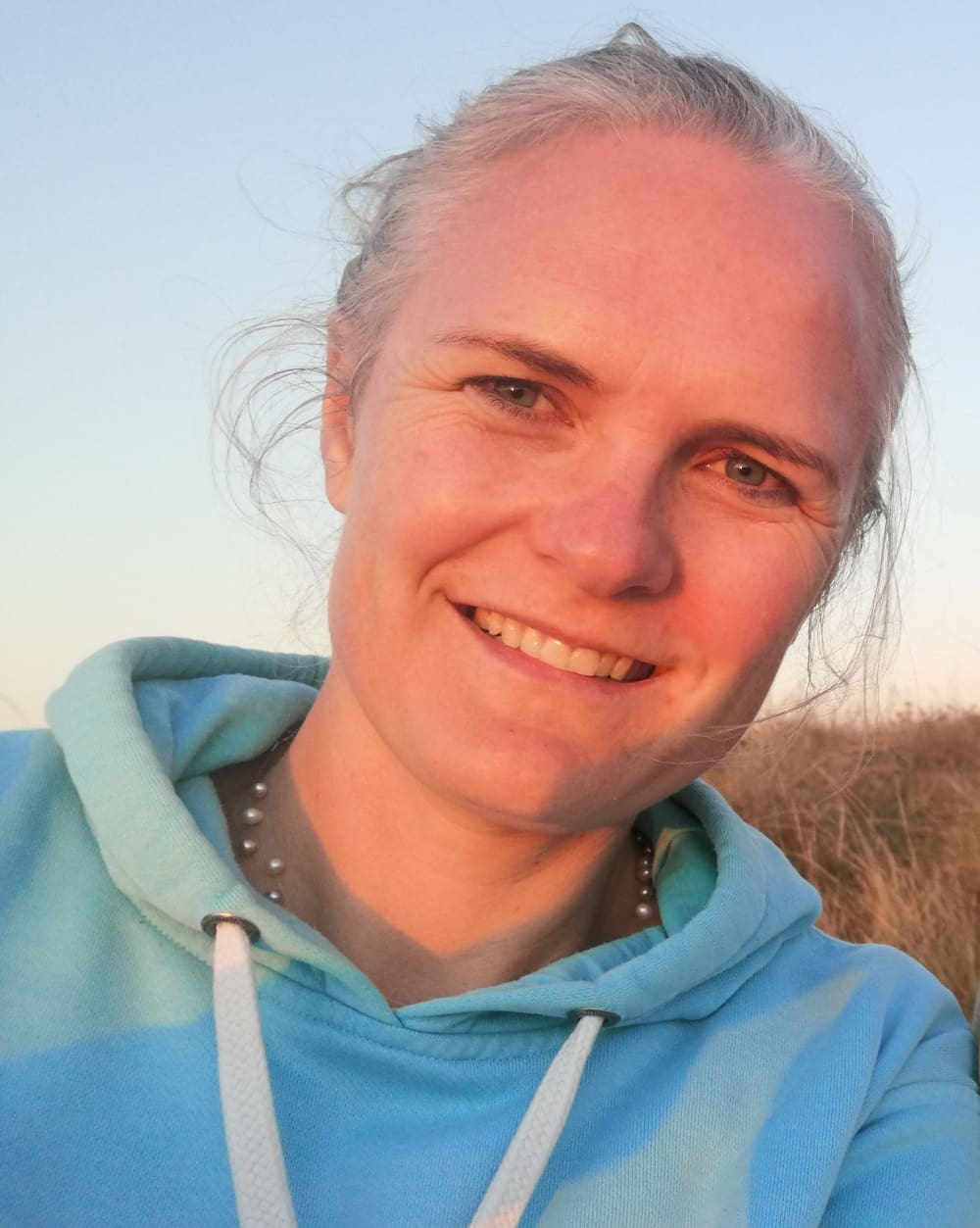 Michelle(right) gave an introduction and then was followed by oral presentations. (Above, l-r: Joshua Tsamba, Michelle Greve, Laura Fernadez-Winzer, Stephni van der Merwe, Nita Pallett) (Photo Credit: Michelle Greve)
 Another student Janine Schoombie of Peter le Roux of University of Pretoria presented in the ad hoc session chaired by Christel Hansen. They only arrived on 30 November after the Prince Edward Island scientific voyage. “Studies of wind, plants and seabirds on Marion Island”. (

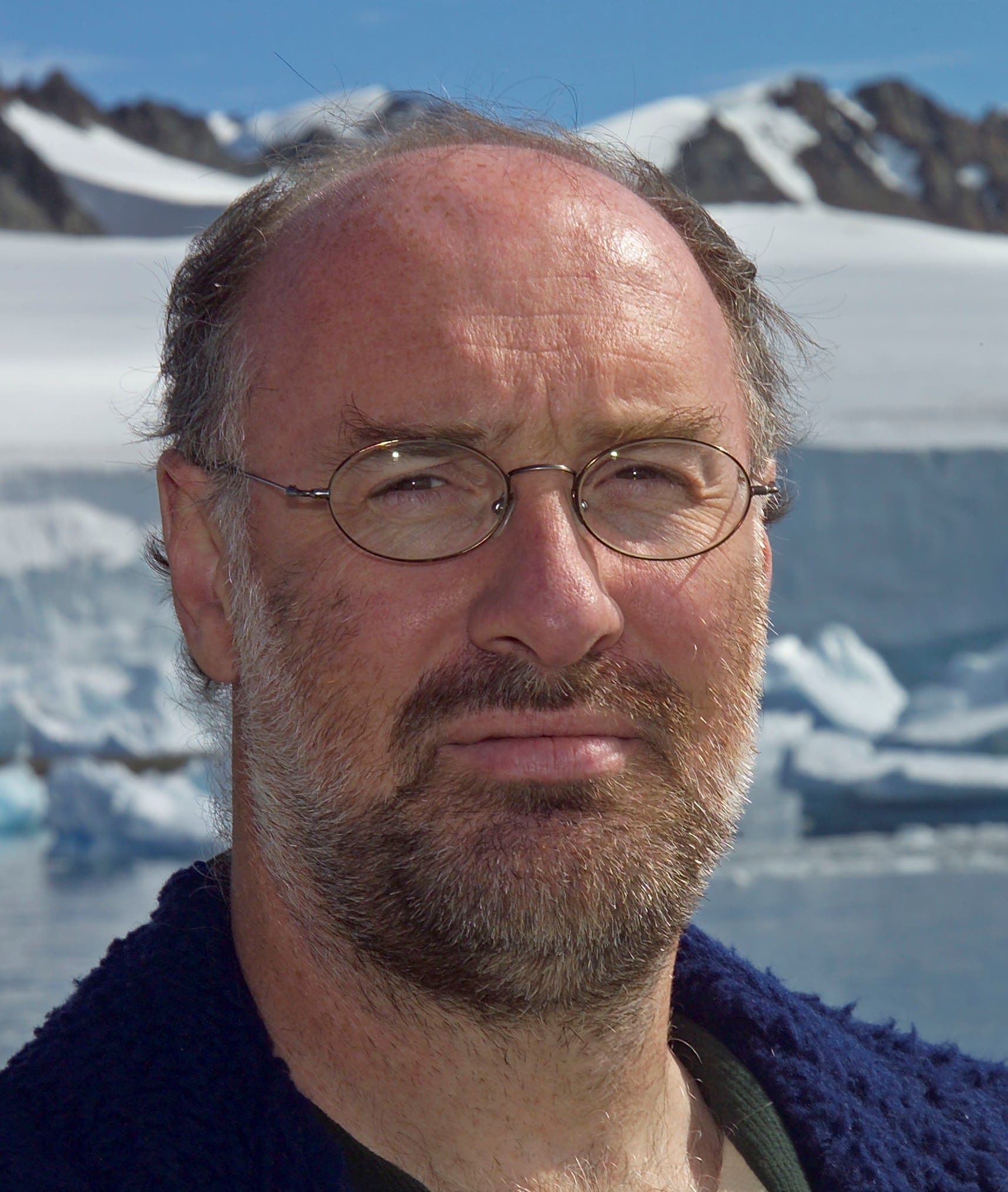 Prof Bettine Jansen van Vuuren (left) chaired the session of Ecosystems, Biodiversity and Biodiscovery with the first plenary talk of the symposium by Peter Convey(right) of the British Antarctic Survey ” Terrestrial biological invasions and their potential impacts in the maritime Antarctic”. (
 Bettine gave an overview of research that included research done by Daniela and Shilpha as they could not attend as they were on Marion Island. Foregrounding geodiversity in landscape ecology studies: insights from the sub-Antarctic – Daniela Monsanto (
 Daniela Monsanto, Shilpa Parbhu, Sandra Durand, Arsalan Emami-Khoyi, Peter Teske, David Hedding
 Morgan Raath-Kruger(left) and student of Peter le Roux at University of Pretoria gave an oral presentation and an introduction to her poster.
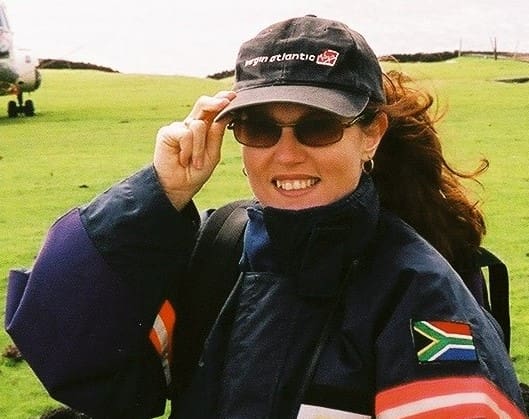 Another abstract submitted but Carol Jacobs(right) could not present is on the biosecurity within the South African National Antarctic Programme. (Abstract)
 MARIS started the first session on Southern Ocean research within SANAP with focus on SEA ICE. Above: Rutger Marquart, Magata Mangatane, Dylan White, Anand Nair, Wayne de Jager, Leila Nefdt, Safiyyah Moos, Tokoloho Rampai, Marcello Vichi, Robyn Verrinder, Hayley Swait, Riesna Audh, James van Niekerk. (Photo Credit: MARIS)

 Oral presentations:
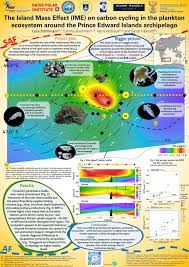 Poster Presentations were displayed in the venue during the symposium and presenters gave a quick introduction to their posters during the round-table session.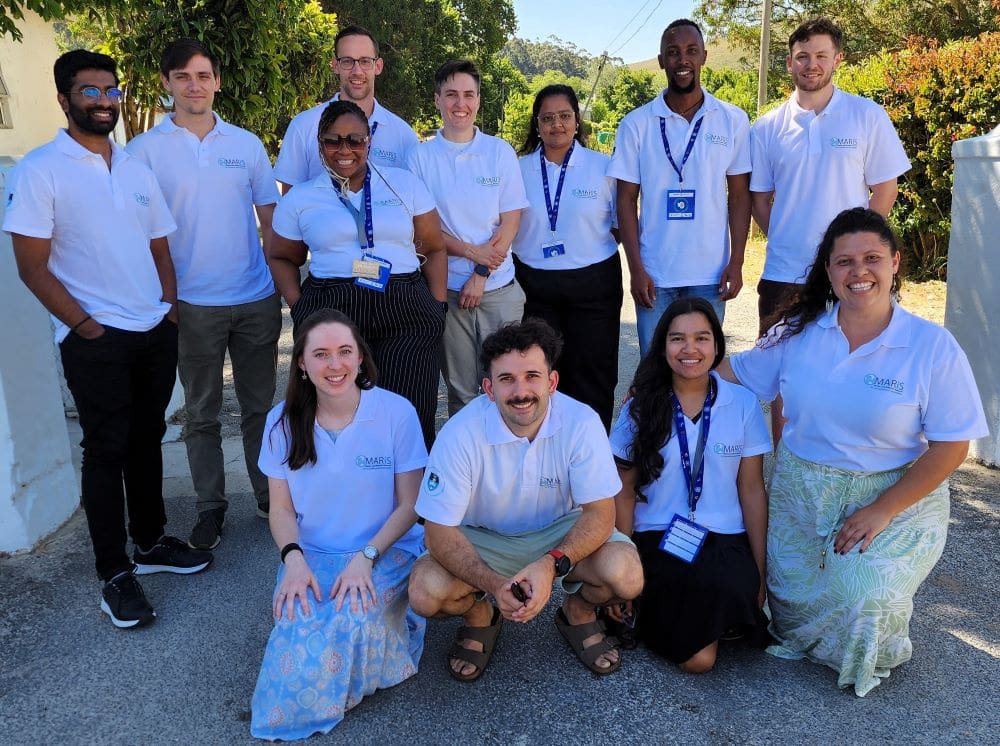

 Prof Isabelle Ansorge of UCT and PI of
 She outlined the strength of SEAmester is that it combines theoretical classroom learning with the application of this knowledge through ship-based, and more importantly, hands-on research through the Agulhas System Climate Array (ASCA) programme. During past voyages 241 students from 26 universities all over South Africa having participated in these cruises. The presentation showed how successful this programme has been, but also the challenges that have been faced. A few were showcased of what has become of some of the
  Isabelle’s presentation was followed by two SEAmester students. Themba Mbalati(above left) a SEAmester student gave a
 Rudzani Silima, the top student for SEAmester in 2019 gave a
 Sandy Thomalla of
 Over a period of 5 days 172 people participate in the
  The purpose of the symposium was to facilitate the free exchange of scientific information within SANAP research. In the
 It was the first time that so many South African polar researchers were together on the 1st December on International Antarctic Day and a special Antarctic Breakfast took place to commemorate this International Day. A map of Antarctica, was signed and a cake was provided to celebrate the occasion.
 The organising committee would like to thank all participants and attendees for making the 6th SANAP symposium a success and achieving its aim in building a SANAP research Community for the future. We are looking forward to the next Symposium in Kruger National Park in 2025 that will be hosted by a consortium of University of Johannesburg, Fort Hare University and the University of the Free State.