by Ria Olivier | Aug 9, 2024 | Antarctica, APECSSA, Commemorative Days, Gough Island, Legacy, Marion Island, Overwintering Team, Research, SANAE IV, SANAP
Theme of the National Women’s Day Commemoration:
“Celebrating 30 Years of Freedom Towards Women’s Development”
 In the SANAP community we are celebrating all those involved as Researchers, Scientists, and Students at tertiary and research institutions and infrastructures, and personnel within the National Research Foundation, the Department of Forestry, Fisheries and the Environment, the Department of Public works and Infrastructure, the South African Weather Services, the South African National Space Agency, the South African Polar Research Infrastructure and all the women serving as part of the crew of the S.A. Agulhas II.
Celebrating our women overwintering team members at our stations: Antarctica (SANAEIV), Marion Island and Gough Island.
2024 women’s day commemoration is a reminder of the important contributions that are made by women to society, as well as a time to reflect on the advances in women’s rights. During 30 years of democracy, South Africa has made significant strides in advancing gender equality in all domains of society, including economic empowerment of women.
Women’s Day 2024 is the first national day led by the Government of National Unity (GNU) and takes place in a rural community as part of including all South Africans in national events, and placing a focus on the achievements and needs of women in all corners of the country. President Cyril Ramaphosa is expected to officiate the national Women’s Day commemoration in Pofadder in the Namakwa District, Northern Cape. – SAnews.gov.za
by Ria Olivier | Jul 5, 2024 | Antarctica, Research, SANAP
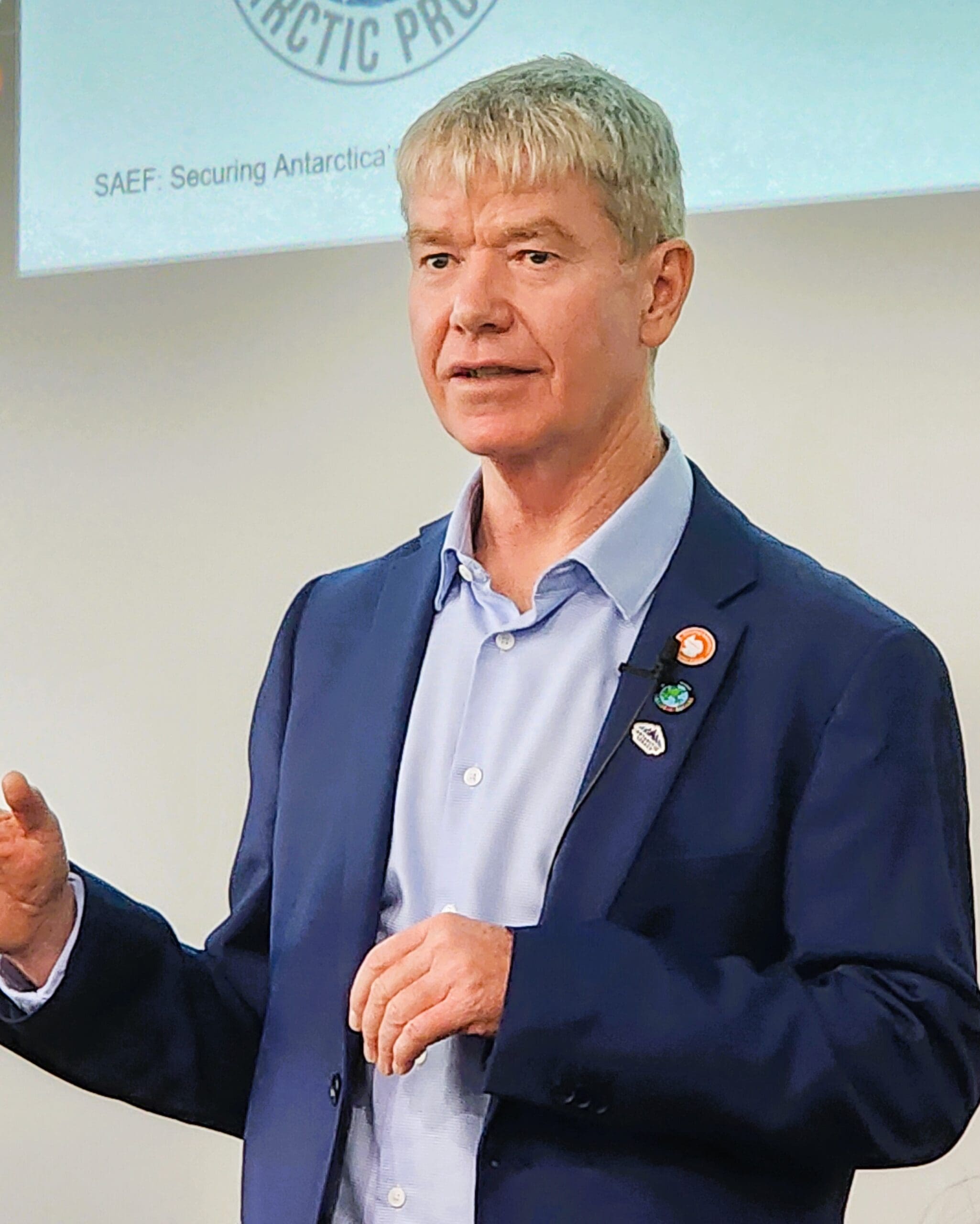
Prof Steven Chown of SAEF visited South Africa during the month of June. The Antarctic Legacy of South Africa at the Department of Botany and Zoology of Stellenbosch University hosted him for a lunch, talk and future discussions.
The main focus of the talk was that Antarctica is the only continent set aside as a natural reserve devoted to peace and science, with environmental protection mandated through the Protocol on Environmental Protection to the Antarctic Treaty. The extent to which these legal protections succeed depends on high-quality biodiversity knowledge, for status and trends of indigenous species, and for the same information with respect to Invasive Alien Species (IAS), along with understanding of the pressures on the region. Yet such information is remarkably fragmentary, and its route into the policy environment less than straightforward. In consequence, whether that best available data, information, and knowledge are accessible to decision-makers, practitioners, and the public for the region is a work in progress.
“Antarctica’s Future is a choice. We have not yet made that choice, though seem set on a poor one. Choosing a better one will mean choosing a better life for all of us. Making the Antarctic a regular thought in our daily lives is the way to do so. Antarctica’s Future is Everyone’s Future.” – Prof Steven Chown”
SAEF WEBSITE
Prof Theresa Wossler, Head of the department, welcomed Prof Chown and introduced him to the attendees. The presentation and talk were attended by eighty-six people in person, who were able to have a chat with Prof Chown afterwards in a coffee break. The talk was streamed online and ninety-six people, representing institutions such as Stellenbosch University, Nelson Mandela University, University of Cape Town, University of Johannesburg, University of South Africa, University of Pretoria, the National Research Foundation, the Department of Forestry, Fisheries, and the Environment and from Belgium from the Department of Natural Sciences were able to attend
In the presentation, current progress in resolving the challenges brought by Antarctic change was laid out, including the way in which progress in the Antarctic region may inform and be informed by developments elsewhere. Biodiversity informatics examples that have been applied to questions such as wilderness, non-native species trends, and the likely drivers of biodiversity change are used here to illustrate the power of the approach to inform and improve policy implementation.
Antarctica and its surrounding Southern Ocean are entirely removed from everyday thought. They are remote, isolated, largely unpopulated, and rarely feature in the news. Yet the continent and its surrounding ocean are an intimate part of our daily lives. They regulate the climates we experience and have a large influence on climate extremes.
The Antarctic Ice Sheet contains 58 m of sea level rise were it to melt entirely. We are already committed to 44-70 cm of global mean sea level rise, meaning that within many lifespans, 1 in 100-year floods will become annual. Sea level rise could be as much as 2 m by 2100. The extra contribution will come from the Antarctic, but we remain uncertain about when we might expect such an addition, and what its exact size will be. Planning for the best has never been a good risk mitigation strategy.
Antarctica is also home to some of the world’s most extraordinary biodiversity. While we may be used to its value in western culture, appreciation for its life has a much longer history with first peoples. Biodiversity is now significantly under threat from changing climates, human activities, and their interaction.
Text from Prof Steven Chown abstract. Images : Antarctic Legacy of South Africa
by Ria Olivier | Jul 1, 2024 | Geomorphology, Marion Island, Research, SANAP, Science
Twenty‐thousand‐year gap between deglaciation and peat formation on sub‐Antarctic Marion Island attributed to climate and sea level change
Article published by Werner Nel, Dominic Hodgson, David Hedding, Alex Whittle and Elizabeth Rudolph
Full Article Available Here
Radiocarbon dating of basal peats has been a key factor in determining minimum ages for deglaciation on sub‐Antarctic islands. On Marion Island, peat bogs dominate the landscape below 300m a.s.l., and palynological assessments of peat cores have been used to assess the vegetation history and succession rates as well as the sensitivity of the indigenous flora to climatic change. Initiation of peat on the sub‐Antarctic islands signifies a major landscape change which has previously been linked to the retreat of glaciers. Here we test this hypothesis by comparing previously published and new basal peat ages from Marion Island with cosmogenic isotope dates for deglaciation, and local and regional palaeo‐environmental changes. Results show that, in common with other sub‐Antarctic islands, peat initiation occurred after the Antarctic Cold Reversal (15–13 ka) and through the early Holocene climate optimum. This substantially postdates cosmogenic isotope evidence for deglaciation from the basalts which shows that the areas where the peatlands dominate were ice‐free from the start of Marine Isotope Stage (MIS) 2 (~31 ka). This suggests that environmental conditions controlled peat initiation rather than deglaciation. Regional climatic proxies show that during and after MIS 2, extremely low temperatures, extensive sea ice conditions and depressed sea surface temperatures together with lower sea levels at an island scale could have maintained conditions unfavourable for peat initiation at their current locations. On Marion Island, the significant gap of ~20 000 years between the timing of deglaciation and peat formation indicates that the use of peat basal ages as a proxy for the minimum age of deglaciation in the sub‐Antarctic should be used with extreme caution.
Left( Werner Nel, David Hedding and Elizabeth Rudolph)
© 2024 The Author(s). Journal of Quaternary Science Published by John Wiley & Sons Ltd.
by Ria Olivier | Jun 27, 2024 | Antarctica, Newsletters>SANAE Newsletters, SANAE, SANAP
SANAE 63 Overwintering Team first newsletter now available. Introducing the team members and sharing their memories.
READ NEWSLETTER HERE
LETTER FROM THE EDITOR
This first edition of the S63 newsletter introduces the team members with highlights of the memorable moments thus far. I hope this edition is fruitful for all our readers. – Tankiso H. Moso, Editor
LETTER FROM THE DEPUTY TEAM LEADER
I remain impressed with everyone’s work ethic. Each person has certainly found his/her stride here at SANAE IV and my overall impression is one of a strong group made up of respectable and mature individuals with a shared identity and purpose whose aim is to hold the legacy of South African National Antarctic Expedition proudly up high. Personally, I am grateful to each and every one of them for making the task of being a Deputy Team Leader a pleasant and gratifying experience for me. I can already see that bonds of friendship are being formed here that will outlive our stay at SANAE IV. – Thulani “Thulz” Ngwaqa, S63 Deputy Team Leader and Base Engineer
MEET THE S63 TEAM – introducing S63 members.
Page through their photo memories
by Ria Olivier | May 31, 2024 | Commemorative Days, Environment, SANAP
National Environment Month is celebrated in June, with the South African government and captains of industry leading the way by stimulating awareness on environmental issues and challenging all to become agents for change. June is Environment Month under the theme “Think, Eat, Save and reduce your foodprint”. we celebrate our Antarctic region environment.
The theme for World Environment Day and National Environment Month rests on three pillars. According to the United Nations Food and Agriculture Organisation (FAO), every year 1.3 billion tons of food is wasted. Therefore, communities are encouraged to “Think” before discarding food off as waste. The second pillar, “Eat” encourages consuming food in such a way that the environmental impact is reduced. Third pillar encourages communities to make wise decisions about discarding food and “Save” as far as possible.
World Environment Day 2024 focuses on land restoration, halting desertification and building drought resilience under the slogan “Our land. Our future. We are #GenerationRestoration.” We cannot turn back time, but we can grow forests, revive water sources, and bring back soils. We are the generation that can make peace with land.
Environmental events celebrated during National Environment Month include:
- 5-Jun World Environment Day
- 8-Jun World Oceans Day
- 19-Jun World Albatross day
- 21-Jun International Day of the Celebration of the Solstice
by Ria Olivier | May 7, 2024 | Announcement, Antarctica, Research, SANAP
Announcing a 2nd Edition of the Special Issue focused on “Antarctic Remote Sensing Applications” that will be published in the journal Remote Sensing (IF: 5.000).
The focus of this Special Issue will be on changes that have been and are undergoing in Antarctica mostly driven by climate change but as well by tectonics, volcanism, and erosion, that causes adaptation of Antarctic biota’s occupation and mobility, and of Human presence. Research papers focused on Antarctica that analyze data acquired by remotely operated sensors within the Remote Sensing scope are welcome to this special issue, in particular:
- Antarctic climate change effect on ice sheet and permafrost state and evolution,
- Antarctic sea level rise and sea surface temperature anomalies,
- Antarctic landform formation by tectonics, volcanism, and erosion,
- Antarctic biota occupation and mobility,
- Antarctic past and recent human presence.
SPECIAL ISSUE Information
Researchers working on these topics express an interest in contributing to this Special Issue by sending a potential title, list of authors and abstract (of about 300 words) to gprates@ualg.pt and/or to submit your contributions.
The submission deadline will be 30th September 2024.
CONTACT:

 Celebrating our women overwintering team members at our stations: Antarctica (SANAEIV), Marion Island and Gough Island.
 2024 women’s day commemoration is a reminder of the important contributions that are made by women to society, as well as a time to reflect on the advances in women’s rights. During 30 years of democracy, South Africa has made significant strides in advancing gender equality in all domains of society, including economic empowerment of women.
 Women’s Day 2024 is the first national day led by the Government of National Unity (GNU) and takes place in a rural community as part of including all South Africans in national events, and placing a focus on the achievements and needs of women in all corners of the country. President Cyril Ramaphosa is expected to officiate the national Women’s Day commemoration in Pofadder in the Namakwa District, Northern Cape. – SAnews.gov.za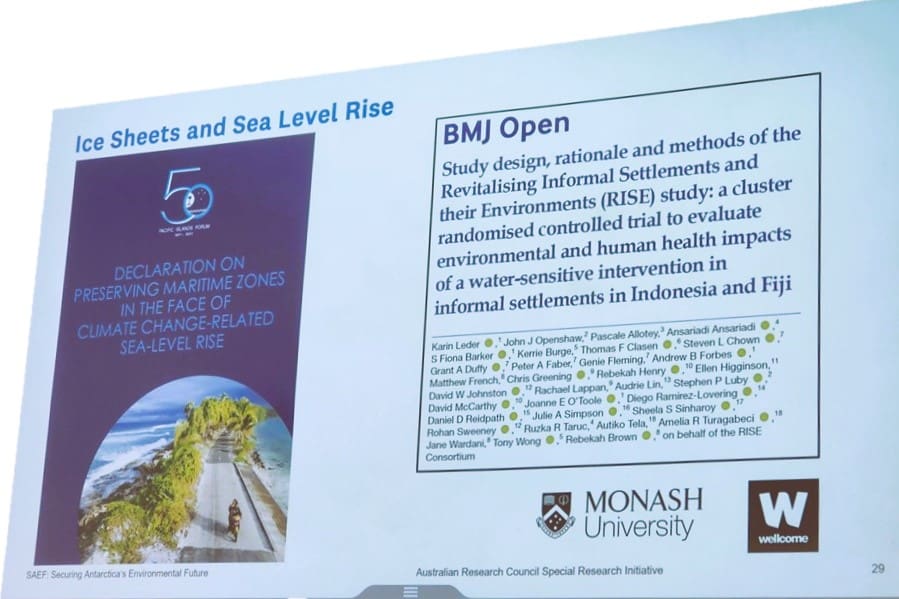
 Prof Steven Chown of
 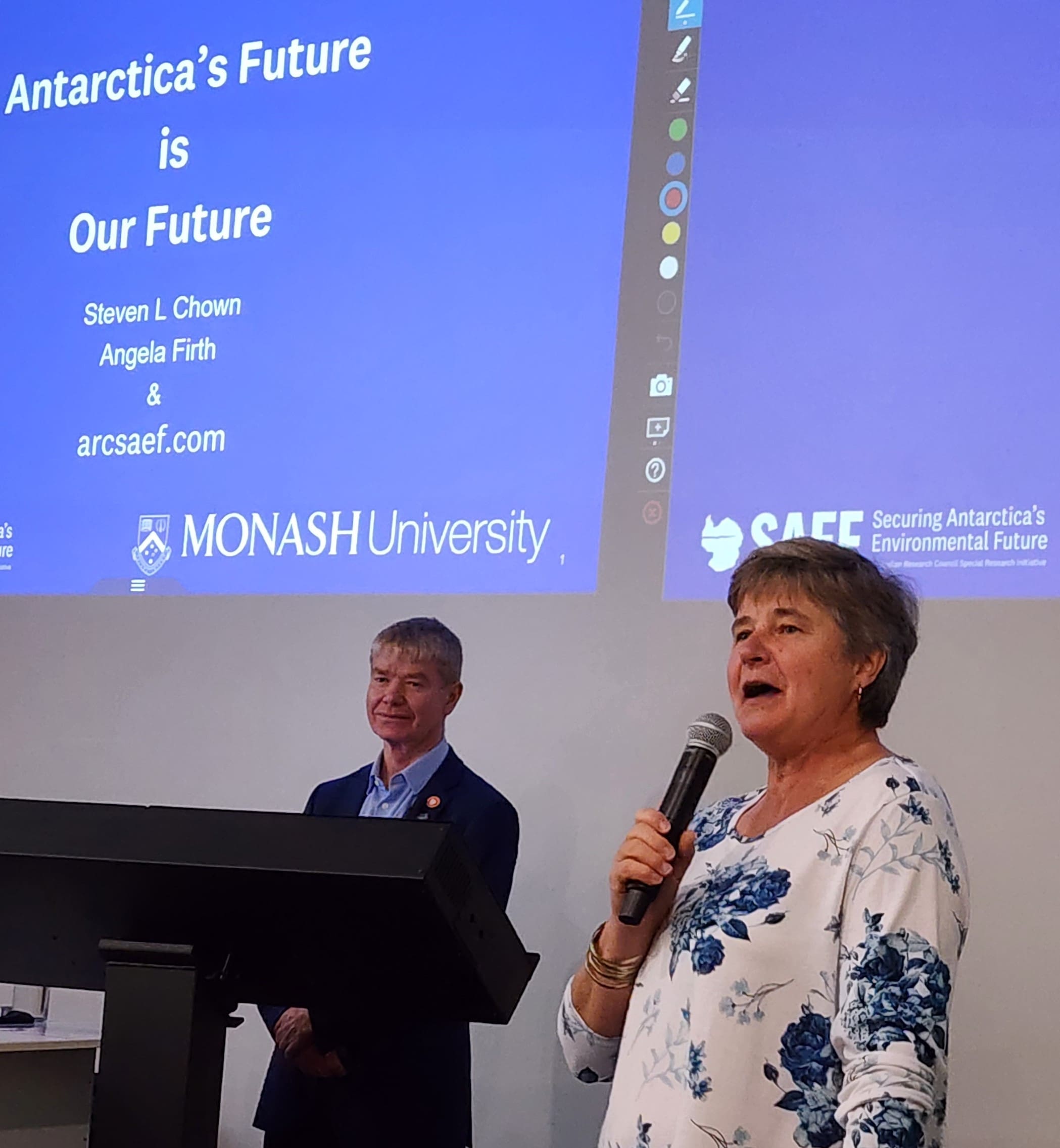 Prof Theresa Wossler, Head of the department, welcomed Prof Chown and introduced him to the attendees. The presentation and talk were attended by eighty-six people in person, who were able to have a chat with Prof Chown afterwards in a coffee break. The talk was streamed online and ninety-six people, representing institutions such as Stellenbosch University, Nelson Mandela University, University of Cape Town, University of Johannesburg, University of South Africa, University of Pretoria, the National Research Foundation, the Department of Forestry, Fisheries, and the Environment and from Belgium from the Department of Natural Sciences were able to attend
 Antarctica is also home to some of the world’s most extraordinary biodiversity. While we may be used to its value in western culture, appreciation for its life has a much longer history with first peoples. Biodiversity is now significantly under threat from changing climates, human activities, and their interaction.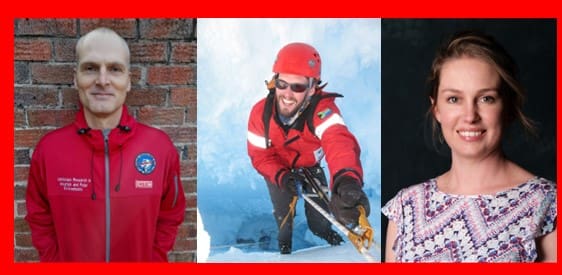
 Article published by Werner Nel, Dominic Hodgson, David Hedding, Alex Whittle and Elizabeth Rudolph
 LETTER FROM THE EDITOR
 Page through their photo memories
 The theme for World Environment Day and National Environment Month rests on three pillars. According to the United Nations Food and Agriculture Organisation (FAO), every year 1.3 billion tons of food is wasted. Therefore, communities are encouraged to “Think” before discarding food off as waste. The second pillar, “Eat” encourages consuming food in such a way that the environmental impact is reduced. Third pillar encourages communities to make wise decisions about discarding food and “Save” as far as possible.
 Announcing a 2nd Edition of the Special Issue focused on “Antarctic Remote Sensing Applications” that will be published in the journal Remote Sensing (IF: 5.000).
 The focus of this Special Issue will be on changes that have been and are undergoing in Antarctica mostly driven by climate change but as well by tectonics, volcanism, and erosion, that causes adaptation of Antarctic biota’s occupation and mobility, and of Human presence. Research papers focused on Antarctica that analyze data acquired by remotely operated sensors within the Remote Sensing scope are welcome to this special issue, in particular: