by Ria Olivier | Jan 7, 2022 | Antarctica, Mammology, News, Research, SANAP Student, Science, Southern Ocean, STEM, Women in Science
Congratulations Mia – from overwintering field assistant to lecturer at the University of Pretoria.
Dr Mia Wege was chosen as one of the “100 Women in Polar Science and Support” featured by Women in Polar Science. Mia is a true ‘go-getter’ and an inspiration to all young women in science!

Her connection with SANAP:
In 2009, her journey within the South African National Antarctic Programme started, where she joined the 66th Marion Island Overwintering Team as a “sealer” (Marion Island Marine Mammal Programme) field assistant (see overwintering team photo below). After this expedition, Mia started an MSc at the University of Pretoria, with her project titled: “Maternal foraging behaviour of Subantarctic fur seals from Marion Island”. During her time as MSc student, she applied to return to Marion Island for another year and returned as part of the 69th Marion Island Overwintering team from 2012 to 2013. In the same year of returning from her last overwinter expedition, she completed her MSc and started working on a PhD with her focus on “Population trend and foraging ecology of sympatric Antarctic and Subantarctic fur seals at Marion Island”. She has been on numerous other take-over expeditions to Marion Island, Gough Island, and Antarctica.
Mia completed her PhD, a 3-year Postdoctoral Research Fellow at the University of Pretoria, and another 1-year Postdoctoral Research Fellow at the University of Canterbury. She was recently employed as a lecturer at the University of Pretoria, Department of Zoology & Entomology.
We would like to congratulate Dr Mia Wege on all her qualifications obtained within the South African National Antarctic Programme and her new position as lecturer.
Her passion for the Antarctic is contagious and we encourage all ECR’s (Early Career Researchers) to work hard work and persevere.
Check out Mia’s website here.
Anche Louw, Antarctic Legacy of South Africa, 07 January 2022.
by Ria Olivier | Dec 24, 2021 | Antarctica, News, Research, SA Agulhas II, SANAE, Southern Ocean
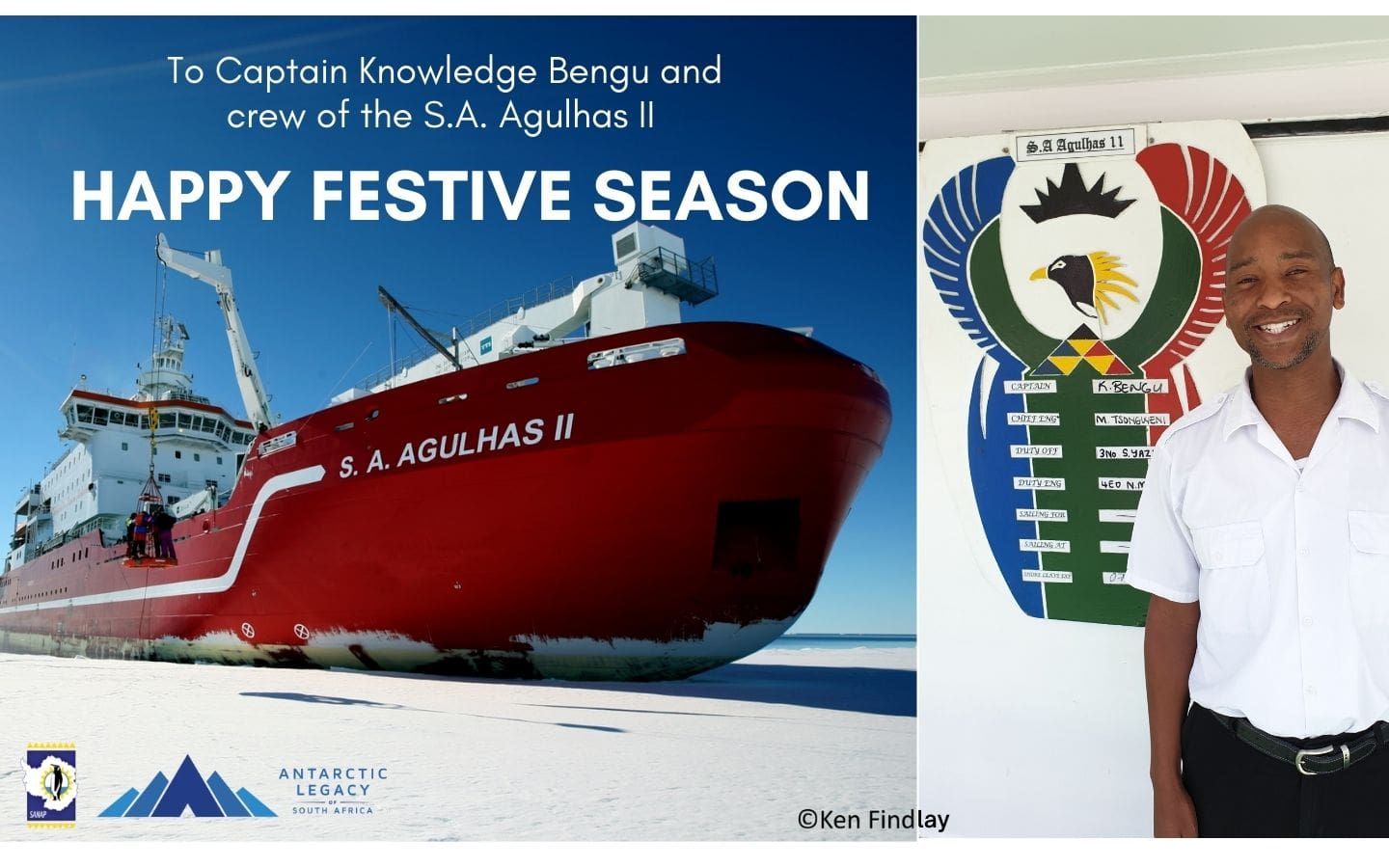
ALSA would like to wish all onboard the research and supply vessel, the S.A. Agulhas II, currently at the Antarctic ice shelf, a happy festive season.
Special thoughts go out to the Captain of the vessel, Captain Knowledge Bengu, and the crew who will be having all hands on deck throughout the festive season. Thank you for supporting all the research activities etc. onboard.
A special message to the AMSOLITES (Captain and Crew) from AMSOL:
Anche Louw, Antarctic Legacy of South Africa, 24 December 2021.
by Ria Olivier | Dec 22, 2021 | Legacy, News, Oceanography, Research, SA Agulhas II, Science, Southern Ocean
Congratulations to all SANAP graduates of 2021. A special congratulations to Dr Mhlangabezi Mdutyana, who just made history by being the first black South African to graduate with a doctorate in observational ocean biogeochemistry.
He is part of the Parallel cycling of nitrogen and iron in the upper Southern Ocean: implications for biological CO2 drawdown and global ocean fertility project led by Principal Investigator, Dr Sarah Fawcett (Department of Oceanography, University of Cape Town).
Read Dr Mdutyana’s inspirational story here. Dr Mdutyana was interviewed by various news channels, see below. Dr Mdutyana is a true inspiration to the future generation of scientists in South Africa.
Anche Louw, Antarctic Legacy of South Africa, 22 December 2021.
by Ria Olivier | Sep 30, 2021 | Antarctica, Data Management, Gough Island, Marion Island, Not-Assigned, Prince Edward Islands, Research, SA Agulhas II, SA Polar Infratsructure, SANAP, Science, Southern Ocean
South African Polar Research Infrastructure (SAPRI): Launch of the Preparatory Phase
The SAPRI team is pleased to inform you that the contractual agreement for the starting of the SAPRI implementation phase is being finalized between the Department of Science and Innovation (DSI) and National Research Foundation of South Africa (NRF). We have now entered the Preparatory Phase of SAPRI’s operationalisation and interim measures are being put in place to ensure progress is made. Until the formal signature of the contract, the SAPRI cannot officially initiate Phase 1, but in the interim the Preparatory Phase will continue the conceptual design of the RI and predispose priority actions with the support of the community.
These achievements would not have been possible without the trust demonstrated by the scientific SANAP community towards the SAPRI team, the contribution and constructive support of the DFFE Oceans & Coasts Branch managing the SANAP logistics, and the commitment to collaborate offered by other institutions that have historically been involved in polar research. This gestation and birth of SAPRI is a major advancement to streamline, consolidate and grow the South African polar sciences, and represent a systemic innovation to maximize the investments of the various governmental institutions involved. The SAPRI will officially start from the advantageous position of being incubated within South African Environmental Observation Network (SAEON), which will fast-track the establishment of the governance and of the consortium agreements.
The launch of the SAPRI Preparatory Phase was announced via a webinar and a Q&A session to illustrate the main aspects of SAPRI, its organization into integrated facilities, and the first steps of the implementation phase listed in the business plan. To accelerate the implementation phase, it is proposed to initiate an informal Preparatory Phase of SAPRI and to discuss the following actions with the community of stakeholders:
- Establishment of the User Fora overseeing the requirements of the integrated facilities.
- Implementation of the Task Team for the reorganization of SANAP within the NRF.
- Consultation and discussion on the implementation steps for the Polar Science Transformation Plan.
- Establishment of the DFFE-SAPRI Task Team for assisting with science-related logistics. This will include discussions around the SA Agulhas II dry dock scheduled for November 2021.
The virtual webinar took place on 29th September 13:00-15:00 and was led by the SAPRI team; Tamaryn Morris, Marcello Vichi, Juliet Hermes, Johannes Pauw.
- Overview of SAPRI
- Current status, Business Plan priorities, budget requirements and transformation actions
- Q&A
- Preparatory phase
The following links are available to the Antarctic Legacy of South Africa Archive of the webinar recordings and presentations of the South African Polar Research Infrastructure (SAPRI): launch of the Preparatory Phase:
IMPORTANT documents related to and to be read together with SAPRI proposal available on ALSA archive:
by Ria Olivier | Sep 23, 2021 | Announcement, Gough Island, News, Overwintering Team, SANAP, Southern Ocean, Take-Over Operations, Tristan da Cunha
The 67th Gough Island overwintering team, all crew onboard the S.A. Agulhas II, and take-over personnel have gone through an isolation period and Covid19 testing prior to departure to Gough Island. The vessel departed from East Pier, Cape Town Harbor on the 15th of September 2021 and after a stop at Tristan da Cunha, arrived at Gough Island today, 23 September 2021.
This take-over will be led by Mardené de Villiers (Meteorological Officer at South African Weather Service), as Chief Scientist. The team leader of the new Gough Island team (G67) is Sandile Nkebe, who is also appointed as the Medical Orderly of the team. The deputy team leader is Peter Chuku, the Communications Engineer, who has overwintered on Gough Island before (2017/2018).
Three of the team members of G66, Kim Stevens, Vonica Perold, and Roelf Daling, will stay on as part of G67 and continue to play a crucial role in the follow-up stages of the Gough Island Restoration Programme. Read more about this mice eradication programme here.
All the best to all involved in this take-over operations, including the team returning home and to the new team that will be taking over duties on Gough Island.
Meet the rest of the team:
Anche Louw, Antarctic Legacy of South Africa, 23 September 2021
by Ria Olivier | Aug 25, 2021 | Antarctica, Research, Science, Southern Ocean
Predictive computational models of Antarctic sea ice through metocean thermodynamics are used to determine sea ice extent and break up. These models are also used for input into climate models and for analysis of the effects upon ships and offshore structures (Feltham, 2008).
(Above: left picture: Miss R. Audh, Mr B. Hall and Mr Omatuku Ngongo. Right picture: Dr T. Rampai)
However, these models need to be able to account not just for the thermodynamic fluxes occurring within the sea ice and ocean, but also the dynamic effects on the ice and its resultant fracture mechanics (Rampal et al., 2011). At present, there is a lack of data for the mechanical properties of sea ice within the Marginal Ice Zone (MIZ), which means it is not possible to calibrate and verify computational models. Sea ice physical and mechanical properties vary greatly due to the meteorological and oceanic conditions experienced, as well as with time (Cox et al., 1984; Petrich and Eicken, 2010).
(Above left to right: temperature-depth profiles with time data of artificially grown sea ice, crystal structure of artificially grown sea ice, comparison of the Elastic Modulus of different types of sea ice)
The physical properties such as grain structure, temperature, salinity and brine volume results all affect the measured mechanical properties such as compressive strength, failure envelope, Elastic Modulus and Poisson’s ratio.
(Above: left picture (UCT MARiS Mobile polar lab), Middle picture (Miss B. Matlakala and Mr F. Guni doing artificial sea ice experiments), Right Picture (Compression machine for testing mechanical properties of sea ice).
The unique contribution from a materials engineering approach is: 1. performing lab-based experiments to calibrate/test the designed equipment’s’ suitability for the intended research. 2. the equipment are used to investigate sea ice dynamics in a controlled and isolated approach (understand the influences of different variables on sea ice properties). This will be done with the designed inhouse to make artificial sea ice. 4. use designed equipment to test the relevant sea ice properties in situ.
(Above left to right: Dr Tokoloho Rampai and A/Prof Marcello Vichi) Dr Tokoloho Rampai (chemical engineering department) is the principal investigator on the project, with the co-investigator A/Prof Marcello Vichi from the department of Oceanography.
The project is facilitated through the MARiS interdisciplinary centre and hosted by the Chemical Engineering Department at the University of Cape Town. MARiS (Marine and Antarctic Research for Innovation and Sustainability) is the new interdisciplinary center for Marine and Antarctic Science projects, involving multiple departments within the University of Cape. The centre is an aggregator of competence and expertise that considers academic and technological knowledge in relation to societal benefits, with the overarching aim of enhancing the production of knowledge and human capacity in marine and Antarctic research. The center strives to develop technological and innovative solutions to interdisciplinary marine problems and for extreme conditions like the polar environment. Furthermore, to promote and maintain post-graduate training, including interdisciplinary curricula. For more information about the center, please click here, or visit maris.uct.ac.za.
Text and Images: Tokoloho Rampai


 ALSA would like to wish all onboard the research and supply vessel, the S.A. Agulhas II, currently at the Antarctic ice shelf, a happy festive season.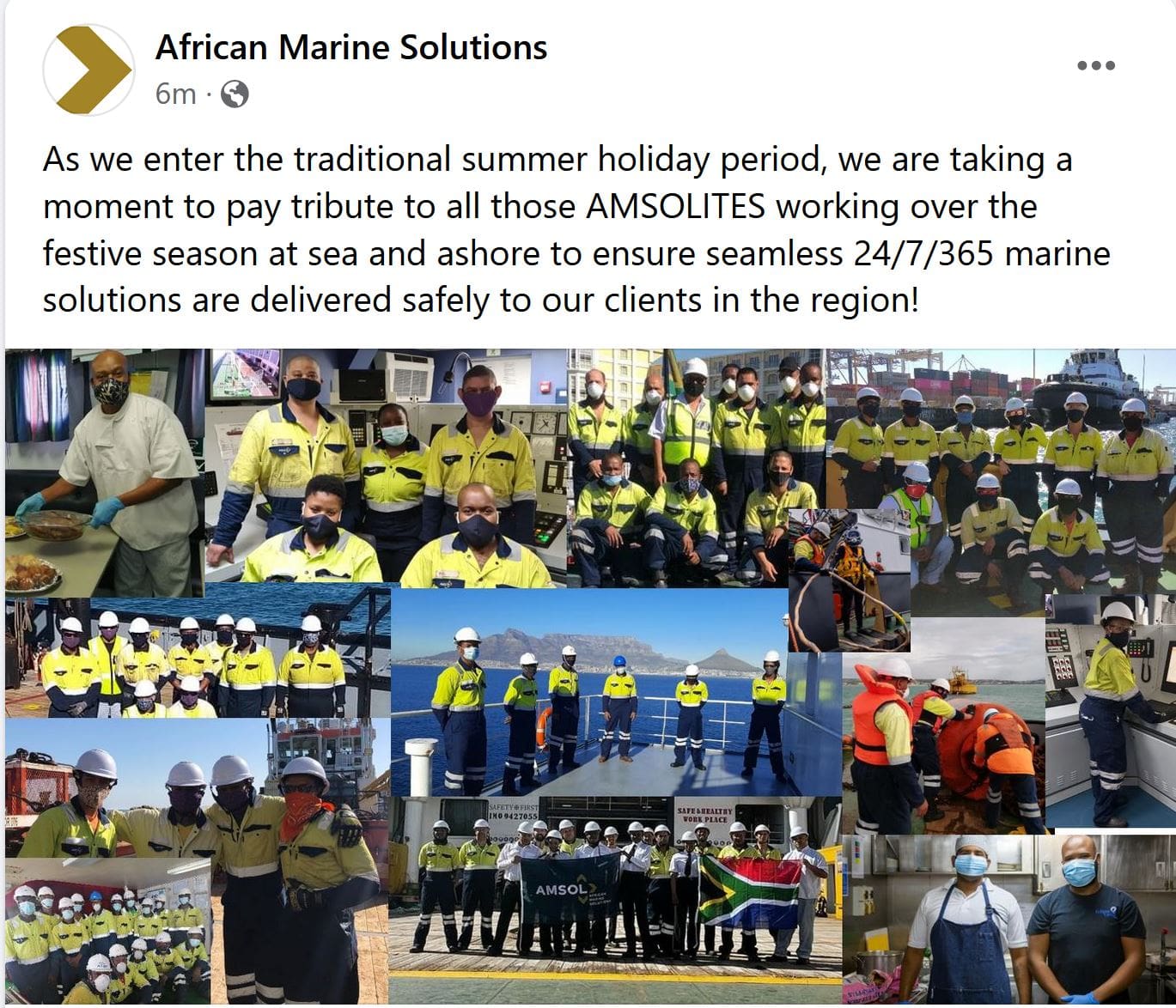


 South African Polar Research Infrastructure (SAPRI): Launch of the Preparatory Phase
 The SAPRI team is pleased to inform you that the contractual agreement for the starting of the SAPRI implementation phase is being finalized between the
 These achievements would not have been possible without the trust demonstrated by the scientific
  The launch of the SAPRI Preparatory Phase was announced via a webinar and a Q&A session to illustrate the main aspects of SAPRI, its organization into integrated facilities, and the first steps of the implementation phase listed in the business plan. To accelerate the implementation phase, it is proposed to initiate an informal Preparatory Phase of SAPRI and to discuss the following actions with the community of stakeholders:
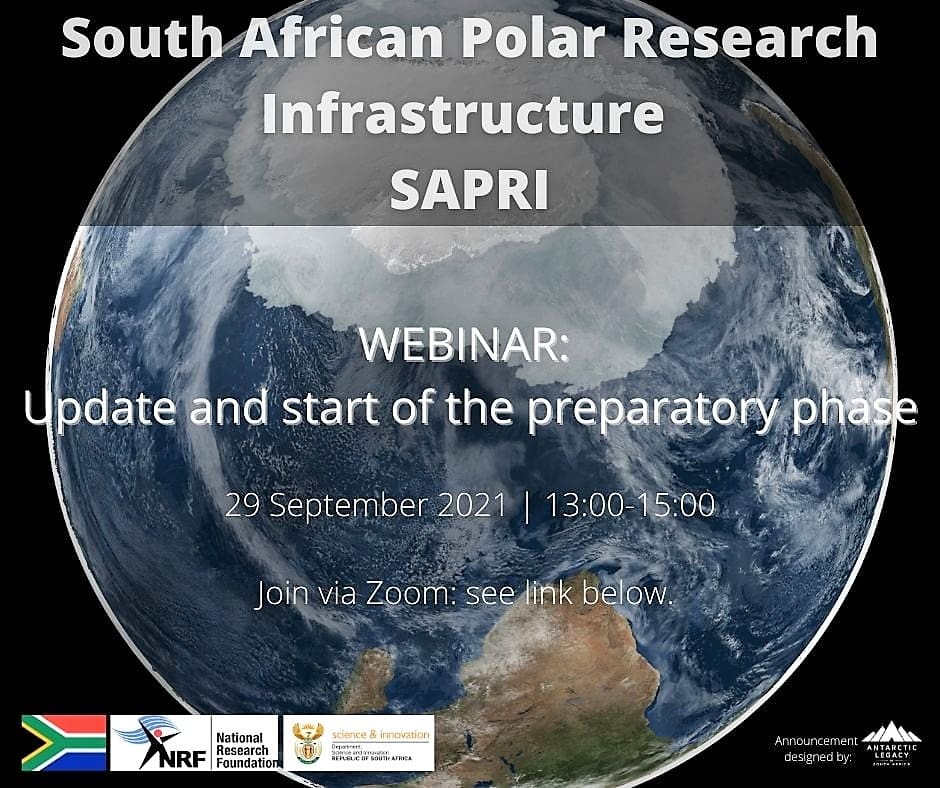 The virtual webinar took place on 29th September 13:00-15:00 and was led by the SAPRI team; Tamaryn Morris, Marcello Vichi, Juliet Hermes, Johannes Pauw.
 (Above left to right: temperature-depth profiles with time data of artificially grown sea ice, crystal structure of artificially grown sea ice, comparison of the Elastic Modulus of different types of sea ice)
 (Above: left picture (UCT MARiS Mobile polar lab), Middle picture (Miss B. Matlakala and Mr F. Guni doing artificial sea ice experiments), Right Picture (Compression machine for testing mechanical properties of sea ice).
 (Above left to right: Dr Tokoloho Rampai and A/Prof Marcello Vichi) Dr Tokoloho Rampai (chemical engineering department) is the principal investigator on the project, with the co-investigator A/Prof Marcello Vichi from the department of Oceanography.