by Ria Olivier | Feb 14, 2024 | Marion Island, Newsletters>Marion Island Newsletters, Overwintering Team, SANAP, Uncategorised
 The 2nd issue of The Wanderer by the Marion80 Overwintering team is now available online. It is a bumper issue with 64 pages to read and to enjoy the amazing photo’s taken by the team members.
Read the editor’s note by Zafar Monier “about the experiences of the people living one of the most extreme lifestyles, unexpected guests, new(born) arrivals, and even some goodbyes” .
Great message by the team leader Sandile Nkebe “Being on Marion Island has taught me to persevere, to be patient and to master the use of “alternatives”.
The Edition includes the visit by the Scientific team to Prince Edward Island.
Click here to Download
In this Issue:
- Clockwise vs Anti-clockwise by Zafar Monier
- Roaring winds by Yinhla Shihlomule
- Ode to the Paddy Counter by Michelle Risi
- How to Samsara by Michelle Risi
- There’s always another one by Zafar Monier
- Natures Midwife by Dylan Seaton
- Whatever Doesn’t Kill You Makes You a Beachmaster by Tammy Eggeling
- Gear Maketh Man by Zafar Monier
- Unexpected Guests by Kelly Mogotsi and Williem Krige
by Ria Olivier | Feb 12, 2024 | Antarctica, Research, SANAP, SAPolarRI, Uncategorised
During the 6th Symposium sessions were allocated to cross cutting disciplines and it led to great presentations and discussions.
Science Engagement and Awareness within SANAP
Anché Louw of the South African Polar Institute and co-investigator of the Antarctic Legacy if South Africa chair the session and begin the session with a presentation on the Antarctic Legacy Internet footprint.
She told her story when she started within the SANAP program as an honors student in Botany. she highlight the importance that as researchers we need to communicate our work and create awareness for the science that we participate in.
Sarah Fawcett asked Anché to highlight the possibilities of Wiley publishing and due to an agreement researchers can publish in a huge variety of journals at no cost, and those papers will be fully open access. Similar agreements have recently been negotiated with Springer and Elsevier, so there’s really no reason any of us should be paying for publication. A Leaflet was include in the welcoming package of all participants. Dr. Pete Convey also mentioned the possibilities and opportunities within SCAR where researchers can publish.
The session included an e-poster by Ria Olivier of the LSA digital museum. The museum can be downloaded from the ALSA archive
by Ria Olivier | Feb 5, 2024 | Research, SANAP, Uncategorised
The 6th SANAP Research symposium was held at Houw Hoek Hotel in the Western Cape, from 27 November to 1 December 2023. A series of posts will be done on the SANAP website to give feedback on sessions and more will follow in the next few weeks.
Delegates started arriving and most were settled in on Monday evening. Delegates from South Africa, Finland, and the United Kingdom spent the week networking with each other and with students, and listening to talks within the thematic themes identified under the South African National Antarctic Programme (SANAP). All delegates received a welcoming package to get them through the symposium.(Left: Photo Credit – Anché Louw, SAPRI)
The symposium started with a keynote lecture by Prof Jukka Tuhkuri of Aalto University, Finland on the expedition to find the shipwreck of the Endurance: “On March 5th, 2022 an international Endurance22 expedition located the wreck of Endurance, the lost vessel of Ernest Shackleton. The Endurance22 expedition was organized by the Falklands Maritime Heritage Trust and the expedition team was taken to the wreck site by S.A. Agulhas II, captain Knowledge Bengu and his crew. Jukka outlined and discussed the three goals of the expedition: to locate the wreck, to tell the story of Endurance to new generations, and to conduct scientific work. The science team onboard included scientists from Stellenbosch University and Aalto University. The Keynote lecture discusses, inter alia, who Shackleton was, how the Endurance was lost and found, and what was learned on the Weddell Sea Expedition” abstract supplied by Prof Tuhkuri. (Above: Photo Credit – Anché Louw, SAPRI)
A welcoming reception took place after the keynote lecture . This reception allowed members of the SANAP community (both old and new) to interact in an informal meet and greet for the first time since the last Symposium in 2018. The 2020 Symposium was cancelled due to the COVID-19 pandemic, and a decision was made to postpone the 2022 Symposium to allow the SANAP community to generate new data post-pandemic.
Afterwards a workshop was held by the Association for Polar Early Career Scientists of South Africa (APECSSA), and they reported back to the SANAP community n Day 3 of the symposium. (Right: Photo Credit: Anché Louw – SAPRI)
Prior to the commencement of the Symposium, a meeting of the members of the South African national committee for Scientific Committee on Antarctic Research (SCAR) took place chaired by Prof Bettine van Vuuren and was attend in person and online by members of the committee. Prof van Vuuren as chair of the national committee feedback on day 2 of the symposium.
More posts on sessions and presentations of the 6th SANAP research Symposium in the coming weeks.
by Rabia Mathakutha | Sep 28, 2023 | Commemorative Days, Current Event, Important Dates, International Days, SA Agulhas II, SA Polar Infratsructure, SA Polar Research Infrastructure, SANAP, SAPolarRI, SAPRI, Science, Southern Ocean, Uncategorised
Today marks World Maritime Day, a global commemorative day celebrated every last Thursday of September. This annual observance serves as a tribute to the indispensable maritime industry and its pivotal role in connecting nations, enabling trade, and fostering economic growth. It is also an opportunity to reflect on the challenges facing the maritime sector and advocate for sustainable practices in an ever-changing world.
The International Maritime Organisation (IMO) has announced that this year’s World Maritime Day theme is “MARPOL at 50 – Our commitment goes on”. This theme highlights the 50th anniversary of the adoption of the International Convention for the Prevention of Pollution from Ships (MARPOL) on 2 November 1973. MARPOL focuses on preventing pollution of the marine environment caused by ships, whether it be from operational activities or accidental incidents.
International Cooperation and Sustainable Shipping
IMO currently has 175 Member States and three Associate Members. South Africa has been a member state of the IMO since 1995, sharing the responsibility to prevent pollution from ships.
In alignment with this year’s theme for World Maritime Day, we are reminded of the proactive measures taken by the country’s Department of Transport. In September 2022, they proposed amendments to the Marine Pollution (Prevention of Pollution from Ships) Act. One notable proposal is the potential increase in fines for ship pollution from R500,000 to R10 million, aiming to make non-compliance financially burdensome. These amendments specifically address the proper treatment and safe disposal of sewage from ships, as well as efforts to reduce greenhouse gas emissions that contribute to climate change and air pollution.
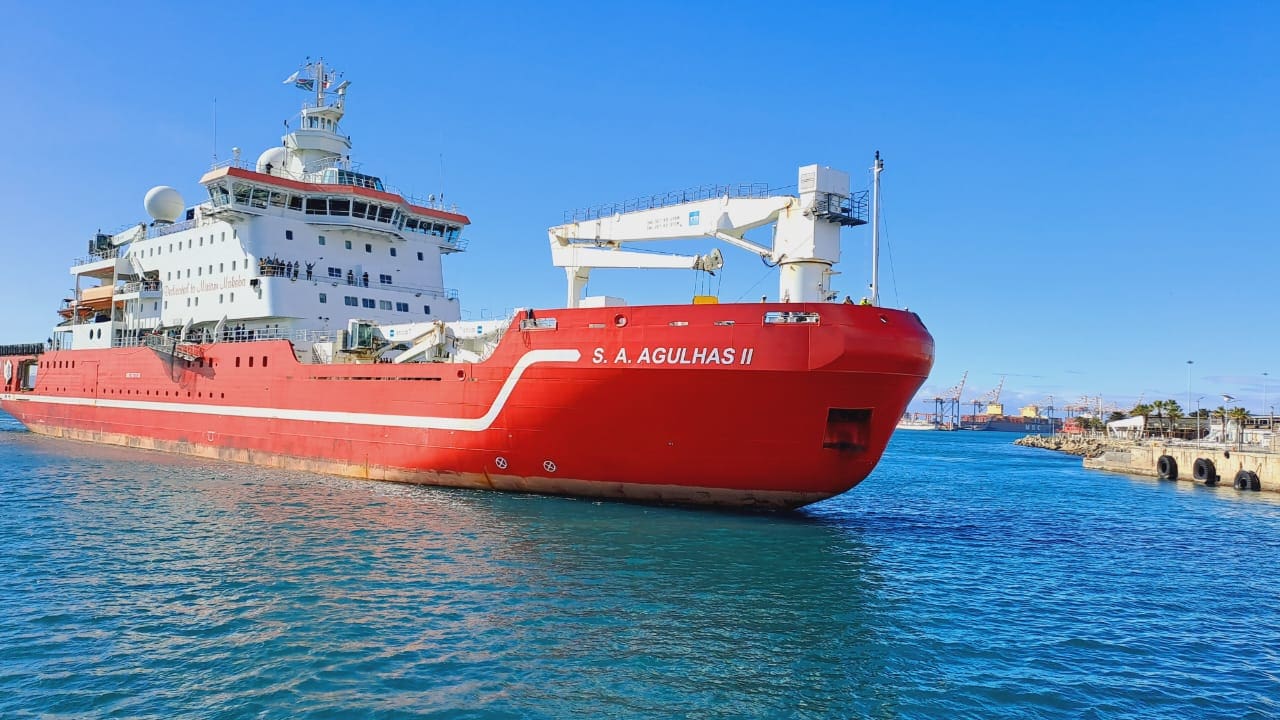
The South African research and supply vessel, the S.A. Agulhas II, is an example of a large ship that meets and complies with the regulations set forth in MARPOL. With its ice-breaking capability, the S.A. Agulhas II frequently navigates the Southern Ocean and Antarctic waters for scientific and research purposes as part of the South African National Antarctic Programme (SANAP).
S.A. Agulhas II entering the Port of Cape Town, on return from the sub-Antarctic Marion Island. Image credit: Abuyiselwe Nguna (SAPRI LTO:Land Research Coordinator).
The S. A. Agulhas II is a state-of-the-art vessel that has been constructed with effective waste management systems. It is equipped with an advanced in-house waste water treatment system that efficiently treats liquid waste, sewage, and greywater before storing or disposing of them within permitted limits. Grease traps are utilised to manage greasy liquid waste, and a comprehensive garbage management plan is in place for all solid waste. These measures ensure adherence to both national and international maritime waste policies, while also supporting South Africa’s leadership in marine and Antarctic research expeditions through SANAP.
Celebrating South Africa’s Seafarers
The SANAP and SAPRI have published The Maritime Interview Series to pay tribute to the seafarers who play a crucial role in the success of the maritime industry. These individuals dedicate their lives to seamanship and are responsible for navigating the S.A. Agulhas II across the Southern, Indian, and Atlantic Oceans for various marine and Antarctic research expeditions. The interview series features six seafarers who work on the S. A. Agulhas II through the vessel managing agent, African Marine Solutions (AMSOL). To learn more about these local heroes in the maritime industry, please visit the links provided below.
The Maritime Interview Series 2023
World Maritime Day encourages us to reflect on the importance of sustainability, safety, and international cooperation in ensuring the enduring prosperity of this sector. As we chart a course toward a more sustainable future, let us acknowledge and appreciate the dedication of those who keep the world’s seas and oceans alive. Together, we can work towards safeguarding these invaluable natural resources for generations to come.
To our local seafarers, we say THANK YOU, for your dedication and endurance while at sea!
Written by: Rabia Mathakutha, South African Polar Research Infrastructure, 28 September 2023
Edited by: Anche Louw (South African Polar Research Infrastructure) and Ria Olivier (Antarctic Legacy of South Africa)
by Rabia Mathakutha | Sep 27, 2023 | Antarctica, Commemorative Days, Environment, International Days, SA Agulhas II, SA Polar Infratsructure, SA Polar Research Infrastructure, SANAP, SAPolarRI, SAPRI, Uncategorised
This is the last interview of The Maritime Interview Series, leading up to World Maritime Day, celebrated on 28 September 2023.
What was this series all about?
Every year on the last Thursday of September, nations around the world come together to celebrate World Maritime Day. This international observance aims to highlight the crucial role that shipping and seafaring play in our global economy and emphasise the importance of sustainable maritime practices.
Acknowledging the Role of South African Seafarers in the Maritime Industry
The maritime industry is the backbone of global trade. This industry connects countries, facilitates economic growth, enables scientific and research expeditions and plays a vital role in our everyday lives. However, the success of this enormous industry would not be possible without the men and women who sacrifice their time on land to serve our maritime needs. In recognising this, the South African National Antarctic Programme (SANAP) and the South African Polar Research Infrastructure (SAPRI), would like to honour some of our local seafarers working on board the South African research and supply vessel, the S.A. Agulhas II during various marine and Antarctic research related expeditions through the Southern, Indian and Atlantic Oceans.
The purpose of The Maritime Interview Series was to pay tribute to these seafarers, in anticipation of World Maritime Day.
The Maritime Interview Series Part 6 features Mr Kyle Peterson, Chief Steward of the S.A. Agulhas II.
What is your role on the ship?
“I am the Chief Steward on the S.A. Agulhas II”.His primary duties involve guaranteeing the welfare and satisfaction of both the crew and guests, while upholding stringent standards of cleanliness, hygiene, and safety aboard the vessel. Additionally, he oversees a team of stewards who play a crucial role in achieving these objectives. This entails managing provisions and inventory to ensure the well-being of the crew, supervising galley operations, maintaining cleanliness and housekeeping, overseeing laundry services, controlling inventory and expenses, delivering exceptional guest services, and ensuring preparedness for safety and emergency situations.
Mr Peterson’s Background and Journey into a Seafarer Career
When not at sea, Mr. Peterson resides in Grassy Park, Cape Town, but he grew up in Mitchells Plain, also in Cape Town. With over 10 years of experience as a seafarer and a total of 12 to 13 years in the hospitality industry, Mr. Peterson has been serving as a Chief Steward on the S.A. Agulhas II for the past two years. Prior to this role, he worked as a catering assistant, utility steward, and steward on the same vessel. However, his seafaring experience extends beyond the S.A. Agulhas II, as he has also worked on other vessels such as the tug vessel S.A. AMANDLA and NOMASA, the trawler ALGOA, the research and supply vessel S.A. Agulhas, and even an international French vessel.
Mr. Peterson shared insights into his early career journey before becoming a seafarer, mentioning his previous work at his mother’s clothing business, a fire station, and a printing shop, among other experiences. He emphasised the importance of seizing opportunities, stating that no job is too small because one never knows where it may lead. Mr. Peterson’s determination is evident in his pursuit of continuous learning and professional development. He is a SAMSA (South African Maritime Safety Authority) accredited officer and actively takes short courses to enhance his skills and potentially advance to the next level within the maritime industry.
What do you like the most about your job?
“I enjoy seeing new places, working with people, helping people (passengers and colleagues), and feeding passengers aboard the S.A. Agulhas II delicious and nutritious food”.
What are some of the challenges that you experience in your line of work?
Mr. Peterson shared some of the difficulties he faces, including being separated from his loved ones. Despite his extensive experience at sea, he mentioned that he occasionally feels the impact of turbulence during sailing, although he assured us that he does not suffer from seasickness.
Any advice to someone who would like to pursue this career?
“The importance of maintaining integrity in your work cannot be overstated, as your actions and dedication will ultimately reflect your character”. Lastly, “work hard, hard work pays off”.
(more…)
by Rabia Mathakutha | Sep 26, 2023 | Antarctica, Commemorative Days, Environment, International Days, News, SA Agulhas II, SA Polar Infratsructure, SA Polar Research Infrastructure, SANAP, SAPolarRI, SAPRI, Uncategorised
The Maritime Interview Series Part 5 features Mr Lionel Alexander, Bosun (or Deck Supervisor) of the S.A. Agulhas II.
Need to catch up? Click here for Part 1 to 4
Rabia Mathakutha (SAPRI DPS Research Coordinator) interviewed Mr Alexander during the SEAmester VI expedition.
What is your role on the ship?
“I am the Bosun, also known as a Boatswain, on the S.A. Agulhas II”.
Mr Alexander plays a vital role on the vessel and is responsible for various tasks related to deck operations and maintenance. His responsibilities as a Bosun on the vessel include supervising deck crew activities during research expeditions, deployment of science/oceanographic equipment, mooring anchoring, and cargo handling, ensuring the cleanliness and maintenance of the vessel’s deck and equipment, conducting safety inspections, participating in emergency drills, training and guiding deck crew members, and maintaining accurate records.
A boatswain or bosun, also known as a deck boss, or a qualified member of the deck department, is the most senior rate of the deck department.
The Bosun’s role is crucial in maintaining the efficiency, safety, and proper functioning of the vessel’s deck operations.
Mr Alexander’s Background and Journey into a Seafarer Career
Mr Alexander is a third generation seafarer with 28 years’ experience in the maritime industry. His experience on research and supply vessels such as the S.A. Agulhas and the S.A. Agulhas II, spans over 20 years. Mr Alexander says he spends 80% of his time in a year aboard and he loves it.
Through his experience as a seafarer, he has travelled to various places, including but not limited to, East Asia, Europe (including England, London, Monaco, Spain), Morocco, Mauritius, Chile, King Edward, and the sub-Antarctic islands and Antarctica. Mr Alexander has also travelled to the remote and isolated Weddell Sea off Antarctica aboard the S.A. Agulhas II, as part of the search of Sir Ernest Shackleton’s lost ship, The Endurance. For someone with such a wealth of knowledge and experience, Mr Alexander stroke us as a genuinely humble man, who is adored and respected by his colleagues.
We admire your level of experience, what are some of the life lessons that you have picked up along the way?
‘Having the right attitude is incredibly valuable, not just experience”.
He mentioned how important it is to learn to interact with people, to respect your colleagues and be a team player, not just in his line of work, but work in general. Mr Alexander talked about how being a Bosun and dealing with people comes with a lot of responsibility, and how he’s developed tactics to deal with different kinds of people. Not dropping the high standards he’s set for seamanship, is his biggest priority. Mr Alexander surprised us with his experience beyond working as a seafarer as he showed us carpentry items that he makes himself while at sea and on land, together with demonstrating his knowledge of oceanographic sampling. He says that he always tells people, “Don’t steal with your hands, steal with your eyes and learn”. It was fascinating to learn how much of a curious and faster learner Mr Alexander is.
What do you enjoy the most about your job?
Mr Alexander expressed his love for travelling and savouring the moments that come with long voyages to remote places. He told fascinating stories about how once with his crew aboard the S.A. Agulhas II, sailed through a rainbow and how much it looked like they were sailing into a magical portal, and a story about an-almost deadly encounter with a whale during one of their voyages to Antarctica. He said it’s moments like these when he just forgets to grab a camera, and he stops to take it all in; saying that every moment is beautiful, even amidst danger. He also said he enjoys working on the S.A. Agulhas II during research expeditions as he gets to learn from and help scientists, and in essence, accomplishing something as a team.
“Having a strong work ethic that is admired and respected by many, and being reliable to my responsibilities and my team is very important to me”, Mr Alexander continued as he added, “in order to lead, one must learn to follow”.
What are some of the challenges that you experience in your line of work?
Mr Alexander’s role as a Bosun requires him to deal with and supervise many crew members, as such, some of the challenges that he mentioned he experiences in his line of work are dealing with different characters of crew members who do not always follow the rules because not everyone is as dedicated. He said he counters this by learning the individual and treating them accordingly, while providing proper guidance and supervision.
Advice from the S.A. Agulhas II Bosun
When asked what advice he would give to someone who would like to pursue this career or a career in maritime, Mr Alexander joked and said “they must come see the Bosun first”, and then emphasised that one must have a passion for being at sea and to never stop learning.
World Maritime Day reminds us of the vital role that the maritime industry plays in our interconnected world. The maritime industry is also particularly crucial in enabling the science and research in the Antarctic region and Southern Ocean through SANAP.
Photo Credit: Rabia Mathakutha (South African Polar Research Infrastructure) and Eduan Teich via the Antarctic Legacy of South Africa (ALSA) Archive.
Written by: Rabia Mathakutha, South African Polar Research Infrastructure, 26 September 2023


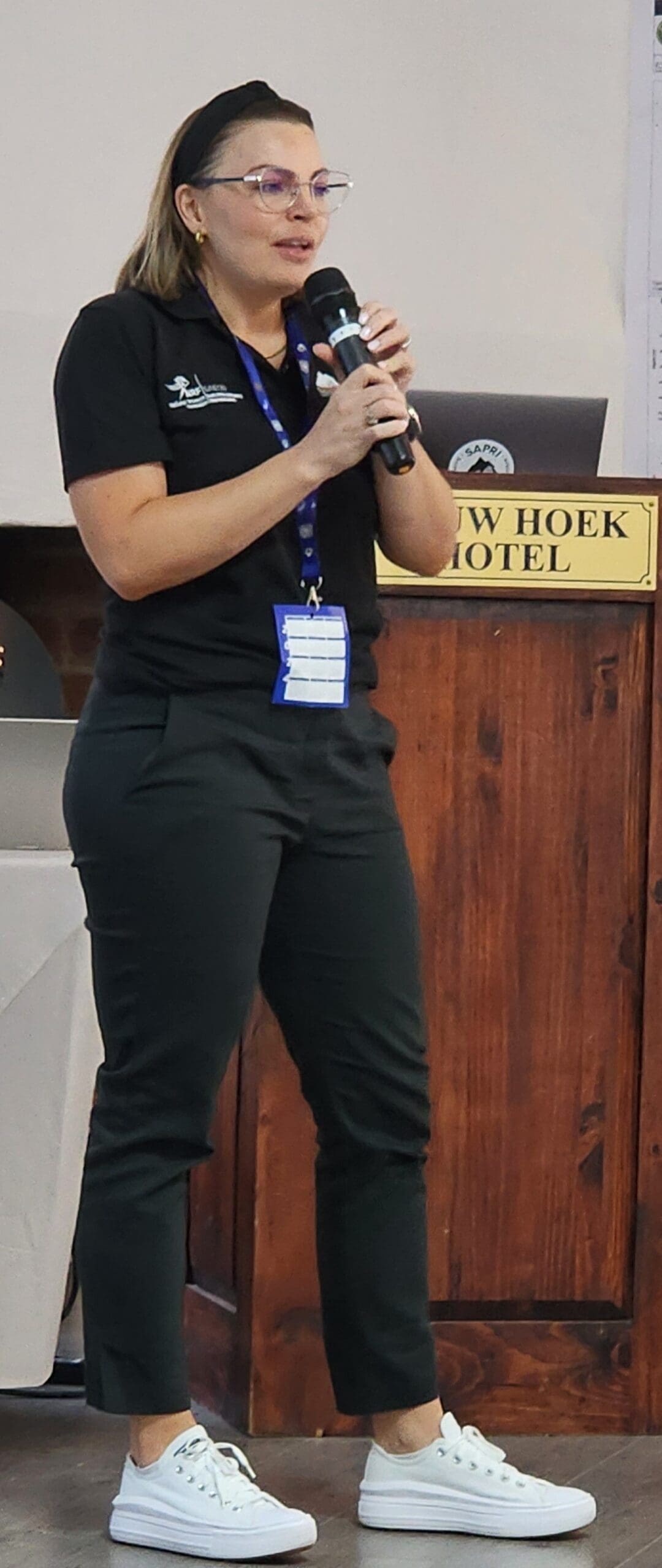 During the 6th Symposium sessions were allocated to cross cutting disciplines and it led to great presentations and discussions.
  She told her story when she started within the SANAP program as an honors student in Botany. she highlight the importance that as researchers we need to communicate our work and create awareness for the science that we participate in.
 Sarah Fawcett asked Anché to highlight the possibilities of


 The symposium started with a keynote lecture by Prof Jukka Tuhkuri of Aalto University, Finland on the expedition to find the shipwreck of the Endurance: “On March 5th, 2022 an international Endurance22 expedition located the wreck of Endurance, the lost vessel of Ernest Shackleton. The Endurance22 expedition was organized by the Falklands Maritime Heritage Trust and the expedition team was taken to the wreck site by S.A. Agulhas II, captain Knowledge Bengu and his crew. Jukka outlined and discussed the three goals of the expedition: to locate the wreck, to tell the story of Endurance to new generations, and to conduct scientific work. The science team onboard included scientists from Stellenbosch University and Aalto University. The Keynote lecture discusses, inter alia, who Shackleton was, how the Endurance was lost and found, and what was learned on the Weddell Sea Expedition” abstract supplied by Prof Tuhkuri. (Above: Photo Credit – Anché Louw, SAPRI)
 A welcoming reception took place after the keynote lecture . This reception allowed members of the SANAP community (both old and new) to interact in an informal meet and greet for the first time since the last Symposium in 2018. The 2020 Symposium was cancelled due to the COVID-19 pandemic, and a decision was made to postpone the 2022 Symposium to allow the SANAP community to generate new data post-pandemic.
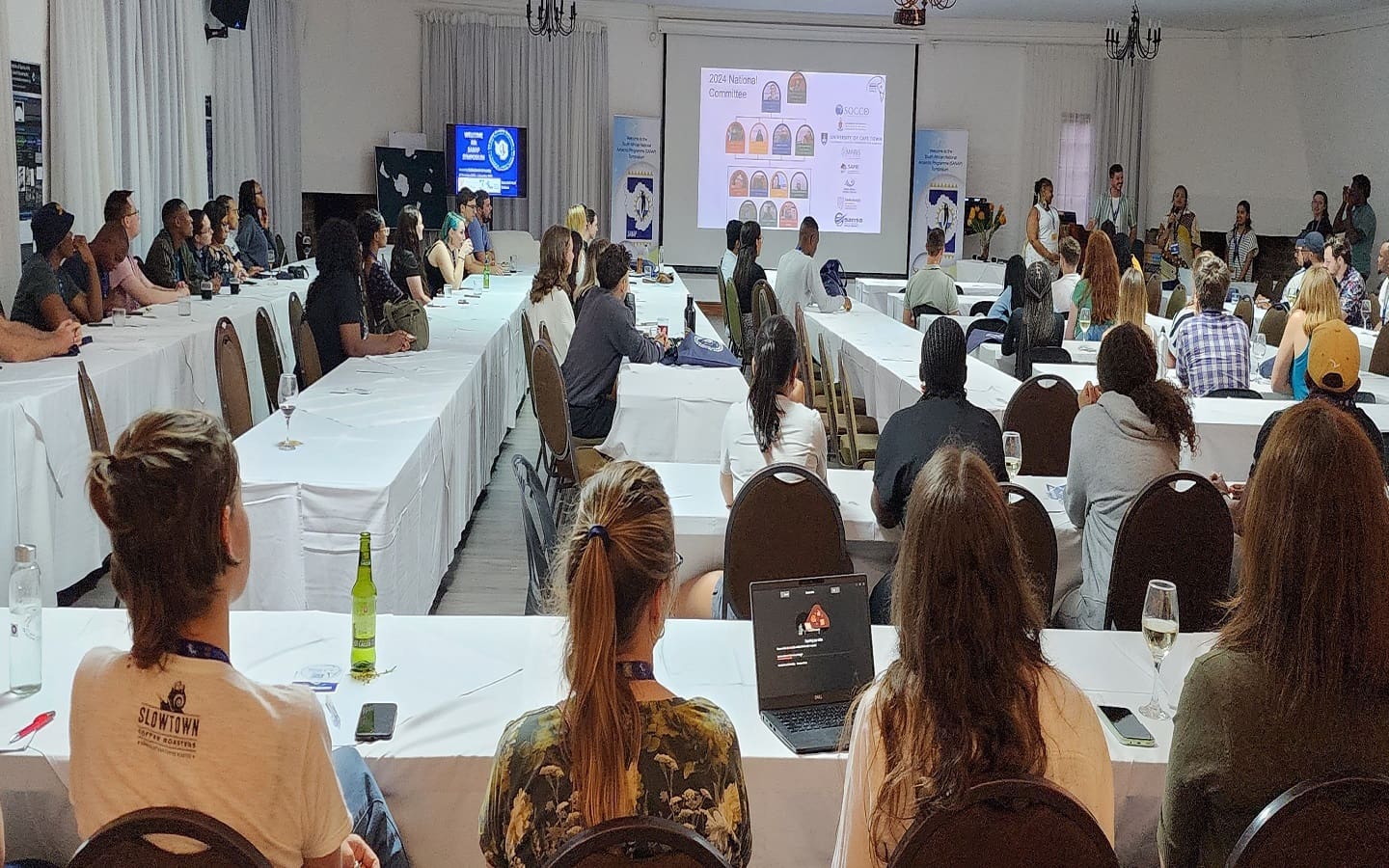 Afterwards a workshop was held by the Association for Polar Early Career Scientists of South Africa (APECSSA), and they reported back to the SANAP community n Day 3 of the symposium. (Right: Photo Credit: Anché Louw – SAPRI)
 Prior to the commencement of the Symposium, a meeting of the members of the South African national committee for Scientific Committee on Antarctic Research (SCAR) took place chaired by Prof Bettine van Vuuren and was attend in person and online by members of the committee. Prof van Vuuren as chair of the national committee feedback on day 2 of the symposium.