by Ria Olivier | May 5, 2023 | Invasion Biology, Marion Island, Mice Eradication, News, Prince Edward Islands, Research, SA Agulhas II, SANAP, Southern Ocean, Stations, sub-Antarctic, Team member

| TEAM | Mouse-Free Marion |
| Project Name | Longitudinal monitoring of terrestrial diversity to assess the effects of the planned mouse eradication on Marion Island, and bait and mouse trials to inform further planning for the Mouse-Free Marion Project |
| Project Manager | Dr Anton Wolfaardt |
| Collaborator | Prof. Michelle Greve |
| M79 Field Assistant | Elsa van Ginkel |
| M80 Field Assistant | Camilla Smyth |
The Mouse-Free Marion Project is a partnership between the Department of Forestry Fisheries and the Environment (DFFE) and BirdLife South Africa, working towards an operation to eradicate invasive mice from Marion Island.
The mice, which were introduced accidentally some 200 years ago, have caused great harm to the ecology of Marion Island. They feed on indigenous invertebrates, damage vegetation, and have more recently started eating seabird chicks. As a result, the mice are considered to be a major pest to the island. If they are not removed, the ecosystem of the island will continue to deteriorate, and they will likely cause most of the seabirds on the island to become locally extinct. These seabirds will be lost to the island forever.
In order to monitor how the island recovers after the mice have been removed, we are collecting data on aspects of the island that we expect to improve once the mice are gone. These include the vegetation and invertebrates. Colleagues working on other projects are collecting similar data on seabirds.
The reason why it is important to collect this data before the eradication operation is so that we can compare and monitor how the island changes (improves) as a result of the eradication operation – comparing the island’s vegetation and invertebrate features before and after the operation.
More about your plans for this takeover?
The project will make use of data that have already been collected over many years, primarily through the various long-term monitoring projects that have been undertaken at Marion Island over many years. The focus of our work currently is to fill some pre-eradication (baseline) data on vegetation and invertebrates. This particular work was initiated during the 2022/23 period, and will continue in 2023/24. The takeover period will be used to provide training and orientation to the new Marion80 overwintering team member (Camilla Smyth) and for the current Marion79 Mouse-Free Marion overwintering team member (Elsa van Ginkel) to hand over the field-work responsibilities to Camilla.
The work includes standard invertebrate and vegetation survey techniques to establish a baseline that can be used to monitor how these ecological parameters change following the eradication of invasive mice. These surveys will repeat and build on historical surveys that have been undertaken on the island previously.
We will also be undertaking further bait trials and weather monitoring to help inform the planning of the baiting operation.
Latest takeover update from the island (on 26 April 2023)
Check out the Mouse-Free Marion Website!
Follow MFM on social media for the latest updates:
Text and images supplied by Dr Anton Wolfaardt.
Featured image: The MFM takeover 2023 team. L-R: Dr Anton Wolfaardt (MFM Project Manager), Camilla Smyth (M80 MFM Field Assistant) and Elsa van Ginkel (M79 MFM Field Assistant). Photo taken on Marion Island, April 2023.
Anche Louw, South African Polar Research Infrastructure (SAPRI DPS Node), 05 May 2023
by Ria Olivier | May 4, 2023 | Announcement, Antarctica, Gough Island, Legacy, Marion Island, News, Prince Edward Islands, SA Agulhas II, SA Polar Research Infrastructure, SANAE IV, SANAP, SAPolarRI, SAPRI, Southern Ocean
Dear Colleagues,
As I prepare to turn the page of a decade-long chapter of managing Operations and Infrastructure Support for Antarctica and Southern Ocean work and move on to new horizons, I wanted to take a moment to express my heartfelt gratitude to each and every one of you. Working together in enabling South Africa’s presence in this unique and challenging environment has been an unforgettable experience that has enriched my life in countless ways.
The extreme conditions and remoteness of the environment have demanded the best of me, and I am incredibly proud to have been part of it all. It sometimes felt like dealing with the logistical complexities of supporting Marine and Antarctic activities were the same as navigating the harsh ice conditions. We have faced and overcome numerous challenges as a team. Even though we may not have agreed on everything, the bonds we have built and the memories we have made will always hold a special place in my heart. I am truly grateful for the friendships, support, agreements and disagreements we have shared.
I am also deeply appreciative for being entrusted to manage South Africa’s presence in these pristine environments, and to have personally witnessed the beauty and wonder of Antarctica, Marion Island and Gough Island. The rough seas, breathtaking landscapes, unique wildlife, and understanding that there is so few which get this opportunity, have left an indelible mark on me, and I will forever cherish these memories.
As I move on to new endeavours away from the Ocean and Polar space, I will carry with me the valuable lessons I have learned especially when dealing with an unpredictable environment – the importance of adaptability, resilience, teamwork, and tenacity. The various curveballs and unexpected challenges have made me more resourceful in finding solutions. I am confident that the skills and experience gained will serve me well in my future pursuits.
I would like to extend my heartfelt thanks to each and every one of you for your unwavering support, dedication, and friendship during my tenure in the Antarctic and Marine space. I will always treasure the memories and the connections made, and I wish you all the very best in your ongoing work in Antarctica and the Southern Ocean or wherever your paths may lead you.
Thank you for being a part of this incredible journey, and please stay in touch.
With deepest gratitude,
Nish Devanunthan
Former Operations Coordinator: South African Polar Research Infrastructure (2022 to 2023)
Former Director – Operations and Engineering: South African National Antarctic Program (2013 to 2022)
Farewell gathering at SAEON Egagasini Node end of April 2023
Message from the SAPRI Team:
Even though Nish was with SAEON and SAPRI for only 9 months, he left a great legacy and managed to really ramp up the operations within SAPRI. He has a fountain of knowledge on Antarctica and Islands, DFFE, the S.A. Agulhas II and supply chain management, yet he still has a great sense of humour and commitment to action in the face of bureaucracy.
Nish, fair winds and following seas, we have the watch (although might ring you every now and then!).
SAEON Egagasini Node and SAPRI Team (L-R) Back: Simoné Louw (Node Administrator), Laura Braby (Postdoctoral Research Fellow), Saffiya Seddick (Seamap Coordinator), Juan-Jacques Forgus (Technician), Nicole du Plessis (Science Officer), Arno Botha (PhD Student), Zach Smith (Systems Developer), Nkululeko Memela (Operational Ocean Modeller); (middle) Lara Atkinson (Offshore Marine Scientist), Jennifer Veitch (Numerical Ocean Modeller), Anne Treasure (SAPRI DPS Node Manager), Anche Louw (SAPRI Digital Marketing and Communications Manager), Daneeja Mawren (Postdoctoral Research Fellow); (front) Juliet Hermes (SAEON Egagasini Node Manager and SAPRI Manager), Nish Devanunthan (Former SAPRI Operations Coordinator) and Thomas Mtontsi (Science Engagement Officer).
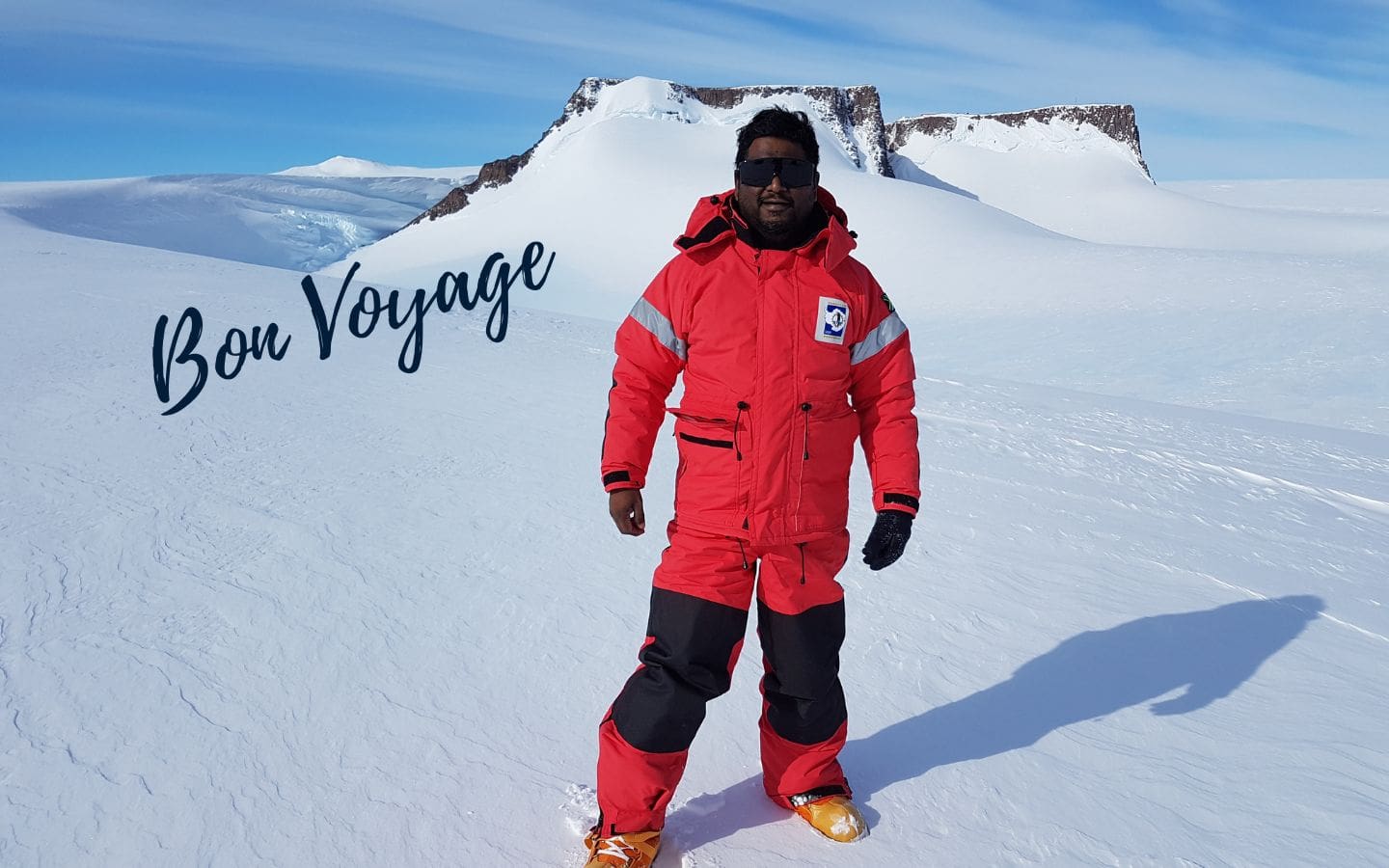
Feature Image: Nish Devanunthan at the South African National Antarctic Expedition Station, SANAE IV.
Anche Louw, South African Polar Research Infrastructure (SAPRI DPS Node), 04 May 2023
by Ria Olivier | Apr 19, 2023 | Marion Island, News, Overwintering Team, Prince Edward Islands, SA Agulhas II, SANAP, Science, Southern Ocean, Stations, Team Photo
The S.A. Agulhas II is on her final stretch of the first oceanographic leg to the sub-Antarctic Marion Island. The voyage has been overall calm, with easy and moderately sea and swells, reaching no more than 3 meters, in the past two days.
The 80th Marion Island overwintering team and land-based takeover personnel will soon reach their destination. The takeover is packed with scientific objectives, for both land and ship-based science groups, which will be shared over the next few weeks.
S.A. Agulhas II - Marion Island Voyage 057
| Departure: Port of Cape Town to Marion Island | Evening of 15 April 2023 |
| Expected time of arrival: Marion Island | Evening of 19 April 2023 |
| S.A. Agulhas II last communicated position (18 April 2023, 23:59) | LAT: 40° 40.6' S
LONG: 27° 45.5' E |
| Destination: Marion Island | LAT: 44° 9.1' S
LONG: 33° 22.7' E |
| Number of passengers on board | 89 passengers |
Message to the overwintering team:
May your team work hard together, take time for celebrations and grow together as a team. We wish you all the best. May you find plenty of happiness and fulfillment during your year in the sub-Antarctic!
80th Marion Island overwintering team
| Team Member | Position on M80 | Affiliation |
| Ndaedzo Nthulani | Assistant Meteorological Technician | SAWS |
| Dylan Seaton | Field Assistant: Sealer | MIMMP (UP) |
| Christopher Jones | Field Assistant: Birder | MAPRU (NMU) |
| Michelle Risi | Field Assistant: Birder | MAPRU (NMU) |
| Treasure Thobatsi | Communications Technician | DFFE |
| Gumede Mbekezeli | Electrical Technician | DFFE |
| Nikitha Fikizolo | Chef | DFFE |
| Tamara Eggeling | Field Assistant: Sealer/Killer Whaler | MIMMP (UP) |
| Zafar Monier | Field Assistant: Sealer | MIMMP (UP) |
| Kuhle Mbalane | Assistant Environmental Control Officer | DFFE |
| Mfezeko Rataza | Electronic Engineer | SANSA |
| Keith Odwa Obose | Assistant Meteorological Technician | SAWS |
| Kyle Maurer | Field Assistant: Birder | DFFE (Oceans & Coasts) |
| Mpumelelo Mabutyana | Field Assistant: Birder | DFFE (Oceans & Coasts) |
| Collen Nkadimeng | Diesel Mechanic | DFFE |
| Kelebogile Mogotsi | Senior Meteorological Technician | SAWS |
| Nkateko Maholobela | Environmental Control Officer | DFFE |
| Sandile Nkebe | Medical Orderly & Team Leader) | DFFE |
| Camilla Smyth | Field Assistant | Mouse-free Marion |
Photo caption: Marion80. Photo taken on the heli deck on board the S.A. Agulhas II. Back (L-R) Ndaedzo Nthulani, Dylan Seaton, Christopher Jones, Michelle Risi, Treasure Thobatsi, Gumede Mbekezeli, Nikitha Fikizolo, Tamara Eggeling, Zafar Monier, Kuhle Mbalane, Mfezeko Rataza; (front) Keith Odwa Obose, Kyle Maurer, Mpumelelo Mabutyana, Collen Nkadimeng, Kelebogile Mogotsi, Nkateko Maholobela, Sandile Nkebe and Camilla Smyth.
Photo credit: Christopher Jones and Michelle Risi
Anche Louw, South African Polar Research Infrastructure (SAPRI DPS Node), 19 April 2023
by Ria Olivier | Feb 6, 2023 | Announcement, Jobs, Marion Island, News, Overwintering Team, Prince Edward Islands, SANAP, Stations, sub-Antarctic
Join the 80th Marion Island Overwintering Team!
The Department of Forestry, Fisheries and the Environment (DFFE) is looking for suitable candidates to join the 2023/2024 Marion Island team.
The team will depart (on the research and supply vessel, S.A. Agulhas II) to the sub-Antarctic Marion Island in April 2023 and return in May 2024.
Positions to be filled:
- Communications Engineer/Technician
- Electrical Engineer/Technician
- Diesel Mechanic
- Medical Orderly
APPLICATION DEADLINE: 10 February 2023
Click on the link below to view the positions to be filled.
Marion Island JOBS
Read more about Marion Island
Anche Louw, South African Polar Research Infrastructure (SAPRI), 06 February 2023
by Ria Olivier | Feb 2, 2023 | Commemorative Days, Current Event, Environment, International Days, Marine Protected Area, Marion Island, Mice Eradication, News, Prince Edward Island, Prince Edward Islands, SANAP, Science, Southern Ocean, sub-Antarctic
World Wetlands Day, is celebrated every year on 02 February. On this day, in 1971, the Convention on Wetlands of International Importance (Ramsar Convention) was signed in Ramsar, Iran.
World Wetlands Day is celebrated to to “raise awareness and understanding of what wetlands are and how we can contribute towards restoring them through making conscious choices, becoming persuasive voices and taking bold actions” (read more here).
What is a wetland?
A wetland is defined as the land which is transitional between terrestrial and aquatic systems where the water table is usually at or near the
surface, or the land is periodically covered with shallow water, and which land in normal circumstances supports or would support vegetation typically adapted to life in saturated soil (1).
Why is wetland restoration so important? Listed below are a few benefits of wetland restoration:
- Enhanced biodiversity
- Improve water supply
- Store carbon
- Reduced impacts from flooding
- Improve livelihoods
- Enhance well–being
- Protection of agricultural resources (1; 2)
Is your role in wetland restoration important?
Yes! Our individual and collective actions have an impact (1).
What can you as individual do to help protect and preserve wetlands?
- Participate in programs that help protect and restore wetlands.
- Report illegal actions such as unauthorized wetland fill or dredging activities to government authorities
- Pick up litter and dispose in appropriate trash containers. Keep surface areas that wash into storm drains clean from pet waste, toxic chemicals, fertilizers and motor oil, which can eventually reach and impair our wetlands.
- Use native species when planting trees, shrubs and flowers to preserve the ecological balance of local wetlands.
- Avoid wetland when you are expanding your house.
- Use phosphate-free laundry and dishwasher detergents. Phosphates encourage algae growth, which can suffocate aquatic life.
- Use non-toxic products for household cleaning and lawn and garden care. Never spray lawn and garden chemicals outside on a windy day or on a day that it might rain and wash the chemicals into waterways.
- Enjoy the scenic and recreational opportunities wetlands offer, while preserving their integrity for future generations by minimizing the use of heavy equipment and staying in designated visitor areas where available (3).
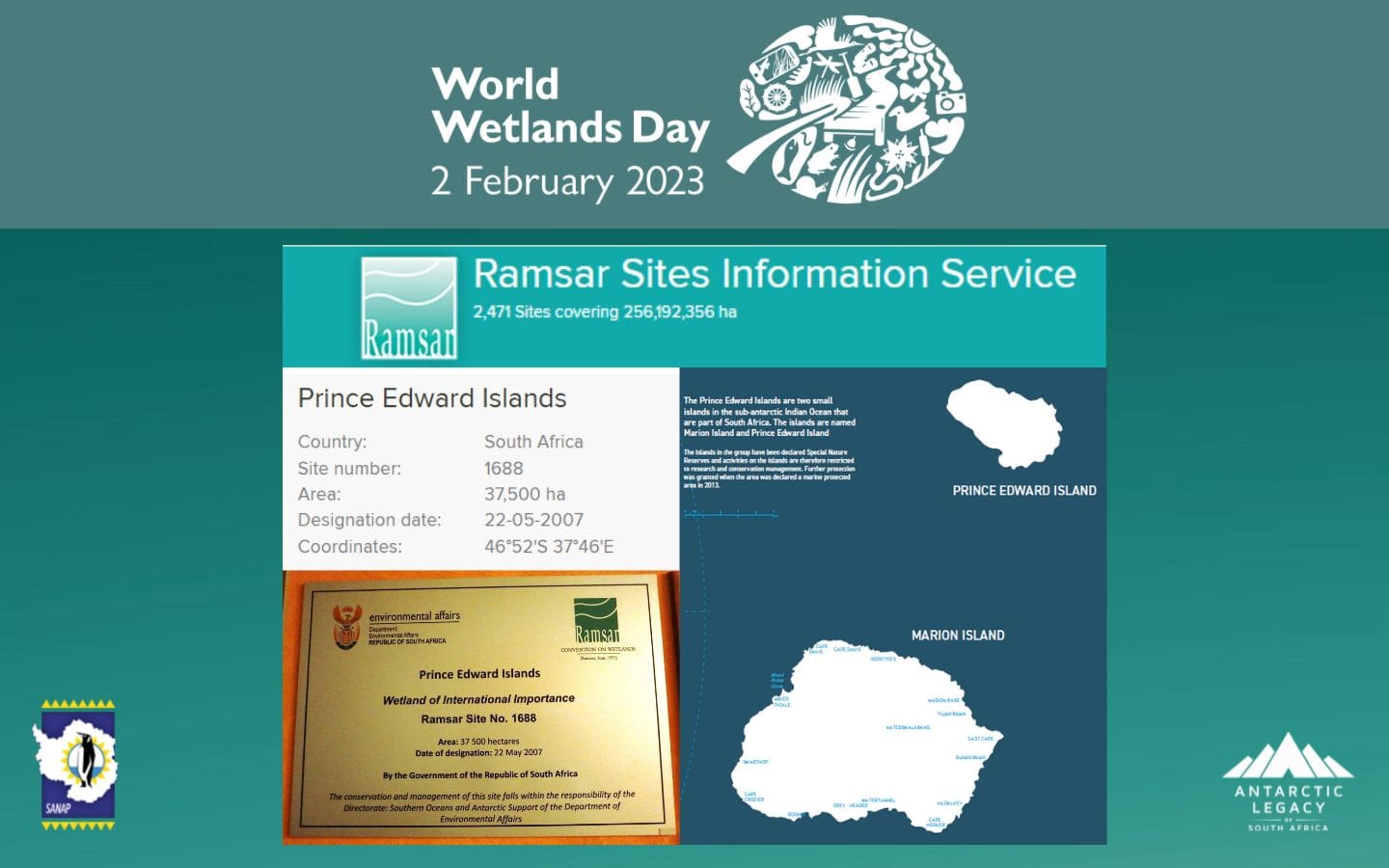
Did you know that the South African Prince Edward Islands (Prince Edward Island and Marion Island) is declared as Wetland of International Importance?
The Prince Edward Islands was declared Wetland of International Importance: Ramsar Site No.1688, on 22 May 2007. The conservation and management of this site falls within the responsibility of the Directorate: Southern Oceans and Antarctic Support of the Department of Forestry, Fisheries and the Environment.
Want to know about wetlands in South Africa?
Click on the posters to enlarge.
What’s been happening on Social Media
Sources:
1- https://www.worldwetlandsday.org/
2- https://www.dffe.gov.za/event/international/wetlandsday2013
3- https://www.epa.gov/wetlands/what-you-can-do-protect-coastal-wetlands
4- https://rsis.ramsar.org/ris/1688
5- https://alp.lib.sun.ac.za/handle/123456789/15327
6- https://blogs.sun.ac.za/antarcticlegacy/event/world-wetlands-day/
Anche Louw, South African Polar Research Infrastructure, 02 February 2023.
by Ria Olivier | Jan 24, 2023 | Announcement, Jobs, Marion Island, Mice Eradication, Prince Edward Islands, sub-Antarctic
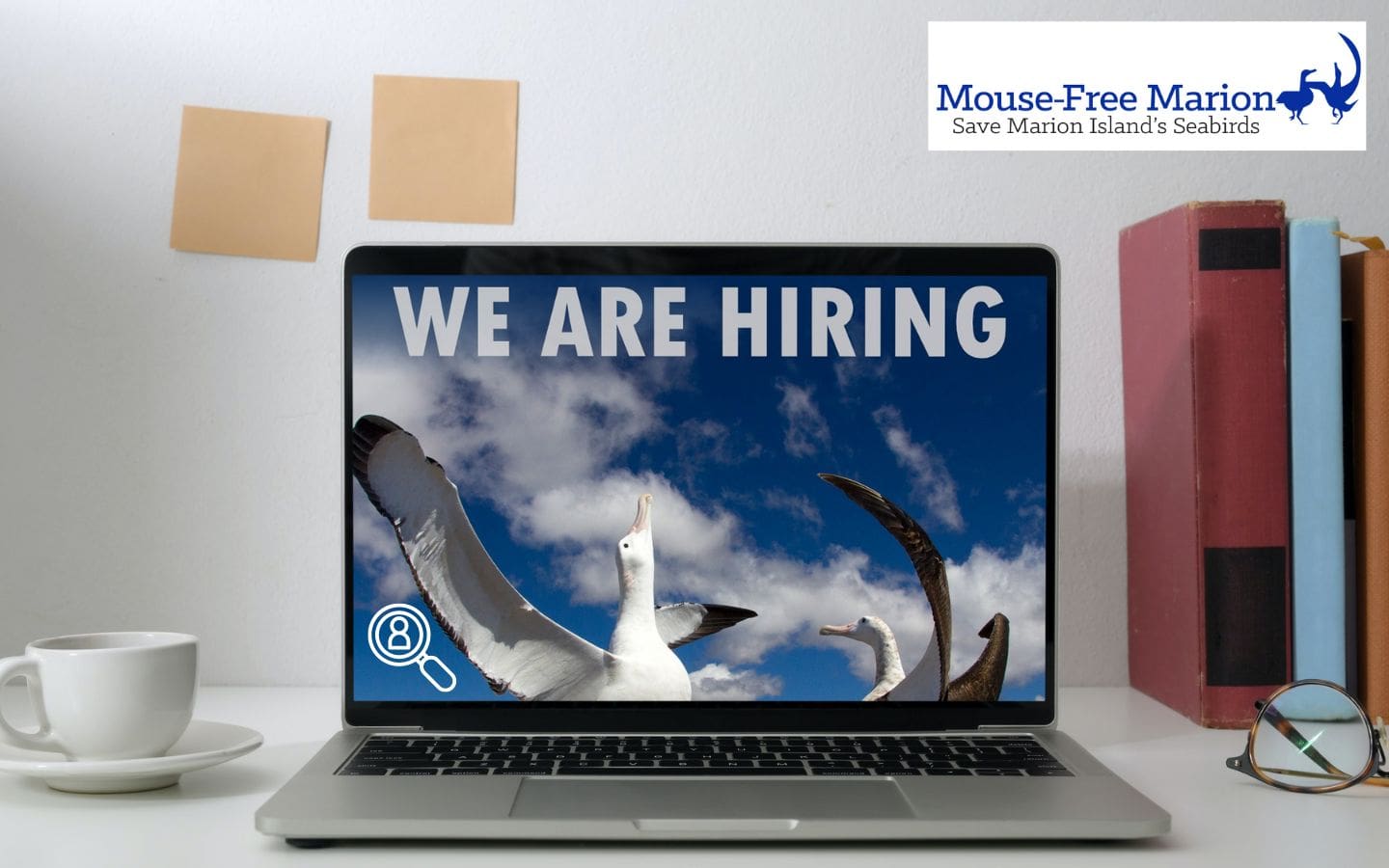
The Mouse-Free Marion (MFM) Project, a partnership between the Department of Forestry, Fisheries and the Environment (DFFE) and BirdLife South Africa, plans to eradicate invasive mice from Marion Island. The project is gaining increasing momentum as we work towards an eradication operation, currently envisaged for the austral winter of 2025. There remains a lot to do between now and then, and the project is seeking to recruit some key positions for the project. These provide an exciting opportunity to be part of the project team working towards restoring Marion Island and reclaiming it for its globally important seabirds.
Current Vacancies:
- Assistant Project Manager
- Administration and Finance Officer
- Prospect Researcher.
More details on these vacancies can be found here.
With detailed post descriptions found here.
Application deadline: 17 February 2023
Text: Robyn Adams, Communications Officer and Project Assistant (The Mouse-Free Marion Project)
Image: Wandering Albatrosses, Marion Island. Photo: Otto Whitehead – supplied and edited by MFM
Text Edited and Featured Image Design: Anche Louw, Digital Marketing and Communications Manager, SAPRI








 The Prince Edward Islands was declared
 The Mouse-Free Marion (