by Ria Olivier | May 22, 2021 | Environment, International Days, Legacy, Uncategorised
In 2014 on International Biodiversity Day the theme was “Island Biodiversity”. The Department of Forestry , Fisheries and the Environment(DFFE) state the following in 2014:“The legacy of a unique evolutionary history, many island species are endemic – found nowhere else on Earth. Islands harbour higher concentrations of endemic species than do continents, and the number and proportion of endemics rises with increasing isolation, island size and topographic variety.”
Today on International biodiversity day we celebrate Marion Island in all its diversity. “With increasing development pressures and climate change islands are now more threatened than ever before. Unless there is immediate action to save the remaining unprotected hotspot areas, the species losses will increase severely especially among those species that are endemic to these islands. Protecting them is vital and necessary, to ensure their conservation for future generations.” – Media release DFFE
The theme for this year is “We are part of the solution for nature”- in an Instagram post David Hedding(left) highlight the landscape response to climate – Did you know South Africa had a glacier until very recently?
“In 1966, Dr Brian Huntley(right) photographed the summit region of Marion Island known as the ‘Ice Plateau’.
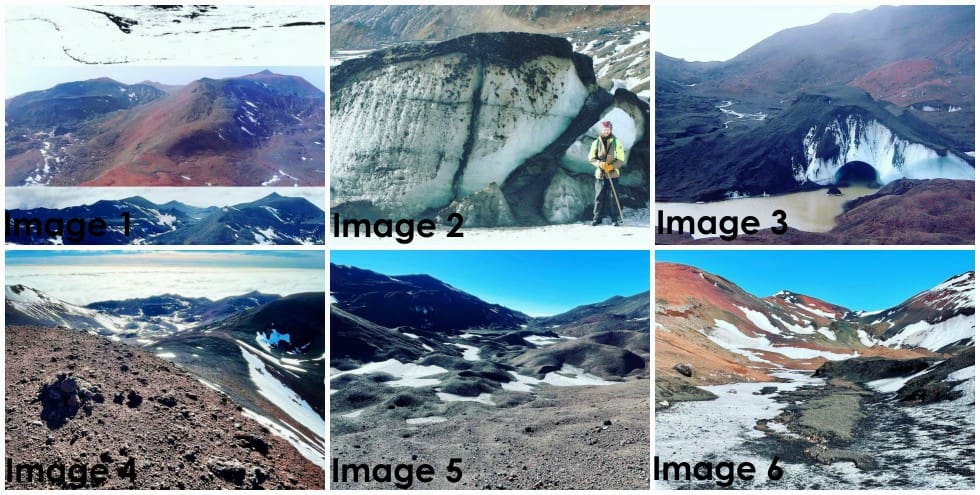
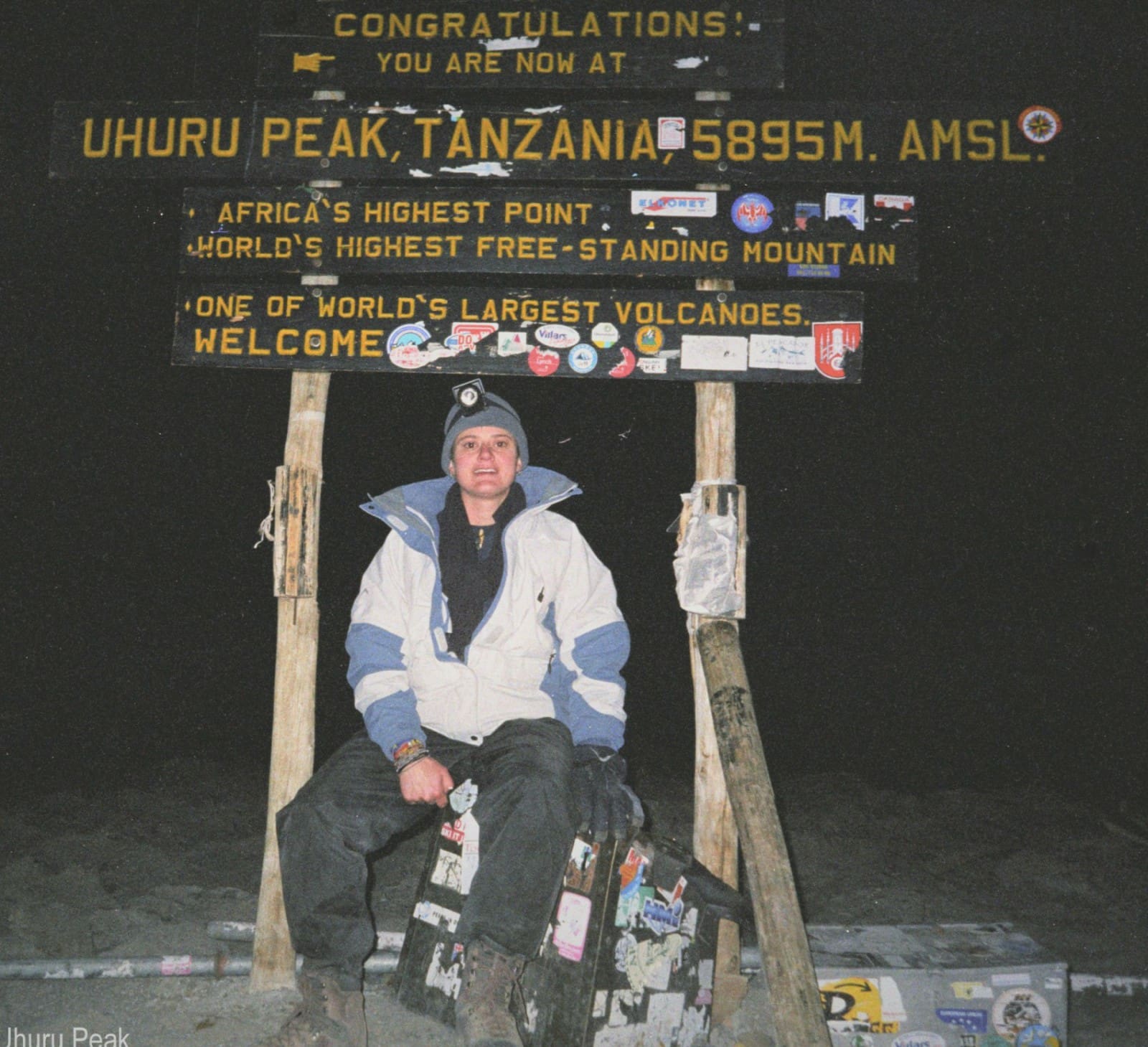
Flow lines visible in the photograph showed that ice was moving (top – image 1- left). In 2004, while doing my Masters, I decided to return to same spot and rephotograph the Ice Plateau to compare (middle – image 1- left). Sadly, much of the ice was melting away and when assessed in the context of climate amelioration recorded at the island provided evidence for the most drastic landscape response to climate change on the island. In 2021, I decided to try get back up to the Ice Plateau. Fortunately, I got a lucky break and managed to get back up on a relatively decent day to summit Mascarin Peak (image 4 -right) and rephotograph the area again (bottom – image 1- left).
Sadly, I noticed even further melt-out with all the ice caves now gone and much of the remaining buried ice also having disappeared (image 2 -left & image 3-right).
The remaining ice was protected from increasing air temperatures and insolation (solar radiation) under a layer of scoria so the ice probably lasted a lot longer than it should have and although a few pockets of buried ice were still visible the ‘Ice Plateau’ as it was once called is no more (images 5-left & 6-right).”
Be part of the solution give your comments on The Minister of Forestry, Fisheries and the Environment, Ms Barbara Creecy, on the revised National Biodiversity Framework (NBF) 2019 to 2024. Minister Creecy granted an extension until 07 June 2021 for public consultation. An electronic copy of the Government Notice and the draft revised framework can be downloaded from the Department of Forestry, Fisheries and the Environment website from the following link: Biodiversity Act, 2004 (Act No. 10 Of 2004): draft revised National Biodiversity Framework published for public comment in terms of the National Environmental Management [G 44229 – GoN 171]
Images, captions: David Hedding
Dr Brian Huntley publication available form the Antarctic Legacy fo South Africa antarcticlegacy@sun.ac.za
by Ria Olivier | May 8, 2021 | Uncategorised
“Sing, Fly, Soar – Like a bird!” That is the 2021 theme for World Migratory Bird Day, observed on the 8th May and on the 10th October (International Migratory Bird Day). This theme highlights the phenomena of the “bird song” and “bird flight” which inspires people to celebrate and appreciate migratory birds, their habits and unique behavioural patterns.
In a joint collaboration between the Secretariat of the Agreement on the Conservation of African-Eurasian Migratory Waterbirds (UNEP-AEWA) and Secretariat of the Convention on the Conservation of Migratory Species of Wild Animals, a day to observe and highlight the need for conservation of migratory birds was initiated. World Migratory Bird Day (WMBD), was officially established in 2006 and served as a yearly awareness-rising campaign to highlight the importance of migratory birds and the need for global conservation of the “Flyway” regions.
These “Flyway” regions are denoted as theAmericas, African-Eurasian and East Asian-Australasian and highlight the migratory patterns of birds. The 2021 theme for WMBD is to inspire people around the globe to share in the desire to celebrate migratory birds and unite in the common effort to protect the diverse habitats which these birds need to survive.
The South African National Antarctic Program (SANAP) plays a large role in the conservation and preservation of Marine Birds and their habitats. Ornithology researchers (Birders) deployed to Marion Island and Gough Island (South African research bases) are tasked with updating ongoing databases and continue conservation efforts in protecting the marine bird population on the islands. Similarly, Birders (ornithologists) are deployed on the SA Agulhas II for the duration of a voyage in order to observe and count marine birds at sea. This data is used by BirdLife South Africa to continue efforts in conservation. To read more about the ongoing conservation projects around the Sub-Antarctic Islands, refer to the following links: Gough Island project – https://www.goughisland.com/ Marion Island project- www.mousefreemarion.org
(L-R) Wandering Albatross perched on a nest, Atlantic Yellow Nosed Albatross.
On this World Migratory Bird Day, take the time to actively listen to and watch the birds wherever you are. Activities such as bird watching and identification is encouraged in order to nurture a shared appreciation of birds and nature. The take home message for WMBD 2021 is that “migratory birds connect us with their unique songs and flights, and remind us of the importance of working together, across borders, to protect them.”
For further reading on current and past Marine Bird research projects conducted by scientists such Dr Maelle Connon please refer to https://www.sanap.ac.za/explore/research. If you wish to view more images of birds please take the time to browse the archive.
Fun Fact
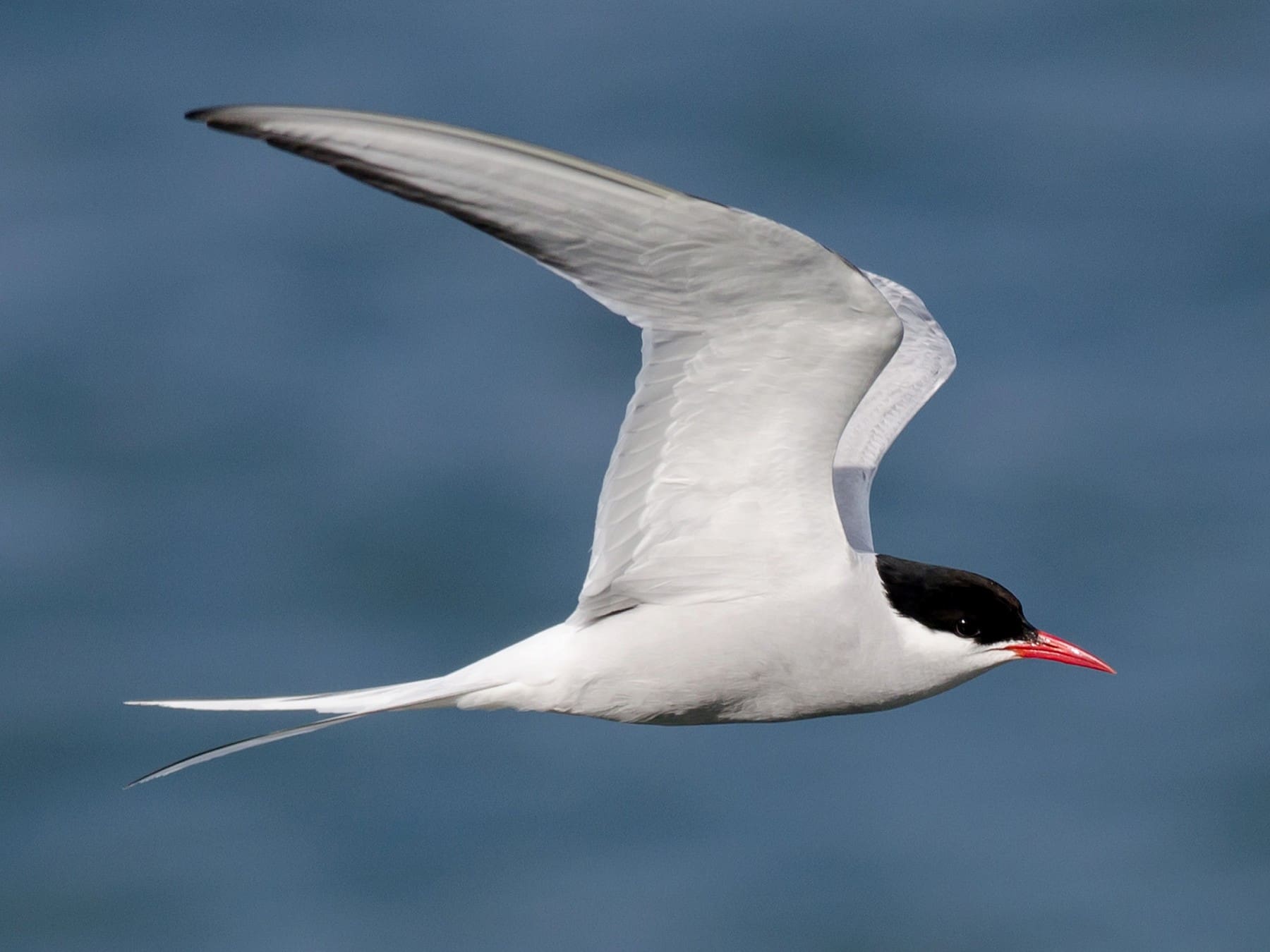
Arctic Tern (https://ebird.org/species/arcter/)
The Arctic Tern has the longest migratory pattern following a convoluted route from its Northern breeding grounds (Arctic) to the Antarctic coast for summer season and returning north six months later.
Cover image: Tahlia Henry
by Ria Olivier | Jan 5, 2021 | Antarctica, SA Agulhas II, SANAE, SANAP, Uncategorised
After stormy weather at the dawn of 2021, the SA Agulhas II arrived at Penguin Bukta at 11h30 UTC on 4 January!
This year the vessel entered notable ice cover at 67° 50′ S. It was mostly easy going with some ramming during the early hours of 4 January. The later departure of the SA Agulhas II has resulted in ice navigation later in the summer. The ice is more depleted by now and navigation has been more straight forward.
The SA Agulhas II skirted a storm in her approach to Antarctica. She was peppered with winds of 50 to 60 knots underway. (Left) If you are lucky enough to escape motion sickness the sea spray from bow slamming compliments the spectacular sunset. (Right)
The ship enters notable sea ice on the morning of 3 January. Here the ice floes are about 10 m in diameter and concentrated at about 80% with some snow cover and only a few centimeters of ice thickness. (In our science we also visually observe the ice and our ‘data’ may vary due to subjective opinion – Do you agree?).
The ice cover becomes increasingly dense but the ship is not required to show her steel yet – owing to the voyage being postponed later in summer. How will her later departure in March influence the ice conditions and will she need to show her steel then?
On 4 January the SA Agulhas II arrived at the ice shelf in Penguin Bukta to bask in the calm after the storm
Thank you to Nicholas Bunn and Karl Pferdekamper (Stellenbosch University, Department of Mechanical and Mechatronic Engineering who are on board and have sent this information). Poor internet hampers their access to Facebook, but they could get this information to Prof Bekker via WhatsApp. Photo credits: @Karl Pferdekamper.
Text by Prof Annie Bekker of the Sound & Vibration Research Group of the Department of Mechanical and Mechatronic Engineering at Stellenbosch University.
by Ria Olivier | Jan 4, 2021 | Legacy, Marion Island, Overwintering Team, Uncategorised
The Marion 77 Overwintering team celebrated Christmas and New Years eve with a few activities.
The one action that will stay with our SANAP community is their lighting of their candles on New Years eve as requested by South Africa’s President Cyril Ramaphosa in memory of those who lost their lives through COVID-19. They had a moment of Silence and sang our national Anthem “Nkosi Sikelel’ iAfrika”
They had a great Christmas Lunch where Mpho Mashau made special biscuits for everyone.
After lunch Santa(Tom Hartwell) handing out gifts to the team and then they played a lot of different games.
Thank You Marion 77 for sharing your celebrations with everyone
by Ria Olivier | Dec 1, 2020 | Antarctica, Current Event, International Days, Uncategorised
International Antarctic Day is celebrated on the 1st December. On this day in 1959 the Antarctic Treaty was signed and South Africa was one of the original 12 treaty countries. Since 1959 South Africa has been part of this treaty and we have a presence on the continent with our overwintering teams at our station. 10% of our planet is set aside to “forever to be used exclusively for peaceful purposes in the interest of mankind”.
In celebration we share this incredible footage taken by Eduan Teich of Ultimate Heli during the 2019/2020 takeover at SANAE IV. This silent footage will enhance the feeling of setting foot on this remote continent.
by Ria Olivier | Sep 25, 2020 | Fellowship, Legacy, Marion Island, SANAP, Science, sub-Antarctic, Uncategorised, Women in Science
Mariëtte Wheeler – regular freelancer for Antarctic Legacy of South Africa was born and bred a proud Pretorian girl. But my passion for the ocean developed throughout my childhood as my grandparents lived in Knysna. In my late teens I found myself staring at the ocean, wondering what it looks like beyond the horizon.
After completing my BSc, BSc honours and MSc in Zoology at the University of Port Elizabeth (currently Nelson Mandela University), I had the opportunity to explore beyond the horizon on Marion Island in 2004–2005 as a member of M61. My PhD was done through the University of Cape Town (with Prof Les Underhill and Dr Marienne de Villiers as supervisors) and University of Pretoria (with Prof Marthán Bester as supervisor). I investigated the effect of human disturbance on the seabirds and seals at Marion Island. My team mates of M61 called me the hybrid birder-sealer as I was fortunate to work on both. I have fond memories of working closely along with the other field workers. For my behavioural observations of the animals I spent days in the cold with semi-frozen fingers and toes, but it was fantastic to be so close to these animals in their natural environment. Chocolate and condensed milk saw me through for energy. I made great friends on this trip who have been standing by me through celebrations but also the difficult times in life.
For the second year of my study I had a field assistant Prideel Majiedt on Marion Island and I supervised from here. One of my best round island trips was during the take-over of 2005 with Prideel(right), Marienne and John Cooper. John and I summited a few of the Marion hills. In 2006 I went for take-over to conduct more research on the Wandering Albatrosses.
After completing my PhD in 2009, I worked for the Southern African Butterfly Conservation Assessment (SABCA) and M2 Environmental Connections (as an environmental consultant). Thereafter I first worked as the manager of the Conservation Leadership Programme of the Endangered Wildlife Trust (EWT) and then as Biodiversity Information Specialist. A highlight in my research career was to give two presentations on my PhD work at the International Polar Year (IPY) 2010 conference in Oslo, Norway. There I also became involved with the Association of Polar Early Career Scientists (APECS). Later that year I was selected to be on the international Executive Committee (ExCom). After my term on the ExCom, I was still actively involved on the Council. In 2012, I was selected as one of the Mail & Guardian’s 200 Young South Africans.
On 27 February 2013, I received a phone call from Bruce Dyer asking if I would be interested to go to Marion Island as their one birder had withdrawn from the team. I had 24 hours to decide! Fortunately the timing was perfect as my contract with EWT was until the end of February. In April 2013 I sailed again to Marion Island as Department of Environment Affairs: Oceans and Coasts birder. What an amazing feeling to see Marion Island again! I therefore had the opportunity to travel on both the SA Agulhas and SA Agulhas II and to live in both the old base and the new base. My previous year on the island was during the construction time, so as a member of M70 I first experienced the isolation of only seeing the “Red Taxi II” a year later. I treasure memories of braai evenings in the braai room with its beautiful views, theme parties and unique hut radio communication.
After returning from the island, Prof Underhill suggested that I study education. In his words: “There is a difference between having been there to tell a child about an albatross, or just teaching from a textbook”. I completed the Postgraduate Certificate in Education (PGCE) at the University of Cape Town in 2015. During this time I also worked ad hoc. for Antarctic Legacy of South Africa (ALSA) through Facebook communication and spreading awareness at schools.
In 2016 I took up a post at Protea Heights Academy in Protea Heights (PHA), Brackenfell teaching Natural Sciences and Life Sciences. In 2018 I taught at a rural community school, Sterkspruit Christian Private School in what used to be Transkei. I lived in the picturesque Lady Grey at the foothills of the Drakensberg. In October 2018 I returned to PHA teaching Life Sciences.
PHA invited Antarctic Legacy of South Africa to take part in our Women In Science event August 2019, where Anche Louw presented on Marion Island to the school hall filled with primary and high school girls and female educators. At one point she asked learners who knew what an albatross looks like to put up their hands. Afterwards my learners proudly told me that they all had their hands up! In 2019 I was selected as 1st Runner up in the National Teacher’s Award for Excellent in Teaching Natural Sciences (GET) for Metro East and North Education Districts.
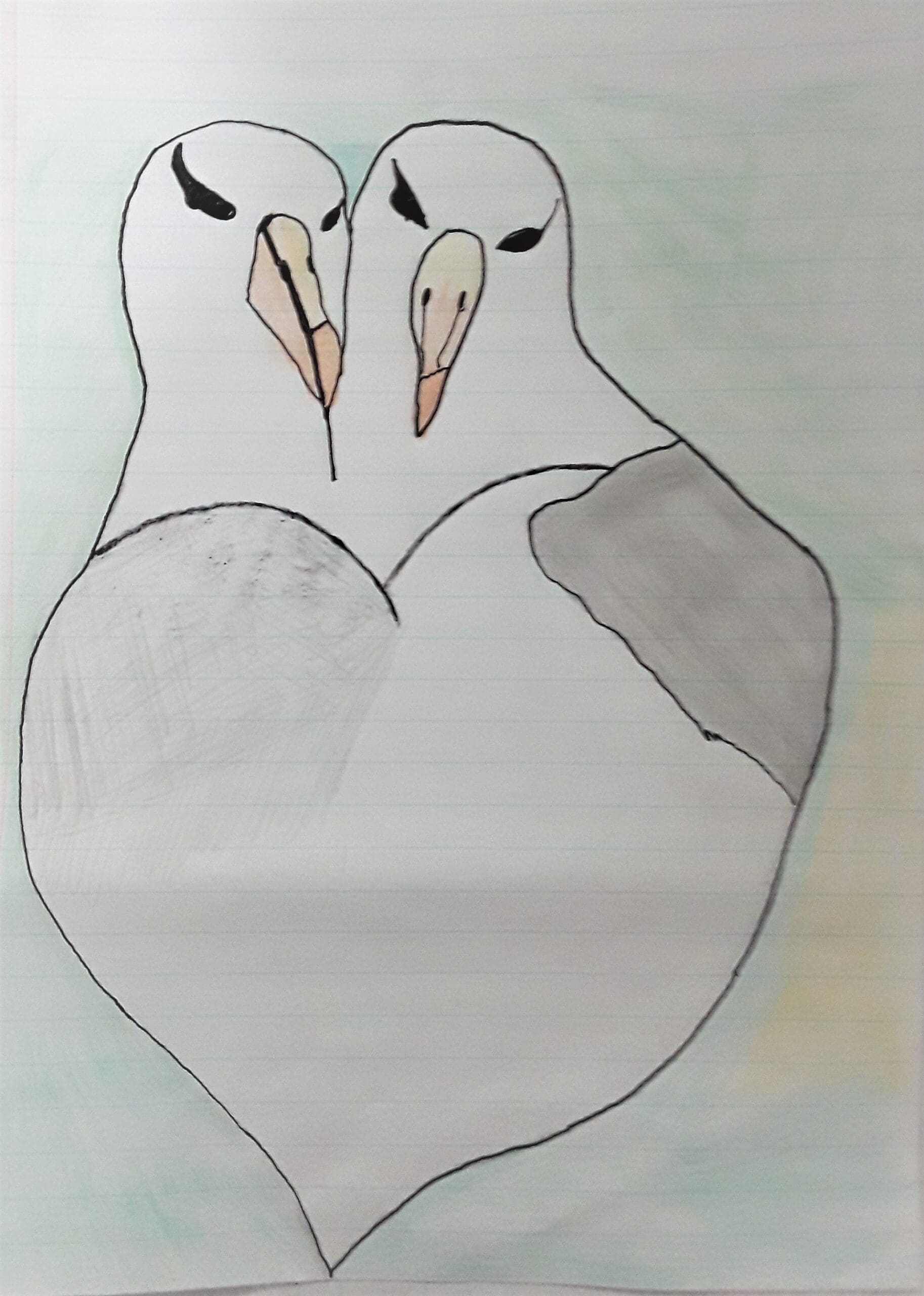
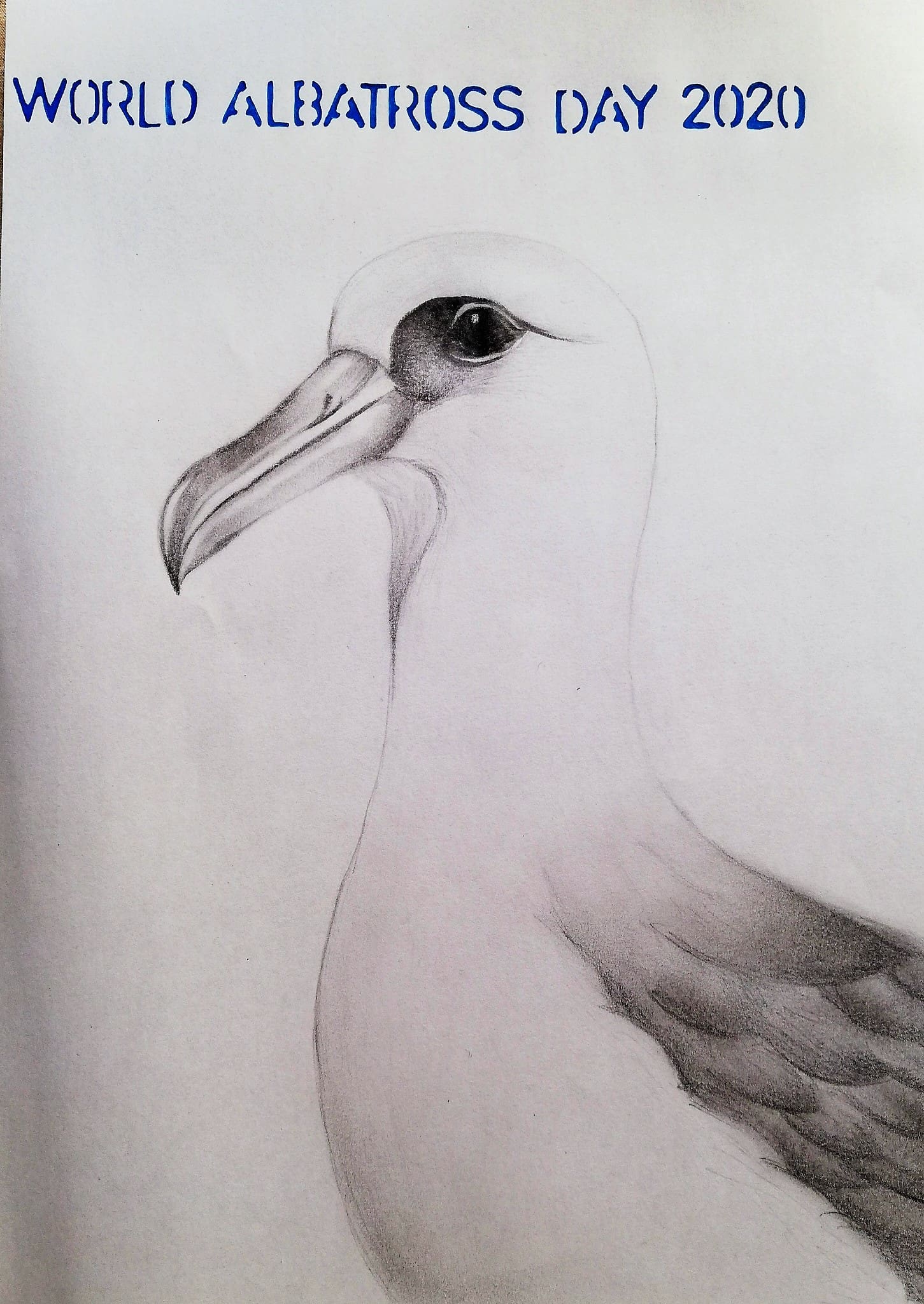
From 2020 PHA is one of the 6 nodal schools for the new Gr 10 to 12 subject Marine Sciences, in collaboration with Two Oceans Aquarium (the writers of the curriculum). I am now the departmental head of Marine Sciences, with Shaun Seaward as colleague. I am also teaching Life Sciences. Recently my learners were involved in the first World Albatross Day. Unfortunately due to COVID, plans that John Cooper and I had to get the entire school involved could not realise. With the international Great Albicake Bake Off as inspiration, I asked my learners (who were all still in lockdown) to make, bake, draw or paint anything creative provided that there was at least one albatross on. In this way they all learned more about albatrosses and enjoyed being creative. Antarctic Legacy of South Africa (ALSA) and the Agreement on the Conservation of Albatrosses and Petrels (ACAP) sponsored posters and books as prizes.
I am blessed that I am able to combine both my passion in marine biology as well as education. Life does not always take you where you thought it would, and sometimes you struggle over symbolic lava such as found at Blackrocks Plateau. But if you “Just keep swimming” as Dory from Finding Nemo said, you will see beauty around you such as the flight of the albatross, a sunset at Swartkop amphitheatre or the smile of a learner. Text and images supplied by Mariette Wheeler. Visit the ALSA archive for more images of Mariette on Marion Island.
Ria Olivier, Antarctic Legacy of South Africa, 25 September 2020.
 In 2014 on International Biodiversity Day the theme was “Island Biodiversity”. The Department of Forestry , Fisheries and the Environment(DFFE) state the following in 2014:“The legacy of a unique evolutionary history, many island species are endemic – found nowhere else on Earth. Islands harbour higher concentrations of endemic species than do continents, and the number and proportion of endemics rises with increasing isolation, island size and topographic variety.”
 Today on International biodiversity day we celebrate Marion Island in all its diversity. “With increasing development pressures and climate change islands are now more threatened than ever before. Unless there is immediate action to save the remaining unprotected hotspot areas, the species losses will increase severely especially among those species that are endemic to these islands. Protecting them is vital and necessary, to ensure their conservation for future generations.” – Media release DFFE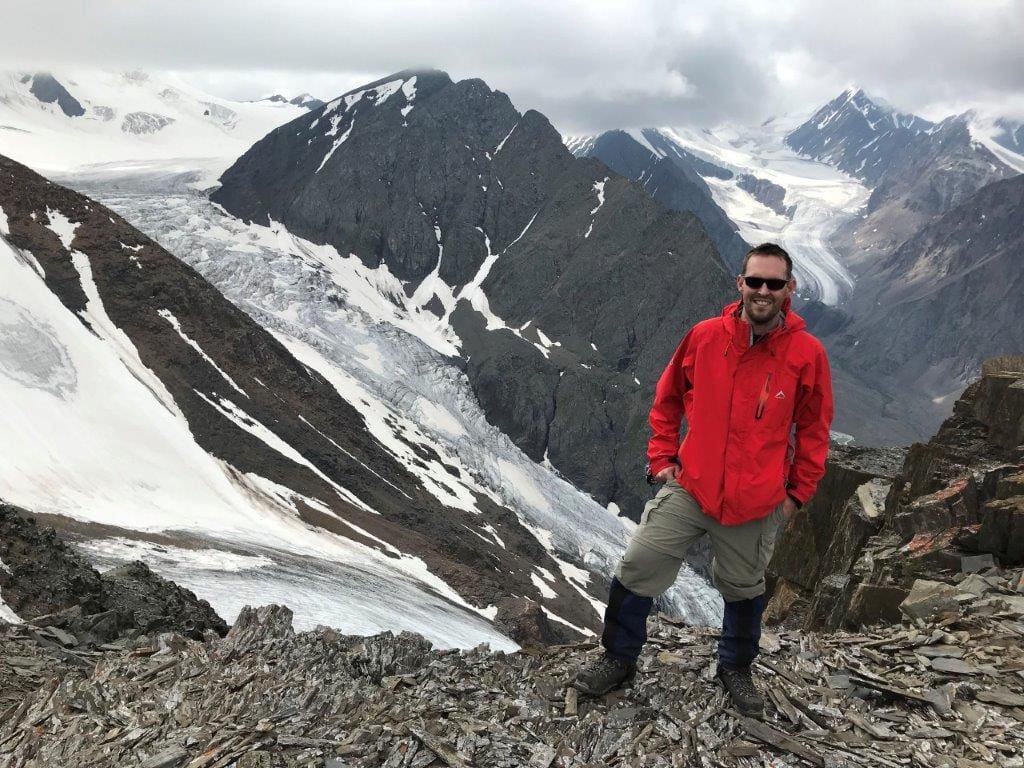
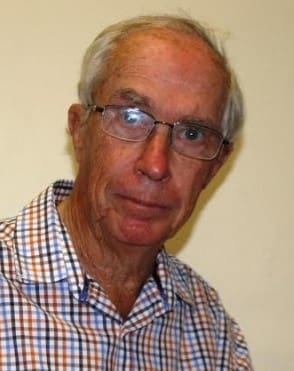 The theme for this year is “We are part of the solution for nature”- in an Instagram post David Hedding(left) highlight the landscape response to climate – Did you know South Africa had a glacier until very recently?
 Flow lines visible in the photograph showed that ice was moving (top – image 1- left). In 2004, while doing my Masters, I decided to return to same spot and rephotograph the Ice Plateau to compare (middle – image 1- left). Sadly, much of the ice was melting away and when assessed in the context of climate amelioration recorded at the island provided evidence for the most drastic landscape response to climate change on the island. In 2021, I decided to try get back up to the Ice Plateau. Fortunately, I got a lucky break and managed to get back up on a relatively decent day to summit Mascarin Peak (image 4 -right) and rephotograph the area again (bottom – image 1- left).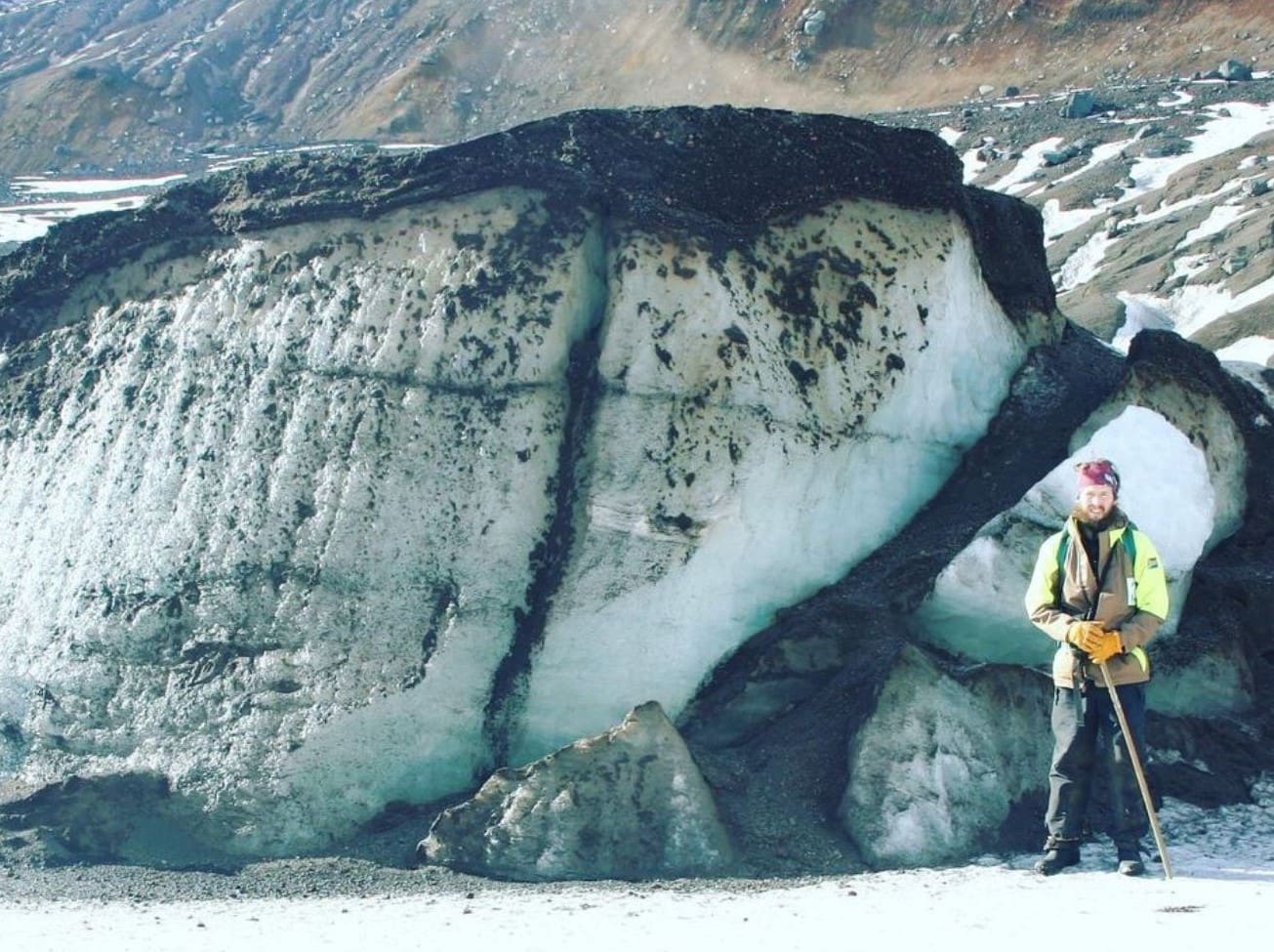
 Sadly, I noticed even further melt-out with all the ice caves now gone and much of the remaining buried ice also having disappeared (image 2 -left & image 3-right).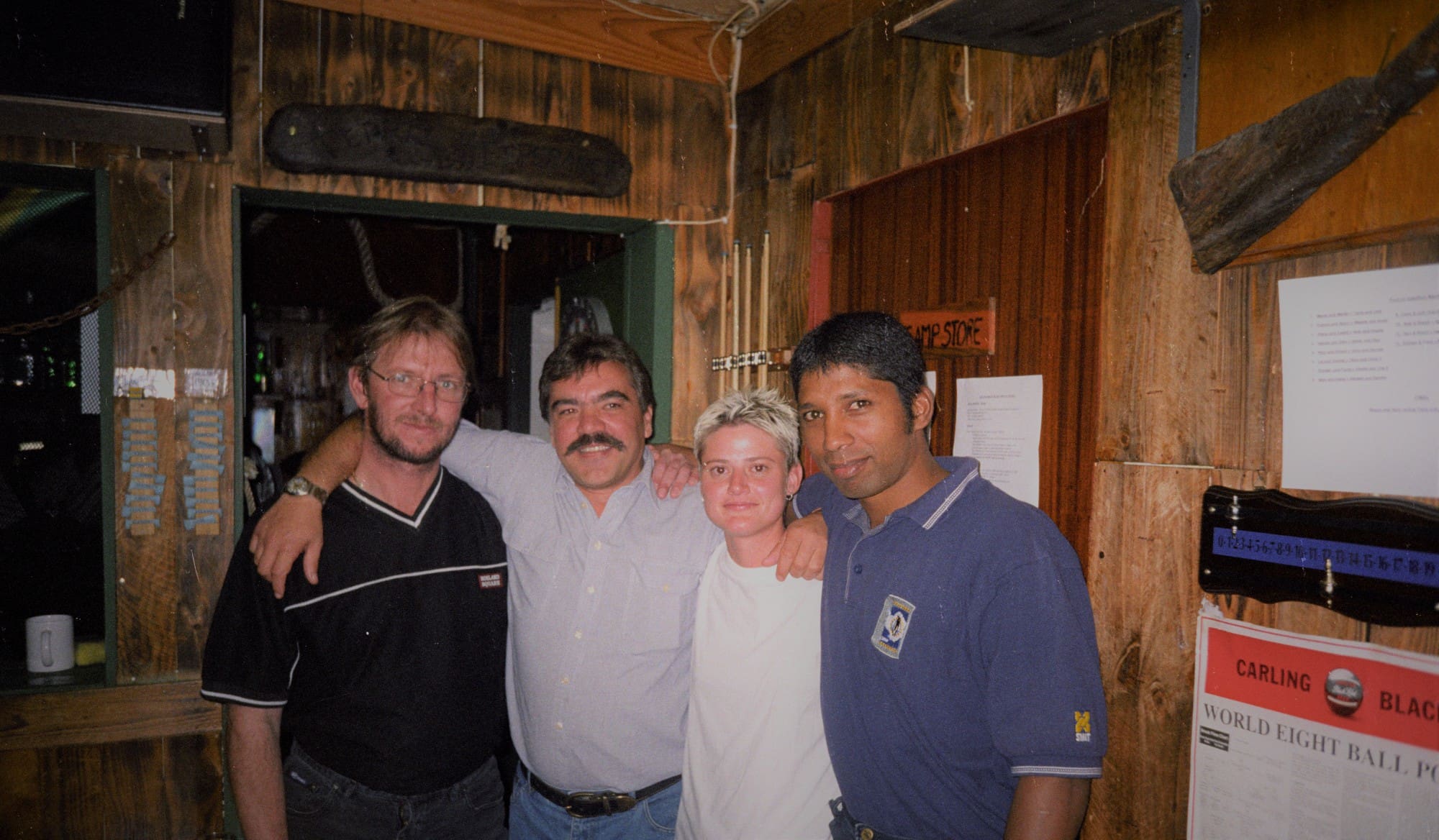
 The remaining ice was protected from increasing air temperatures and insolation (solar radiation) under a layer of scoria so the ice probably lasted a lot longer than it should have and although a few pockets of buried ice were still visible the ‘Ice Plateau’ as it was once called is no more (images 5-left & 6-right).”
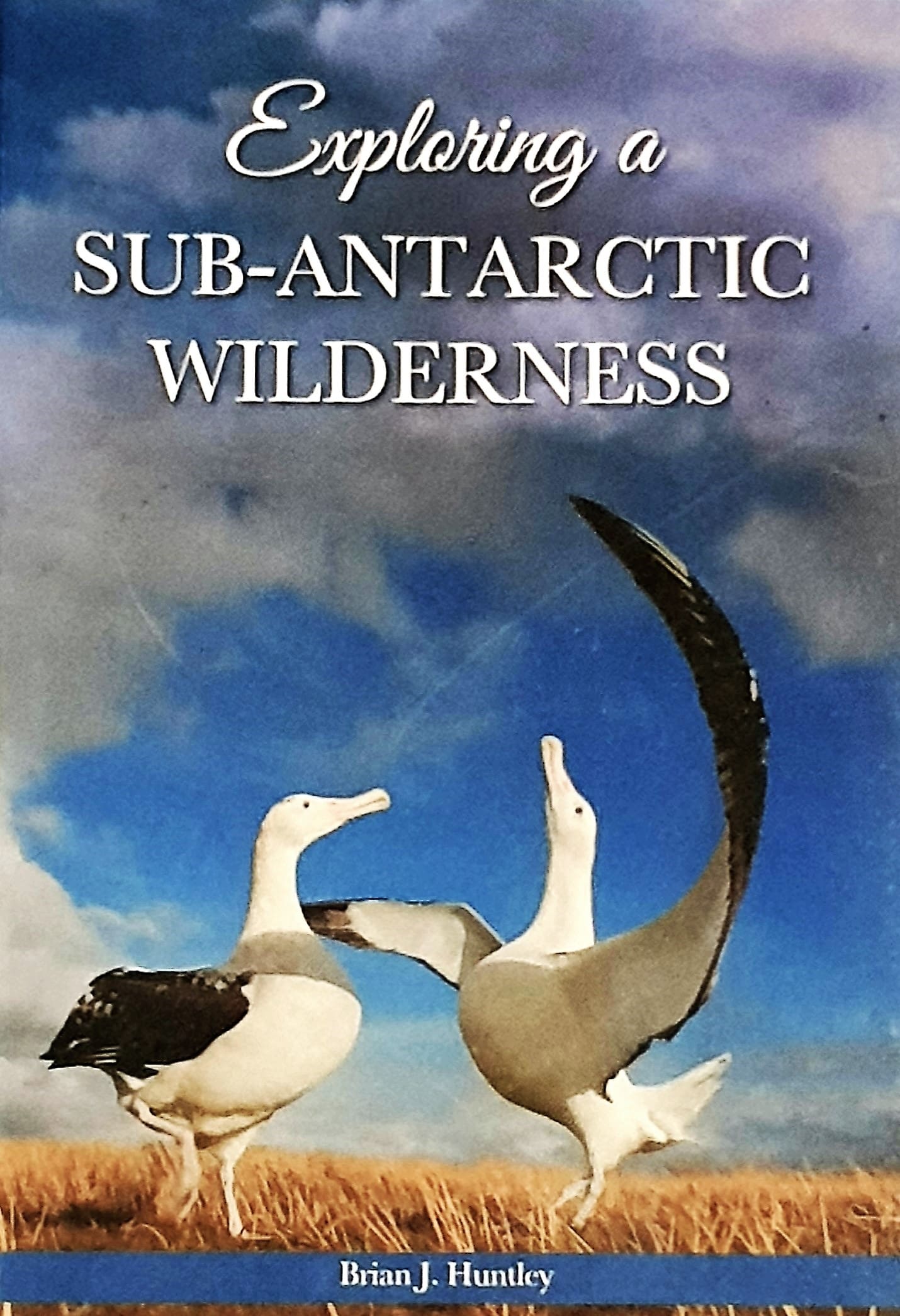 Dr Brian Huntley publication available form the Antarctic Legacy fo South Africa antarcticlegacy@sun.ac.za
 These “Flyway” regions are denoted as theAmericas, African-Eurasian and East Asian-Australasian and highlight the migratory patterns of birds. The 2021 theme for WMBD is to inspire people around the globe to share in the desire to celebrate migratory birds and unite in the common effort to protect the diverse habitats which these birds need to survive.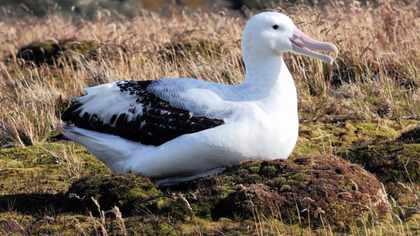

 This year the vessel entered notable ice cover at 67° 50′ S. It was mostly easy going with some ramming during the early hours of 4 January. The later departure of the SA Agulhas II has resulted in ice navigation later in the summer. The ice is more depleted by now and navigation has been more straight forward.
 The ship enters notable sea ice on the morning of 3 January. Here the ice floes are about 10 m in diameter and concentrated at about 80% with some snow cover and only a few centimeters of ice thickness. (In our science we also visually observe the ice and our ‘data’ may vary due to subjective opinion – Do you agree?).


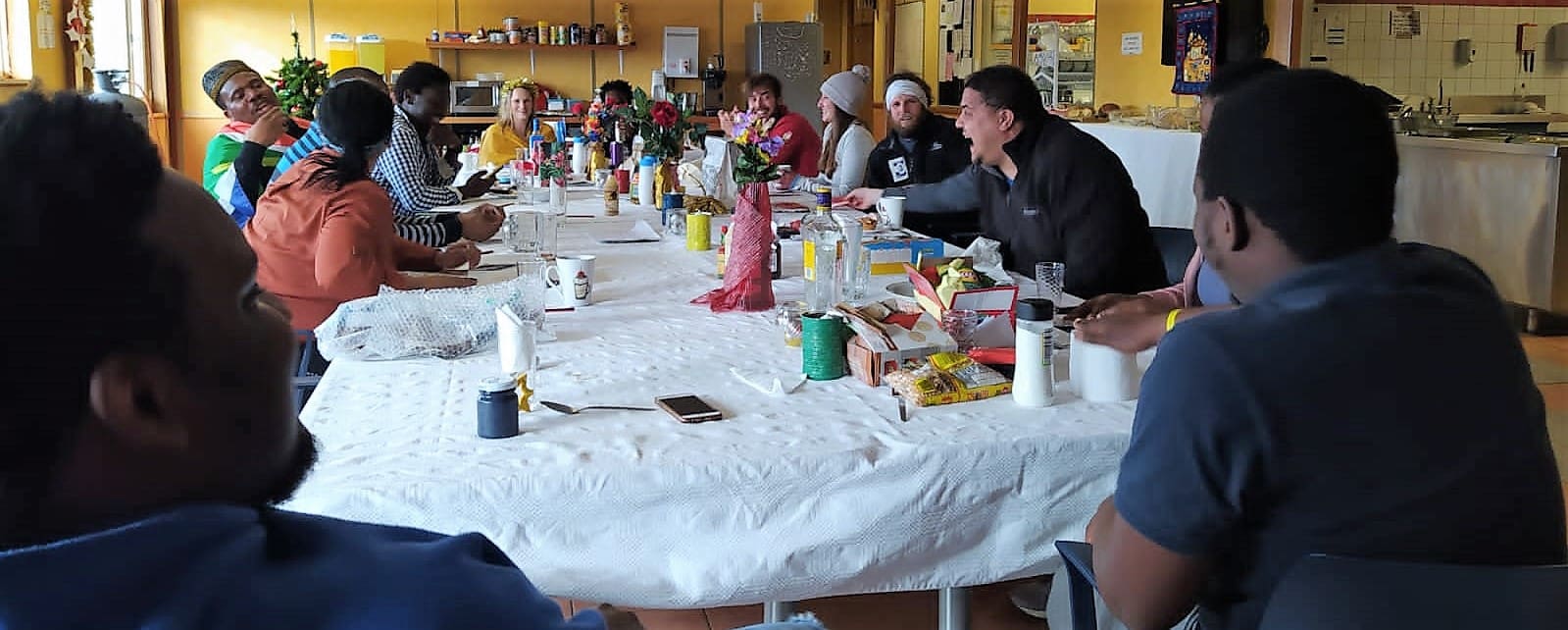 They had a great Christmas Lunch where Mpho Mashau made special biscuits for everyone.

 After lunch Santa(Tom Hartwell) handing out gifts to the team and then they played a lot of different games.


 Mariëtte Wheeler – regular freelancer for Antarctic Legacy of South Africa was born and bred a proud Pretorian girl. But my passion for the ocean developed throughout my childhood as my grandparents lived in Knysna. In my late teens I found myself staring at the ocean, wondering what it looks like beyond the horizon.
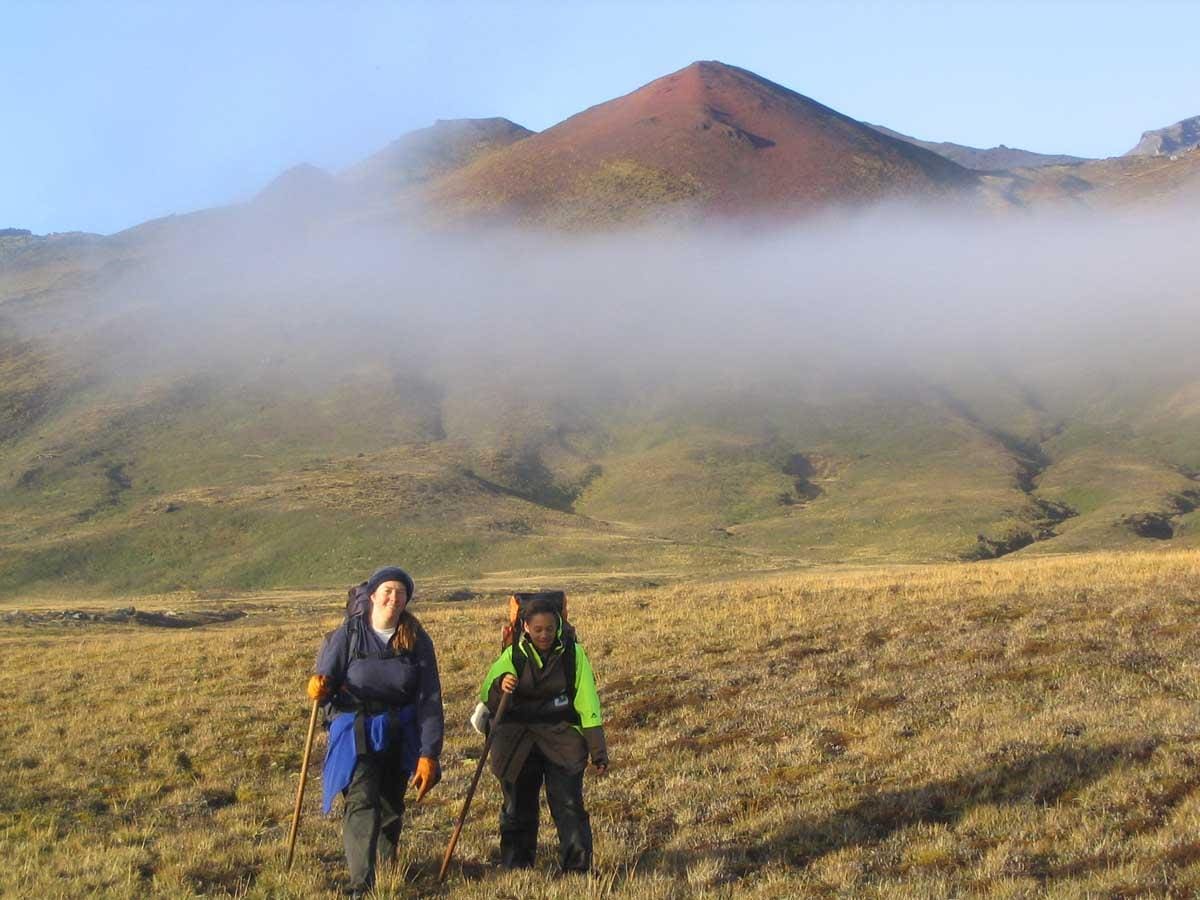 For the second year of my study I had a field assistant Prideel Majiedt on Marion Island and I supervised from here. One of my best round island trips was during the take-over of 2005 with Prideel(right), Marienne and John Cooper. John and I summited a few of the Marion hills. In 2006 I went for take-over to conduct more research on the Wandering Albatrosses.
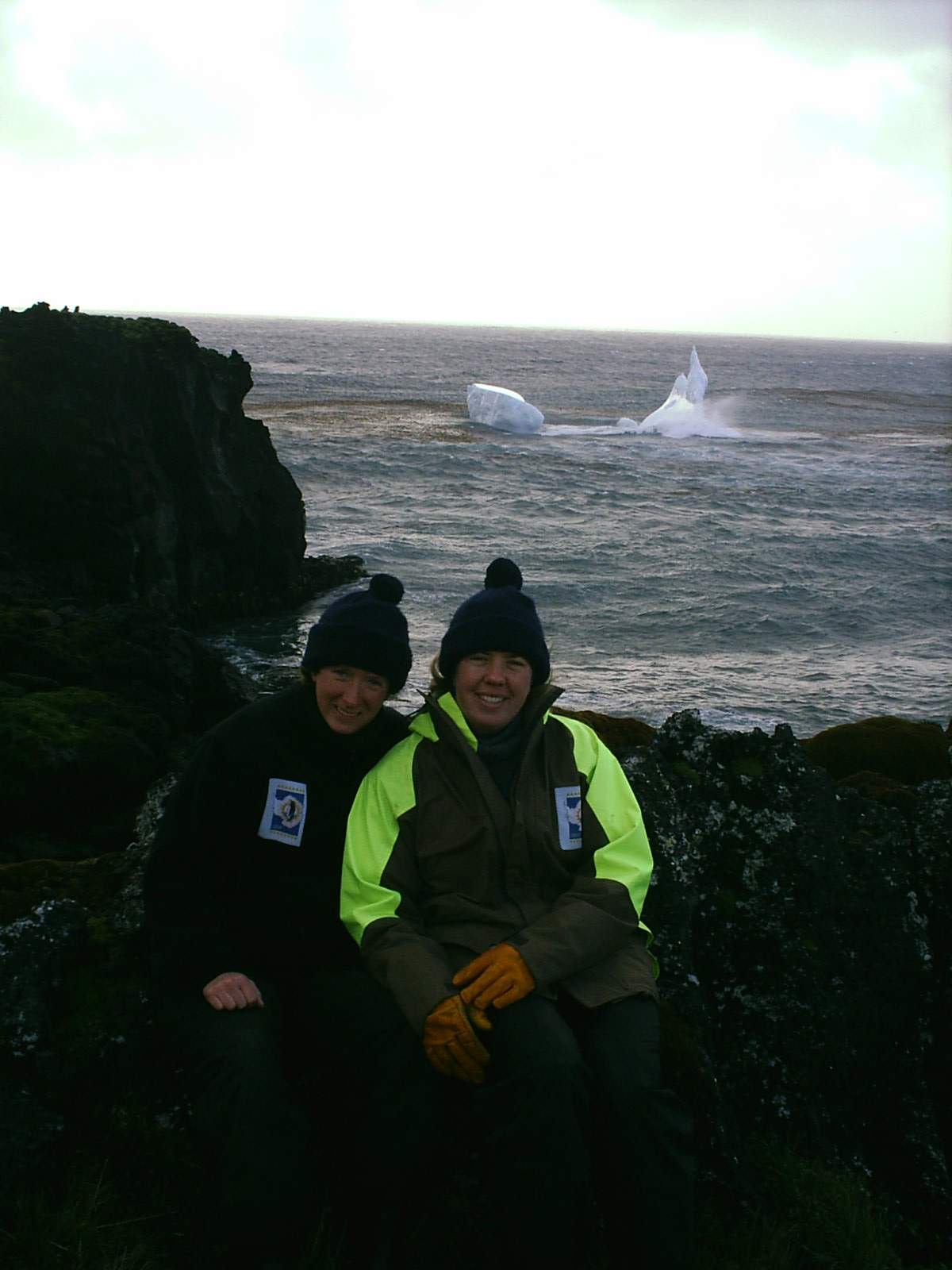 On 27 February 2013, I received a phone call from Bruce Dyer asking if I would be interested to go to Marion Island as their one birder had withdrawn from the team. I had 24 hours to decide! Fortunately the timing was perfect as my contract with EWT was until the end of February. In April 2013 I sailed again to Marion Island as Department of Environment Affairs: Oceans and Coasts birder. What an amazing feeling to see Marion Island again! I therefore had the opportunity to travel on both the SA Agulhas and SA Agulhas II and to live in both the old base and the new base. My previous year on the island was during the construction time, so as a member of M70 I first experienced the isolation of only seeing the “Red Taxi II” a year later. I treasure memories of braai evenings in the braai room with its beautiful views, theme parties and unique hut radio communication.
 In 2016 I took up a post at
  From 2020 PHA is one of the 6 nodal schools for the new Gr 10 to 12 subject Marine Sciences, in collaboration with Two Oceans Aquarium (the writers of the curriculum). I am now the departmental head of Marine Sciences, with Shaun Seaward as colleague. I am also teaching Life Sciences. Recently my learners were involved in the first World Albatross Day. Unfortunately due to COVID, plans that John Cooper and I had to get the entire school involved could not realise. With the international Great Albicake Bake Off as inspiration, I asked my learners (who were all still in lockdown) to make, bake, draw or paint anything creative provided that there was at least one albatross on. In this way they all learned more about albatrosses and enjoyed being creative.