by Ria Olivier | May 3, 2022 | Antarctica, News, SA Agulhas II, SANAP, This Day in History

On this day, 03 May 2012, the newly built South African vessel, the S.A. Agulhas II, arrived in the Port of Cape Town. The vessel was formally handed over to the Department of Environmental Affairs (currently Department of Forestry, Fisheries and the Environment), in Finland on 04 April 2012 and left for South Africa the following day. Read more here.
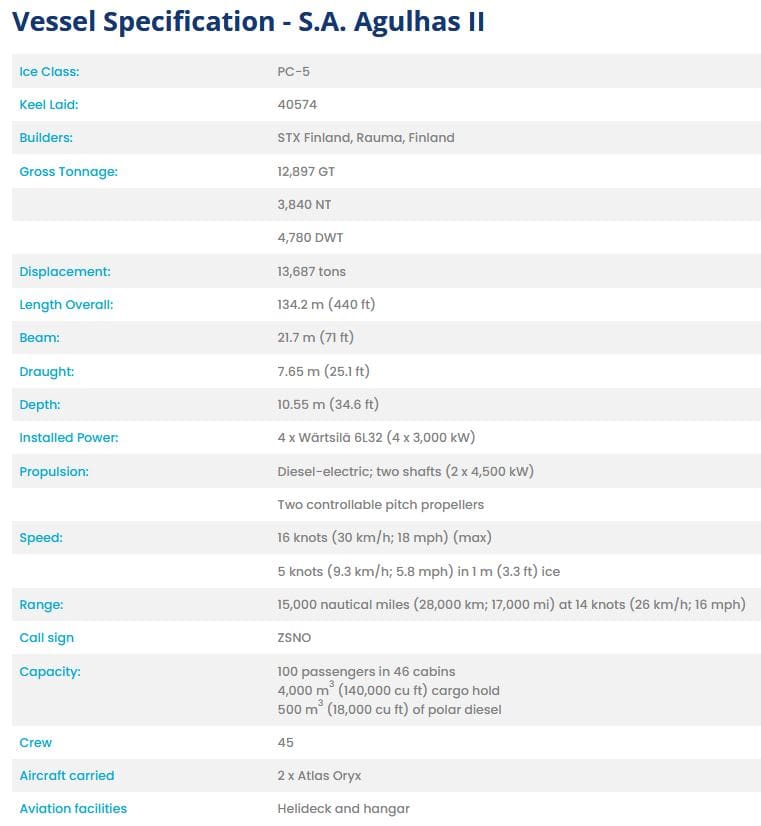
More about the vessel: This 134.2 m vessel was designed to carry out both scientific research and resupply South Africa’s research stations in the Antarctic and the Southern Ocean. See full vessel specification below.
Click on the link below to read more about the S.A. Agulhas II and its predecessors.
Vessels
Watch this short documentary to learn more about the South African National Antarctic Programme and the building process of the South African polar research and supply vessel, the S.A. Agulhas II.
Read more about the vessel, with links to the Antarctic Legacy of South Africa Archive – click here.
The Sound and Vibration Research Group, at The Department of Mechanical and Mechatronic Engineering at Stellenbosch University, work onboard the vessel when at sea to determine, amongst other things, the effects of ship vibration. This group was also on the recent ‘The Endurance22 Expedition‘ on the search for Sir Ernest Shackleton’s sunken ship, The Endurance. The S.A. Agulhas II played a crucial part in this successful expedition. Read more here.
by Ria Olivier | Apr 21, 2022 | Current Event, Marion Island, News, Overwintering Team, Prince Edward Islands, Research, SA Agulhas II, SANAP, Science, Southern Ocean, Stations, sub-Antarctic, Take-Over Operations
The S.A. Agulhas II departed from East Pier, V&A Waterfront on her annual Marion Island relief voyage, Sunday 17 April 2022. The expected time of arrival at the island is today, 21 April 2022.
The first leg of the voyage, Oceanographic Leg 1, from Cape Town to Marion Island, was dedicated to underway sampling (the vessel did not stop for sampling to take place).
Once at the island, take-over operations will commence immediately (weather permitting) – all land-based scientists, National Department of Public Works (NDPW) personnel, and take-over personnel (DFFE) will disembark. Cargo will be slung with helicopters to the island and fuel will be pumped to the island. Hereafter, the vessel will depart from Marion Island on the 2nd Oceanographic leg (annual Research and Monitoring programme around the Prince Edward Islands). The 3rd Oceanographic leg will commence after take-over, on the way back to Cape Town.
What is planned for the 2022 take-over on Marion Island (land-based)
- base and hut maintenance (NDPW)
- base and hut restock
- take-over function
- 79th Marion Island overwintering team (meet the team in next article) to take over from 78th Marion Island overwintering team (M78 – click here).
- take-over projects – scientific fieldwork (see table below)
University of Fort Hare, Department of Geography
Landscape and climate Interactions In a changing sub-Antarctic Environment🔗 |
| Group Leader | Prof Werner Nel |
DFFE: Oceans and Coasts
Southern Ocean and Island Research Programme
|
| Group Leader | Dr Azwianewi Makhado |
BirdLife South Africa & University of Pretoria
Department of Plant and Soil Sciences🔗
Longitudinal monitoring of terrestrial diversity to assess the effects of mouse eradiction on Marion Island, and bait and mouse trials to inform further planning for the project |
| Group Leader | Mr Luis Alberto Rodriguez-Pertierra |
BirdLife South Africa, DFFE
Mouse-Free Marion (Project to Eradicate House Mica from Marlon Island)🔗 |
| Group Leader | Dr Anton Wolfaardt |
South African National Space Agency (SANSA)
Polar Space Weather Studies🔗 |
| Group Leader | Mr Matthew Spoor |
South African Weather Service (SAWS)
Atmosphere and Ocean Surface Research🔗 |
| Group Leader | Mr Vuyo Xelithole |
University of KwaZulu-Natal, School of Mathematics, Statistics and Computer Science
Observing Dawn In the Cosmos🔗 |
| Group Leader | Mr Ronny Joseph |
University of Pretoria, Mammal Research Unit, Department of Zoology & Entomology
Marion Island Marine Mammal Programme (MIMMP)🔗
Marion Island Marine Mammals in Changing Environments: lndividual Heterogeneity and Population Processes |
| Group Leader | Prof Nico de Bruyn
|
Nelson Mandela University, Department of Zoology
Marine Apex Predator Research Unit (MAPRU)🔗
Avian scavengers as indicators of recovery of an island biota |
| Group Leader | Dr Maëlle Connan |
What is planned for the take-over onboard the S.A. Agulhas II (ship-based)
DFFE: Ocean & Coasts Research
DFFE Ship-based Southern Ocean and Islands Research Programme |
| Ocean Physics: Group Leader | Mr Gavin Tutt |
| Ocean Chemistry: Group Leader | Dr Thato Mtshali |
| Ocean Biological: Group Leader | Mr Henry Kakora |
DFFE:Ocean & Coasts, University of Cape Town, Bayworld Centre for Research & Education
SAMOC-SA |
| Group Leader | Mr. Grant van der Heever |
University of Pretoria
Enhanced insights regarding the ecology, evolution, and function of marine microbiomes |
| Group Leader | Mr Choaro Dithugoe |
Land-based DFFE and other take-over personnel
Department of Forestry Fisheries and the Environment (DFFE)
Directorate: Southern Oceans & Antarctic Support
Management, logistics and support for this voyage |
| Departmental Co-ordinator (DCO) | Mr Errol Julies |
| Assistant DCO | Mr Mfundo Tima |
| Admin Officer | Ms Pozisa Matshoba |
| General/Waste Technician | Mr Sabata Setona |
| General/Waste Technician | Mr Mazizi Salmani |
DFFE
Directorate: Oceans, Coasts & Biosecurity Compliance |
| Environmental Control Officer | Mr Thomas Mufanadzo |
DFFE
Directorate: Earth Systems Strategies
Prince Edward Islands Management Authority (Oversight Management Functions) |
| Group Leader | Ms Ntombovuyo Madlokazi |
| Chief Scientists |
| Land-based | Prof Werner Nel |
| Ship-based | Mr Marcel van den Berg |
National Department of Public Works (NDPW)
Maintenance Support |
| Group Leader | Mr Takalani Mudau |
Featured Image: S.A. Agulhas II at Marion Island, May 2014 (Credit: Anche Louw).
Anche Louw, Antarctic Legacy of South Africa, 21 April 2022
by Ria Olivier | Apr 7, 2022 | Antarctica, Meetings, News, Research, SA Agulhas II, SA Polar Research Infrastructure, SAPolarRI, Southern Ocean, sub-Antarctic
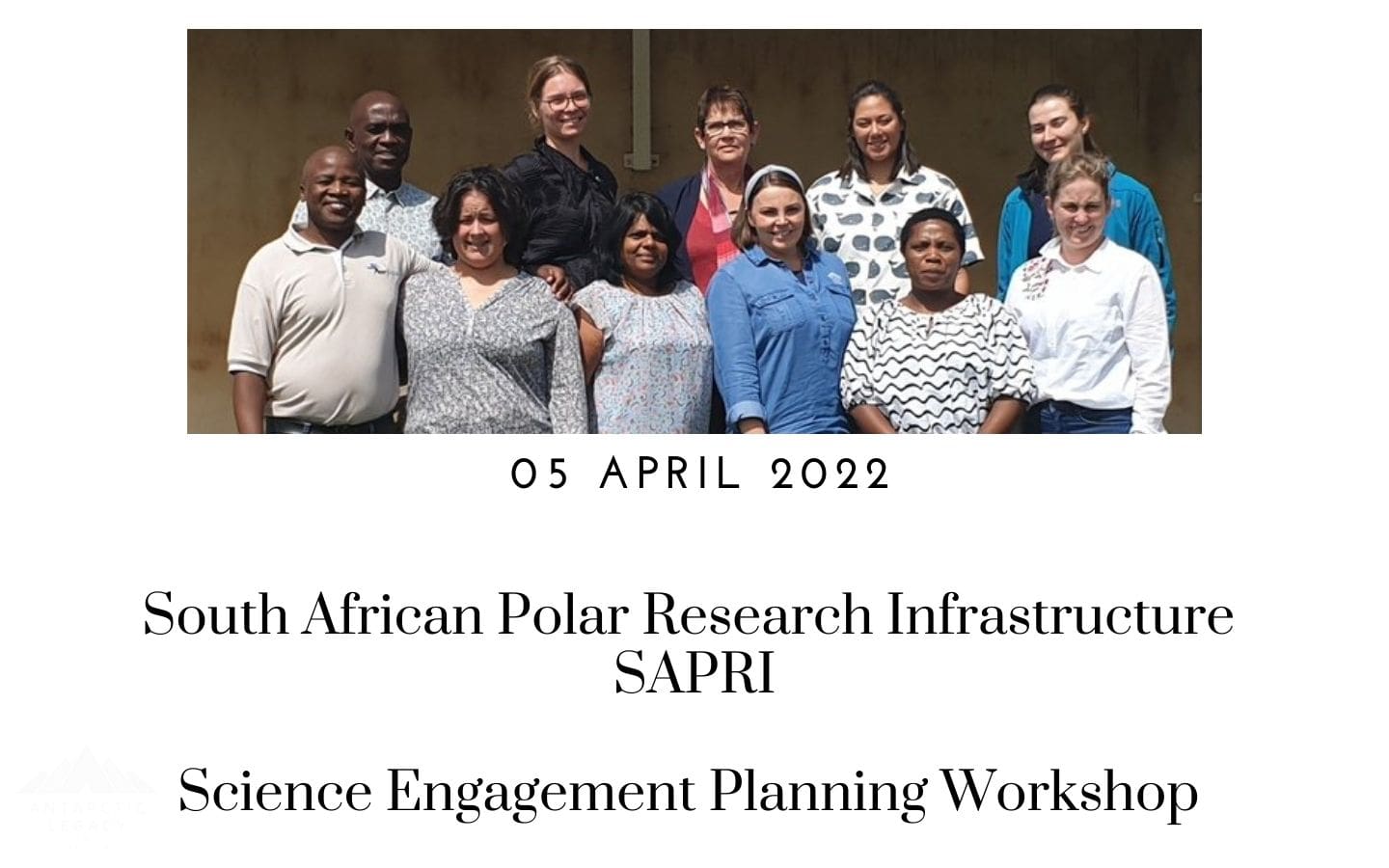
The first face-to-face SAPRI Science Engagement planning meeting was organised and hosted by the South African Environment Observation Network (SAEON) Science Engagement team.
The workshop was held on the 5th of April 2022, in Gauteng, South Africa.
The program started with an introduction and an overview of SAPRI by Dr Tamaryn Morris, the co-champion of SAPRI. Ria Olivier introduced the Antarctic Legacy of South Africa (ALSA) to the delegates and the role ALSA plays within the South African National Antarctic Programme (SANAP) and its future role within the SAPRI DPS (Data, Products and Societal benefits). The SAEON Science Coordinator, Kogie Govender, introduced environmental science education/outreach focus areas of SAEON and how SAEON’s efforts will be of advantage and incorporated into the SAPRI Science Engagement efforts.
A presentation on web development was delivered by Zack Smith (SAEON), to get some ideas going for the SAPRI website. Thomas Mtontsi (Environmental Science Education Officer, SAEON) gave an overview of the Draft SAPRI Science Engagement Policy. This policy is a work in progress and two valuable workshop activities, hosted by Kogie Govender, were indicative of new ideas and audiences that need to be incorporated into this policy.
The next meeting will be virtual and the SAPRI Science Engagement Policy will be a joint effort between ALSA, SAEON, and APECS-SA (Association for Polar Early Career Scientists – South Africa).
Featured image (L-R) Back: Joe Sibiya (SAEON), Dr Christel Hansen (APECS-SA), Ria Olivier (ALSA), Tahlia Henry (ALSA), Caitlin Ransom (SAEON); (Front) Thomas Mtontsi (SAEON), Dr Tamaryn Morris (Co-champion SAPRI), Kogie Govender (SAEON), Anche Louw (ALSA), Nozi Hambaze (SAEON) and Dr Liezel Rudolph (APECS-SA).
by Ria Olivier | Mar 23, 2022 | Antarctica, Gough Island, Important Dates, International Days, Marion Island, Meteorology, Research, SA Agulhas II, SANAE, SANAP
Meteorological and oceanographic (met-ocean) data supplied by the South African Weather Service played an integral part in the recent and successful Endurance 22 expedition.
by Marc de Vos, Senior Scientist, South African Weather Service (SAWS) Marine Research Unit.
Carla-Louise Ramjukadh preparing to deploy a radiosonde (weather balloon). Find out more about a radiosonde – check out this video (click here).
The Endurance 22 expedition has returned from the Weddell Sea aboard the S.A. Agulhas II, having successfully located and surveyed the wreck of Sir Ernest Shackleton’s legendary Endurance. For the safety of any maritime activity, information about the environmental conditions is important. Mariners constantly evaluate factors such as sea-state (the combined effect of wind and waves on the surface of the ocean), tides, and surface currents, all of which affect the navigability of the vessel. For highly specialised undertakings, this requirement becomes particularly acute. To assist, the South African Weather Service (SAWS) sent two scientists from its Marine Research Unit to provide meteorological and oceanographic (met-ocean) support to the expedition.
The first challenge associated with a voyage to the Weddell Sea is the transit from Cape Town, through the south Atlantic and the Southern Ocean. These ocean areas are characterised by a steady procession of midlatitude cyclones; storms that might be up to 2,000 km in diameter, bringing strong winds, high seas, and powerful underlying ocean currents. These are the phenomena behind the nicknames for the latitudinal bands through which the S.A. Agulhas II needed to transit; the “Roaring Forties”, “Furious Fifties” and “Screaming Sixties”. In particular, the Southern Ocean is widely regarded as the roughest on the planet. This is largely due to the lack of land boundaries to break the acceleration of the ocean’s surface by the wind. Careful planning is required to thread a route through the storms, themselves moving and morphing, and the high seas which lag behind them. This process (sometimes more of an art!) is a fine balance between speed, efficiency, and risk-limitation, and the SAWS team on board worked closely with the ship’s officers to determine the most suitable route to the search area. It is a challenging but exciting task. We use a mix of data from numerical models, free-drifting ocean instruments and satellites, and algorithms that assist to process these data. Ultimately, the experience of the ship’s officers and the exchange of information between scientists and navigators remain key in balancing the myriad of competing factors.
Upon arrival in the sea ice, different challenges arise. The sea ice might be up to 4 metres thick, with an average of around 1.5 m, and covers the search area entirely. A process of constant ice-breaking, repositioning, drifting with the ice, and deploying the autonomous underwater vehicles (AUVs) to scan the sea bed begins (read more about these vehicles here). Whilst surveying the ship drifts with the ice, but the search area on the sea bed does not, and therefore it is vital to anticipate wind and tidal shifts such that the drift can be predicted and deployment of the AUVs planned accordingly. SAWS scientists worked closely to support the highly skilled sea ice specialists from Drift + Noise Polar Services to provide supplementary information of this nature.
Prediction and analysis are not the only tasks for met-ocean scientists on board. Throughout the voyage, regular weather/ocean observations were performed and a range of meteorological instruments was deployed. These included Argo floats (see image above), surface velocity program (SVP) weather buoys, Sofar Ocean Wave Spotter buoys, and atmospheric radiosondes. These instruments drift freely in the ocean (or rise through the atmosphere, in the case of the radiosonde), collecting and transmitting data in an-otherwise data sparse region. Data are processed and fed to global numerical weather/ocean prediction models to improve their predictions via a process called data assimilation. Generally, the more data supplied to models, the better their performance. In many cases, measurements from these instruments are also available in real-time, providing an excellent means to onboard scientists by which to “ground-truth” ocean/weather predictions. Finally, data are archived in climate databases, for future use by climate change researchers.
Being able to play a small role in the success of Endurance 22 feels like a career-defining moment. A historic event of this scale, having taken place in so beautiful and dramatic an environment, is a uniquely rewarding experience. I am humbled to have been asked to participate and immensely grateful to the leadership of the expedition. I am also thankful to fellow expedition members and particularly my on-board colleague, Carla-Louise Ramjukadh, along with shore-based colleagues Tania Daniels, Michael Barnes and Tammy Morris for their tireless support behind the scenes. Even in the modern world, where almost everything can be navigated digitally, the fundamental effects of meteorology and oceanography continue to affect every human on the planet. Young people looking for where to apply their skills and ambitions should be encouraged by this, and the incredible opportunities which our science often provides.
Text by Marc de Vos, Senior Scientist, South African Weather Service (SAWS) Marine Research Unit. Edited by Anche Louw, Antarctic Legacy of South Africa, 23 March 2022
by Ria Olivier | Mar 9, 2022 | Announcement, Antarctica, Current Event, News, Research, SA Agulhas II
Sir Ernest Shackleton’s ship, The Endurance was crushed and sank to the ocean floor, in the Weddell Sea, Antarctica (1915). Read more here.
The Endurance was found at a depth of 3008 meters in the Weddell Sea, Antarctica. Image Credit: Falklands Maritime Heritage Trust/National Geographic
The South African (Department of Forestry, Fisheries and the Environment) owned research and supply vessel, the S.A. Agulhas II (managed and operated by African Marine Solutions), is currently in the Weddell Sea, chartered by the Falklands Maritime Heritage Trust to locate the sunken ship of Shackleton. The Endurance 22 Expedition made an official press release earlier today, announcing that The Endurance has been found and successfully surveyed and filmed for research purposes. Read the press release on Endurance 22 here.
Congratulations to all the different research teams on board and to the captain of the vessel, Captain Knowledge Bengu, and his crew that ensured the safety of all passengers.
WATCH the footage here!
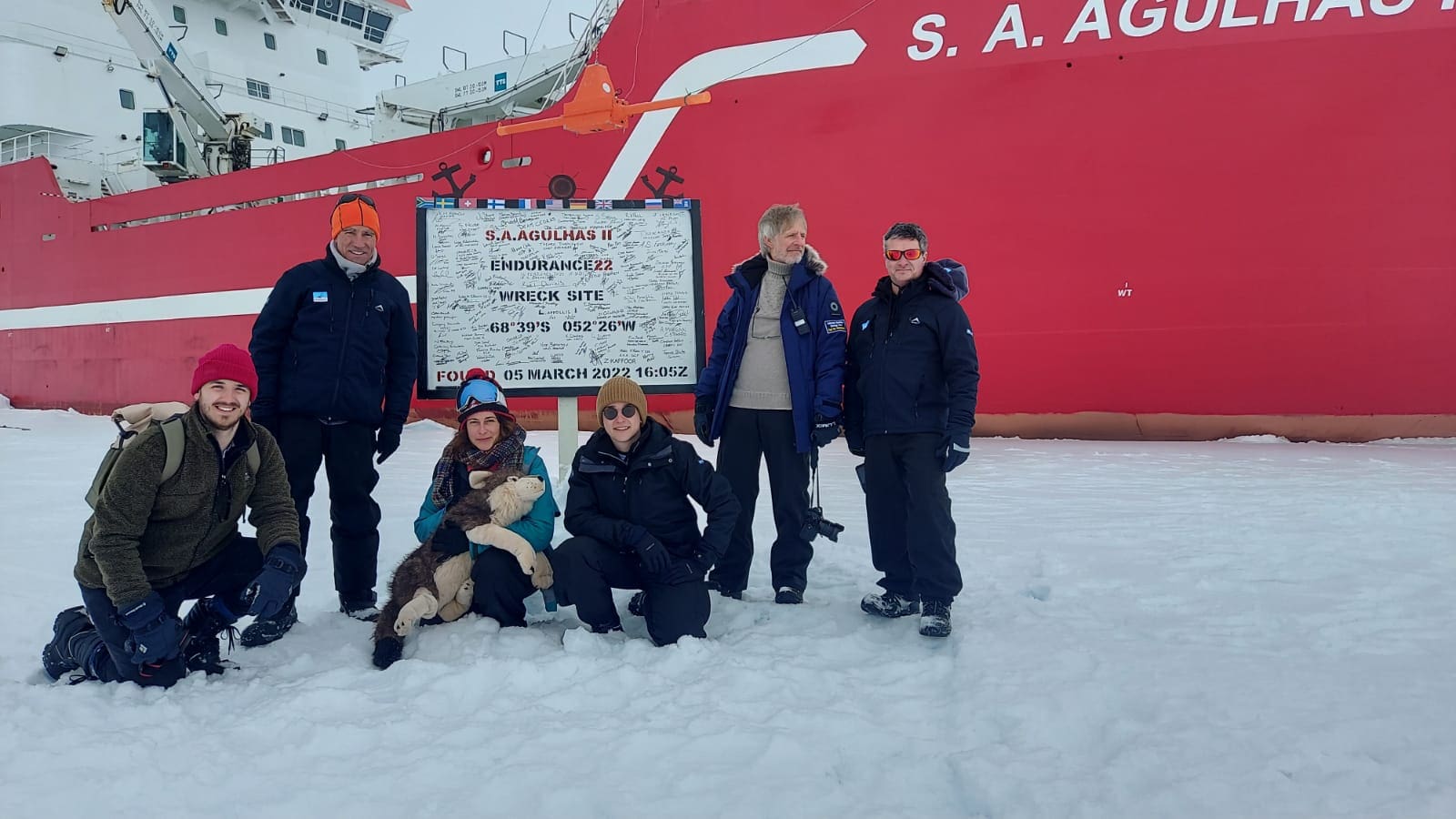
After the unsuccessful Weddell Sea Expedition in 2019, these are the proud individuals (including Captain Knowledge Bengu, Ice Pilot Captain Freddie Ligthelm and many S.A. Agulhas II crew members) that were able to join this second and very successful hunt for Shackleton’s Endurance.
L-R: James-John Matthee, John Shears, Annie Bekker, Pierre Le Gall, Mensun Bound, Chad Bonin. Image Credit: Chad Bonin.
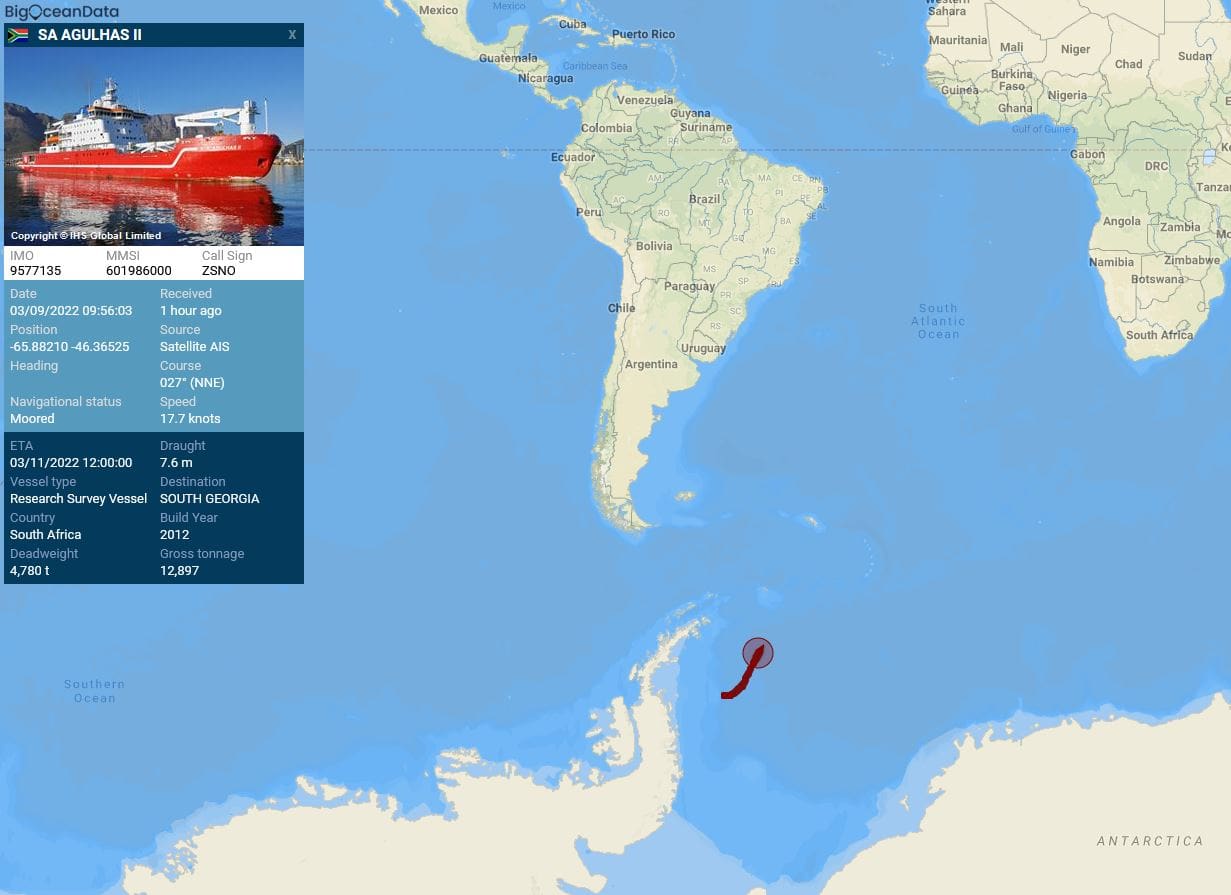
Before heading to Cape Town, with only 3 days left of the original charter time, the S.A. Agulhas II is now on her way to South Georgia, the burial place of Sir Ernest Henry Shackleton.
LIVE Interview from the S.A. Agulhas II – Captain Knowledge Bengu
Anche Louw, Antarctic Legacy of South Africa, 09 March 2022
by Ria Olivier | Mar 8, 2022 | Engineering, Genomics, International Days, News, Oceanography, Research, SA Agulhas II, Southern Ocean, STEM, sub-Antarctic, Women in Science
The theme for this year’s International Women’s Day is “Break the Bias”.
This year we are featuring three inspiring women within the South African National Antarctic Programme. They are leaders in their fields and represent South Africa on an international level.
Prof Annie Bekker – Stellenbosch University
Professor in Engineering, Director of the Sound & Vibration Research Group, and currently on the international Endurance 22 expedition (Antarctica).
“My job is about applying maths and science to technology… discovering and searching for new things. It is sometimes difficult, it takes long hours, breakthroughs can be incremental… and many times the belief, momentum, and enthusiasm for success have to come from within myself… Today, I love my job and the hard work to this point is absolutely worth it. I could not get here without encouragement, love, and mentorship in key moments. I cannot continue without the support of my family, the example of my colleagues, or the curiosity of my students – their excellence and hunger for their own new frontiers of discovery.
This is your life. Invest in your education. Believe in yourself, try, try again, never give up. Be hungry to learn. Sharpen your skills. Absorb all that is positive around you. Find mentors. Accept responsibility. Rebound from failure. Celebrate success. Be brave. Dream”.
Check out the Sound & Vibraton Research Group website: svrg.sun.ac.za.
Read more about Annie’s work and adventures here.
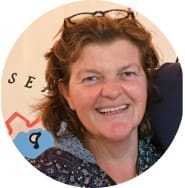
Prof Isabelle Ansorge – University of Cape Town
Head of the Oceanography Department at UCT and mastermind behind South Africa’s first class afloat – SEAmester.
Isabelle Ansorge is an observational oceanographer, Professor, and first female Head of the Oceanography Department at the University of Cape Town. Having built an observational oceanography career both nationally and internationally, Prof. Ansorge’s interests lie in Indian, Atlantic, and Southern Ocean dynamics that include Southern Ocean eddy transports of heat and salt, frontal dynamics, and variability in the Antarctic Circumpolar Current and its effects on Subantarctic Islands such as Marion Island. Another passion of Isabelle’s is the shipboard training of postgraduate students from all over South Africa and she is the mastermind behind the SEAmester Floating University programme. SEAmester provides an incredible teaching and research platform for South African early-career scientists and lecturers alike. Prof. Ansorge’s list of affiliations is a testament to her extensive experience in the field including being a committee member of the Scientific Committee on Antarctic Research (SCAR), as a member of the start-up committee for the Southern Ocean Observing System (SOOS), as an Executive Bureau Member of the International Union for Geodesy and Geophysics (IUGG) and formally the vice-president of the International Association for Physical Sciences of the Oceans (IAPSO).
Check out the SEAmester website: seamester.co.za.
Read more about Isabelle here.
Prof Bettine van Vuuren – University of Johannesburg
Professor of Zoology, Director of the Centre for Ecological Genomics and Wildlife Conservation, and Chair of the South African Committee for the Scientific Committee on Antarctic Research (SANC for SCAR).
“The first thing to say is that I believe there is nothing that any person can’t do if they apply their mind (and time) to it. We often set our own ceilings based on general beliefs that society or others impose on us, and it is crucial that we break through these (non-real) boundaries. STEM fields are a case in hand. This is especially true for women, who traditionally were seen as homemakers or child-carers. In STEM specifically, fields such as mathematics, physics, and engineering, and traditionally more field-based disciplines such as zoology, botany, or oceanography, are seen as more suited to men (either because women were not traditionally considered as analytically strong, capable to work in the field, or for that matter, be away from home for any period of time). It is critical that any person (both men and women) should carefully consider what they enjoy, what their specific strengths are (be that a STEM career for a woman, or as a childcarer/homemaker for a man), and then pursue that with all their strength and passion. Personally, I was initially directed into a field that I had no interest in (because I could not answer questions asked re where I would work if my husband lived in a small town), and from a personal perspective I strongly urge and support women that want to step out of the usual/ typical / what is expected from you by society and follow what they are passionate about”.
Follow Bettine on Twitter (Click here).
You can also visit her website: molzoolab.co.za.
Meet the SANC for SCAR committee here.
Read more about Bettine here.
Image of Prof Bekker supplied by: James-John Matthee.
Anche Louw, Antarctic Legacy of South Africa, 08 March 2022








 Prof Annie Bekker – Stellenbosch University
 Prof Isabelle Ansorge – University of Cape Town