by Ria Olivier | Nov 2, 2022 | Announcement, Antarctica, Gough Island, Jobs, Marion Island, Prince Edward Island, Prince Edward Islands, SA Agulhas II, SA Polar Research Infrastructure, SANAE, SANAP, SAPolarRI, SAPRI, Science, Southern Ocean, sub-Antarctic
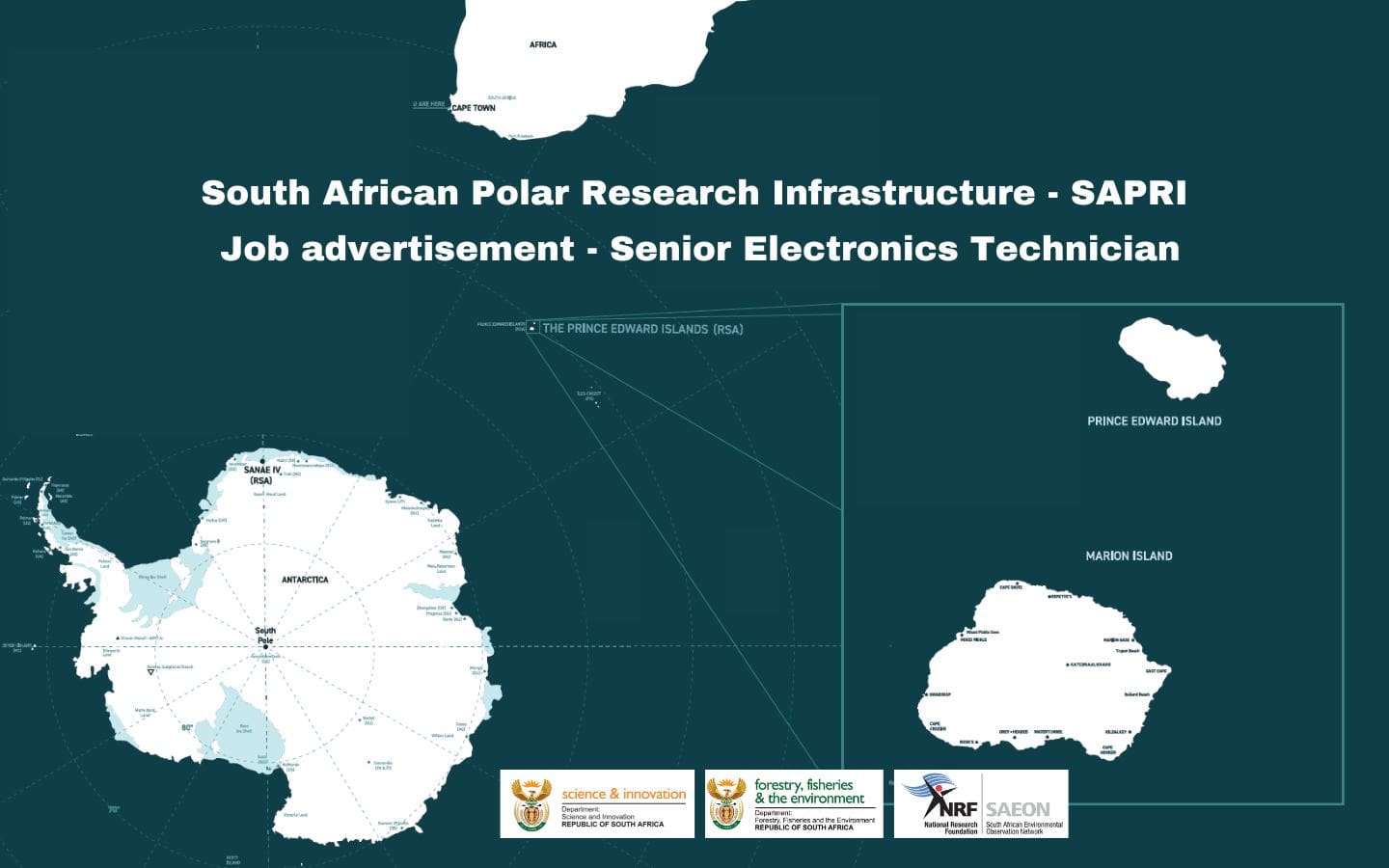
As per job advertisement:
The South African Environmental Observation Network (SAEON) is a research platform funded by the Department of Science and Innovation (DSI) and managed by the National Research Foundation (NRF).
SAEON is mandated to establish and manage long-term environmental observatories; maintain reliable long-term environmental data sets; promote access to data for research and/or informed decision making; and contribute to capacity building.
This position is supported by the Department of Science and Innovation’s South African Polar Research Infrastructure (SAPRI) programme and will be based in Cape Town.
A Senior Electronics Technician to provide technical and logistic support for the SAPRI programme’s various research and long-term monitoring activities in the offshore marine and Southern Ocean, sub-Antarctic Islands and Antarctica, conducted onboard South African and international research vessels.
Application Closing Date: 16 November 2022
Click here to view the position advert.
Read more about SAPRI:
South African Polar Research Infrastructure (SAPRI): Feedback and start of the Preparatory Phase
Anche Louw, Antarctic Legacy of South Africa
by Ria Olivier | Oct 31, 2022 | Announcement, Jobs, Marion Island, News, Overwintering Team, Research, SANAP, Science, Southern Ocean, Stations, sub-Antarctic, Team member
The following positions are available on the sub-Antarctic, Marion Island for the overwintering period (April 2023 to May 2024)
Applications close between 7 November and 14 November 2022.
Click here: View the positions
Anche Louw, Antarctic Legacy of South Africa, 31 October 2022.
by Ria Olivier | Oct 6, 2022 | Announcement, Geomorphology, Marion Island, News, Prince Edward Island, Prince Edward Islands, Research, SANAP, Science, sub-Antarctic
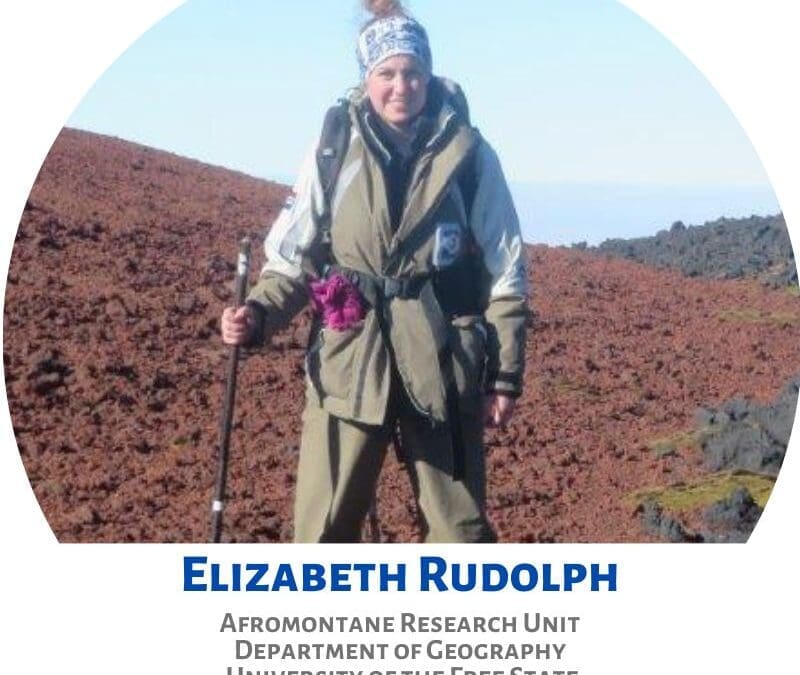
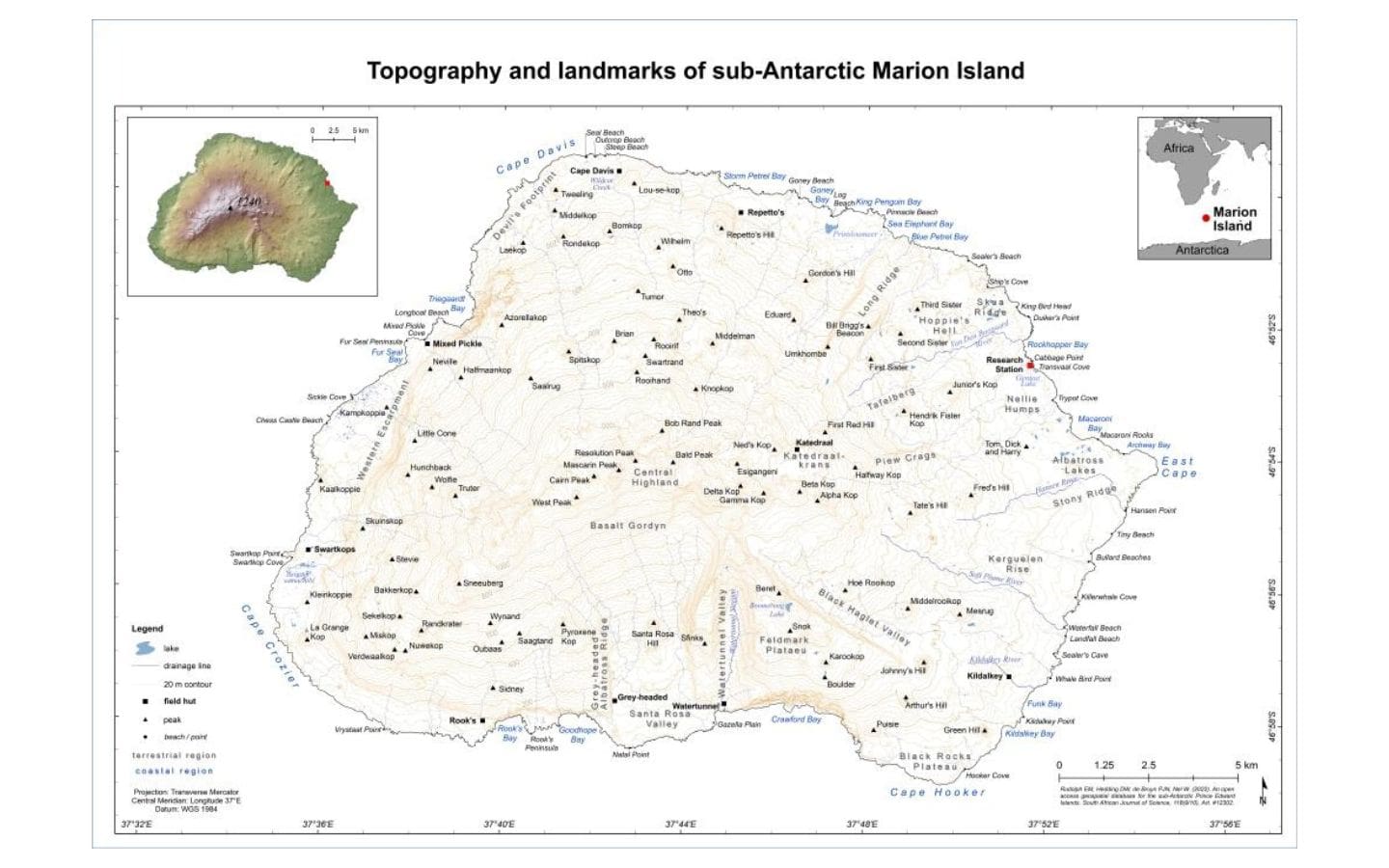
In a new publication, An open access geospatial database for the sub-Antarctic Prince Edward Islands, by Elizabeth Rudolph, David William Hedding, Nico de Bruyn, and Werner Nel, open access is given to a geospatial database for both Marion Island and Prince Edward Island.
Click here to view the full suite of data: Prince Edward Islands Geospatial Database
This paper was presented at the Scientific Committee on Antarctic Research Open Science Conference 2022, in a poster format. Click here to view the poster.
Authors:
Anche Louw, Antarctic Legacy of South Africa, 06 October 2022
by Ria Olivier | Aug 17, 2022 | Antarctica, News, Research, SA Agulhas II, SANAP, SANAP Student, Science, Southern Ocean, sub-Antarctic
“SCAR’s mission is to advance Antarctic research, including observations from Antarctica, and to promote scientific knowledge, understanding and education on any aspect of the Antarctic region. To this end, SCAR is charged with the initiation and international co-ordination of Antarctic and Southern Ocean research beneficial to global society. One of the most effective ways to do this is to bring researchers together to share their latest results, discuss new ideas, and provide opportunities to develop new projects” – www.scar.org
SCAR expanded its biennial business meetings to include an Open Science Conference (OSC). This year’s open science conference was held from 1 – 10 August 2022, hosted by India. It made it possible for participants and attendees to discuss current results and develop future projects. The conference included plenary, parallel and satellite events, as well as workshops. Business meetings of the science groups were held before the open science conference.
South Africans participated and attended various sessions during the conference (see details below):
- Keynote speaker Katye Altieri: “Stable isotopes as a tracer of reactive nitrogen emissions and aerosol formation in the Southern Ocean”.(link)
- Bettine van Vuuren chaired a mini-symposium.
- Christel Hansen, Mia Wege, Geoff Grantham, and Charne Lavery were session convenors.
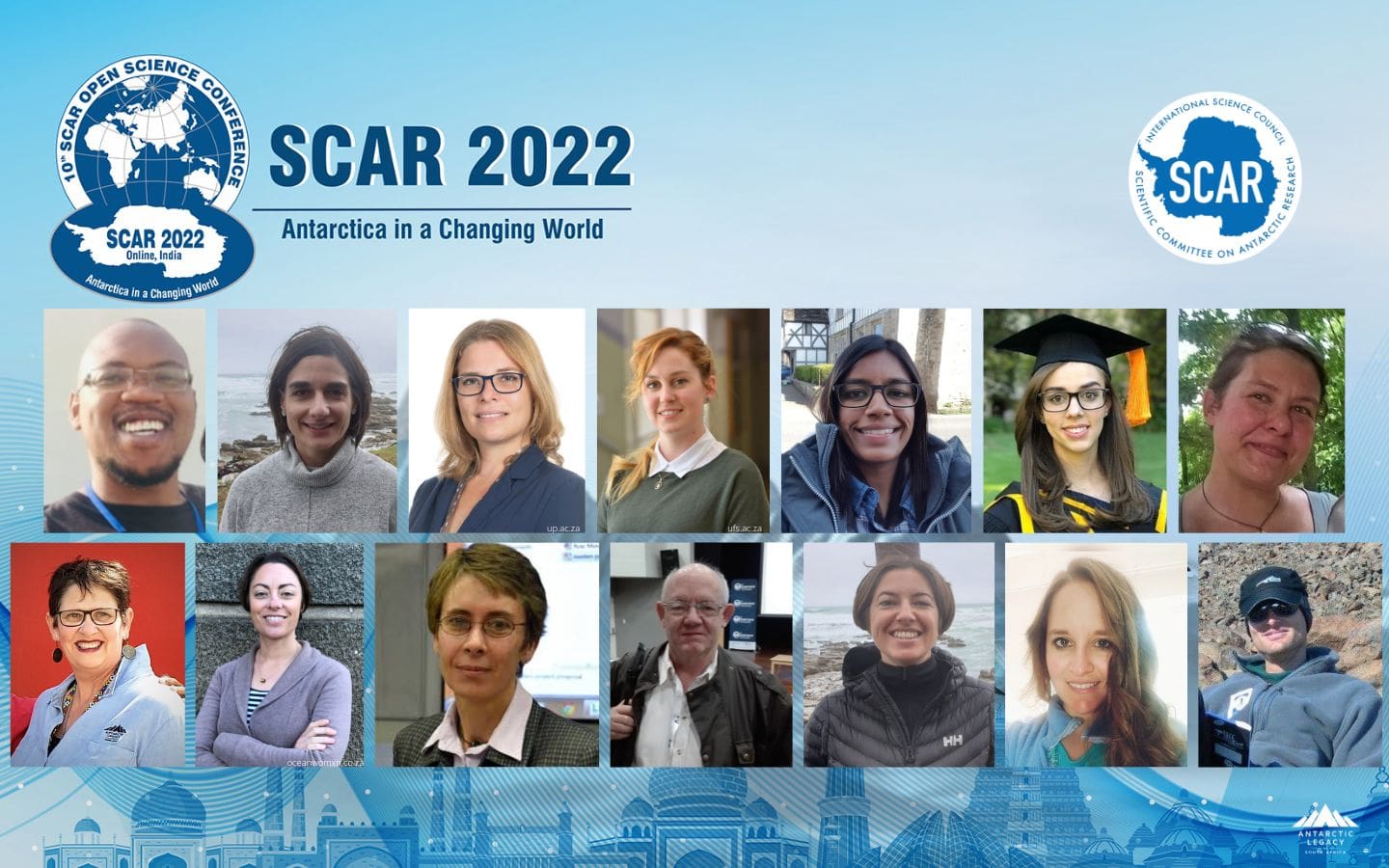
- The business meetings were attended by Bettine van Vuuren, Sarah Fawcett, Ria Olivier, Christel Hansen, Anche Louw, Charney Lavery, Geoff Grantham, Thulani Makhalanyane and Werner Nel.
Presentations delivered:
- Geoff Grantham: The Age And Chemistry Of Granitic Gneisses From The Western H.U.Sverdrupfjella, Maud Terrane, Western Dronning Maud Land, Antarctica. (link)
- Ria Olivier: Digging into the Past; An archive as a tool to compile and establish a timeline of human impact in our polar heritage (link); Collaboration of South African Researchers in an Extreme Cold Environment. (link)
- Marcel du Plessis: Insights from the SO-CHIC Expedition: what have we done and where are we now? (link)
- Morgan Raath-Krüger: Do Anisotropic Processes Influence Fine-Scale Spatial GeneticStructure Of A Keystone Sub-Antarctic Plant Species? (link)
- Charne Lavery: Antarctica, Africa and the Arts (link)
- Adrienne van Eeden Wharton: On Aftermaths and Afterlives, Afterimages and Aftersounds: Mourning-As-Witnessing Ecological Destruction in the SouthernOcean/S
- Daniela Monsanto: Landscape Genetics Of A Springtail Endemic To Marion Island (link)
- Sophie Kohler: Ice in the Southern Imagination (link)
- Pedro Lebre: Uncovering The Unexplored: The Microbial Ecology Of Sub-AntarcticIsland Soils (link)
E-Posters:
- Liezel Rudolph: A geospatial database for the sub-Antarctic Prince Edward Islands (link)
- Geoff Grantham: The Kuunga Accretionary Complex of Sverdrupfjella, western Dronning Maud Land, Antarctica (link)
- Shilpa Parbhu: Understanding how an invasive springtail adapted to cold sub-Antarctic Marion Island (link)
- Trevor McIntyre: The ontogeny of southern elephant seal foraging migration strategies: finding their way as they go (link)
Antarctic Legacy of South Africa communicated South Africa’s participation and conference-related announcements on Twitter (47 Tweets). A highlight was the session on the discovery of Shackleton’s Endurance, where South Africa was frequently mentioned during the talk.
What is to come:
- SCAR Delegates Meeting (5-7 September 2022)
- All the best to Bettine van Vuuren and Tracy Klarenbeek attending as SA representatives.
All posters and presentations can be found on the ALSA digital archive.
The conference virtual site is still available – if you have missed out on any sessions you can listen to the recordings, and all abstracts and posters can still be downloaded.
Ria Olivier, Antarctic Legacy of South Africa, 17 August 2022.
by Ria Olivier | Jul 29, 2022 | Antarctica, Current Event, Research, SA Agulhas II, SANAP, Science, Southern Ocean, sub-Antarctic
A CSIR-SOCCO – DFFE-Oceans & Coasts partnership
Team CO2-HEAT (L-R): Bubele Rasmeni, Siyabulela Hamnca and Baxolele Mdokwana.
| TEAM | CO2-HEAT |
| Project Name | Contemporary and Future Drivers of CO2 and Heat in the Southern Ocean |
| Principal Investigator | Sarah Nicholson | Council for Scientific and Industrial Research (CSIR) |
| Co-Principal Investigator | Pedro Monteiro | Council for Scientific and Industrial Research |
| Co-Principal Investigator | Sebastiaan Swart | University of Gothenburg |
Onboard CO2-HEAT team members:
| Team Member | Role | Affiliation |
| Siyabulela Hamnca | Onboard Team Leader | Council for Scientific and Industrial Research |
| Baxolele Mdokwana | Technician | Department of Forestry, Fisheries and the Environment (DFFE) |
| Bubele Rasmeni | Technician | Department of Forestry, Fisheries and the Environment |
Contemporary and Future Drivers of CO2 and Heat in the Southern Ocean
The contemporary Southern Ocean mitigates the effects of anthropogenic climate change through its disproportional uptake of carbon and heat. However, it is not well understood how this role will evolve under different emission and mitigation scenarios. The Southern Ocean also remains the largest source of global ocean uncertainty in the global estimates of CO2 and heat fluxes. While much has been achieved globally and regionally in constraining the variability and some of the mechanisms that drive Southern Ocean CO2 and heat fluxes separately, we propose that a significant part of the challenge lies in the lack of research on CO2 and heat together to better understand the feedback and the mechanisms that drive those feedbacks.
This SANAP-NRF project aims to examine the changing role of the Southern Ocean in global climate by looking at the two main drivers CO2 and heat, in an integrated way using an unprecedented 10-year high resolution glider dataset from the 2012-2022 SOSCEx experiments, prognostic biogeochemical models, and new observational experiments planned in partnership with CSIR and DFFE as well as the SO-CHIC EU H2020 project. This collaboration is undertaken as part of the emerging National Ocean CO2 Facility, a research infrastructure integration between CSIR and DFFE within SAPRI and hosted at DFFE.
We aim to gain a better understanding of how the interaction of atmospheric synoptic cycles (storms) and fine-scale (0.1-100 km) ocean processes influence seasonal-decadal variability of CO2 and heat fluxes. This will include the extent to which they feedback on each other and ultimately contribute to a better understanding of the role of the Southern Ocean in the global carbon-climate system.
The expected three outcomes are:
- Improved observational constraints for the contemporary seasonal-interannual variability of CO2 and heat fluxes.
- Understanding of how storms and their interaction with fine-scale dynamics influence the seasonal and interannual variability of CO2 and heat fluxes.
- Identify the potential mechanisms that could explain the decadal anomaly in CO2 fluxes at the end of the 20th century.
Winter cruise sampling:
The SCALE Winter-2022 cruise provides an important opportunity to address a key source of uncertainty in annual Southern Ocean CO2 and heat observations – the dearth of winter time observations. While the lack of winter observations has been improved by the recent proliferation of SOCCOM floats, ship-based observations remain highly valuable as an independent and direct measurement of CO2 and importantly include heat flux observations. On the SCALE Winter-2022 cruise, the CO2-Heat team will be sampling profiles of dissolved inorganic carbon (DIC) and Total Alkalinity. The underway pCO2 system will also be operated during the cruise. Simultaneously, the heat flux sensors are in continuous operation measuring the short and long-wave radiation on minute time-scales. In addition, as part of SO-CHIC, two Saildrones will overlap with the ship sampling path for calibration of measured CO2 and heat flux. The Saildrones will remain in the Southern Ocean sampling heat and CO2 fluxes for the remainder of winter. These key winter observations will be contrasted to the previous summer observations made during the dedicated SO-CHIC cruise in January 2022.
Dr Siyabulela Hamnca in action during SCALE-WIN22.
For more information visit:
Text supplied by Sarah Nicholson (PI).
Featured image supplied by Kurt Martin (SAPRI trainee).
Anche Louw, Antarctic Legacy of South Africa, 29 July 2022.
by Ria Olivier | Jul 26, 2022 | Announcement, Antarctica, SCAR, Science, Southern Ocean, sub-Antarctic
SCAR Open Science Conference takes place from 27 July and this includes the Business Meetings on 27-29 July 2022, the conference from 1-5 August, and the delegates meeting on 5- 7 September.
The SCAR Open Science Conference, established 20 years ago, has in many ways become the premier activity of SCAR that supports its mission to promote and facilitate international Antarctic and Southern Ocean science. These biennial meetings have become fertile ground for the exchange of the latest and highest profile Antarctic research outcomes and a place where future collaborations are born. The biennial SCAR meetings are an opportunity for subsidiary groups to meet and conduct their business. For some groups this provides the time to develop and produce reports for the Delegates Meeting which follows the open science conference.
XXXVII SCAR DELEGATES MEETING takes place from 5- 7 September and the South African delegates are Prof Bettine van Vuuren (Chair of South African National Committee for SCAR) and Tracy Klarenbeek (director: NRF – Knowledge Advancement and Support)
Under SCAR’s Articles of Association, the Meeting of the Delegates may create subsidiary bodies to undertake certain aspects of the business of SCAR. Specified Subsidiary Bodies are:
We wish all successful business meetings and conference participation.
Follow us on Twitter for announcements of presentations and sessions.
Text compiled from the official SCAR2022 website.
Ria Olivier, Antarctic Legacy of South Africa, 26 July 2022






 SCAR Open Science Conference takes place from 27 July and this includes the Business Meetings on 27-29 July 2022, the conference from 1-5 August, and the delegates meeting on 5- 7 September.
 The
The