by Ria Olivier | Jan 5, 2021 | Antarctica, SA Agulhas II, SANAE, SANAP, Uncategorised
After stormy weather at the dawn of 2021, the SA Agulhas II arrived at Penguin Bukta at 11h30 UTC on 4 January!
 This year the vessel entered notable ice cover at 67° 50′ S. It was mostly easy going with some ramming during the early hours of 4 January. The later departure of the SA Agulhas II has resulted in ice navigation later in the summer. The ice is more depleted by now and navigation has been more straight forward.
The SA Agulhas II skirted a storm in her approach to Antarctica. She was peppered with winds of 50 to 60 knots underway. (Left) If you are lucky enough to escape motion sickness the sea spray from bow slamming compliments the spectacular sunset. (Right)
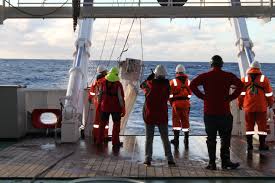
The ship enters notable sea ice on the morning of 3 January. Here the ice floes are about 10 m in diameter and concentrated at about 80% with some snow cover and only a few centimeters of ice thickness. (In our science we also visually observe the ice and our ‘data’ may vary due to subjective opinion – Do you agree?).
The ice cover becomes increasingly dense but the ship is not required to show her steel yet – owing to the voyage being postponed later in summer. How will her later departure in March influence the ice conditions and will she need to show her steel then?
On 4 January the SA Agulhas II arrived at the ice shelf in Penguin Bukta to bask in the calm after the storm
Thank you to Nicholas Bunn and Karl Pferdekamper (Stellenbosch University, Department of Mechanical and Mechatronic Engineering who are on board and have sent this information). Poor internet hampers their access to Facebook, but they could get this information to Prof Bekker via WhatsApp. Photo credits: @Karl Pferdekamper.
Text by Prof Annie Bekker of the Sound & Vibration Research Group of the Department of Mechanical and Mechatronic Engineering at Stellenbosch University.
by Ria Olivier | Dec 26, 2020 | Antarctica, SANAE, SANAP
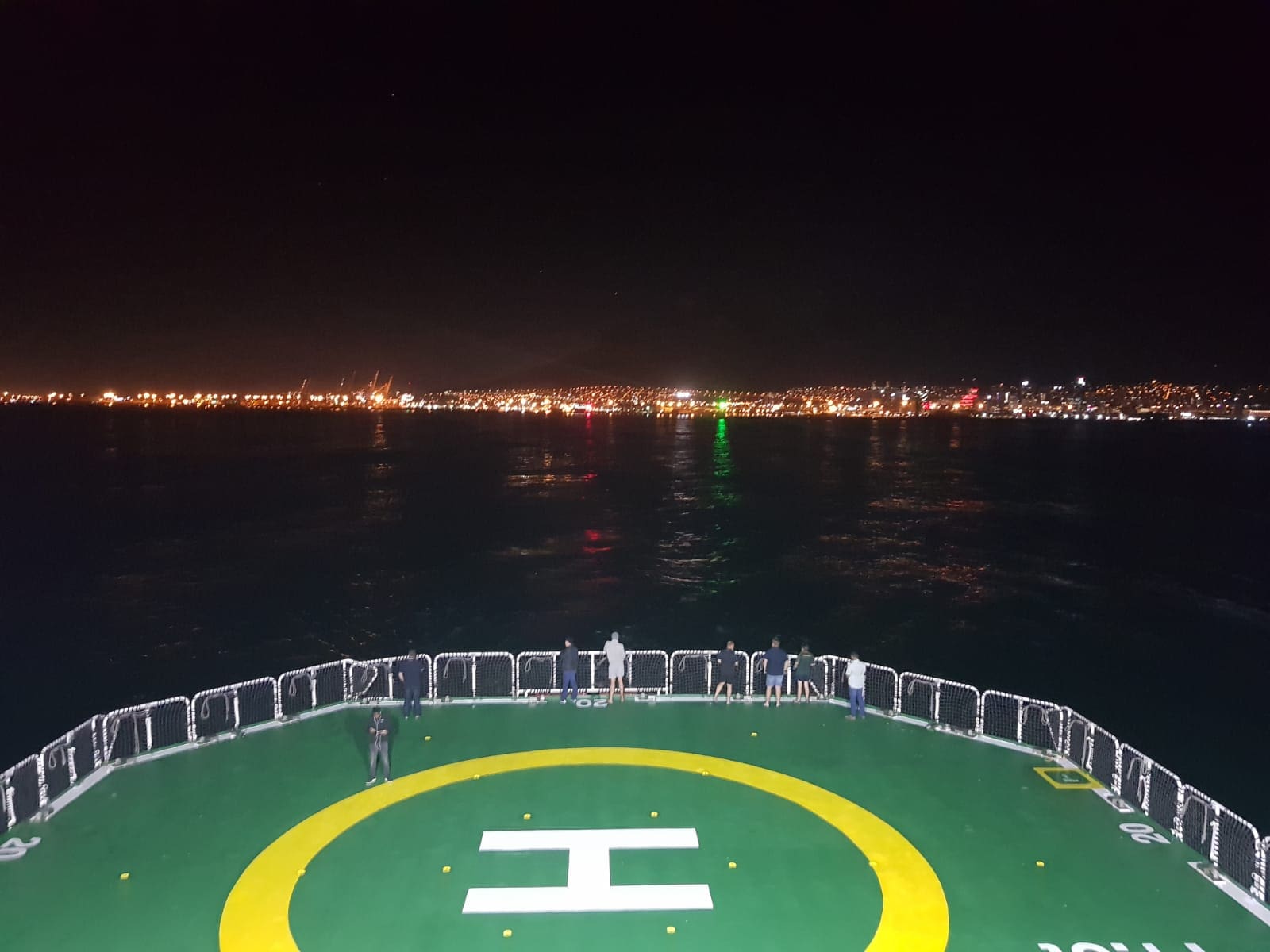
SANAE 60 departed on 25 December at 22:20 from Cape Town harbour to Antarctica.
Address by Mr Ashley Naidoo, Acting Deputy Director-General: Oceans and Coasts
On the Departure of the SA Agulhas II to Antarctica, On Friday, 25 December 2020,
Greetings to all you all SANAP Participants, Crew, Team Members, Officer and Scientists. Most cruise on this ship have some unusal aspect associated with the cruise objectives, operations or destinations. A voyage to Antarctica certainly fits within this, but this year the cruise preparations also added several layers of uniqueness and firsts. I am Ashley Naidoo, Acting Deputy Director-General of Oceans and Coasts. How I wish I could have made this send-off message personally alongside the vessel as in past years. The pandemic has turned things up-side-down but through it all, here you are still dedicated to the programme. I would like to acknowledge your bravery, commitment, zeal and taking the bold step in ensuring success and continuity of this important work. The extended quarantine period coupled with the anxiety of waiting for the covid-19 test results was a huge ask – I thank you for your patience.
This voyage’s planning came with numerous pleas from your Principals to allow more personnel, sadly we had to once again reduce numbers to keep with the quarantine and social distancing protocols. Please convey our sincere appreciation to them and your organisations for their understanding. This does mean that our various teams have fewer than the usual numbers of members. Please continue practising ‘Ubuntu’ and lend a helping hand where it is needed.
I will not be doing justice if I do not send a special ‘cheerio’ to the eight incredible SANAE 60 over-wintering expedition team members that will be spending approximately 14 months on the ‘ice continent’. South Africa first embarked on a National Expedition to Antarctica in 1960. This was after signing of the original Treaty with 11 other contries in December of the preceding year. Worth mentioning is that amongst the S60 team are old and experienced hands who had undertaken Antarctic and Marion expeditions before. This team is quite privileged to have Mr Kagiso ‘Kg’ Malepe and Gerard ‘Boy’ Oppel who bring a host of experience to both the expedition and the programme. This includes Kg’s previous experience as Shore-based Chief Scientist for the Antractic relief voyage.
To all of you on board, the Scientists, the Harzard Identification and Risk Assessment (HIRA) Expert, the team from the National Department of Public Works and Infrastructure, to the DEFF coordinating team, with Ms Kusi Ngxabani the Departmental Coordinating Officer, her Assistant Mr Sibusiso Mhambi who will also oversee the Technical work, Ms Libuso Phalane, the Admin Officer and both Messrs Mazizi Salmani and Sabata Setona as Waste Technicians, thank you for working tirelessly before and during the quarantine period; Ultimate Heli crew, AMSOL crew and the team that assisted in packing of all supplies and ensuring they are loaded on the vessel. I cannot thank you enough in making it possible to get us to this point. I can’t help but send a special thanks to Mr Stiaan Kotze who, due to circumstances beyond our control joined the voyage at the eleventh hour. Stiaan will carry out environmental conservation duties during the voyage. The SANDF team that has been seconded to the voyage, thank you for once again availing yourselves to assist us. I am equally grateful to your friends, family and loved ones in affording you the opportunity to serve the Nation despite these trying times. The quarantine period even made your absence lengthier and on that note, please convey my heartfelt gratitude to your families.
For the first time on our expedition, we are blessed with a female Pilot, Ms Lisa Burger. This, Ladies and Gentlemen, takes me back to the 2019/2020 Antarctic relief voyage experience with yet another lady that joined the voyage as the first woman Driver. TJ Mareme actually drove more than 300km at no more than 20km p/hr in the big Challenger transferring cargo and fuel to and from the ice shelf. Well done Ladies. What an inspiration to other young women. Our society needs women like TJ and Lisa. Ke a leboga, baie dankie, ndiyabulela mantombazana!!!
The other good news worth sharing is the approval of the ‘Revised Antarctic and Southern Ocean Strategy’. The strategy provides, inter alia, for the coordination and implementation of the Antarctic Treaties Act (Act 60 of 1996) relating to research, conservation, sustainable resource use and environmental management in support of the African Agenda. This also contributes to the Sustainable Development Goals, by recognizing that the Antarctic and Southern Ocean are critical parts of the global climate system.
To the DEFF team behind the scenes, thank you for finding ways over and around the many stumbling blocks in preparing for this voyage. Through it all, the vessel is now about to sail with all the supplies safely on board.
To Captain Knowledge Bengu and crew, our well wishes are with you during this voyage and smooth sailing to the ‘ice’ continent. I know for a fact that as always, you will work tirelessly in ensuring living conditions and meals on board are of a high standard.
To all Christians on this voyage, may you have a blessed Christmas and, to each and everyone, a prosperous New Year! As you leave us behind, we promise to be safe during the Festive season and we will continue practicing safety covid-19 standards!
I look forward to seeing you on your return from the relief voyage and expedition.
Nihambe kakuhle, Le tsamaye hantle, Hambani kahle, Mag dit goed gaan (of tot siens), Ga botse, Ndi zwone, Mufambe zvakanaka, Good-bye!!!
Cover Image:
Departure from Capet Town Harbour on Christmas day
Christopher Gray – SANAE60
Also see Video Clip on Facebook
by Ria Olivier | Jul 17, 2020 | Antarctica, SANAE, SANAP, Science, SEAmester
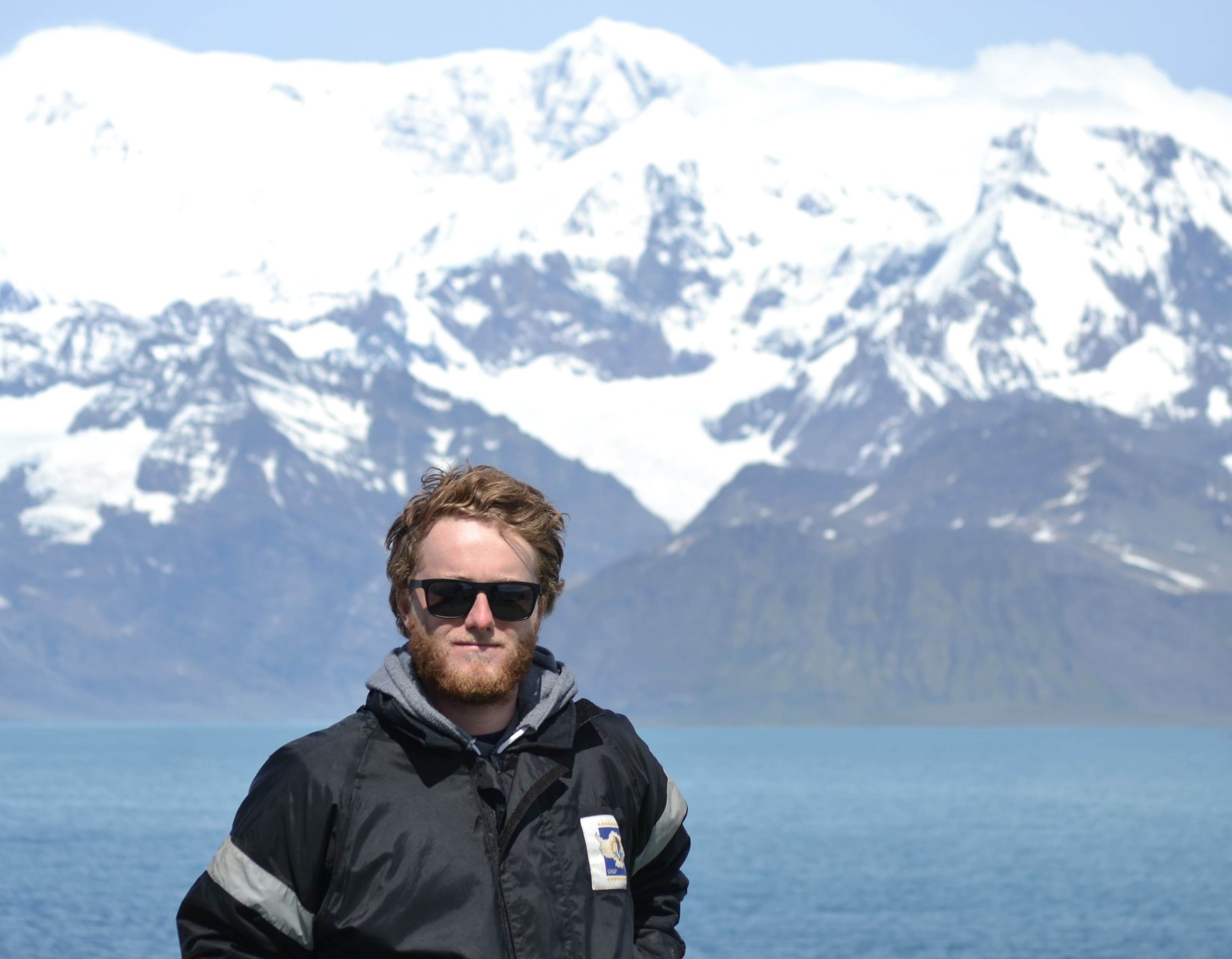
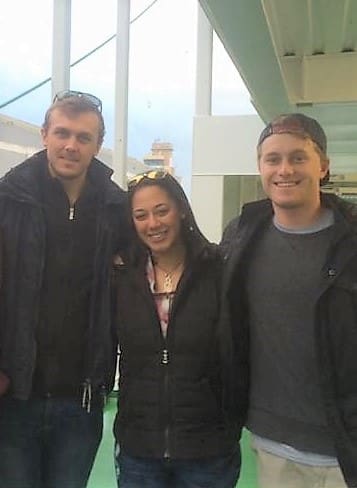
Stephen involvement in SANAP started back in 2016 when he was a student at UCT. He was working towards his Honours degree in Environmental Management when he came across the SEAmester programme and the opportunity to go to sea. “I applied and successfully made it into the programme. This was a huge moment as Antarctica and the South Africa’s prized research vessel, the SA Agulhas II, have always fascinated me. I loved every minute of the SEAmester programme, so much so that I spent every moment of extra time learning about all the science instruments used on the expeditions to Antarctica. Later that year I was granted the opportunity to participate in the SANAE 56 take over expedition. As expected, I did indeed fall in love with Antarctica.
Throughout my university career I had been very involved in home-brewing and the brewing industry. I was virtually brewing as much as I was studying and started a nano brewery in the back of a local Cape Town pub. I would bounce between classes and the brewery daily spending most of my time forging relationships with bars and brewers. Before I knew it, this hobby had turned into a functioning business. I had a small range of beers that I would sell before I’d even brewed the beer. As a student, cash and cash flow are always a difficulty and this sales approach (which is very unusual) worked for my situation.
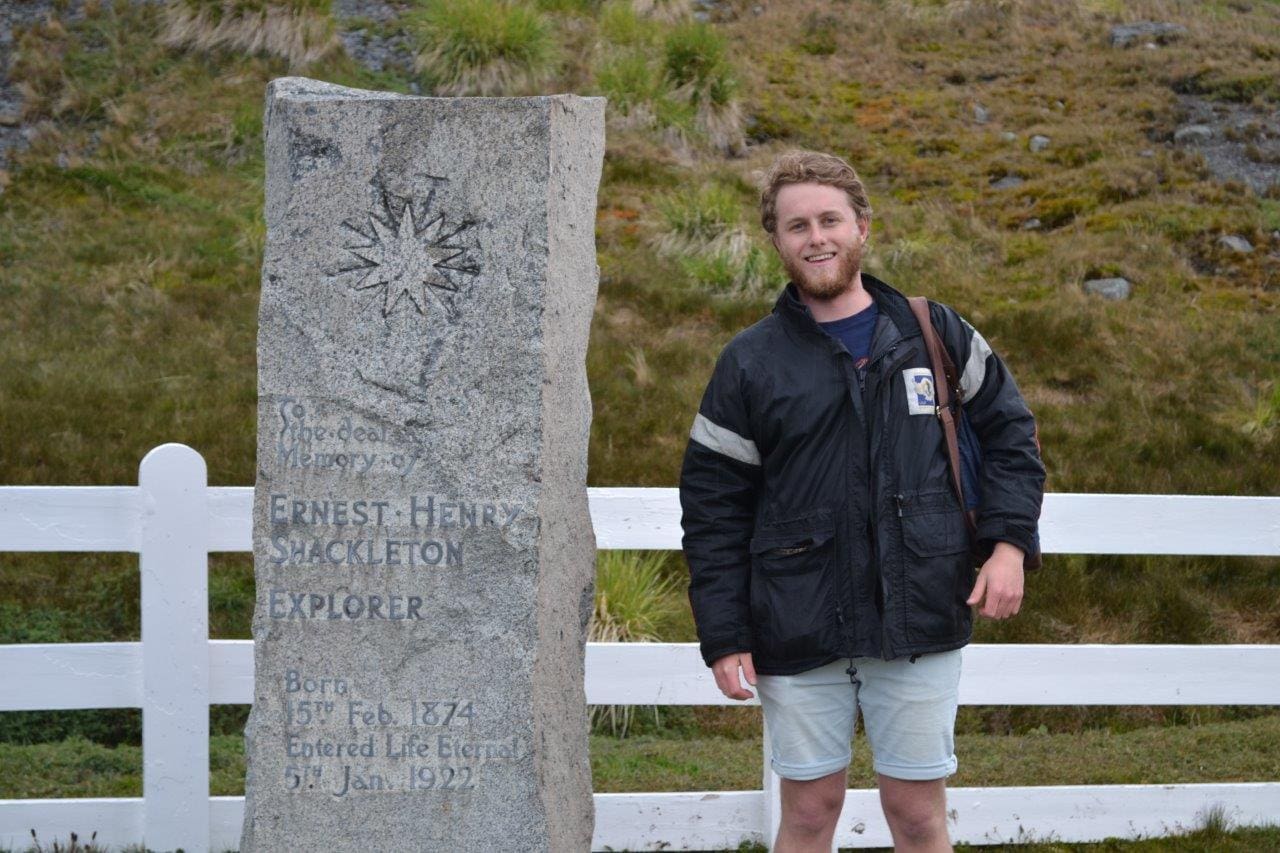
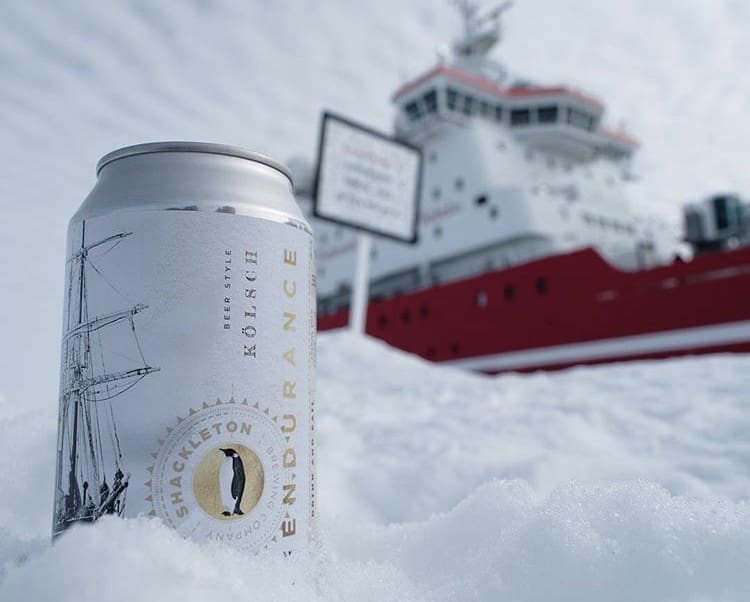
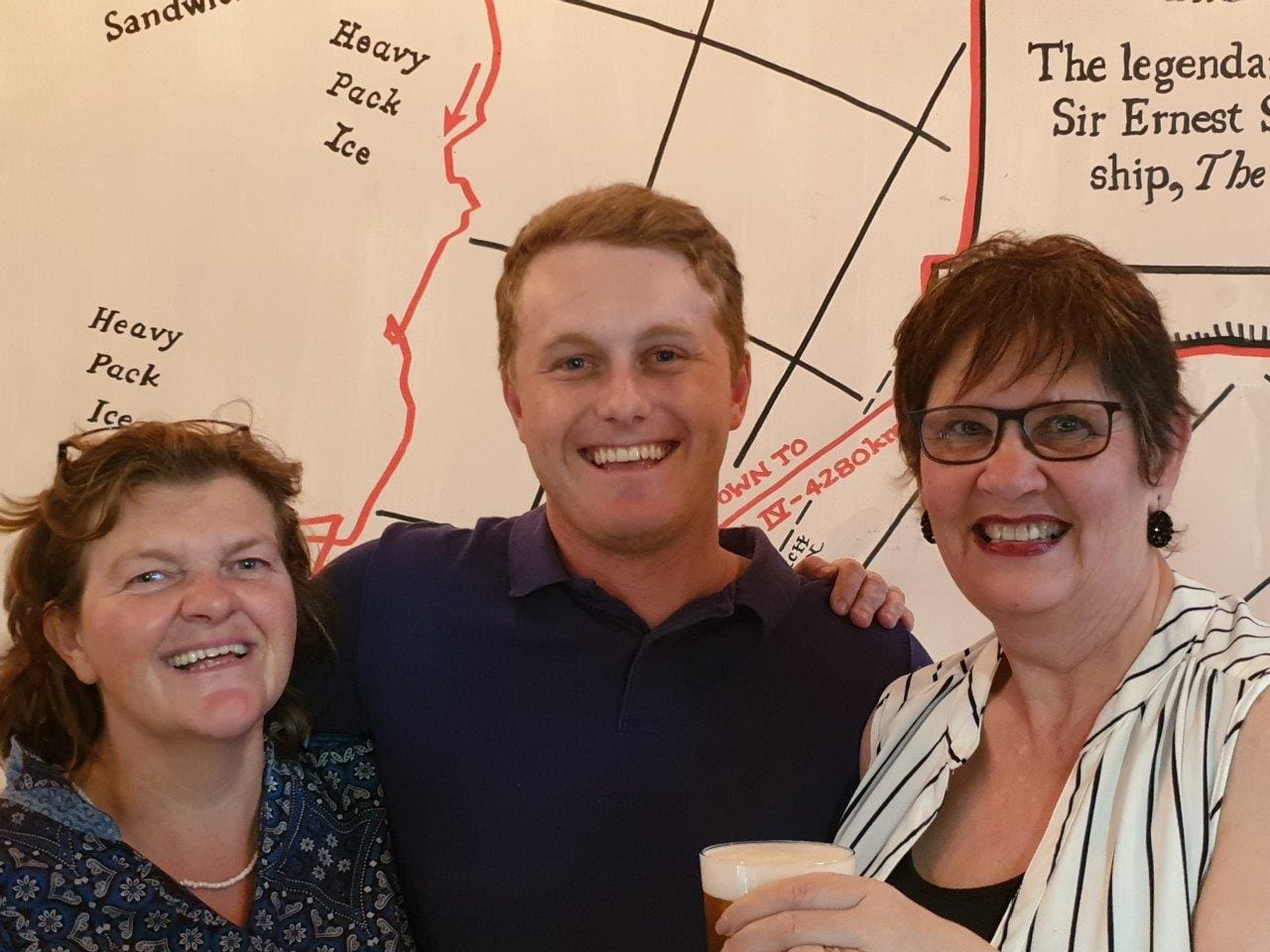
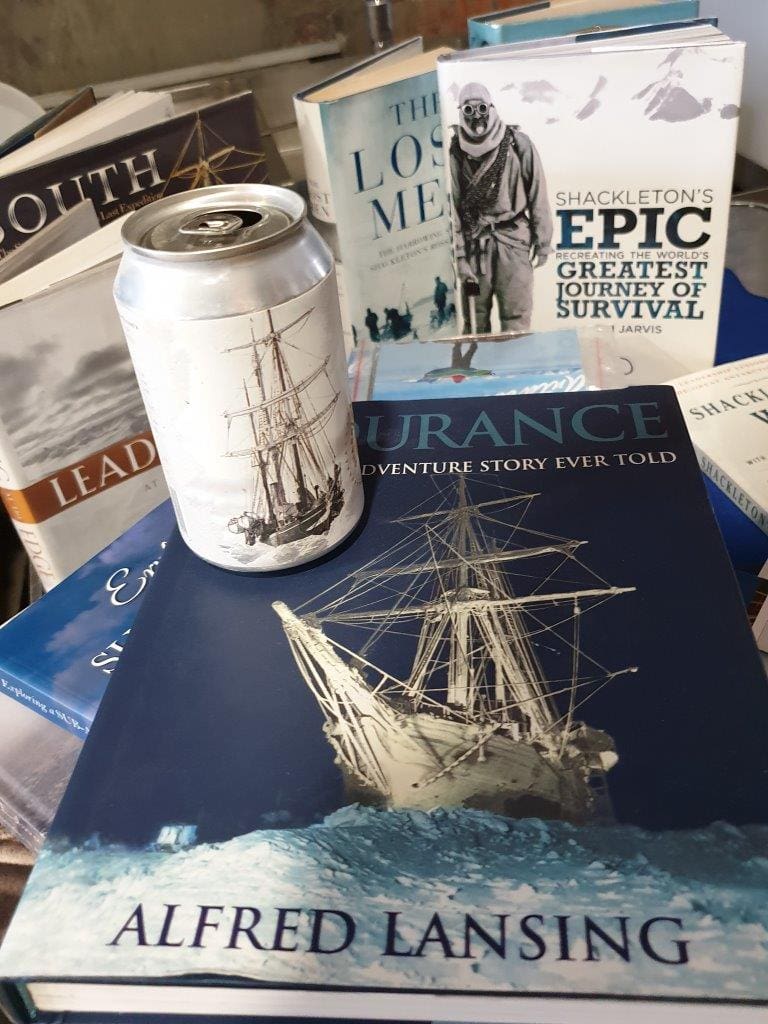
The SANAE 56 take over expedition was an experience that changed my life for the better. I learnt the importance of science and exploration as a fundamental duty to better protect our planet. I was amazed by the commitment of the scientists and researchers involved in ocean and Antarctic studies. It was also on this expedition that I read and learnt about the great Sir Ernest Shackleton, whose unrivaled story of leadership, exploration and survival had an impact on me. So much so that upon returning from Antarctica I decided to name our brewery Shackleton Brewing Company. Our goal as a brand is to inspire people through Shackleton’s endeavor and acknowledge the value of research in ocean and Antarctic studies. This has always been a focus on the brand and translating this through our products.
My biggest life decision came after the SANAE 56 take over expedition. I had to choose whether to continue my studies or work in the field that I had studied or to pursue the brewing business. At the time the business did not feel like a sustainable option, but I saw it as an experience that I could learn from. It all fell into place when I secured an investor that funded a proposal, I put forward to purchase a brewery from the UK. Signed, sealed and my brewing path had been decided. I spent two months in the UK packing up a brewery into a container to send back to Cape Town. The equipment was in perfect condition when it landed after a long cruise from Bristol port. Over the next few years, the business grew, and the brand has become established in the brewing industry.
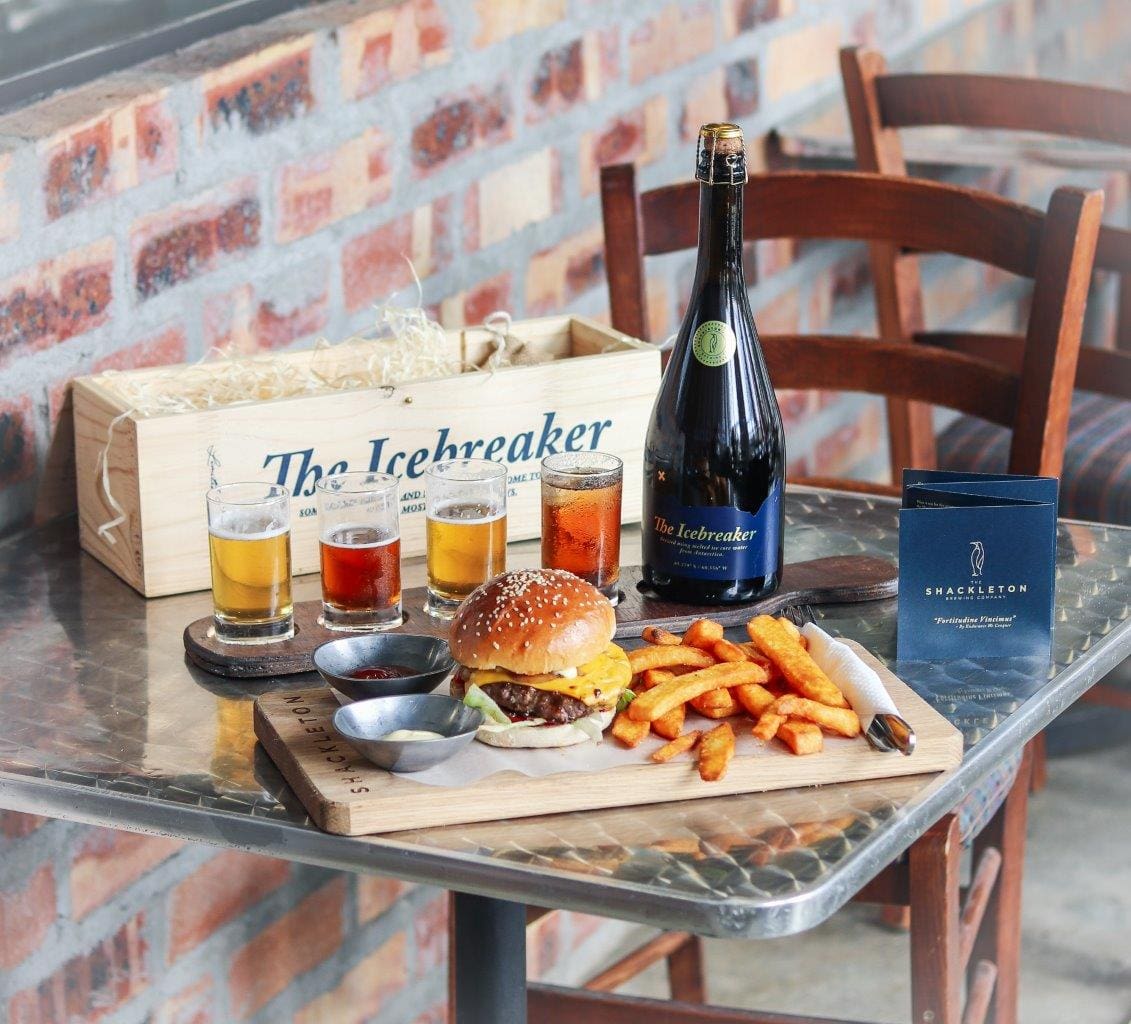
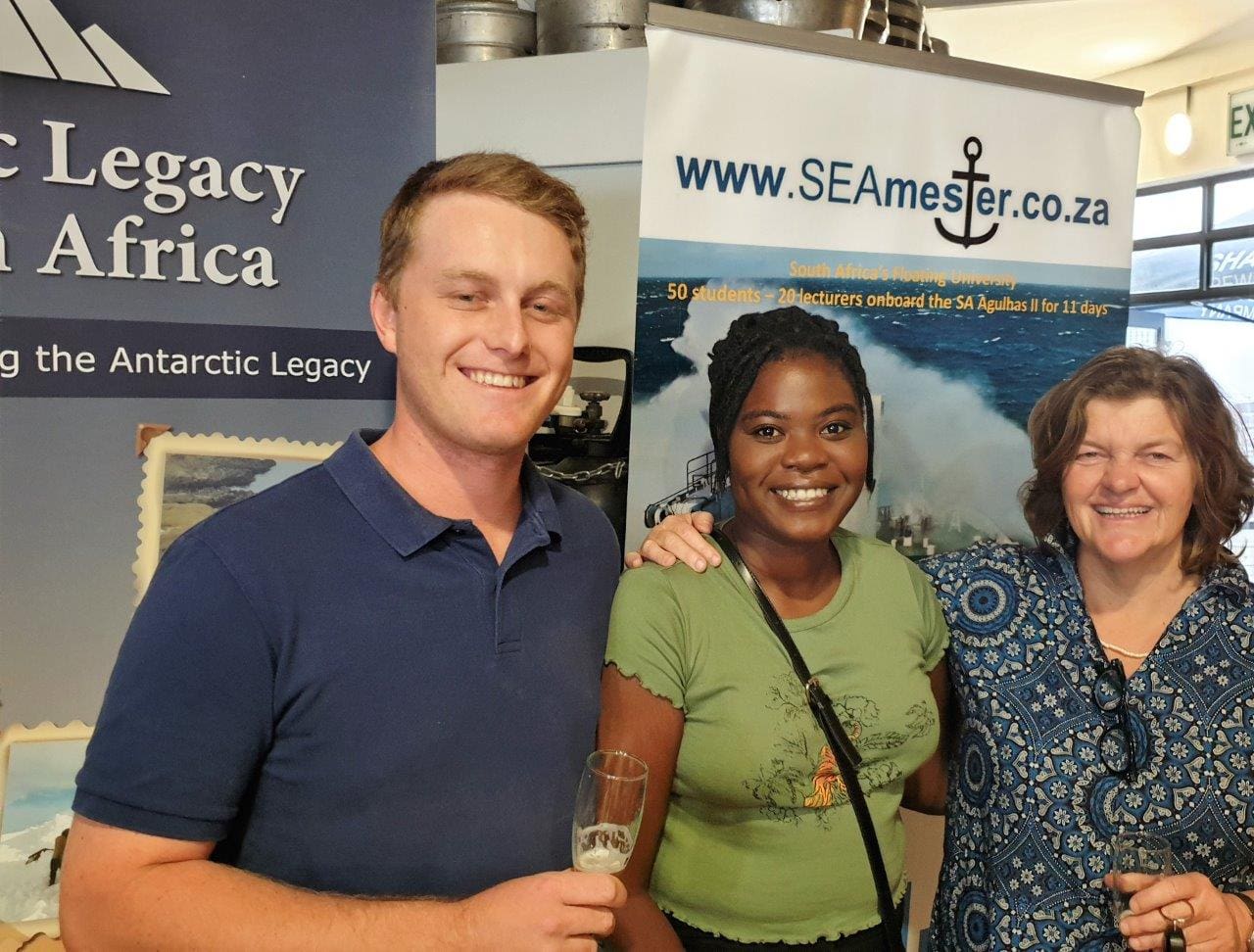
It had always been a goal to collaborate with Univeristy of Cape Town and the Oceanography department, which has given me so much. Our idea came into fruition as we set out to celebrate science and sustainability in the form of a beer. Using the discarded Antarctic sea ice cores as the primary ingredient (water), we made a beer that embodied the message of science and sustainability. The beer used organic malt, sensibly harvested hops and packaged in a handmade wooden box with the story about the project. We partnered with institutions and organisations who played an important role in making this product possible. Shackleton has committed 10% of all the beer sales to be donated to the SEAmester programme in the hopes of funding 1 extra student to have the experience I did. It was a brilliant launch night with Antarctic Legacy of South Africa (a partner in the project) displaying books, info packs etc for the guests to read. Many people don’t know the value of the research done in Antarctica and this night was an experience that educated and celebrated science to our beer community.
Why you love your career in science?I have a huge obsession with business and the many ways to make success out of it. That said, it’s incredibly difficult to actually succeed. Where I feel my true expertise, lie is in the science of brewing. I love the care and attention to all variables that create the outcome. Small slip ups in brewing have exponential knock on effects in the end product. There is science in controlling these variables to consistently producing the same product. There is a saying which I really appreciate – “brewing beer is a science but brewing great beer is an art”. I believe if you can marry the two, you’ll have success in the quality of the product.
My message to future scientists and researchers: “I believe that science and exploration is a noble pursuit but undoubtedly a rewarding one. It is also our duty to better understand the world and how best to preserve nature its beauty. There is also infinite amount of problems to solve and hypothesize to prove. By becoming a scientist, I believe you are an explorer with intrigue and wonder. I have had the privilege of working with ground-breaking scientists and researchers who have dedicated their life contributing to our collective knowledge about the world.”
Images: Herman Luyt, Stephen Peel, Antarctic Legacy of South Africa. Text by Stephen Peel.
by Ria Olivier | Jun 20, 2020 | Antarctica, International Days, Research, SANAE, SANAP, Science
“Auroras provide direct visual evidence that the atmosphere is shielding life on Earth from the radiation hazards of space.” – Michael Kosch, SANSA.
Today Overwintering Teams are celebrating Midwinter. With this in mind we would like to share some information on Aurora Australis. The research on Auroras in SANAP would be under the jurisdiction of SANSA. Although they do not currently have an aurora program, there is a possibility of doing research on it in the future. The spectacular and beautiful auroras, usually seen at polar latitudes, are caused by high energy particles bombarding the upper-atmosphere. These particles originate from the sun and travel across the void towards Earth as the solar wind, moving at around 500 km/sec.
About 10% of the solar wind becomes trapped on the Earth’s magnetic field lines in a process called magnetic reconnection, the rest is rejected and flows past the planet into deep space. The trapped particles accumulate, but this cannot go on forever. They are eventually released into the upper-atmosphere in a process called substorms, exciting the atomic oxygen and molecular nitrogen to produce the familiar green and red colours from oxygen, and sometimes the blue colour as well from nitrogen. Charged particles, such as electrons and protons, are constrained to follow the magnetic field lines, and since the Earth’s magnetic field is similar to a dipole bar magnetic, it is only in polar regions where the magnetic field lines reach down to the ground, which is why the auroras appear mostly in polar regions.
Auroras appear in the height range 100 to 300 km above the Earth’s surface, typically with red, green and blue appearing near the top, middle and bottom, respectively, of this height range. The height of the auroras, and therefore their colour, depends on the energy of the particles, with higher energy able to penetrate to lower altitudes. Auroras are rarely seen at lower latitudes such as South Africa except during major geomagnetic storms, an example of which occurred in 1989 when auroras were visible from Durban.
The following are a few articles in the South African Journal on Antarctic Research available on the Antarctic Legacy of South Africa (ALSA) digital repository
Geomagnetism and Aurora Programme in Antarctica – Short summary of the Aurora and Magnetic Programmes in Antarctica by G Kuhn
WAND auroral imager for SANAE written by G Hough and MWJ Scourfield.
Aurorae are optical emissions excited by the collisions of charged particles with the upper atmosphere at about 100 km, the altitude of the ionospheric E-region. In fact, the ionosphere has often been likened to a giant TV screen. For the latter, the electrons are fired from an electron gun, whereas the sources of high energy electrons that cause aurorae are located in the magnetosphere. One of the central problems in space physics is locating the sources and mechanisms causing the acceleration of auroral particles. The Wide Angle No Distortion (WAND) was designed, prototype built, and tested at SANAE-3 in 1993. The unique mirror optics removed the circular distortion of standard fisheye lenses, making the image of the sky recti-linear for a fixed latitude.
Magnetospheric electrons precipitating into the atmosphere by Pieter Stoker.
The International Magnetospheric Study (IMS) and the Antarctic and Southern Hemisphere Aeronomy Year (ASHAY) by JA Gledhill
Text for post provided by Michael Kosch of SANSA. Principal investigator in SANAP.
Images from ALSA repository contributed by Gareth de Villiers, Harm Moraal, Beneke De Wet and Mark St Quintin.
Article references provided by ALSA, all articles available on the ALSA repository.
Compiled by Ria Olivier, Antarctic Legacy of South Africa.
by Ria Olivier | Jun 3, 2020 | Antarctica, SANAE, Take-Over Operations
Watch the amazing video by Alexander Oeloefse made during the 2019 -2020 takeover period at SANAE IV. AN interview with the driver s of the Bulldozer equipment.
These driver teams are part of South Africa’s Antarctic Legacy. Read more about them on the ALSA webpage. The team during 2019-2020 was Thabang Tshupo, Bertus Roos, Andrew Kietzmann, Riaan Marx, Thabo Thebe, Thato Mareme and Markus Viljoen.
Video credit: Alexander Oelofse
Ria Olivier, Antarctic Legacy of South Africa.
by Ria Olivier | Apr 17, 2020 | Antarctica, Legacy, SA Agulhas II, SANAE, SANAP, Science, Take-Over Operations, Women in Science
Jess Verheul grew up in Johannesburg, South Africa and has always had an affinity for the outdoors, wild and remote places, exploring, surviving and adventuring. She believes she might have been inspired and influenced by her grandparents being farmers; “we spent much time playing outside growing up. I loved being on the farm, and my parents took us on some great safari holidays when we were younger too”. She graduated with a Bachelor of Science degree, specialising in Geography and Environmental Management. In her third year (2009), her mom showed her an article in an old girls school newsletter, an article by a fellow former school girl, who had been in Antarctica as the overwintering Medical Doctor. This sparked a conversation which in turn started a personal obsession…Mission Antarctica, by any means necessary. Her sense of adventure and the will to explore, or a search for depth and resilience to struggle and experience the elements for one’s-self sparked this obsession.
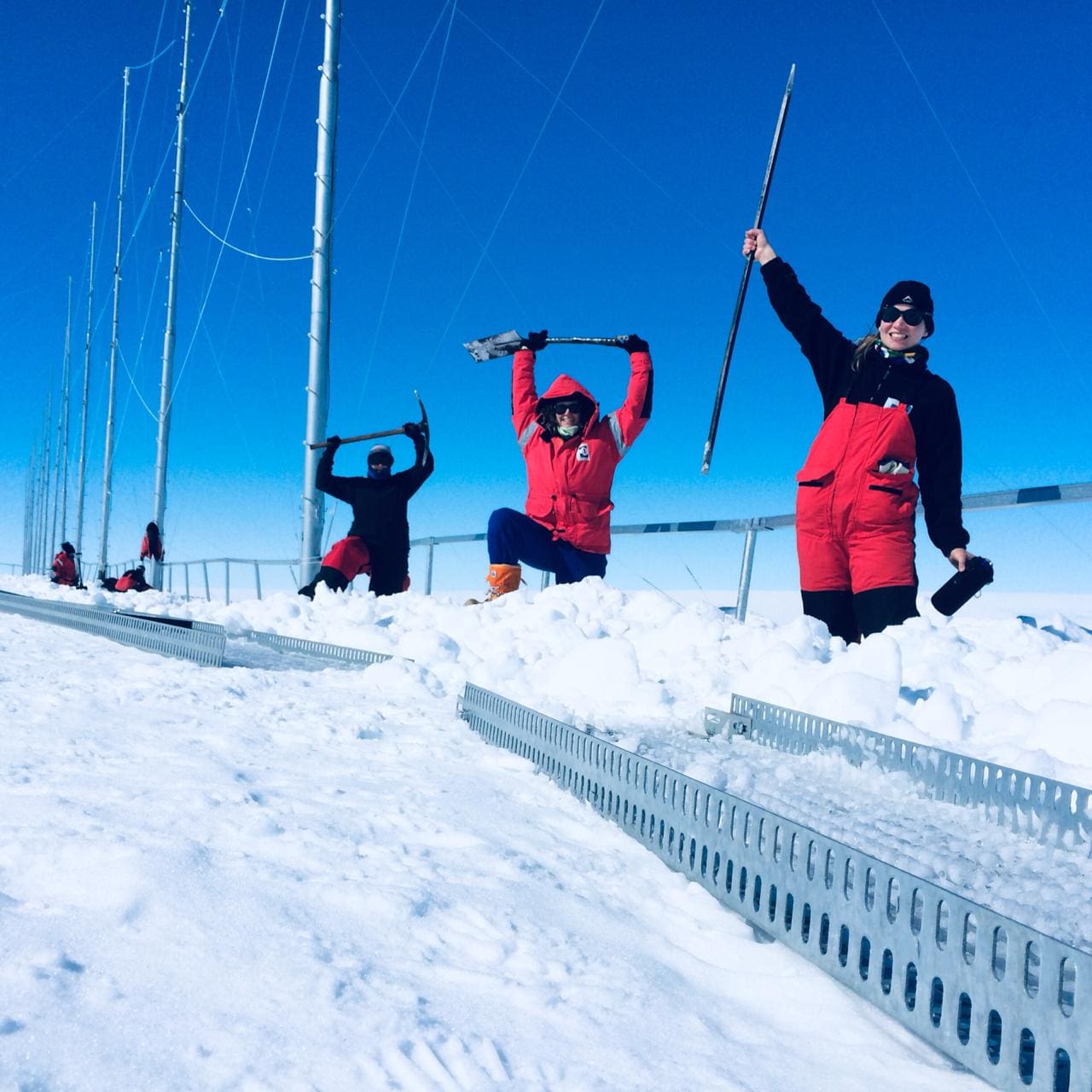
Jess completed her Master’s Degree in Environmental Management in 2012 and started working in the corporate consulting world. She relocated to Cape Town in 2014 and got involved as a volunteer firefighter and started experimenting more with creative hobbies like drawing and painting. In 2018 she was offered a volunteer position for the summer takeover to SANAE IV, South Africa’s Antarctic station located on the Vesleskarvet nunatak in Dronning Maud Land. She joined the South African National Space Agency (SANSA) team as a volunteer for the summer takeover expedition. As a member of a team of 10 people for SANSA undertaking upgrades and maintenance at SANAE IV over the summer takeover period from December 2018 to March 2019.
“Lacking a good camera but having a desire to experience this incredible place to the fullest, and knowing that drawing is a fantastic meditation; I treated myself to a blank sketchbook and some fine-liner pens before departing on our journey. I like creative expression. It helps me clear my head and experience a place or a situation more deeply.”
The SANSA Team didn’t have to do any work for the 11-day ship journey South, so she spent her time reading several books and did a bit of sketching. On the 19th of December the S.A. Agulhas II was close to the Fimbul Ice-shelf in Dronning Maud Land. Over the summer Jess spent approximately 100 hours in between work and chores, helping out and socialising; drawing, painting and studying the landscapes. “It was an unforgettable experience, one that still feels like a dream. I am ever grateful for the incredible opportunity. Since having spent all that time observing the place, I will remember it deeply for the rest of my days.”
ANT{INK}TICA : There were initially no plans to publicise her art, but the opportunity was presented by the archivist at Antarctic Legacy of South Africa (ALSA) to publish it in a coffee table book. This is the first art publication from the Antarctic Legacy of South Africa. The book consists of 49 sketches and 3 poems, depicting scenes experienced by Jess during her Antarctic Expedition. Only 100 publications are available and will be signed by the artist. This publication will be a unique addition to Art Book Collections and Antarctic publications. Visit the website www.justjiggs.com to read more about the publication and place an order or contact riaolivier@sun.ac.za for more details.
Jess’ message to you: “To get out there, challenge yourself. To believe in yourself and your ability. To try new things. Try harder, to judge yourself less and to never give up. To appreciate the experiences and lessons you’ve been endowed with and to help others along their way”. . Jess’ hope is that this book will shine a light for you, to show you that anything is possible. That persistence pays. Magic exists. And every day is a gift. Life is short, don’t waste a second.
Text: Jess Verheul Photo credits: Jess Verheul, Colin de la Harpe, ALSA
 The ship enters notable sea ice on the morning of 3 January. Here the ice floes are about 10 m in diameter and concentrated at about 80% with some snow cover and only a few centimeters of ice thickness. (In our science we also visually observe the ice and our ‘data’ may vary due to subjective opinion – Do you agree?).

 SANAE 60 departed on 25 December at 22:20 from Cape Town harbour to Antarctica.
 Cover Image:
 Stephen involvement in SANAP started back in 2016 when he was a student at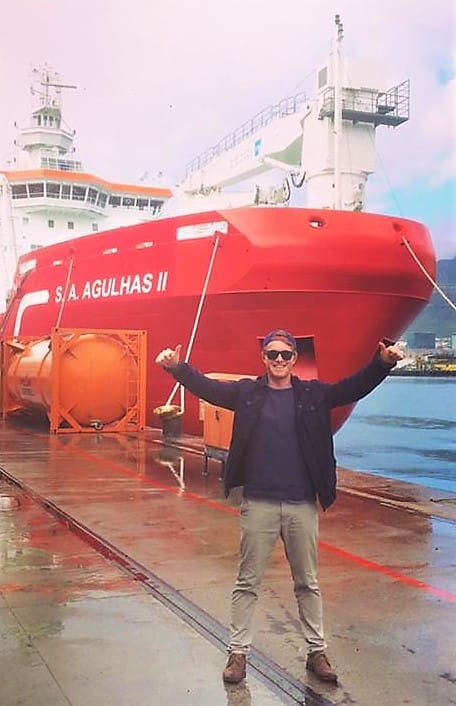
 Throughout my university career I had been very involved in home-brewing and the brewing industry. I was virtually brewing as much as I was studying and started a nano brewery in the back of a local Cape Town pub. I would bounce between classes and the brewery daily spending most of my time forging relationships with bars and brewers. Before I knew it, this hobby had turned into a functioning business. I had a small range of beers that I would sell before I’d even brewed the beer. As a student, cash and cash flow are always a difficulty and this sales approach (which is very unusual) worked for my situation.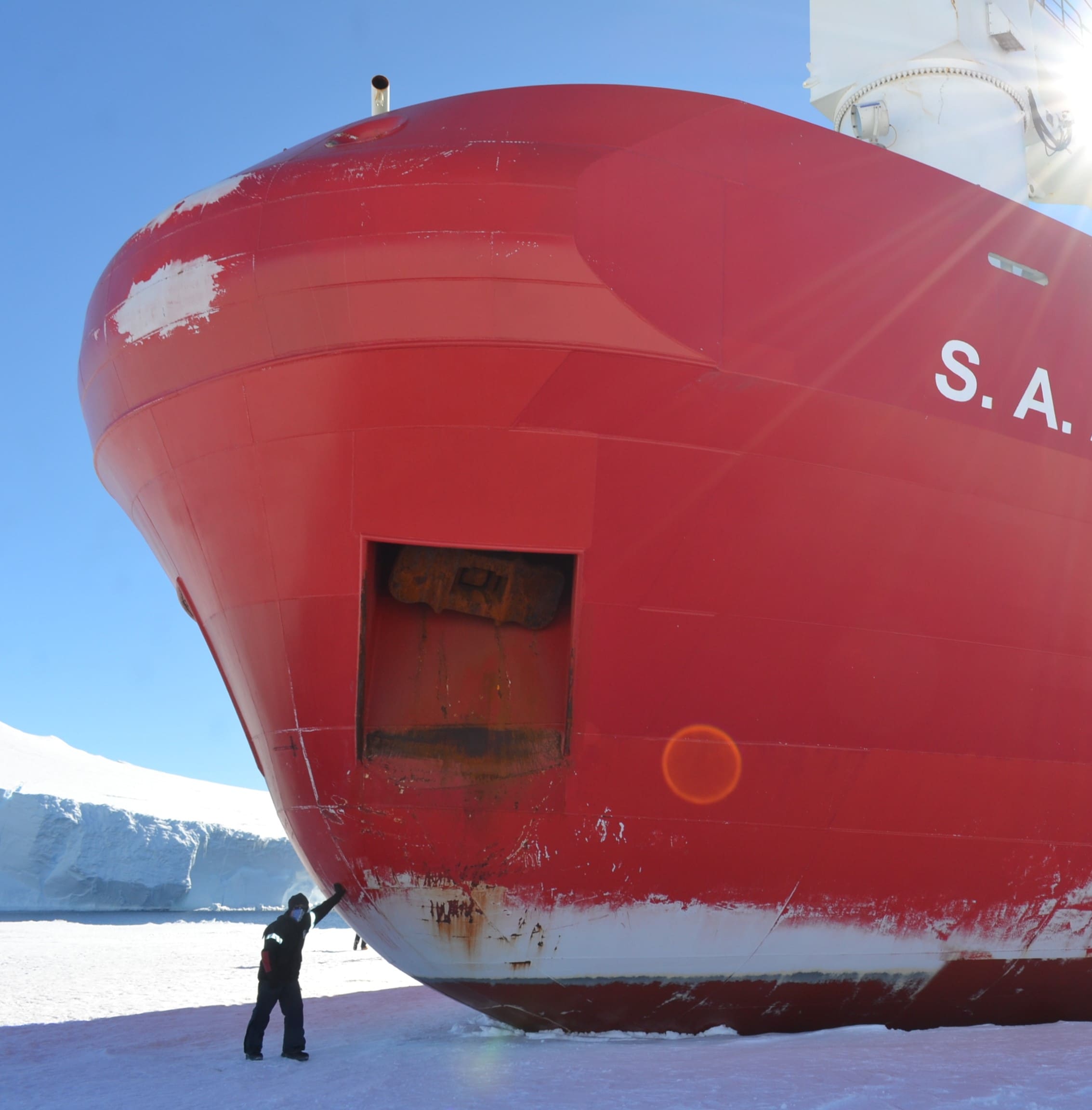
 The
The 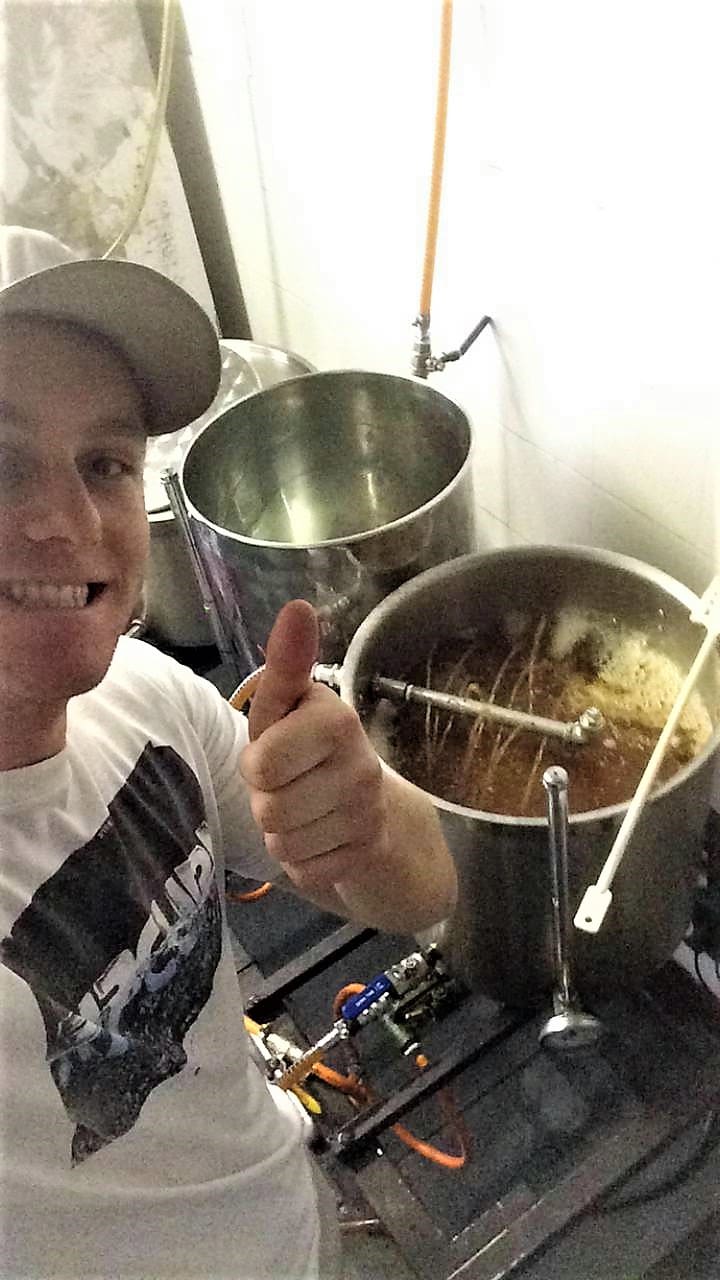
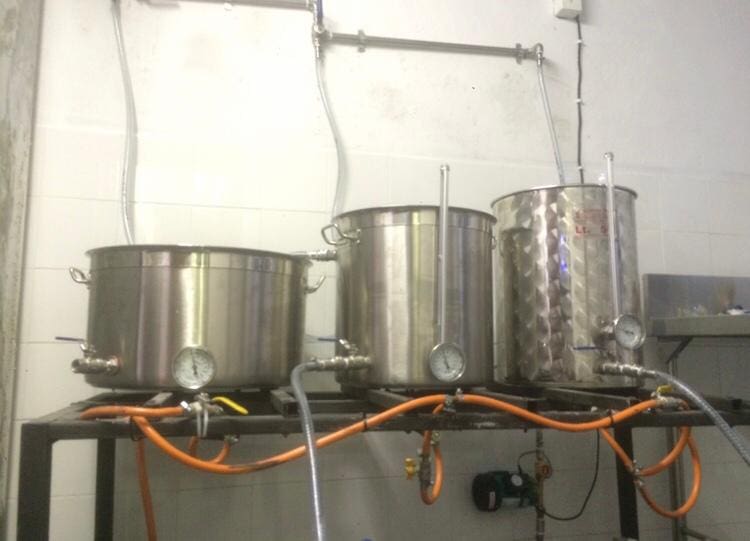 My biggest life decision came after the SANAE 56 take over expedition. I had to choose whether to continue my studies or work in the field that I had studied or to pursue the brewing business. At the time the business did not feel like a sustainable option, but I saw it as an experience that I could learn from. It all fell into place when I secured an investor that funded a proposal, I put forward to purchase a brewery from the UK. Signed, sealed and my brewing path had been decided. I spent two months in the UK packing up a brewery into a container to send back to Cape Town. The equipment was in perfect condition when it landed after a long cruise from Bristol port. Over the next few years, the business grew, and the brand has become established in the brewing industry.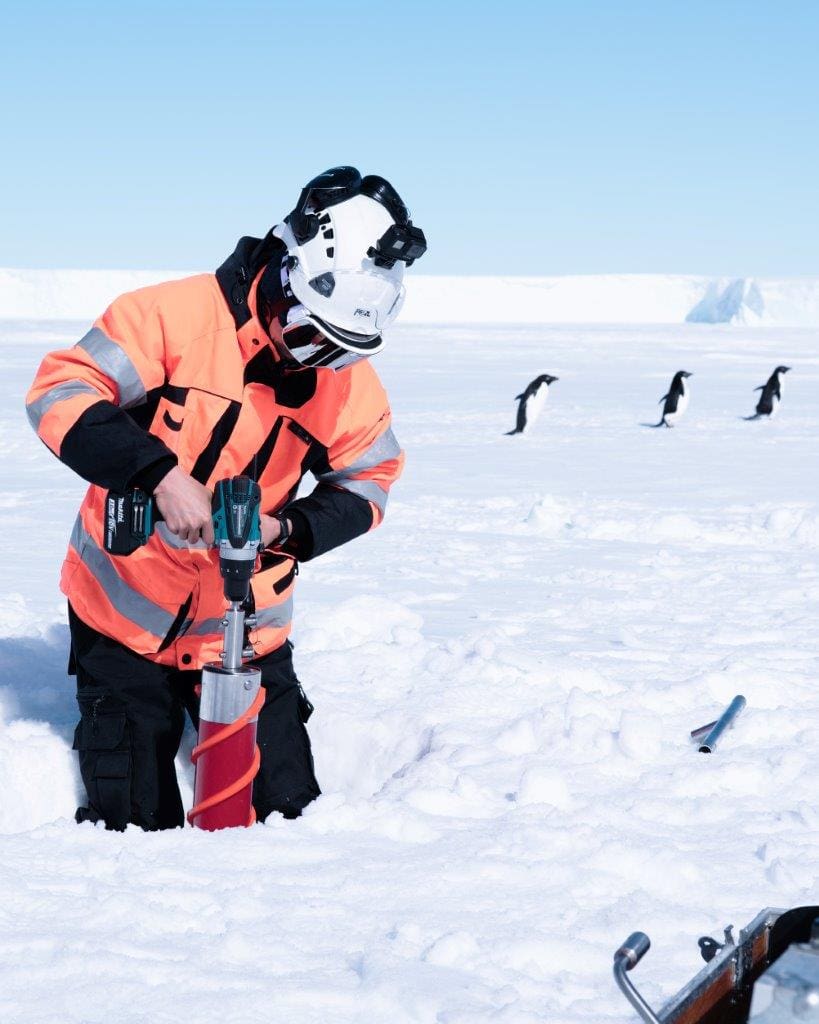
 It had always been a goal to collaborate with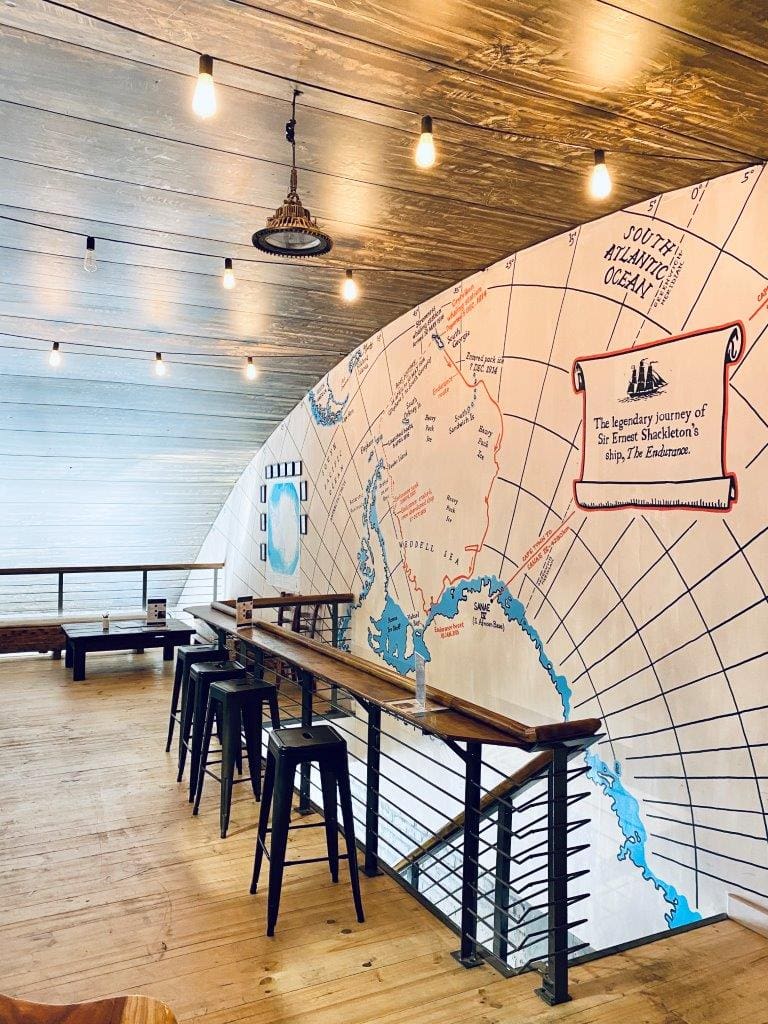
 Why you love your career in science?I have a huge obsession with business and the many ways to make success out of it. That said, it’s incredibly difficult to actually succeed. Where I feel my true expertise, lie is in the science of brewing. I love the care and attention to all variables that create the outcome. Small slip ups in brewing have exponential knock on effects in the end product. There is science in controlling these variables to consistently producing the same product. There is a saying which I really appreciate – “brewing beer is a science but brewing great beer is an art”. I believe if you can marry the two, you’ll have success in the quality of the product.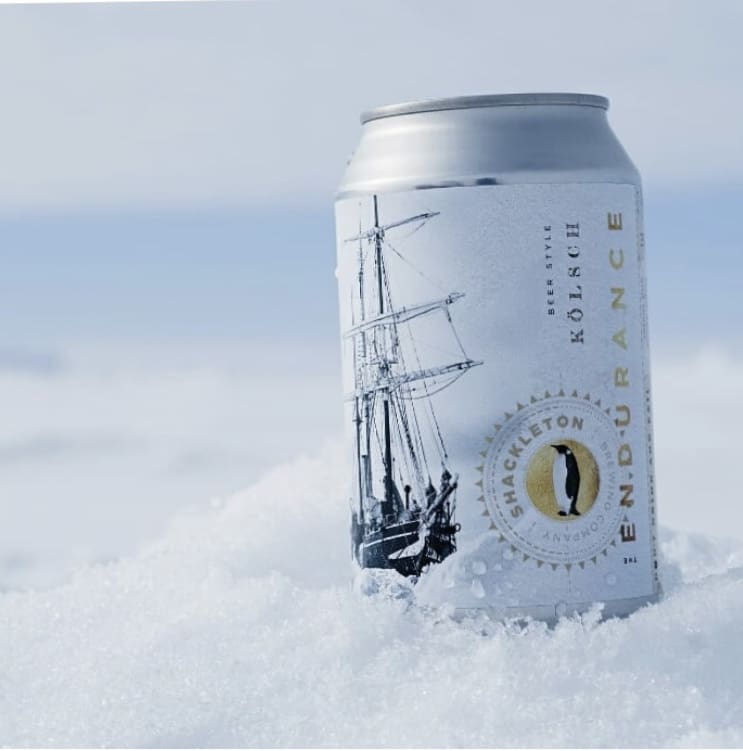
 My message to future scientists and researchers: “I believe that science and exploration is a noble pursuit but undoubtedly a rewarding one. It is also our duty to better understand the world and how best to preserve nature its beauty. There is also infinite amount of problems to solve and hypothesize to prove. By becoming a scientist, I believe you are an explorer with intrigue and wonder. I have had the privilege of working with ground-breaking scientists and researchers who have dedicated their life contributing to our collective knowledge about the world.”
 “Auroras provide direct visual evidence that the atmosphere is shielding life on Earth from the radiation hazards of space.” –
 About 10% of the solar wind becomes trapped on the Earth’s magnetic field lines in a process called magnetic reconnection, the rest is rejected and flows past the planet into deep space. The trapped particles accumulate, but this cannot go on forever. They are eventually released into the upper-atmosphere in a process called substorms, exciting the atomic oxygen and molecular nitrogen to produce the familiar green and red colours from oxygen, and sometimes the blue colour as well from nitrogen. Charged particles, such as electrons and protons, are constrained to follow the magnetic field lines, and since the Earth’s magnetic field is similar to a dipole bar magnetic, it is only in polar regions where the magnetic field lines reach down to the ground, which is why the auroras appear mostly in polar regions.

 Auroras appear in the height range 100 to 300 km above the Earth’s surface, typically with red, green and blue appearing near the top, middle and bottom, respectively, of this height range. The height of the auroras, and therefore their colour, depends on the energy of the particles, with higher energy able to penetrate to lower altitudes. Auroras are rarely seen at lower latitudes such as South Africa except during major geomagnetic storms, an example of which occurred in 1989 when auroras were visible from Durban.
 The following are a few articles in the South African Journal on Antarctic Research available on the Antarctic Legacy of South Africa (ALSA) digital repository
 These driver teams are part of South Africa’s Antarctic Legacy. Read more about them on the

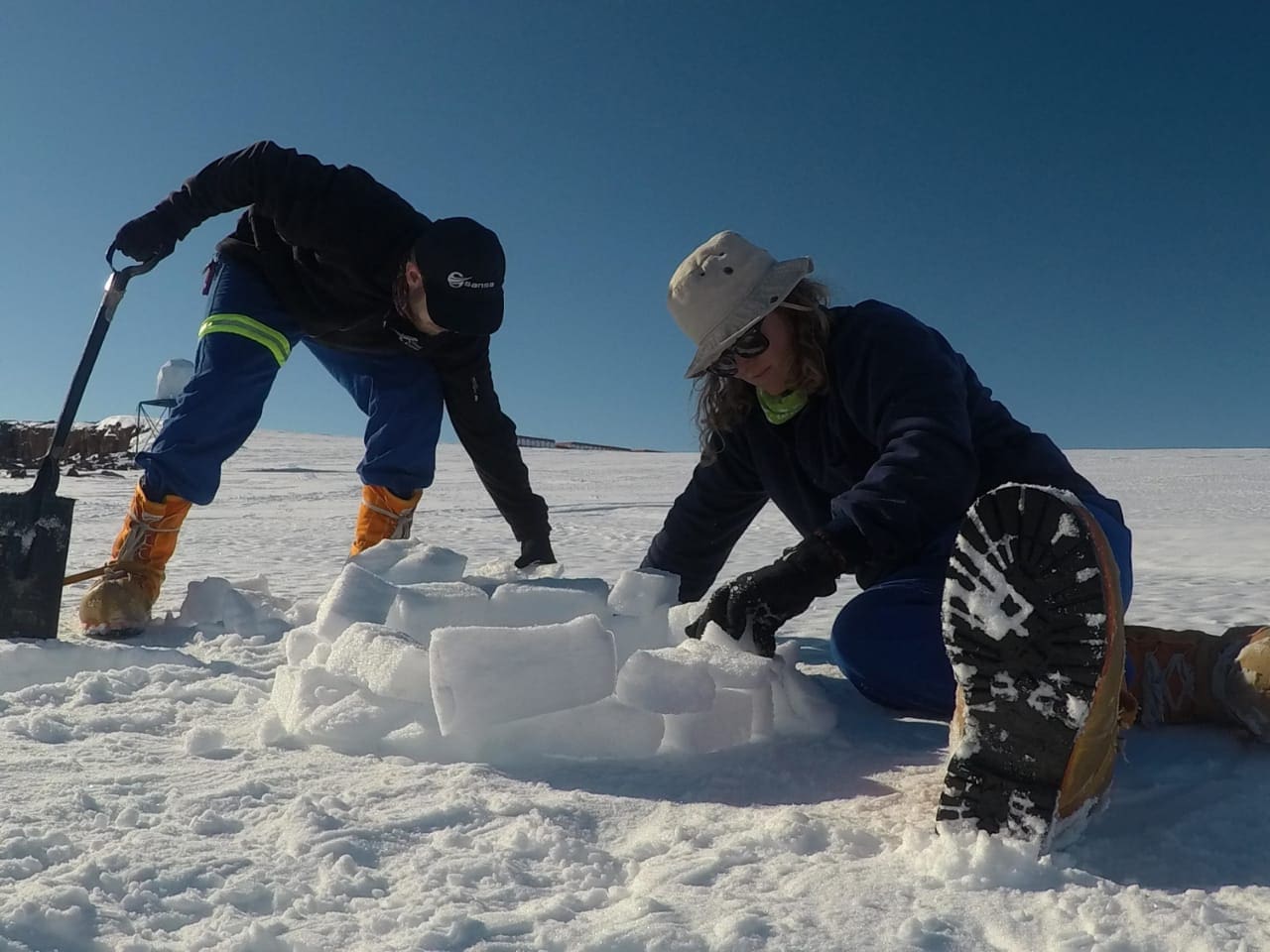 Jess completed her Master’s Degree in Environmental Management in 2012 and started working in the corporate consulting world. She relocated to Cape Town in 2014 and got involved as a volunteer firefighter and started experimenting more with creative hobbies like drawing and painting. In 2018 she was offered a volunteer position for the summer takeover to
  “Lacking a good camera but having a desire to experience this incredible place to the fullest, and knowing that drawing is a fantastic meditation; I treated myself to a blank sketchbook and some fine-liner pens before departing on our journey. I like creative expression. It helps me clear my head and experience a place or a situation more deeply.”
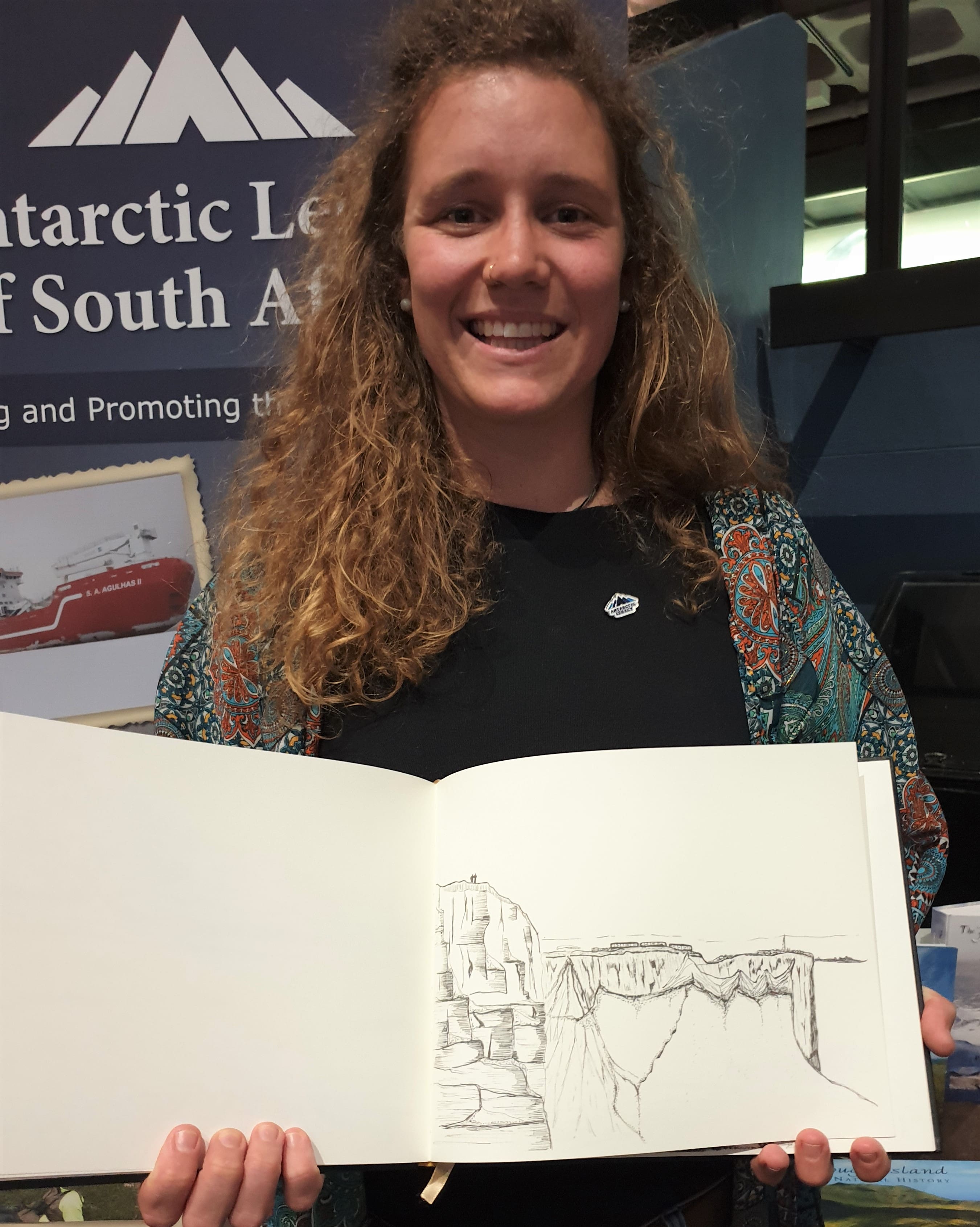 ANT{INK}TICA : There were initially no plans to publicise her art, but the opportunity was presented by the archivist at Antarctic Legacy of South Africa (ALSA) to publish it in a coffee table book. This is the first art publication from the Antarctic Legacy of South Africa. The book consists of 49 sketches and 3 poems, depicting scenes experienced by Jess during her Antarctic Expedition. Only 100 publications are available and will be signed by the artist. This publication will be a unique addition to Art Book Collections and Antarctic publications.
  Jess’ message to you: “To get out there, challenge yourself. To believe in yourself and your ability. To try new things. Try harder, to judge yourself less and to never give up. To appreciate the experiences and lessons you’ve been endowed with and to help others along their way”. . Jess’ hope is that this book will shine a light for you, to show you that anything is possible. That persistence pays. Magic exists. And every day is a gift. Life is short, don’t waste a second.