by Ria Olivier | Jun 21, 2022 | Antarctica, Current Event, International Days, Marion Island, News, Overwintering Team, Prince Edward Islands, SANAE, SANAP, Southern Ocean, Stations
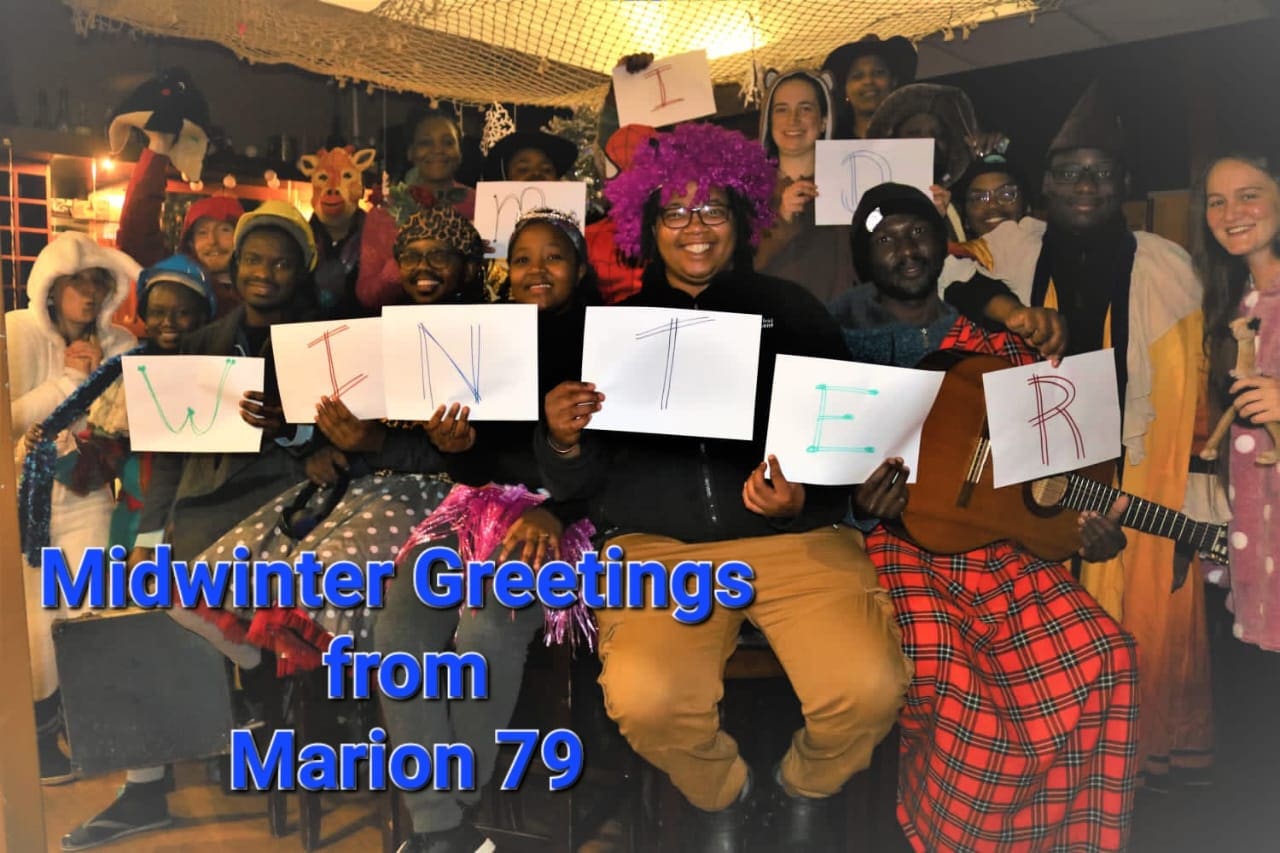
Midwinter’s Day (21 June) is celebrated by the South African National Antarctic Programme (SANAP) overwintering teams on Antarctica (SANAE 61), Marion Island (Marion 79), and Gough Island (Gough 67).
Midwinter is the shortest day, and for those on Antarctica, the darkest day, of the year.
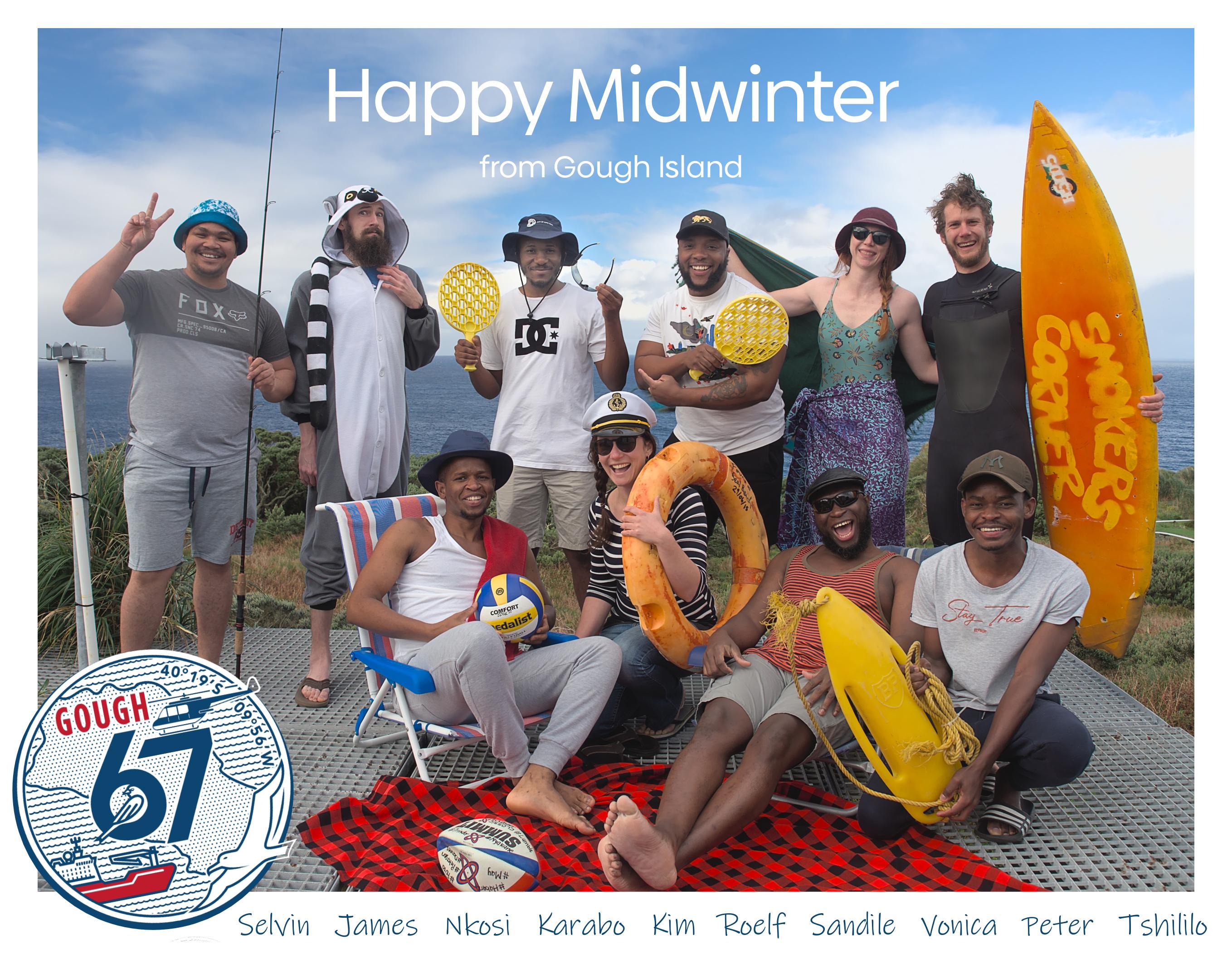
Overwintering teams from all over the world send greeting cards to each other, to family and friends, and to their national Antarctic program communities. We received greeting cards from the three SANAP overwintering teams, wishing all of you a happy midwinter!
Midwinter greetings from the 79th overwintering team on South Africa’s sub-Antarctic Marion Island.
On Antarctica, Midwinter is the midpoint of a time of darkness and extreme isolation and the SANAE team will also celebrate this today!
Midwinter greetings from the 61st SANAE Overwintering Team, on Antarctica.
Midwinter greeting from the 67th Gough Island Overwintering team!
We asked the teams what their plans are for today:
Marion Island: “We are having a nice braai and midwinter games”.
Gough Island: “We have actually already started our own midwinter tournament knockouts (with our semifinals and finals today)! We have a number of events including pool, table tennis, darts, fuzzball, checkers, chess and Mario Cart (TV game).
Quite an exciting lineup”.
SANAE IV: “We will celebrate with some midwinter games”.
Do you want to know more about the teams?
Click here to meet Marion 79!
Click here to meet Gough 67!
Click here to meet SANAE 61!
Thank you for the greeting cards SANAP teams, have a great day!
Anche Louw, Antarctic Legacy of South Africa, 21 June 2022.
by Ria Olivier | Jun 19, 2022 | Announcement, Environment, Important Dates, International Days, Marion Island, Prince Edward Islands, Southern Ocean, sub-Antarctic
World Albatross Day was inaugurated by the Agreement on the Conservation of Albatrosses and Petrels (ACAP) in 2020 and is now celebrated annually on 19 June.
I have spent the past eight years in close contact with albatrosses, but have realised that many don’t really know of their existence and/or importance. World Albatross Day is a very important initiative to highlight the wonders of these special birds, as well as the threats they face on a daily basis.
Stefan Schoombie, a PhD in Biological Sciences at the University of Cape Town. His research focus is on the behaviour of seabird species.
How did you end up working on seabirds in the sub-Antarctic?
After finishing a BSc (Hons) at the University of KwaZulu-Natal in 2012, I had the opportunity to overwinter on Marion Island as part of the 70th overwintering expedition. During this expedition (2013-2014) I worked as a field assistant (for Fitzpatrick Institute of African Ornithology), monitoring seabird colonies, and gathering data for my Master’s degree.
I was fortunate enough to join several more expeditions to Marion Island between 2015 and 2019, this time gathering data towards my PhD degree, while performing other research activities with the ultimate goal of seabird conservation.
Read more about Stefan’s research and publications here!
How would you describe your first encounter with an albatross?
The first albatross I encountered was a Wandering Albatross, sitting on a nest on Marion Island. The sheer size of the bird was unbelievable, but the fact that they are so calm in our presence was incredible. Adult albatrosses breeding on sub-Antarctic Islands have no natural predators while on land, and thus they are not as scared of us as most land birds that we are used to. However, the most amazing thing about a Wandering Albatross is when they open their wings and reveal a three-meter wingspan.
Swartkops hut (on the Western side of Marion Island) and hundreds of Wandering Albatross nests.
The different Albatross species on Marion Island are each unique in their own way. How would you describe the uniqueness of each species?
WANDERING ALBATROSS
By far the most impressive of the albatrosses when you are up close. I tracked the fine-scale movements of these birds for my PhD degree, resulting in a lot of close encounters with them. We also monitored hundreds of breeding birds, as part of a long-term monitoring program. I was fortunate enough to spend enough time on Marion Island to see albatross chicks grow up from tiny chicks up to the point where they were large and strong enough to fly off into the vast Southern Ocean skies. Part of my research included the use of bird-borne cameras, where we were able to see what the birds experienced from their point of view, giving me a new-found respect for the incredible flying capabilities of these birds.
SOOTY (OR DARK-MANTLED SOOTY) ALBATROSS
These were the first albatross species I worked with, while gathering data for my MSc. Part of my research included setting up a long-term monitoring colony of Sooty Albatrosses. This included marking a large number of birds with unique numbered rings, for identification, which is particularly challenging seeing that these are cliff-nesting birds. One of the most memorable things about Sooty Albatrosses is their calls, which echo along the cliffs as they call to their partners. They also perform a synchronised flight as part of their courtship which is something to behold.
LIGHT-MANTLED (OR LIGHT-MANTLED SOOTY) ALBATROSS
These birds are very similar to the Sooty Albatross and I conducted the same research as with the Sooty Albatrosses. Light-mantled Albatrosses are more common in the southern parts of the Southern Ocean, with Marion Island being their northernmost breeding ground. Thus, their population size is quite small on Marion and the birds are a bit more skittish than other species.
GREY-HEADED ALBATROSS
These are incredibly beautiful birds that are very photogenic, but their cliff-nesting behaviour makes them difficult to get close to. Apart from a small monitoring colony, we normally don’t come close to these birds and only perform annual counts with binoculars. However, in 2015 increases in attacks from invasive house mice resulted in us monitoring them much closer. Grey-headed Albatrosses breed in dense colonies which is like a very noisy, busy airport terminal, with birds landing and taking off all around you.
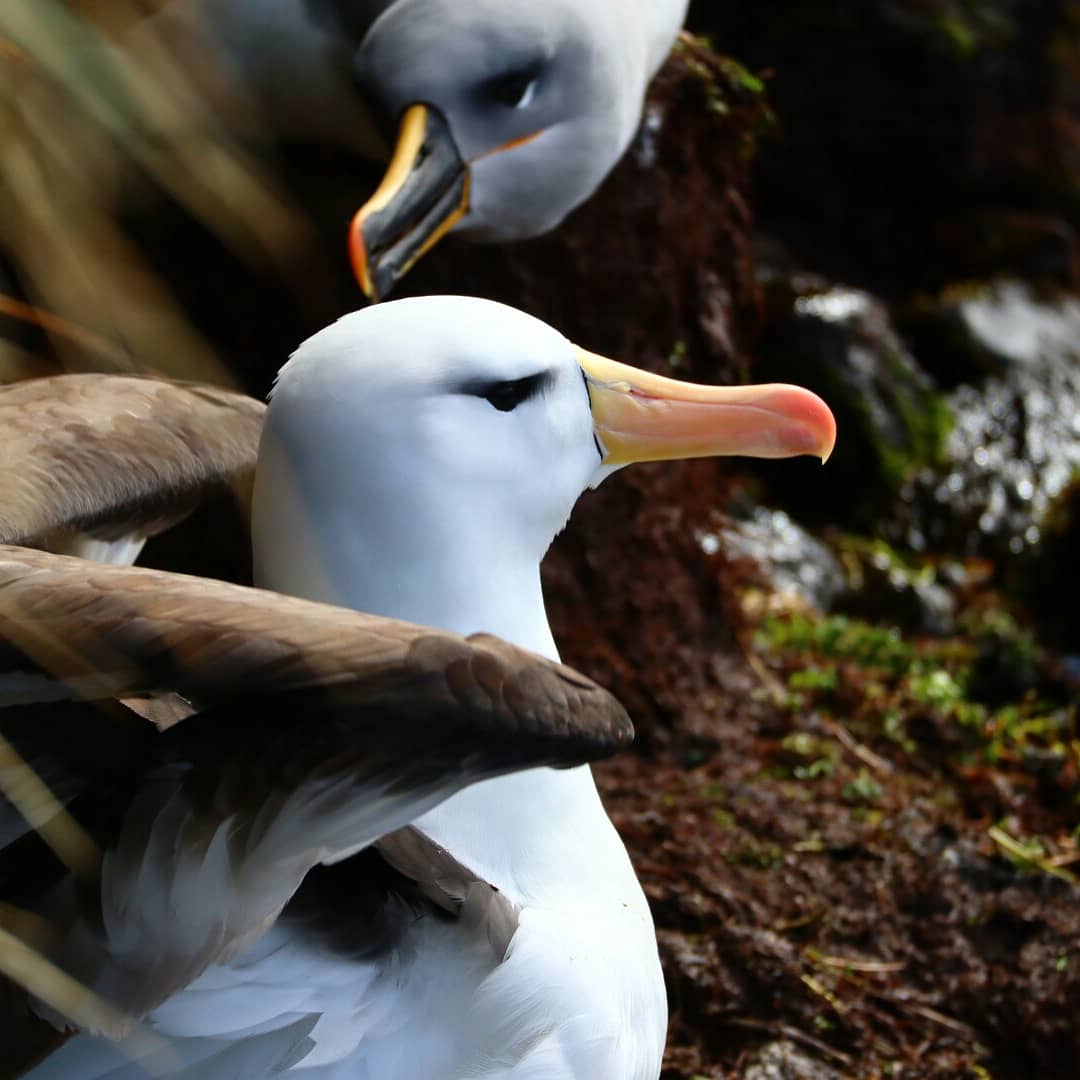
BLACK-BROWED ALBATROSS
Marion Island is not a breeding ground for Black-browed Albatrosses, but there is one vagrant individual that breeds with Grey-headed Albatrosses from time to time, resulting in hybrid offspring.
Seabirds of the sub-Antarctic are under threat due to unsustainable fishing practices, climate change, and invasive species. Currently, on Marion Island, the invasive house mice are threatening the albatross species living and breeding on this sub-Antarctic island. The Mouse-Free Marion Project (partnering with BirdLife South Africa and the South African Department of Forestry, Fisheries and the Environment) aims to remove the mice from Marion Island in 2024.
YOU CAN HELP SAVE MARION ISLAND’S SEABIRDS
View the ACAP Media Release for this Year’s Albatross Day
Anche Louw, Antarctic Legacy of South Africa, 19 June 2022.
Images: Stefan Schoombie.
by Ria Olivier | Jun 3, 2022 | Announcement, Research, SA Agulhas II, SA Polar Research Infrastructure, SANAP, SAPolarRI, Science, Southern Ocean, STEM
The South African Polar Research Infrastructure has been recently established through funding from the Department of Science and Innovation (DSI). SAPRI is a consortium of institutions led by the South African Environmental Observation Network (SAEON) that enables scientific research in polar sciences. Among the various aims, it will promote and support participation in the South African National Antarctic Program (SANAP) by institutions that have not been historically involved in polar sciences.
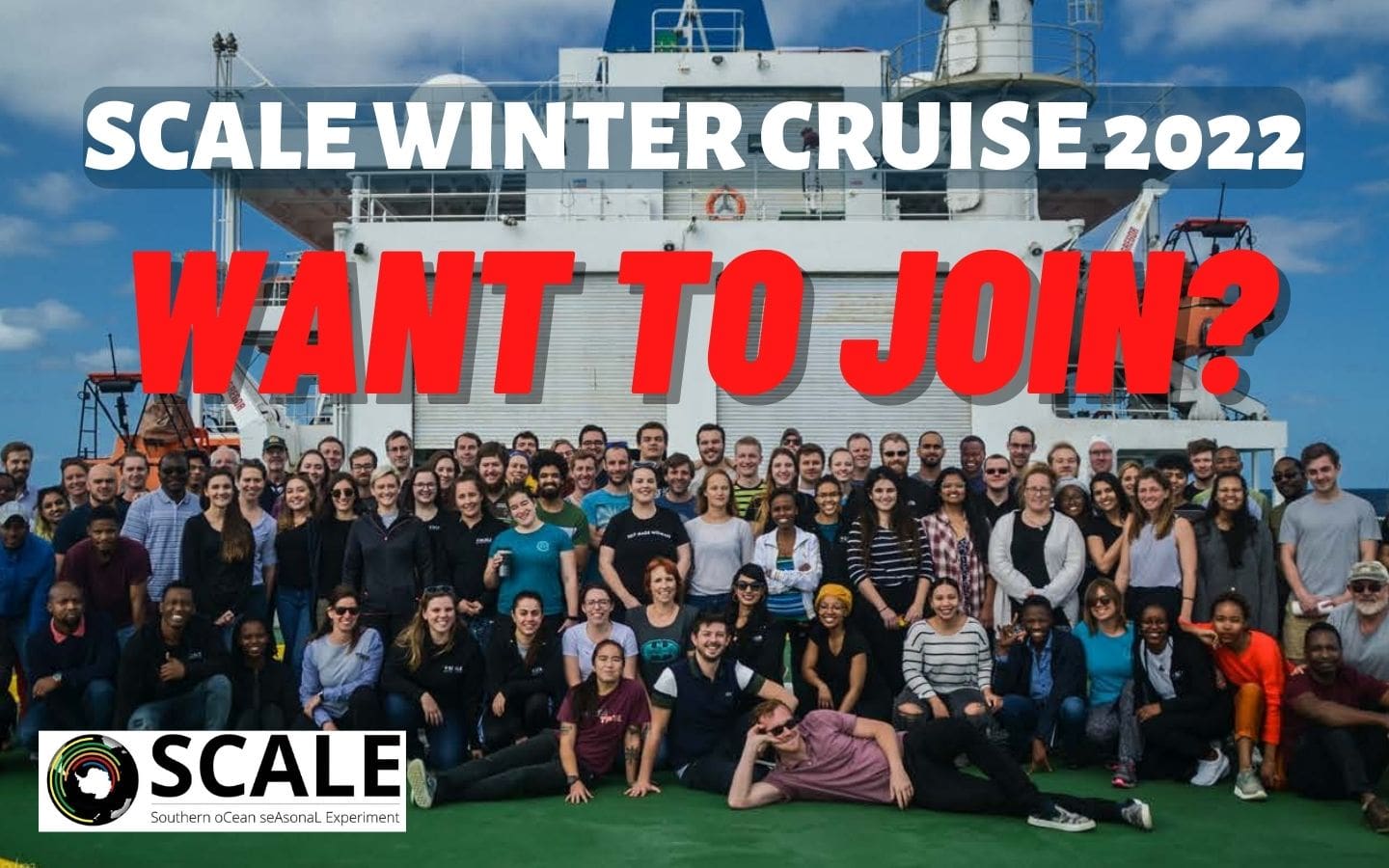
As part of this transformation program, SAPRI will support the participation of 10 early career researchers to an upcoming research cruise on the S.A. Agulhas II departing on the 11th of July 2022. The scientific program will cover a variety of polar disciplines, from open ocean sampling to sea ice measurements. The projects are currently part of the SANAP and other NRF-funded projects with topics in the Southern Ocean and are led by internationally renowned scientists, with the participation of international teams.
The “SAPRI trainees” can be either early career researchers with an interest to grow their career in the polar sciences or more established researchers that would like to broaden their horizons. It is aimed at people who are early career (post-MSc) or established scientists and technicians who will remain in the system either through a Postdoc or being employed. They will participate in seminars on board the ship and will be exposed to the science done by the various projects, with direct hands-on experience through job shadowing and direct sampling. This is an opportunity to expand your current research topics and to build a network that would be helpful for your own projects. The group of SAPRI trainees will eventually become leaders of individual projects in their own universities.
This is a last-minute call specifically addressed to institutions and topics that have not been traditionally part of the SANAP. This includes aspects of social and economical sciences that are relevant to the polar sciences. As such, we require a prompt response from researchers and postgraduate students (MSc, MPhil, PhD). Participants will need a valid passport and be ready to go through a quarantine period of 7 days prior to departure.
Chief Scientist: A/Prof Marcello Vichi (MARiS)
KEY DATES:
8 June 2022: Applications Close
5 July 2022: Quarantine in dedicated hotel
11 July 2022: Departure at East Pier, Victoria and Alfred Waterfront, Cape Town Harbour.
31 July 2022: Arrival at East Pier, Victoria and Alfred Waterfront, Cape Town Harbour
COSTS: The SAPRI will cover the costs for transportation, quarantine stay and medicals. Ship costs will be covered by the NRF.
Expression of Interest: Click here!
To view the SCALE Crusie Report of 2019:
Click here!
DEADLINE: 08 June 2022
by Ria Olivier | Jun 2, 2022 | Marion Island, News, Overwintering Team, SA Agulhas II, Southern Ocean, Stations, sub-Antarctic, Team Photo
The 79th Marion Island Overwintering Team has arrived on the island 6 weeks ago. After a very busy take-over, where each team member was introduced to their new roles on the island, they are now settled in and ready for their sub-Antarctic overwintering expedition. Marion79 consist of 21 team members – check them out below.
Message from the Team Leader, Jufter Munyai:
“The Marion79 team is ready to look after the South African station on Marion Island, some will be conducting scientific fieldwork, whereas others have obligations in and around the station”.
Want to know more about the Marion Island 2022 take-over? Click here
We wish the team a successful expedition. See you back in Cape Town, in May 2023.
79th Marion Island Overwintering Team
Featured Image: Marion79 onboard the S.A. Agulhas II, about to depart to Marion Island on Sunday, 17 April 2022. Image supplied by Jufter Munyai (Team Leader).
Anche Louw, Antarctic Legacy of South Africa, 02 June 2022
by Ria Olivier | May 31, 2022 | Announcement, Gough Island, Marion Island, News, Prince Edward Island, SANAP, Science, Southern Ocean, sub-Antarctic, Tristan da Cunha
Congratulations to Prof Peter Ryan, awarded with the BirdLife South Africa Gill Memorial Medal, for an outstanding lifetime contribution to ornithology in southern Africa.
Prof Ryan, an A-rated Ornithologist and Director of the Percy FitzPatrick Institute of African Ornithology at the University of Cape Town, has been part of the South African National Antarctic Programme for more than two decades, doing research on seabirds breeding on Marion Island and the Tristan archipelago, which includes Gough Island. Prof Ryan’s latest research within SANAP is focused on “Avian scavengers as indicators of recovery of an island biota”, co-led with Dr Maëlle Connan (Research Fellow in the Marine Apex Predator Research Unit, Nelson Mandela University). Click here to read more about this project.
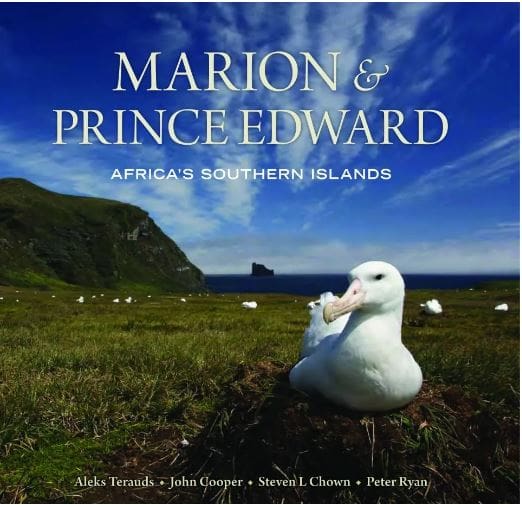
He is the author and co-author of a number of books on seabirds and the sub-Antarctic islands. Here is his latest publication: Guide to Seabirds of Southern Africa.
The Citation for Prof Ryan’s award – Click here.
In 2012, John Cooper, who was extensively involved in long-term seabird monitoring studies on Gough and Marion islands since the 1980s, received this award for his outstanding contribution to ornithology in southern Africa.
Featured Image: Prof Peter Ryan at the 5th SANAP Symposium (2018) in Hermanus, where he presented his work on “Plastics in Antarctica – preliminary findings from the Antarctic Circumnavigation Expedition (ACE).
Anche Louw, Antarctic Legacy of South Africa, 31 May 2022
by Ria Olivier | May 18, 2022 | Announcement, Discover, Gateway cities, International Days, Prince Edward Island, Prince Edward Islands, Research, SA Agulhas II, SANAE, SANAP, Science, Southern Ocean, Stations, sub-Antarctic
Free entrance to Iziko Museums of South Africa today, 18 May 2022.
Visit the Sentinels of the South Exhibition at Iziko Museum of South Africa, Cape Town.
This exhibition will give you insight into the history, discoveries, and current role of South Africa’s Antarctic and Southern Ocean exploration. Read more here.
Anche Louw, Antarctic Legacy of South Africa, 18 May 2022